

More news on this day
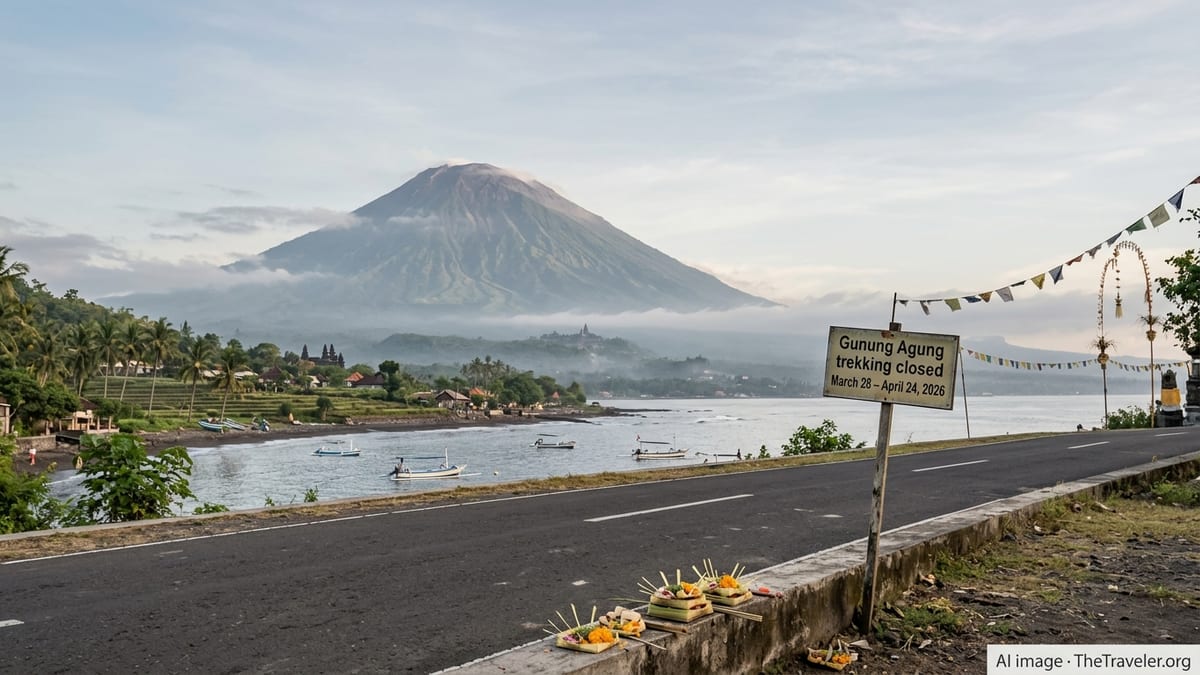
Travellers planning a trek up Bali’s highest volcano should prepare to adjust their itineraries, as publicly available information indicates that Mount Agung will be closed to hikers and general visitors from March 28 to April 24, 2026, to accommodate a series of major Hindu ceremonies at temples on its slopes.
Get the latest news straight to your inbox!
What the 2026 Mount Agung Closure Actually Covers
The 2026 restrictions apply to all trekking and recreational access on Mount Agung during the March 28 to April 24 period. Reports from local tourism and community channels indicate that both of the main hiking routes, including the popular Besakih and Pasar Agung approaches, are affected. Tour operators are being advised not to accept bookings for summit or crater hikes during these dates, and visitors are urged to avoid attempting informal or unguided climbs.
While the closure focuses on hiking and non-religious visitation to the volcano itself, temple-based worship and ceremonial activities for local communities continue as normal within the designated sacred areas. The closure does not affect broader travel to Bali or to Karangasem Regency, where Mount Agung is located, and road access through the region remains open unless otherwise restricted for short periods around individual rituals.
Similar closures have taken place in recent years during major ceremonies, with published coverage in local outlets describing temporary bans on trekking that lasted from several days to more than a month. These previous patterns suggest that enforcement is taken seriously, with local regulations used to support the temporary status of the volcano as an exclusively sacred space.
Travellers who have already booked trips that include an Agung sunrise trek are encouraged to contact their accommodation providers or tour companies to clarify cancellation or rebooking options. Many operators in Bali are now accustomed to these cyclical religious closures and may offer alternative itineraries at short notice.
Why Mount Agung Closes for Sacred Ceremonies
Mount Agung holds a central place in Balinese Hindu cosmology. The peak is widely regarded as the dwelling place of divine forces and is closely associated with Besakih, often referred to as Bali’s “Mother Temple,” on its southwestern slope. During major ceremonies, Balinese belief systems emphasise the need for purity and undisturbed space so that deities can symbolically descend and blessings can be carried to communities across the island.
Publicly available explanations from previous years’ closures describe how large-scale rituals such as Ida Bhatara Turun Kabeh and other significant temple festivals involve processions, offerings and overnight prayer events in and around the Agung landscape. During these periods, the presence of sightseeing visitors and hikers is considered incompatible with the spiritual focus of the rituals, especially near key shrines and sacred routes.
The 2026 closure window again falls shortly after Nyepi, Bali’s annual Day of Silence, which in 2026 occurred on March 19. That period is traditionally followed by a dense calendar of ceremonies. Travel advisories and local calendars show that these weeks often bring heightened religious activity at major temples, with Mount Agung frequently at the centre of observances that extend across multiple villages and customary regions.
Environmental and safety considerations also play a role. The combination of large local gatherings, changeable mountain weather and the lingering risks associated with an active volcano can make crowd management challenging. By pausing recreational hikes during intensive ritual periods, community leaders reduce the likelihood of accidents while reinforcing long-standing expectations around respect for sacred landscapes.
Practical Advice for Travellers Visiting Bali in Late March and April
For visitors arriving in Indonesia between late March and late April 2026, the Mount Agung closure does not mean cancelling an entire Bali itinerary. It does, however, call for some careful planning. Travellers who had scheduled a sunrise summit hike during this period should remove Agung from their plans and avoid attempting to reach the trailheads, even if some online booking platforms still appear to accept reservations.
Travel forums and local news coverage from earlier closures in 2024 and 2025 highlight that unapproved attempts to hike during a ban can lead to intervention by local community patrols and, in some instances, immigration consequences for foreign visitors. Respecting posted signs, advisory letters at trail posts and guidance from local guides is therefore essential, both from a cultural and a legal perspective.
Visitors staying near Amed, Candidasa or other east Bali coastal areas may still enjoy impressive views of Agung from a distance. Hotels, homestays and beachside cafes in Karangasem routinely incorporate the volcano into their panoramas, and photography from roadsides and coastal lookouts remains possible, provided travellers do not cross into restricted zones or ignore local instructions.
As always in Bali during major ceremonial seasons, travellers should also anticipate heavier traffic near temple complexes, temporary road diversions and occasional short-term closures of village streets for processions. Building some flexibility into transfer times, particularly to and from the eastern side of the island, can help avoid missed flights or tours.
Alternative Volcano and Nature Experiences During the Closure
With Mount Agung off-limits to hikers in 2026 during the March 28 to April 24 window, many travellers are likely to look toward other peaks and outdoor experiences. One of the most popular substitutes is Mount Batur in Kintamani, a lower but still dramatic volcano that is traditionally more accessible to visitors. Published tourism information notes that Batur sunrise hikes, jeep tours and caldera walks are generally available throughout the year, subject to weather and any local ceremonial schedules.
Batur’s surroundings, including Lake Batur and the villages scattered along its rim, offer a mix of trekking, cycling and hot-spring bathing that can fill the gap left by a cancelled Agung climb. Hiring a licensed local guide remains the norm on Batur as well, reflecting broader Balinese expectations that visitors treat volcanic landscapes with reverence and follow community rules.
Beyond volcanoes, central and northern Bali provide a wide range of nature activities that are unaffected by the Mount Agung closure. Rice-terrace walks in Tegalalang and Jatiluwih, waterfall visits around Munduk and Sekumpul, and coastal snorkeling in Amed, Tulamben and Menjangan Island can all be scheduled during the affected dates. These experiences offer strong scenery and cultural encounters without approaching restricted sacred sites.
For travellers willing to explore further afield, neighbouring islands such as Lombok, Java and Flores present additional trekking options, from Lombok’s Mount Rinjani to crater lakes and highland routes elsewhere in the archipelago. Domestic flights and fast-boat links from Bali make it feasible to pivot a portion of an itinerary toward these destinations if a multi-day volcano trek was the main focus of a trip.
How to Plan Respectfully Around Bali’s Sacred Calendar
The 2026 closure of Mount Agung reinforces a wider trend across Bali, where local regulations increasingly formalise customs that long governed access to sacred mountains and temples. Reports over the past few years point to new provincial rules that make local guides mandatory on certain peaks and empower communities to suspend recreational access around key religious dates.
For international visitors, this means that checking ceremonial calendars and local advisories has become as important as monitoring weather forecasts. Many hotels, guesthouses and locally based tour companies now share updated information on temple festivals, Nyepi and mountain closures, and can recommend respectful ways to observe celebrations from a distance without intruding on rituals.
Travellers can also adapt their expectations by viewing Bali’s sacred calendar as part of the destination’s appeal rather than an obstacle. While a summit trek on Mount Agung may not be possible between March 28 and April 24, 2026, the same period offers a rare chance to witness how deeply religious practice shapes everyday life on the island, from decorated village streets to nightly offerings and processions.
By aligning their plans with these rhythms, visitors not only avoid practical disruptions but also help preserve sites that are central to Balinese identity. Choosing permitted alternatives, working with reputable local operators and giving space to ceremonial activities can turn an unexpected mountain closure into a more nuanced and memorable travel experience.