

More news on this day
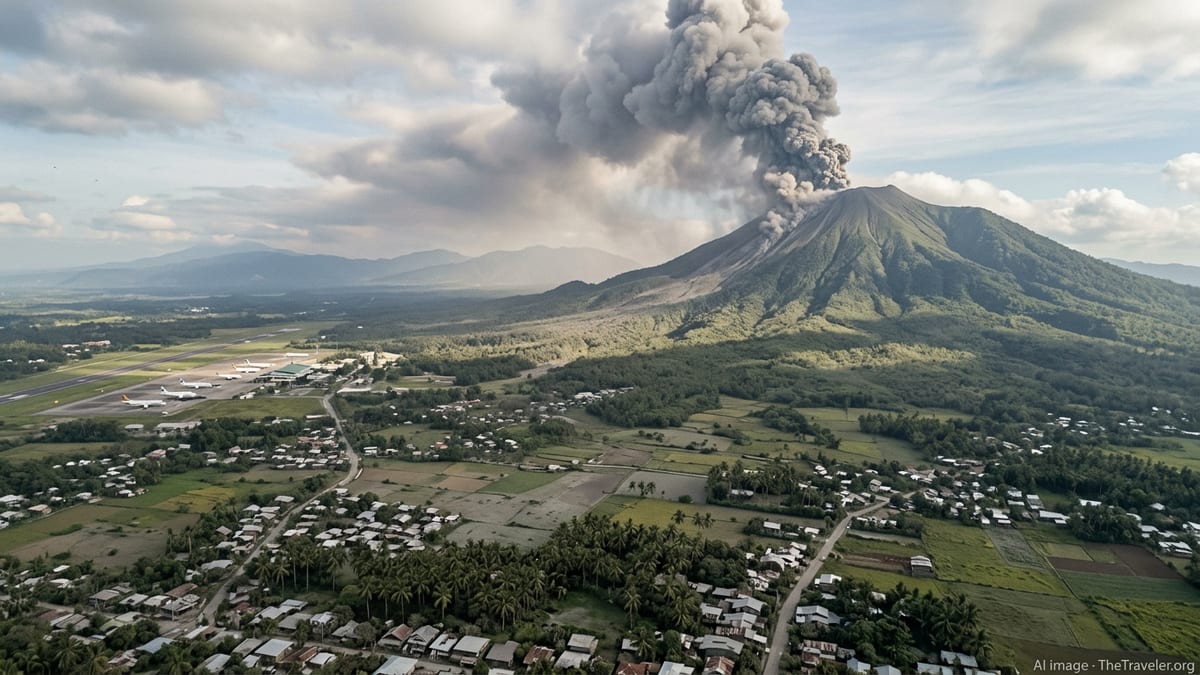
A powerful eruption at Mount Kanlaon on Negros Island in the central Philippines has hurled a dense ash plume roughly 5 kilometers into the sky, disrupting air travel, alarming local communities, and prompting fresh questions about how visitors should navigate this volatile but popular region.
Get the latest news straight to your inbox!
What Happened at Mount Kanlaon
Publicly available monitoring data and media coverage indicate that Mount Kanlaon, one of the most active volcanoes in the Philippines, produced an explosive eruption that drove a thick gray ash column to around 5,000 meters above the summit. The plume spread across parts of Negros Island, with reports of ashfall in communities downwind of the volcano.
The event is part of an ongoing eruptive episode that began in 2024, when the volcano shifted from background unrest to more frequent explosive activity. Summaries of recent activity note that similar eruptions have repeatedly sent ash several kilometers into the atmosphere and generated short pyroclastic density currents on the southern and southeastern slopes.
According to technical bulletins and situation reports released after earlier Kanlaon events, explosive phases are often sudden, accompanied by loud rumbling, lightning within the plume, and rapid darkening of skies in nearby towns. While this latest eruption fits that pattern, it stands out for the height of the plume and the breadth of the area experiencing volcanic ash.
Travelers already on Negros Island reported reduced visibility, a sulfurous odor, and a fine layer of ash on vehicles and buildings in some urban centers. Local advisories have repeatedly reminded residents and visitors to avoid the permanent danger zone around the volcano and to limit outdoor exposure during heavy ashfall.
Impact on Flights and Transport
The 5-kilometer ash plume immediately raised concerns for aviation, since volcanic ash can severely damage jet engines and limit visibility. Based on published coverage of this and previous Kanlaon eruptions, aviation authorities typically declare temporary danger zones in the airspace around the volcano, and pilots are advised to avoid routes that intersect the drifting ash cloud.
Airlines serving Negros Occidental and Negros Oriental have a record of delaying or canceling flights when ash is reported near approach paths or at cruising altitudes. Following the latest eruption, regional news reports and airline advisories pointed to schedule disruptions at airports that connect Negros with Manila, Cebu, and other domestic hubs.
Even when airports remain technically open, volcanic ash on runways and taxiways can slow ground operations as crews assess conditions and clear deposits. Visibility issues, air quality concerns for staff, and the need for additional inspections of aircraft exposed to ash can all contribute to extended turnaround times and knock-on delays.
On the ground, intercity buses and private vehicles crossing central Negros may encounter reduced visibility, slippery ash-covered roads, and localized detours, particularly near the higher slopes. Public information campaigns in the Philippines typically advise motorists to use headlights, slow down, and avoid driving during periods of dense ashfall when possible.
Conditions on Negros Island for Visitors
Negros Island is a major destination for both domestic and international travelers, known for its beaches, diving, heritage cities, and inland hiking routes. The Mount Kanlaon eruption has not shut the island to tourism, but it has led to localized restrictions and rapidly changing conditions in upland areas.
Recent disaster management summaries for earlier eruptions at Kanlaon describe temporary evacuations from villages near the permanent danger zone, the closure of hiking trails on the volcano’s flanks, and advisories against all forms of climbing or crater trekking. Travelers can expect similar measures to be considered or reimposed whenever eruptive activity intensifies.
Lowland urban centers, including major cities on Negros, generally remain functional during moderate eruptions, although air quality can briefly deteriorate when ash drifts overhead. Short-term closures of schools, outdoor attractions, and some public facilities have occurred in past events, but core services such as hotels, restaurants, and inter-island ferries have usually continued operating with adjustments.
For visitors staying in resort areas along the coast, the most noticeable effects are often hazier skies, occasional ashfall on outdoor furniture and pools, and impressive but distant views of the volcanic plume. However, wind direction can change conditions quickly, and accommodations nearer the central highlands are more likely to experience persistent ash and audible volcanic rumbling.
Safety Guidance for Tourists in the Region
Public advisories in the Philippines consistently emphasize that the primary hazard zone around Mount Kanlaon is off-limits even during periods of relative quiet. The permanent danger zone, typically extending several kilometers from the crater, is designed to keep people away from sudden explosions, ballistics, and pyroclastic flows that can occur with little warning.
Visitors already on Negros Island are widely encouraged, through open-source guidance and previous government bulletins, to stay informed via official hazard maps, broadcast bulletins, and local hotel or tour operator updates. Even if skies look relatively clear, climbing the volcano or approaching its upper slopes is strongly discouraged when alert levels are elevated.
During ashfall, simple precautions can significantly reduce health risks. Public health recommendations after past eruptions in the Philippines have included staying indoors when ash is heavy, closing windows and doors, using masks or cloth to cover nose and mouth when going outside, and avoiding strenuous outdoor exercise. Contact lens wearers are often advised to switch to glasses temporarily to prevent eye irritation.
For those traveling by road, visibility can deteriorate in ash-laden air and fine ash can make surfaces slick, especially when wet. Motorists are typically advised to slow down, maintain safe following distances, and use low-beam headlights. Travelers relying on hired vehicles or transfers may wish to confirm that drivers are monitoring announcements about closures or rerouted roads.
How to Plan or Adjust Upcoming Trips
For travelers with upcoming trips to Negros Island, the Mount Kanlaon eruption is a reason to plan carefully rather than to panic. Current and recent reporting on the volcano shows that activity can vary significantly from week to week, with short, intense eruptions followed by quieter intervals. This pattern means that conditions for tourism can improve relatively quickly once ash clears and hazard levels are reassessed.
Flexible itineraries offer the greatest resilience. Visitors may wish to prioritize lowland cultural sites, food and heritage tours, and coastal destinations that are farther from the volcano, while leaving upland hikes and nature excursions as options only if conditions clearly stabilize. Many tour operators in the Philippines outline contingency plans that shift guests away from affected zones during eruptions.
Travel insurance policies frequently treat volcanic eruptions as a named or specified peril, but coverage details differ widely. Public consumer guidance suggests that travelers check whether their policy addresses trip interruption due to airport closures, government advisories, or mandatory evacuations related to volcanic activity, and whether preexisting alerts affect eligibility for new bookings.
Prospective visitors are also encouraged to monitor airline notices and local tourism board statements closer to their departure date. Flight waivers, fee-free rebooking options, or voluntary change policies are sometimes introduced during significant volcanic disruptions, allowing travelers to shift travel dates or reroute through alternative gateways such as Cebu or Iloilo when necessary.