

More news on this day
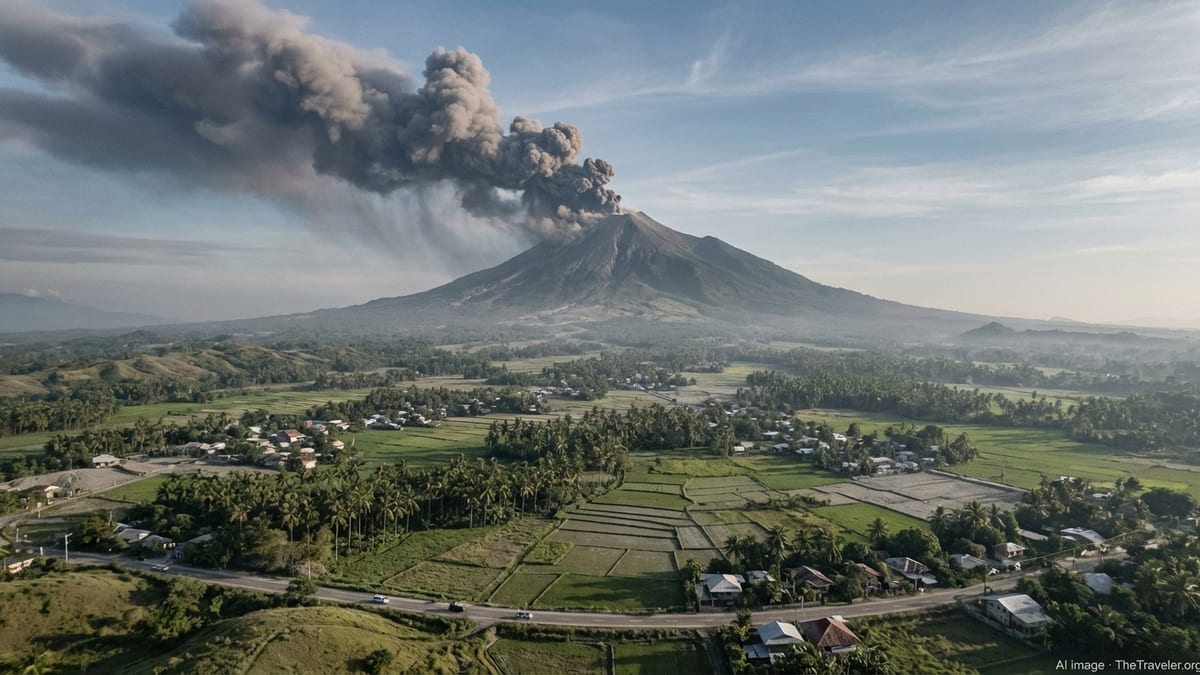
Mount Kanlaon, one of the most active volcanoes in the Philippines, erupted on February 19, 2026, hurling a towering ash plume roughly 2,000 meters (about 6,500 feet) into the sky and prompting fresh alerts for residents and travelers across Negros Island and beyond.
What Happened in Today’s Eruption
The Philippine Institute of Volcanology and Seismology reported a moderately explosive eruption at Mount Kanlaon’s summit crater late Thursday afternoon, local time. The event began at 4:38 p.m. and lasted around two minutes, but it was powerful enough to send a dark gray ash column about 2,000 meters above the crater, drifting mainly to the southwest with the prevailing winds.
Initial monitoring indicated that pyroclastic density currents, or fast-moving clouds of hot gas and volcanic debris, traveled down the southern and southwestern slopes of the volcano for up to one kilometer. These dangerous flows remained confined within the upper slopes, but their presence underscores the potential for sudden, hazardous activity even during brief eruptions.
Authorities emphasized that the eruption is part of an ongoing period of unrest rather than an isolated incident. Kanlaon has experienced repeated ash emissions, persistent degassing, and frequent volcanic earthquakes since its major eruptive phase in 2024, with additional explosive episodes recorded in 2025 and early 2026.
The current eruption is the first confirmed explosive event at Kanlaon this year and comes as local officials and communities were already operating with heightened vigilance due to the volcano’s recent activity history.
Current Alert Level and Official Warnings
As of Thursday evening, Kanlaon remains under Alert Level 2, indicating increased unrest. This status reflects a volcano that is restless and capable of producing sudden steam-driven or phreatic eruptions as well as magmatic explosions, but without clear evidence yet of a large-scale, imminent climactic eruption.
Authorities have reiterated a strict prohibition on entry into the four-kilometer-radius Permanent Danger Zone around the volcano. Within this zone, the risk from rockfalls, pyroclastic density currents, ballistic projectiles, and sudden ash blasts is considered extremely high, especially when weather conditions hide the summit or when seismic signals change rapidly.
Local disaster risk reduction councils across Negros Occidental and Negros Oriental have been advised to stay on standby for any escalation. While no mass evacuation orders had been issued at the time of writing, officials noted that contingency plans, shelters, and logistics arrangements remain in place after several rounds of evacuations in previous eruptive episodes.
Residents and visitors are urged to follow only official bulletins from national and local agencies. Rumors of higher alert levels or large-scale evacuations have circulated during past eruptions; authorities stress that any changes in alert status will be announced promptly through government channels and mainstream media.
Ashfall, Air Quality, and Health Precautions
Shortly after the eruption, civil defense officials confirmed that ash from Kanlaon’s plume was drifting to the southwest and could affect communities located downwind of the summit. Even light ashfall can reduce visibility, contaminate water sources, and irritate the eyes, nose, throat, and lungs, particularly for people with asthma or other respiratory conditions.
The Department of Health on the Negros Island Region has advised residents and travelers in affected areas to stay indoors as much as possible during ashfall, close doors and windows, and use damp cloths or tape to reduce ash ingress through gaps. People who must go outside are encouraged to wear well-fitted masks, such as surgical masks or cloth face coverings with multiple layers, and to protect their eyes with glasses or goggles.
Ash should be cleaned up carefully once it has settled, using damp methods to avoid stirring particles back into the air. Authorities recommend placing collected ash into sturdy bags or containers instead of sweeping it into drains, where it can clog infrastructure and worsen flooding. Roofs with heavy ash deposits may need to be cleared to prevent structural damage, but this should only be done when it is safe to access them.
Travelers passing through nearby towns may notice a faint sulfur smell or a light dusting of gray material on roads, vehicles, and buildings. While this can be unsettling, it is typical of eruptions such as today’s and, in most cases, manageable when standard ashfall precautions are observed.
Impact on Flights and Transportation
Volcanic ash poses a significant hazard to aviation, and Philippine civil aviation authorities have repeatedly issued advisories around Kanlaon during past eruptive phases. Today’s 2,000-meter plume and drifting ash have again prompted warnings to pilots to avoid airspace near the volcano, particularly at lower altitudes where the plume is concentrated.
Airlines serving airports on Negros Island and neighboring islands may adjust flight paths, delay departures, or temporarily cancel flights if ash clouds move into commonly used air corridors. Disruptions can ripple outward, affecting connections in Cebu, Iloilo, Bacolod, and even Manila, particularly on domestic routes that pass near central Visayas airspace.
Overland travel is also susceptible to the effects of ashfall. Reduced visibility, slippery road surfaces, and the potential for mudflows during heavy rain may complicate driving conditions on the slopes of Kanlaon. Local governments may restrict access to some mountain roads or hiking trails, and tour operators are likely to suspend trekking, camping, or summit excursions around the volcano for safety reasons.
Travelers with upcoming journeys through the region should check with airlines and bus companies for the latest operational updates and give themselves extra time for transfers and check-in. Those already on Negros Island should closely follow local advisories and be prepared for temporary detours or schedule changes.
What Travelers in the Region Should Do Right Now
For visitors currently in Negros Occidental, Negros Oriental, or nearby islands, the immediate priority is situational awareness. Travelers should determine their distance from Mount Kanlaon and whether they are within areas that have experienced ashfall or previous evacuations during earlier eruptions.
Hotels, guesthouses, and tour guides are valuable sources of local information and typically receive updates from municipal disaster offices. Guests are advised to ask front desk staff about any current restrictions, shelter locations, and emergency contact numbers. It is also wise to keep copies of identification and travel documents ready, along with a small “go bag” stocked with water, basic food, medication, masks, and a flashlight in case conditions change quickly.
Those planning to hike, bike, or drive into rural or upland areas near the volcano should postpone such activities until authorities declare it safe. Even if skies appear clear, the risk of sudden eruptions, localized ashfall, or access road closures remains elevated while the volcano is restless.
Travel insurance policies should be reviewed to understand coverage for natural hazards and trip disruptions. Some policies include specific provisions for volcanic activity, including cancellations, delays, and emergency evacuation; others may not. Travelers may wish to document any advisories or disruptions they experience, which can help support later claims.
How This Eruption Fits Into Kanlaon’s Recent Activity
Mount Kanlaon’s latest eruption is part of a broader pattern of sustained volcanic unrest that has unfolded over the past two years. A major explosive eruption in June 2024 sent ash plumes as high as five kilometers, prompting a rise in alert level, temporary evacuations, and extended degassing from the summit crater. Subsequent months saw repeated ash emissions and high sulfur dioxide output, indicating that magma remained relatively near the surface.
In late 2024 and through 2025, Kanlaon produced further ash plumes ranging from several hundred to several thousand meters high, with episodes lasting from minutes to hours. These events brought fluctuating alert levels, occasional evacuations, and a steady stream of advisories warning of possible larger eruptions. Ground deformation measurements and seismic monitoring confirmed that the volcano’s internal plumbing system remained active and evolving.
By late 2025, authorities noted that while some parameters had eased compared with the peak crises, the volcano continued to emit ash intermittently and to generate volcanic earthquakes, justifying the continued imposition of a permanent danger zone and close scientific surveillance. The eruption on February 19, 2026, reinforces the picture of a volcano in an ongoing, multi-year phase of unrest rather than one that has fully returned to quiet background levels.
For travelers, this means Kanlaon is not a one-off event but a dynamic landscape feature that may influence trip planning in the region for some time. While large, destructive eruptions remain relatively rare, smaller explosions and ash emissions can still disrupt travel and pose localized hazards.
Travel Planning for Negros and the Central Philippines
Negros Island and the wider central Philippines remain important destinations for domestic and international tourists, known for diving, beaches, cultural heritage, and highland landscapes. Even during volcanic unrest, many parts of the region continue to operate normally, and tourism does not stop entirely. The key is flexible, informed planning that accounts for changing conditions around Mount Kanlaon.
Travelers considering trips to Bacolod, Dumaguete, or nearby islands such as Cebu and Panay should monitor national weather and hazard bulletins in the days leading up to their journey. Tourism offices, reputable tour operators, and accommodation providers can explain which attractions are fully open, which have limited access, and which are currently off-limits due to volcanic risks.
It is sensible to build flexibility into itineraries, allowing extra days in transit hubs in case flights or ferries are disrupted by ash clouds or related weather. Booking accommodations with reasonable change or cancellation policies can reduce financial stress if plans must be adjusted at short notice. Travelers who wish to include volcano viewpoints or highland treks should ensure that their guides are licensed, follow official safety guidance, and are prepared to change plans if alerts are raised.
Those who value certainty above all may wish to focus on coastal and island destinations that are farther from the volcano and less likely to experience ashfall. Even then, the interconnected nature of domestic flights and ferries in the central Philippines means that activity at Kanlaon can still have indirect effects, underscoring the importance of staying updated throughout a trip.
Staying Informed as the Situation Evolves
Volcanic activity can change rapidly, sometimes with limited warning. For travelers, staying well informed is as important as packing the right gear. Official bulletins from scientific agencies, civil defense offices, and local governments remain the most reliable sources on hazard levels, restricted zones, and any evacuation orders.
News outlets with reporters on the ground can provide valuable context, including interviews with experts and local authorities, as well as visual coverage that helps explain the scale of ash plumes and their impacts on nearby communities. However, travelers are encouraged to verify any alarming social media posts against official advisories to avoid confusion and unnecessary panic.
Mobile connectivity in many parts of Negros Island and neighboring regions is sufficient for receiving push alerts and checking updates throughout the day. Visitors should ensure their devices are charged, consider carrying a power bank, and save key emergency numbers, including those for their embassy or consulate if traveling from overseas.
For now, today’s eruption at Mount Kanlaon has heightened awareness but not triggered the most severe emergency measures. How the situation evolves in the coming days will depend on the volcano’s behavior as well as prevailing weather. Travelers who remain alert, follow guidance, and adapt their plans as necessary can still experience the many attractions of the central Philippines while respecting the power and unpredictability of one of the country’s most active volcanoes.