

More news on this day
A powerful eruption of Mount Kanlaon on Negros Island has hurled a towering ash plume roughly 5 kilometers into the sky, startling communities across the central Philippines and disrupting air travel just as the region heads into a busy travel period.
Get the latest news straight to your inbox!
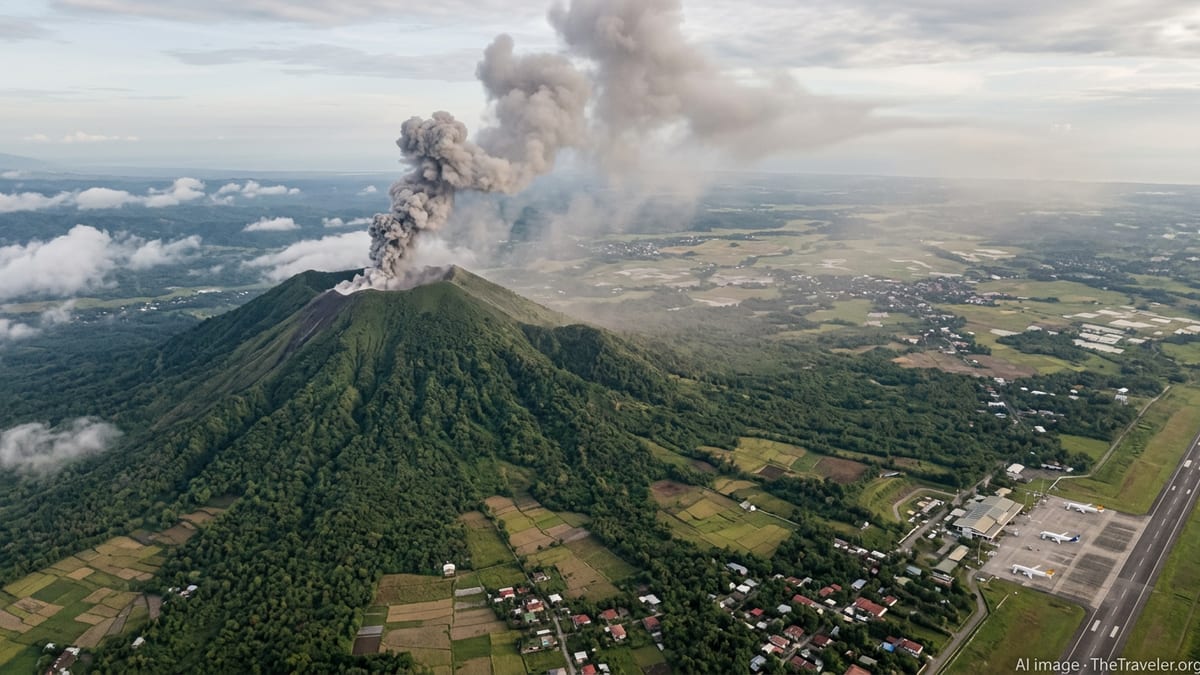
Explosive Eruption Stuns Negros Island
Publicly available monitoring data and local coverage describe a sudden, moderately explosive event at Mount Kanlaon, one of the Philippines’ most active volcanoes, with an ash column rising about 5,000 meters above the summit crater. The plume spread laterally over parts of Negros Occidental and Negros Oriental, turning late afternoon skies gray and dusting nearby towns with fine ash.
Reports indicate that coarse ashfall reached communities on the western and southern flanks of the volcano, including areas around Canlaon City, La Carlota, La Castellana and Bago. Residents shared images of the eruption column dominating the skyline, while emergency bulletins urged people to stay indoors, use masks, and avoid unnecessary travel near the volcano due to reduced visibility and poor air quality.
Philippine hazard bulletins classify Kanlaon as a restive stratovolcano with a history of short, ash-rich explosions. The latest activity fits that pattern, with a brief but intense eruption phase, a tall eruption column and localized ashfall, followed by continued emissions at lower heights. For travelers, the event is a reminder that Negros’ dramatic volcanic landscapes are also dynamic natural systems that can change conditions rapidly.
Flight Disruptions and Changing Air Routes
According to published aviation notices and news coverage, the 5 kilometer ash plume and drifting cloud triggered temporary disruptions across central Philippine air corridors. Ash in the atmosphere can damage jet engines and impair visibility, so precautionary measures included rerouting aircraft around the plume and, in some cases, suspending operations on affected routes.
Initial reports reference cancellations and delays on flights serving Bacolod and other airports in the Visayas, with ripple effects as aircraft and crews were repositioned. Some Manila and Cebu departures bound for Negros and nearby islands were reportedly held or rebooked as airlines adjusted to updated ash advisories and wind data.
Travelers transiting through regional hubs were advised by carriers and airport announcements to expect longer check in times, potential last minute gate changes and the possibility of diversions if ash drifted into established flight paths. While major international gateways remained open, schedule changes on domestic segments have been the main concern for visitors heading to or leaving Negros and neighboring islands.
As conditions evolve, publicly available information from aviation and meteorological agencies suggests that airspace restrictions tend to be targeted and temporary, focused on the immediate vicinity of the plume and its projected path. Still, anyone connecting to smaller airports in the central Philippines should build extra time into itineraries and keep digital bookings handy for quick rebooking.
Impact on Tourism Around Mount Kanlaon
Tourism activity in the immediate vicinity of Mount Kanlaon has been among the first to feel the impact. Local government advisories and regional media reports describe the suspension of hiking, camping and other outdoor recreation in designated hazard zones, including popular trails that normally bring trekkers into the volcano’s upper slopes and crater area.
Guided treks, nature tours and farm stays that market views of Kanlaon’s forested cone have paused operations until conditions stabilize and updated safety guidance is issued. Some accommodation providers in upland communities have shifted focus to short term stays for stranded travelers or visiting family members of residents, rather than leisure guests.
Elsewhere on Negros Island, many attractions remain accessible. Urban landmarks in Bacolod and Dumaguete, coastal resorts and heritage sites outside the ashfall footprint are reported to be operating largely as normal, aside from potential airline schedule knock on effects. Visitors already in these cities are primarily dealing with hazier skies and intermittent advisories about air quality rather than direct volcanic hazards.
Travel media and local tourism offices emphasize that Kanlaon related restrictions are highly localized, centered on the volcano’s slopes and river valleys where lahars or secondary flows could occur if heavy rains follow the eruption. For travelers, this means itineraries that focus on beaches, food, culture and city breaks on Negros can often proceed with adjustments, while summit hikes and close range volcano experiences are temporarily off the table.
What Travelers Need to Know Right Now
For anyone planning a trip to Negros or transiting through the central Philippines, the main considerations are flight reliability, localized safety measures and flexible route planning. Airlines serving Bacolod, Dumaguete and nearby airports typically update passengers via email, text and terminal displays, so staying closely connected to official booking channels is essential.
Publicly available hazard maps and bulletins outline a permanent exclusion zone around Kanlaon’s summit, where entry is not permitted even in quieter periods. During and after an eruption with a tall ash plume, temporary restrictions can expand to include hiking trails, farm roads and sections of national parks on the volcano’s slopes. Travelers should avoid entering any posted danger zones, even if paths appear open, as ash covered ground can conceal rockfall and sudden erosion.
Health advisories focus on limiting exposure to airborne ash, which can irritate eyes and lungs. Visitors caught under ashfall are encouraged to use well fitting masks, cover skin where possible and avoid driving in heavy ash, as it can quickly reduce visibility and make road surfaces slippery. In towns where ash settles, simple precautions such as keeping windows closed and brushing ash away from doorways can help keep accommodation more comfortable.
Those planning inter island trips that combine Negros with Cebu, Panay or smaller islands may wish to monitor news summaries and airline notices for any wider regional effects, especially if winds shift. At present, available reporting suggests that impacts are most intense close to Kanlaon, with broader disruptions dependent on the evolving behaviour of the ash plume and weather systems.
Planning Ahead: Flexibility Is Essential
Travel planners observing Mount Kanlaon’s activity highlight the value of flexibility when visiting active volcanic regions. Fully refundable or changeable fares, accommodation with lenient cancellation policies and travel insurance that covers natural hazards can all reduce the stress of last minute changes driven by eruptive episodes.
Itineraries built around a single key activity, such as a summit hike or dawn trek to a crater rim, are particularly vulnerable to disruption when eruptions occur. Visitors are increasingly encouraged to view such experiences as optional highlights rather than guaranteed fixtures, pairing them with alternative activities like food tours, coastal excursions or cultural visits that remain viable if mountain access is restricted.
For long haul travelers, connecting through major hubs such as Manila or Cebu with at least several hours of buffer time can provide an extra margin of safety if domestic flights into Negros are delayed by ash related route adjustments. Keeping printed copies or offline versions of booking details can also help when mobile connectivity is limited during busy periods at regional airports.
While the latest 5 kilometer ash plume from Mount Kanlaon has startled residents and reshaped travel plans in the short term, published observations describe these eruptions as episodic rather than continuous. For now, anyone heading to Negros Island should stay informed, adopt a flexible mindset and be prepared to adapt on the ground as the volcano’s behaviour and local advisories continue to evolve.