

Rising above the granite hills and prairie of southwestern Oklahoma, Mount Scott offers some of the most expansive views in the state, along with reliable wildlife sightings and one of the region’s classic scenic drives.
Perched within the Wichita Mountains Wildlife Refuge near Lawton and Medicine Park, this accessible peak draws casual sightseers, hikers, cyclists and photographers in every season. Understanding its viewpoints, wildlife habitat and evolving road access rules will help you make the most of a visit while respecting this unique protected landscape.
Mount Scott in Context
Mount Scott is a prominent granite peak in the Wichita Mountains Wildlife Refuge of southwestern Oklahoma, north of Lawton and just above the small resort town of Medicine Park. At roughly 2,460 feet in elevation, it is not among the tallest peaks in the American West, yet it stands well above the surrounding prairie and low hills. This height difference creates a true sense of relief and makes the summit one of the most commanding publicly accessible viewpoints in the state.
The mountain sits inside a federal wildlife refuge managed by the U.S. Fish and Wildlife Service, which protects bison, Texas longhorn cattle and a mosaic of mixed-grass prairie, granite outcrops and small lakes. That status shapes every aspect of a visit, from where you can drive or park to when you may hike along the paved summit road. Mount Scott is more than a roadside overlook; it is part of a carefully managed ecosystem where visitor access must be balanced with habitat protection and public safety.
For travelers, Mount Scott often serves as both introduction and finale to a day in the refuge. The three mile scenic drive to the top, plus the pullouts and boulder fields near the summit, create a natural focal point for sunrise and sunset viewing. Many visitors pair time on the mountain with wildlife watching on the refuge loop roads or short walks near lakes such as Quanah Parker and Lost Lake.
Because the name Mount Scott also appears in Oregon, Washington and Canada, it is worth noting that this overview focuses specifically on Mount Scott in Oklahoma’s Wichita Mountains Wildlife Refuge, where a paved road, broad parking area and open rock slabs make the summit especially approachable for a wide range of visitors.
Summit Views and Scenic Character
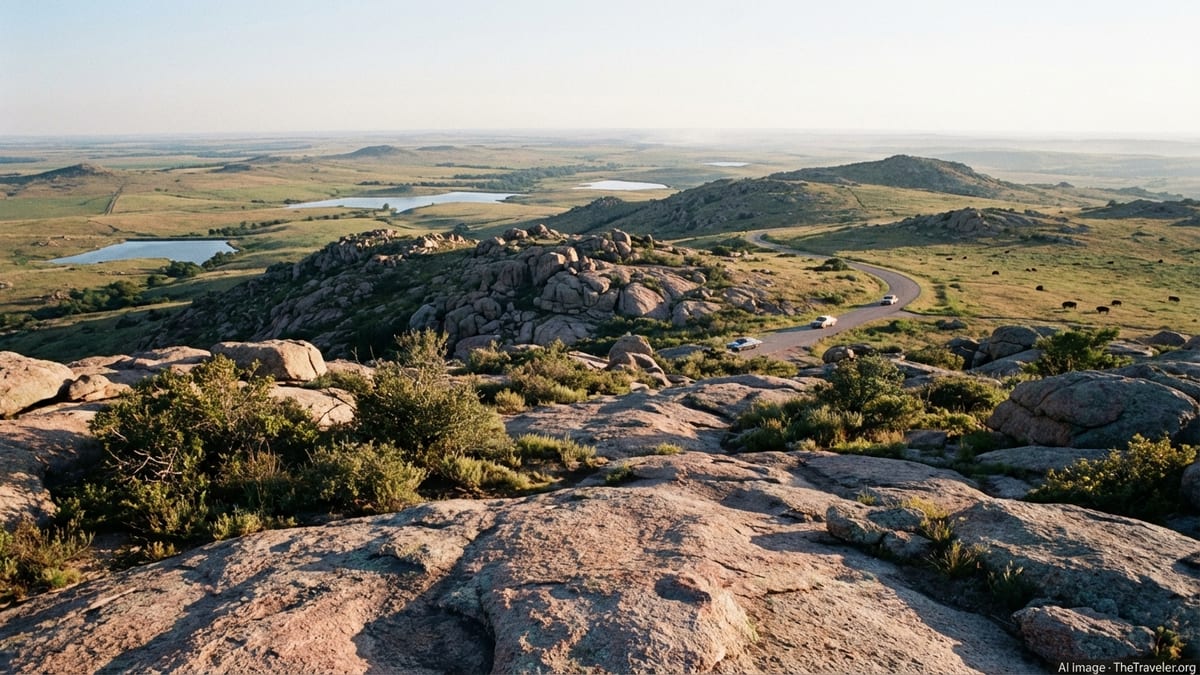
The main reason most people ascend Mount Scott is the view. From the summit area, the 360 degree panorama takes in the rounded granite domes of the Wichita Mountains, the checkerboard of prairie and oak woodland, and the wide plains stretching toward Lawton and the distant horizon. On clear days the sense of distance is striking, with subtle shifts in color and texture as the landscape recedes.
Around the parking lot and along short paths, large granite slabs and boulder piles create natural terraces. Visitors can step carefully onto these rocks to frame their own compositions of lakes, cliff faces and winding roads. To the west and north, smaller peaks and ridges stack into layers, while to the east the land drops away more gently toward farmland and the city grid of Lawton. The contrast between rugged rock and open plains is a defining part of Mount Scott’s appeal.
Light changes quickly on the summit, especially around sunrise and sunset. Early mornings often bring soft pastel tones, with long shadows stretching across the granite and low fog sometimes pooling in the valleys below. Evenings tend to be more dramatic, with the sun dropping behind broken ridgelines and warm light washing across the boulders. Wind is common, and on blustery days the summit can feel much cooler than the refuge below, so layers are helpful even in warmer months.
Despite its popularity, Mount Scott still offers moments of quiet, especially on weekdays or during cooler seasons. Step away from the immediate parking area and you can often find a patch of rock or a low ledge with an unhindered view and little crowding. These quiet corners are ideal for slow travel pursuits such as sketching, journaling or simply watching the sky change.
Wildlife and Natural Environment
Mount Scott rises from one of the oldest mountain ranges in North America, a landscape shaped by ancient igneous rock and long weathering. The granite domes, thin soils and patches of prairie support a surprising diversity of plant and animal life. While the summit area itself is mostly rock and hardy vegetation, the lower slopes and nearby refuge provide context for the wildlife that visitors sometimes glimpse from the road.
The Wichita Mountains Wildlife Refuge is known for free roaming American bison and a managed herd of Texas longhorn cattle. Although these large animals do not typically graze right on the summit, they are often visible from the Mount Scott road or from viewpoints along the way. Seeing bison dots on the grasslands far below while standing among granite boulders adds a distinctly Great Plains character to the visit. White tailed deer are also common in the refuge and may occasionally appear near the base of the mountain around dawn or dusk.
Birdlife is varied. Turkey vultures and other raptors often ride the thermals around the peak, circling at eye level or slightly below the summit. Smaller songbirds favor the scrub and scattered trees on the slopes, while waterfowl gather on the refuge lakes that you can spot from above. During migration seasons, keen observers may notice an uptick in bird activity, though conditions change from year to year.
Reptiles and smaller creatures round out the picture. Snakes, including rattlesnakes and copperheads, inhabit the broader refuge and can make use of the rock crevices and sunny ledges that characterize Mount Scott’s geology. For this reason, remaining on established paved surfaces or very near the parking and overlook areas is wise, especially in warmer months. Lizards, insects and a variety of hardy plants adapted to shallow, rocky soils all contribute to the mountain’s subtle but resilient ecosystem.
Driving the Mount Scott Scenic Road
Access to the summit of Mount Scott is via a paved, roughly three mile road that climbs in a series of curves from near Medicine Park up to the large parking area at the top. The drive is short but engaging, with continuous elevation gain and several tight turns. It serves as both transportation and attraction, functioning as a scenic drive with broad views and occasional pullouts along the way.
The road is relatively narrow in places, with no shoulders on some curves and steep drop offs beyond the guardrails. Drivers should expect to share the pavement with cyclists and, during designated hours, pedestrians using the road as a climbing route. Speeds are posted conservatively, and keeping to them is important both for safety and to preserve the relaxed, scenic nature of the experience. Passing opportunities are limited, so patience is essential during busier periods.
At the summit, the road opens into a loop and parking area that can become crowded on weekends and holidays. Spaces usually turn over regularly as many visitors stop for photos and a short walk rather than long stays. On quieter days, drivers may have their pick of spaces along the loop, allowing for easy access to different vantage points without needing to move the vehicle far.
The surface conditions of the Mount Scott road can change over time as weather and age affect the historic pavement and supporting structures. Refuge managers periodically adjust access to accommodate maintenance, repairs or safety concerns. Travelers should treat any current signage at the gate and along the roadway, as well as official refuge information, as the definitive word on what is open on a given day.
Current Road Access and Hiking Rules
Because Mount Scott lies within a wildlife refuge and uses a historic roadway, access rules are more detailed than at many roadside viewpoints. In recent years, the refuge has used time based schedules to balance vehicle traffic with people who prefer to walk or cycle the three mile climb. These schedules can evolve, especially after maintenance work or following safety reviews, so it is wise to confirm current details shortly before a visit.
As a general pattern, motor vehicles typically have broad access to the Mount Scott road between sunrise and sunset, with some periods reserved primarily or exclusively for motorists and others set aside for hikers and cyclists. On certain weekends or holiday periods, refuge managers have historically given hikers dedicated morning hours when the gate is closed to vehicles, allowing people to ascend on foot without having to navigate traffic on the narrow pavement. At other times, shared use is the norm, and pedestrians walk on the same surface as cars and bicycles.
Hiking directly on the paved road has become a popular way to reach the summit, providing a consistent grade and open views rather than a conventional dirt or rock trail. However, group sizes are limited on the roadway to prevent crowding, and hikers are expected to stay alert, walk in single file where practical, and follow all posted guidance. Off road scrambling on the steep, broken granite outside designated areas is discouraged or prohibited, both to protect fragile vegetation and to reduce the risk of accidents that can strain rescue resources.
Weather and seasonal conditions also influence access. During periods of extreme heat, the refuge has at times restricted midday hiking hours due to the risk of heat illness and the difficulty of search and rescue in high temperatures. In winter storms or during icy conditions, vehicle access to the Mount Scott road may be temporarily closed even if the rest of the refuge remains open, with pedestrians urged to use extra caution on untreated, slick surfaces. Because these changes are reactive and situation specific, checking the latest official updates is always prudent.
Experiencing Mount Scott on Foot or by Bicycle
For many visitors, walking or cycling up the Mount Scott road is as rewarding as standing at the summit itself. The three mile climb offers steady elevation gain without technical obstacles, making it a favored workout route for local runners and road cyclists. The constant curves reveal new angles on the surrounding hills, lakes and prairie, and frequent glances back down the road underscore how quickly the landscape drops away below.
On foot, the ascent can be moderately strenuous, particularly in warm weather, but the paved surface and defined line of the road reduce navigation challenges. Most reasonably fit walkers can reach the top in under two hours at an unhurried pace, with plenty of opportunities to stop at pullouts or wider shoulders to catch breath and enjoy the view. Because the road is shared with vehicles at many times, reflective clothing, small headlamps in low light and alert walking habits all add an extra margin of safety.
Cyclists typically approach Mount Scott from nearby towns or parking areas in the refuge, tackling the climb as an out and back or part of a longer loop. The grade is sustained enough to feel like a true mountain ascent but short enough to be accessible to a wide range of riders. Wind, especially near the top, can add challenge and affect descent speeds. Helmets, good brakes and controlled riding are essential, as the curves and potential gravel patches in pullouts can complicate fast downhill runs.
Whether on foot or on a bike, timing your outing around designated non motorized access windows, when available, can significantly improve the experience. Quieter roads, cooler temperatures in the early morning, and the soft light of sunrise all combine to highlight the mountain’s scenery while reducing conflicts with traffic. Carrying water and sun protection is crucial, as shade is limited along most sections of the roadway.
Safety, Seasons and Practical Tips
While Mount Scott is relatively accessible, it still demands basic preparation. The combination of exposure, elevation gain and changing weather can catch visitors off guard. Summer days in southwestern Oklahoma can be hot and humid, with temperatures that make mid afternoon hiking or running on the pavement risky. Dehydration and heat related illnesses are recurrent concerns for refuge staff, who have responded with temporary restrictions during periods of intense heat.
Visitors should bring more water than they think they will need, along with hats, sunscreen and light, breathable clothing. Even for those driving, short walks on the exposed summit rocks can feel intense in full sun. In colder months, strong winds on the peak can lower the apparent temperature significantly compared with the refuge below. A windproof layer and gloves can make the difference between a quick, uncomfortable stop and a relaxed sunset viewing session.
Wildlife safety is another key consideration. Bison and longhorns, while a highlight of the refuge, are large and unpredictable animals that require generous space. They may appear near the lower sections of the road or in adjoining pastures visible from pullouts. Approaching them on foot, blocking their path or trying to pose for close photographs is dangerous. Smaller hazards include venomous snakes in rocky or grassy areas and insects such as ticks and chiggers that thrive in warmer months. Staying on paved areas, checking yourself for ticks after walks and wearing closed shoes help reduce risks.
Finally, parking and traffic etiquette shape the overall atmosphere on Mount Scott. It is important not to stop in the roadway, block the gate or park in undesignated spots along narrow curves. Yielding space to emergency vehicles, observing posted speed limits and treating the mountain as a shared resource all contribute to safer, more enjoyable visits for everyone who comes to admire the view.
The Takeaway
Mount Scott offers an accessible taste of high country drama in the middle of the Oklahoma plains. Its summit views stretch across lakes, granite domes and prairie, tying together the varied landscapes of the Wichita Mountains Wildlife Refuge in a single sweeping panorama. Bison herds, circling vultures and hardy plants on the rocky slopes remind visitors that this is first and foremost a protected natural area, not just a roadside overlook.
Whether you drive to the top for a quick sunset, hike the paved road in the quiet of an early morning, or include Mount Scott as one stop on a full day of wildlife watching in the refuge, the mountain rewards unhurried attention. Respecting evolving road access rules, preparing for conditions and keeping a light footprint on the land ensure that future travelers can enjoy the same open vistas and sense of space.
For travelers seeking a destination that combines big sky views with relatively easy access, Mount Scott stands out. It is a place where you can watch raptors ride the wind at eye level, see bison grazing on distant hills and trace the curve of a scenic road that has carried generations of visitors to the same lookout. With a bit of planning and respect for the refuge’s guidelines, your time on Mount Scott can be a highlight of any journey through southwestern Oklahoma.
FAQ
Q1. Where is Mount Scott located?
Mount Scott is in southwestern Oklahoma inside the Wichita Mountains Wildlife Refuge, north of Lawton and close to the town of Medicine Park.
Q2. How do you reach the summit of Mount Scott?
Most visitors drive a paved three mile scenic road to the top, while others walk or cycle the same roadway during designated access times.
Q3. What kind of views can I expect from the summit?
The summit offers broad 360 degree views of granite peaks, prairie, small lakes and the distant plains, especially impressive at sunrise and sunset.
Q4. Is there a hiking trail separate from the road?
There is no formal dirt trail to the summit. Hiking is usually done on the paved roadway itself, with off road scrambling discouraged in most areas.
Q5. What wildlife might I see from Mount Scott?
Visitors often see bison and longhorn herds on nearby grasslands, along with birds of prey, songbirds and smaller animals throughout the refuge.
Q6. Are there specific hours when the Mount Scott road is open?
Access is typically limited to daylight hours, and managers sometimes set time based schedules for vehicles, hikers and cyclists that can change over time.
Q7. Is the drive suitable for all vehicles?
The paved Mount Scott road is steep and curving but generally suitable for standard passenger vehicles driven carefully at posted speeds.
Q8. When is the best time of year to visit?
Spring and autumn usually offer milder temperatures and clearer skies, though Mount Scott can be visited year round when the road is open and conditions are safe.
Q9. Do I need to pay a fee to visit Mount Scott?
The Wichita Mountains Wildlife Refuge has traditionally not charged an entrance fee, but visitors should verify current policies before traveling.
Q10. What safety precautions should I take on Mount Scott?
Bring water and sun protection, watch for traffic if walking or cycling, give wildlife plenty of space and follow all posted refuge rules and closures.