

More news on this day
Mozambique’s national carrier LAM is deepening its relationship with Boeing in a bid to secure its aviation future, aligning fleet renewal and safety initiatives with long-term growth in one of Africa’s most dynamic but challenging air transport markets.
Get the latest news straight to your inbox!
A Strategic Turnaround Amid Financial Turbulence
The new partnership between LAM and Boeing is emerging against the backdrop of a complex restructuring process for the Mozambican flag carrier. Publicly available information shows that LAM has faced years of financial strain, including accumulated losses and state capital injections designed to stabilise operations and reduce debt. At the same time, the airline has been reshaping its fleet strategy, seeking to move away from short-term wet leases and towards more sustainable long-term solutions.
Reports indicate that LAM has been working under a government-led reform agenda that includes recapitalisation, workforce adjustments and a renewed focus on cost efficiency. Within this framework, closer technical and strategic engagement with Boeing is being positioned as one pillar of a broader turnaround plan, rather than an isolated procurement decision. The emphasis is on building capabilities and processes that can support consistent, reliable operations over the next decade.
For Mozambique, a stable national carrier is closely tied to economic priorities such as tourism development, connectivity for remote provinces and support for major energy and mining projects. A structured collaboration with a major airframe manufacturer is therefore being framed as part of a national infrastructure story, not just an airline fleet upgrade.
Aligning With Boeing’s Long-Term View of African Growth
According to recent industry outlooks released by Boeing, Africa’s passenger traffic is forecast to grow around 6 percent annually through the mid-2040s, with the continent’s commercial fleet expected to more than double over that period. These projections highlight the scale of opportunity for African airlines that can successfully modernise fleets, strengthen safety cultures and tap into rising intra-African and international demand.
LAM’s move to formalise and deepen its partnership with Boeing comes at a time when many African carriers are weighing similar choices, often balancing relationships with both US and European manufacturers. For Mozambique’s flag carrier, closer links with Boeing are understood to span not only potential future acquisitions in the 737 family but also access to technical expertise, training and data-driven performance tools that can improve day-to-day operations.
By aligning itself with the growth narrative outlined in Boeing’s commercial market outlook, LAM is signalling that it intends to be an active participant in Africa’s aviation expansion rather than a marginal player. The choice of a structured partnership is also intended to send a message to investors, tourism stakeholders and regional partners that the airline is planning beyond short-term crisis management.
Safety, Training and Operational Reliability at the Core
While aircraft orders tend to grab headlines, the emerging LAM–Boeing relationship is also focused on the less-visible work of safety enhancement, crew development and maintenance reliability. Publicly available information on similar Boeing partnerships across Africa indicates that these arrangements frequently include pilot training support, maintenance practices aligned with global standards and data analytics services that monitor fuel burn, on-time performance and technical events.
For LAM, which has historically managed a small and mixed fleet and has at times relied on leased aircraft to plug capacity gaps, access to such tools is particularly significant. A structured engagement with Boeing gives the airline a pathway to standardise procedures across its operations, reduce unplanned cancellations and improve passenger confidence in its schedules. This is especially relevant on Mozambique’s long domestic routes and key regional corridors where reliability has a direct impact on business travel and tourism flows.
Training is another critical dimension. As LAM contemplates a future in which more of its flying could be done with Boeing narrowbody aircraft, investment in pilots, engineers and flight operations personnel becomes a prerequisite. Industry coverage of Africa-wide initiatives suggests that manufacturers are increasingly involved in supporting local training ecosystems, and LAM’s partnership is expected to tap into that trend by expanding access to simulators, technical courses and modern safety management methodologies.
Fleet Modernisation and Network Ambitions
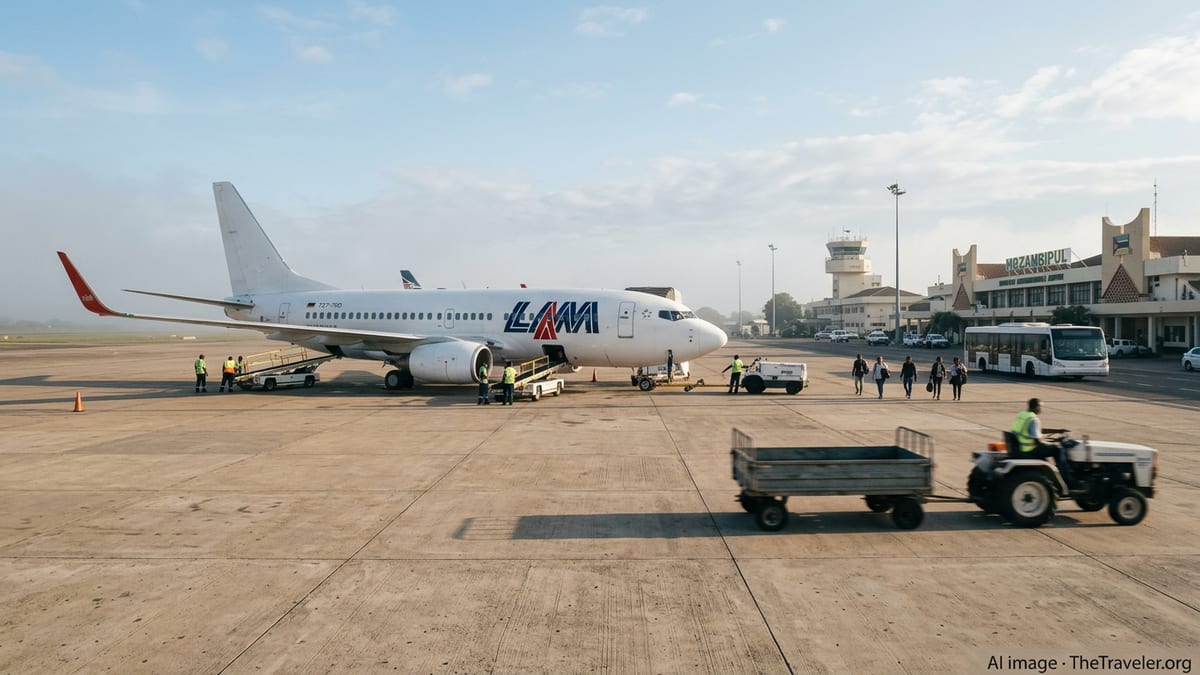
In recent years, LAM has operated a compact fleet combining regional jets and turboprops, while periodically leasing Boeing narrowbodies and even freighters to serve both passenger and cargo demand. Reports indicate that the airline has been evaluating the acquisition of additional Boeing 737-700 aircraft, alongside other types, as part of a long-term fleet plan that prioritises fuel efficiency and lower maintenance costs.
Closer cooperation with Boeing is expected to provide LAM with more structured fleet planning support, including scenario analysis for different route networks and growth assumptions. This can help the carrier decide where larger narrowbody aircraft make economic sense and where smaller regional jets remain the better fit. For Mozambique’s tourism sector, that could translate into more reliable links between Maputo, coastal resort gateways and neighbouring regional hubs, improving access for international visitors.
Network ambitions extend beyond leisure travel. Mozambique’s resource-rich northern regions, as well as cross-border connections to South Africa and other Southern African Development Community markets, present opportunities for LAM to carry both business travellers and time-sensitive cargo. A modernised Boeing-supported fleet gives the airline a more competitive platform to pursue such routes, particularly if supported by improved maintenance, ground handling and schedule discipline.
Positioning Mozambique Within a Competitive African Landscape
Across Africa, national carriers are actively courting manufacturer partnerships as they seek to survive rising fuel costs, regulatory demands and intense competition from larger regional players and Gulf super-connectors. In this environment, Mozambique’s decision to anchor part of LAM’s strategy in a structured relationship with Boeing is also a signal of intent about the country’s place on the continent’s aviation map.
According to industry analysis, the success of such partnerships often depends on how effectively airlines integrate manufacturer support into their own governance and management practices. For LAM, that means aligning Boeing-backed initiatives on safety, training and fleet renewal with transparent financial oversight and clear performance targets. The airline’s ongoing restructuring, including recapitalisation and efforts to streamline its cost base, will be critical in turning technical collaboration into sustainable results.
As Africa’s air transport market moves into a new growth cycle, LAM’s engagement with Boeing offers Mozambique a chance to rebuild confidence in its national carrier and to position the country as a more reliable gateway for tourism and trade. The coming years will show whether this partnership can translate ambitious plans into a stable, efficient airline that connects Mozambican cities and the wider region with greater consistency and safety.