

More news on this day
European cruise heavyweights MSC Cruises, AIDA Cruises and Costa Cruises are rapidly unwinding Middle East and Red Sea programs as security jitters and shipping disruptions intensify across the region, triggering a new wave of last minute cancellations and complex rebooking headaches for winter 2025 and beyond.
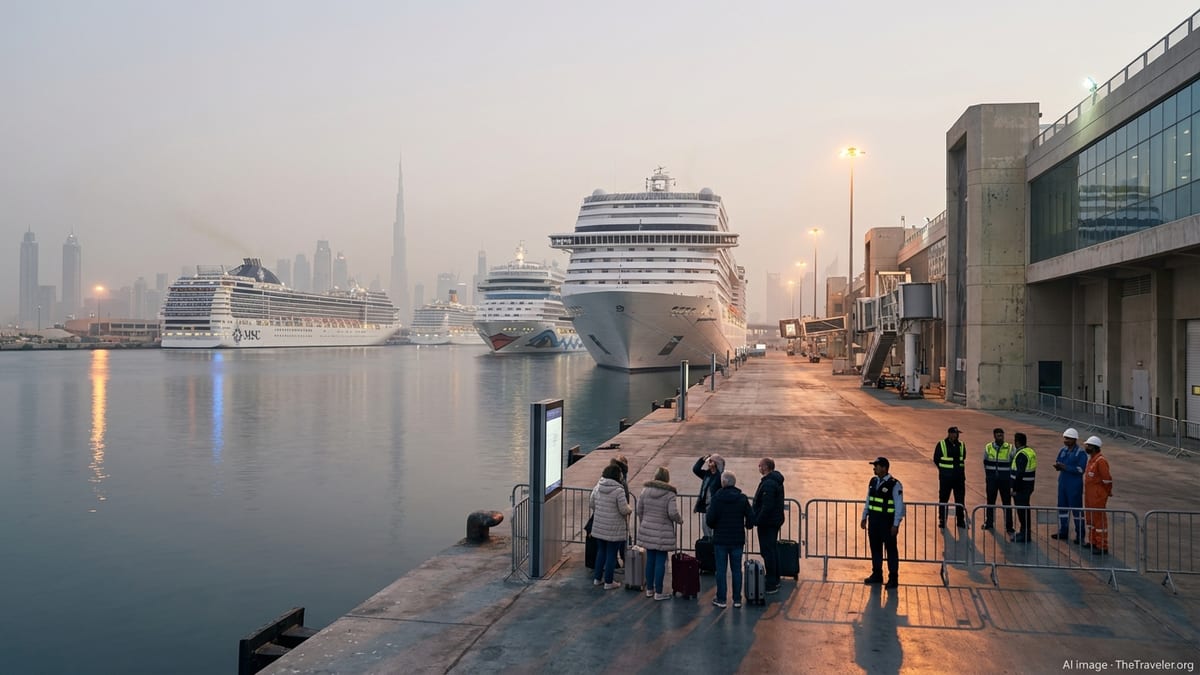
MSC Cruises Extends Retreat as Security Crisis Drags On
MSC Cruises, already cautious about transiting the Red Sea since early 2024, has quietly deepened its pullback from the wider region, scrapping and rerouting voyages that would have required passage through the Suez Canal and the Bab el Mandeb Strait. The company initially canceled several repositioning voyages between South Africa, the Gulf and Europe in 2024, citing the deteriorating risk picture in the area. That caution has now evolved into a more structural retreat, with itineraries for 2025 and early 2026 adjusted to avoid the most sensitive chokepoints entirely.
While MSC has stopped short of announcing a blanket withdrawal from Gulf homeports, the line has reworked deployment plans so that ships no longer rely on the Red Sea as a bridge between Europe and winter sun markets in the Arabian Peninsula. Vessels originally slated to reposition through the Suez Canal have been rerouted around Africa or reassigned within Europe and the Atlantic, trading classic Dubai to Mediterranean combinations for safer, though longer and more fuel intensive, alternatives.
For guests, that shift is translating into abrupt cancellations of seemingly secure, far in advance bookings. Sailings advertised as part of extended grand voyages or world segments that threaded through the Middle East are being pulled from schedules, often with only weeks or a few months of notice as risk assessments are updated. Passengers booked on these MSC itineraries are generally being offered full refunds, future cruise credits and in some cases price protected alternatives on modified routes, but popular holiday dates and balcony cabins are proving hard to match.
The line insists that guest and crew safety remains the sole driver of the changes, pointing to ongoing volatility around Yemen and the wider Red Sea corridor. Even as overall shipping volumes have partially rebounded from the worst days of the crisis, cruise executives and maritime insurers say the risk of missile, drone and sea drone attacks on large passenger ships transiting narrow straits remains unacceptably high.
AIDA and Costa Unravel Winter Middle East Seasons
The retreat is even more visible at AIDA Cruises and sister brand Costa Cruises, both part of the Carnival Corporation group. AIDA has confirmed that its 2025 to 2026 Middle East season, which would have based AIDAprima in Dubai and Abu Dhabi for a series of weeklong Gulf cruises, has been canceled outright. It marks the first time in nearly two decades that the German focused line will not offer a winter program in the Arabian Gulf, a region it helped popularize with European fly cruise guests.
The decision follows earlier steps AIDA took in 2024 to rework spring 2025 repositioning itineraries for several ships. AIDAprima and AIDAstella were removed from Suez Canal and Red Sea routes, forcing the cancellation of multiple Mediterranean voyages and prompting a reshuffle that brought AIDAcosma in to cover gaps. With the full 2025 to 2026 Gulf season now scrapped, AIDAprima will instead spend the winter in Northern Europe and the Atlantic Islands, sailing from German ports to the Canary Islands and other coastal destinations.
Costa Cruises, which initially kept its Red Sea and Suez plans on sale longer than many rivals, has also been steadily pruning Middle East linked voyages. World cruise segments and repositioning itineraries that once stitched together Dubai, Oman and the eastern Mediterranean through the Red Sea have been rerouted away from the conflict axis or removed entirely. Travel agents in key European markets report a spike in schedule change notices affecting Costa sailings that were due to pass near Yemen or through the Bab el Mandeb in late 2025.
For both Costa and AIDA, the Middle East draw was a combination of guaranteed winter sun, modern cruise terminals and efficient air links. The calculus has shifted as insurers raise premiums for transits near conflict zones and as European guests show less appetite for itineraries perceived to be near active flashpoints, even when ports themselves remain peaceful. Executives now appear to be betting that they can fill ships more reliably on safer Northern European, Canary Islands and Western Mediterranean routes.
Red Sea Security Turmoil Rewrites Cruise Maps
The underlying trigger for this new phase of cruise disruption is the protracted security crisis in the Red Sea and Gulf of Aden, which began in late 2023 and has since reshaped global shipping patterns. A sustained campaign of missile, drone and sea drone attacks on commercial vessels around the Bab el Mandeb Strait and along Yemen’s coastline has deterred many shipowners from using the corridor that links the Suez Canal with the Indian Ocean. Container lines and energy carriers have diverted en masse around Africa’s Cape of Good Hope, accepting longer transit times and significantly higher fuel and insurance costs.
For cruise lines, the implications are particularly acute. Passenger ships have large superstructures, sail on fixed published schedules and carry thousands of civilians, making them highly sensitive to even low probability security threats. Naval escort missions deployed by the United States and European partners have reduced some risks for merchant shipping, but naval commanders acknowledge they cannot guarantee full coverage of such a vast area, especially for slower moving cruise ships bound by tight port timetables.
Although there have been periods of reduced attack intensity and intermittent ceasefire signals, insurers and security analysts warn that the threat picture remains volatile and could flare quickly with any deterioration in broader regional tensions. That uncertainty is incompatible with cruise industry planning cycles, which typically fix deployment years in advance and rely on stable port access and predictable routing around major chokepoints such as Suez.
As a result, cruise planners are effectively redrawing the map for long haul itineraries between Europe and Asia. Instead of stitching together Mediterranean ports with Gulf hubs through the Red Sea, lines are experimenting with extended African circumnavigations, Atlantic repositioning voyages and more closed loop seasons within a single basin. The Middle East, once marketed as a glamorous winter playground, is increasingly being left off the marquee brochures of Europe’s biggest brands.
What Impact Travelers Are Seeing Right Now
For cruisers booked on MSC, AIDA or Costa itineraries touching the Middle East or Red Sea between late 2024 and spring 2026, the most immediate impact is a stream of schedule change emails and calls from travel agents. Sailings that once promised overnights in Dubai, calls to Abu Dhabi or transits through the Suez Canal are being canceled outright or reissued as alternative voyages in Europe, the Canary Islands or around Africa. In many cases, the original departure dates remain, but the ports of call are completely different from what was advertised.
Passengers affected by these changes are generally being offered a combination of options. These typically include full cash refunds, rebooking on a modified itinerary at the original fare, or future cruise credits that add an extra value incentive if guests accept a credit rather than cash. However, travelers who built complex land arrangements around their cruises, including flights, pre and post stays in Gulf cities or independent desert tours, are finding that those ancillary bookings are not automatically protected and may be subject to separate change or cancellation fees.
Travel advisors are urging clients with any itinerary that references the Red Sea, Suez Canal, Gulf of Aden or Bab el Mandeb to double check the current status of their voyage directly with the cruise line or their agent, even if final documents have already been issued. Industry observers note that schedule changes are occurring closer to departure than usual as lines weigh evolving security assessments and try to avoid overcorrecting if the situation temporarily improves.
Pricing dynamics are also shifting. With capacity being withdrawn from Middle East programs and redeployed into European and Atlantic markets, some shoulder season sailings in those regions are seeing increased demand and firmer fares. At the same time, a handful of less exposed Middle East cruises operated by other brands are offering aggressive discounts, but experts caution that these too could be subject to late rerouting if conditions worsen.
How to Protect Your Booking in a Volatile Region
For travelers still hoping to experience the Gulf’s skyline views or the Suez Canal from the deck of a cruise ship, the latest wave of cancellations is a reminder to build flexibility into any plans involving politically sensitive waterways. Specialists advise booking flights directly with airlines rather than via third party platforms, ensuring that air tickets can be changed with reasonable penalties if a cruise itinerary is altered or moved to a different embarkation port.
Comprehensive travel insurance that includes both trip interruption and supplier default coverage is increasingly seen as essential. Policies should be checked for exclusions related to war or civil unrest, which may limit payouts if a cruise is canceled due to security concerns rather than mechanical issues or weather. Some insurers have begun tailoring products specifically for itineraries that skirt higher risk areas, but these may come with higher premiums and stricter terms.
Travelers are also being encouraged to monitor official travel advisories and to remain realistic about the likelihood of further last minute itinerary tweaks. Even if a cruise line decides to operate a sailing, ports can be substituted on short notice if security partners advise against a particular call. Guests who prioritize the onboard experience over specific ports of call may cope better with these changes than those who are focused on ticking off particular destinations.
Ultimately, while MSC, AIDA and Costa are at the forefront of the current Middle East retreat, the broader pattern is industry wide. As long as critical sea lanes near Yemen and the Red Sea remain unpredictable, the region’s future as a mass market winter cruising hotspot is uncertain. For now, travelers who value stability over spectacle may find it wiser to follow the ships to their new, safer playgrounds in Europe and the Atlantic, and to treat any remaining Middle East cruise offers with a healthy degree of caution.