

More news on this day
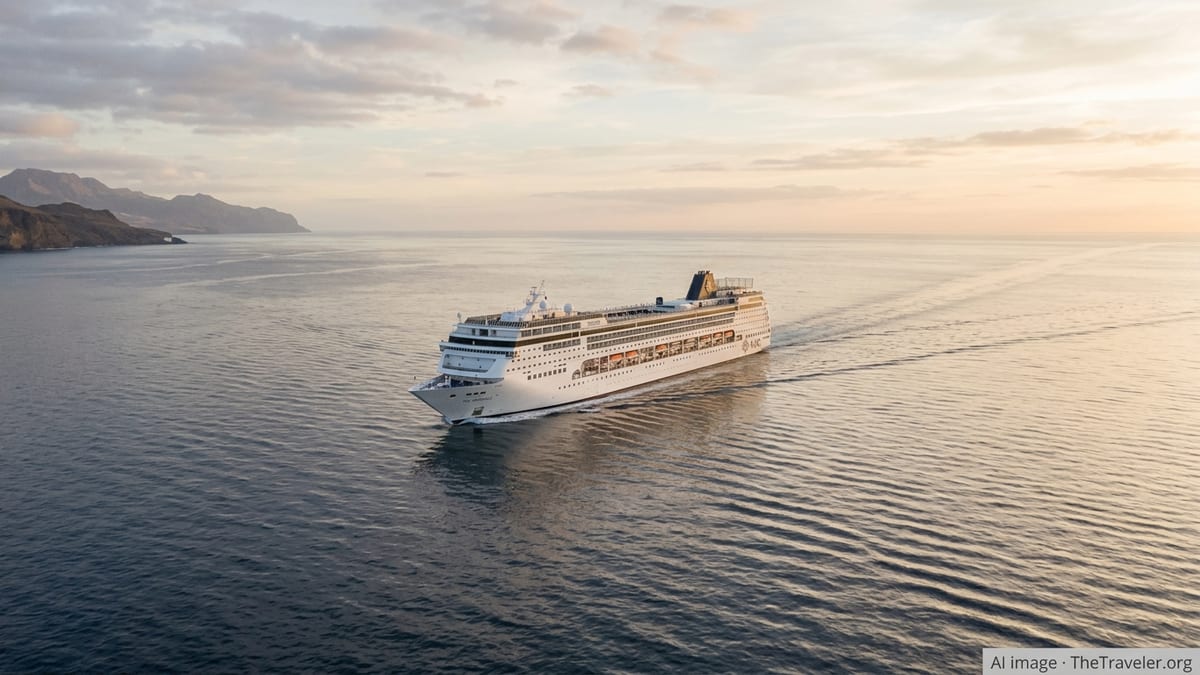
MSC Armonia has concluded her 2025–26 winter deployment in South America and is now sailing a multi-country repositioning voyage to Europe, spotlighting growing interest in Cape Verde, Morocco, Spain, Italy and Croatia along key transatlantic routes.
Get the latest news straight to your inbox!
Ship Wraps Up Robust South America Winter Program
Publicly available deployment details show that MSC Armonia spent the 2025–26 winter season homeported in Brazil as part of MSC Cruises’ expanded South America program, sailing a series of three- to seven-night itineraries that linked major regional ports. The ship operated alongside several fleetmates in the region, underscoring the company’s strategy to increase capacity following record demand in previous seasons.
Schedules indicate that MSC Armonia’s winter cruises focused on popular routes between Brazilian hubs such as Santos and Rio de Janeiro and neighboring destinations in Argentina and Uruguay. These sailings typically included calls in ports like Buenos Aires and Punta del Este, which have become staples of the line’s South American offering.
Industry coverage notes that MSC Cruises has steadily added ships and berths in South America over recent years, with MSC Armonia positioned as a mid-sized, traditionally styled vessel catering to guests seeking classic cruise experiences. The just-completed winter deployment contributed to that broader regional growth, consolidating the ship’s role in MSC’s South American portfolio.
The end of the 2025–26 season marks another step in MSC Armonia’s evolving deployment pattern, in which the vessel alternates between South America during the southern summer and Europe during the northern summer, using transatlantic repositioning voyages to bridge the two programs.
Transatlantic Route Highlights Cape Verde and Morocco
With the South America winter season now complete, MSC Armonia has embarked on a repositioning voyage that traces a classic transatlantic arc from Brazil to Europe, using Atlantic islands and North African ports as stepping stones. Cruise itineraries published by multiple travel retailers show the ship sailing from Rio de Janeiro and Santos in mid-March 2026 before striking out across the ocean.
One of the standout calls on this route is Mindelo in Cape Verde, a destination that continues to gain visibility on repositioning and grand voyage itineraries. According to advertised schedules, MSC Armonia is spending a full day in Mindelo, giving guests time to explore the volcanic landscapes of São Vicente, its pastel waterfront, and the live music culture that has made the port a highlight for Atlantic crossings.
The itinerary also features Tangier in Morocco, reflecting the country’s growing prominence as a cruise gateway at the meeting point of the Atlantic and the Mediterranean. Travel-industry listings describe Tangier’s appeal as a blend of historic medina districts, modern waterfront redevelopment and access to nearby cultural sites, all of which align with MSC Cruises’ pattern of combining scenic cruising with culturally focused shore experiences.
Together, the calls in Cape Verde and Morocco position MSC Armonia’s repositioning voyage as more than a simple relocation of capacity. The route functions as a showcase of emerging and re-energized ports along the broader Atlantic rim, connecting South American source markets with destinations that are increasingly present in European cruise brochures.
Spanish and Italian Ports Anchor Mediterranean Return
After leaving Cape Verde and Morocco, MSC Armonia is scheduled to move north and east toward the heart of the Mediterranean, with several well-established Spanish and Italian ports anchoring the second half of the crossing. Itinerary information compiled from booking platforms points to calls in Las Palmas in the Canary Islands and Barcelona on Spain’s mainland coast as key staging points on the approach to the Western Mediterranean.
Las Palmas, frequently used as a turnaround and fuel stop on transatlantic voyages, offers guests a mix of urban beaches, volcanic scenery and historic quarters. Its inclusion on MSC Armonia’s crossing reinforces the city’s role as a logistical and tourism hub at the intersection of Atlantic and Mediterranean routes.
Barcelona continues to serve as one of MSC Cruises’ primary Mediterranean gateways, and its appearance on the repositioning schedule illustrates how the line uses major embarkation ports to refresh passenger counts and reposition onboard offerings ahead of the European summer. Published deployment data shows that Armonia then continues to Italy, with calls such as Civitavecchia for Rome and Messina in Sicily that connect guests to headline cultural and historical attractions.
By threading together Spain’s Atlantic and Mediterranean ports with key Italian gateways, the voyage effectively transitions the ship from a South American market focus back into the European cruise network, aligning with the seasonal demand patterns that shape the line’s wider deployment strategy.
Croatian Call Underscores Eastern Mediterranean Growth
Schedules for MSC Armonia’s 2026 repositioning indicate that the ship’s European leg also extends into the Adriatic, with a call in Split, Croatia listed on several grand voyage itineraries. This stop highlights the growing role of Croatian ports in Mediterranean cruise planning, particularly for itineraries that combine Italy and the eastern Adriatic coast.
Croatia has seen a steady rise in cruise calls over the past decade, as medieval coastal cities, UNESCO-listed old towns and island landscapes have attracted increased interest from both large-ship and boutique operators. Including Split on MSC Armonia’s repositioning voyage creates a natural link between central Mediterranean hubs such as Italy and the increasingly popular Adriatic corridor.
Industry analysis of deployment trends suggests that Eastern Mediterranean destinations are benefiting from broader diversification in European cruising, as lines balance well-known ports with secondary cities that can offer less congestion and more distinctive shore experiences. MSC Armonia’s call at Split fits within this pattern, adding another Adriatic touchpoint to a repositioning voyage already rich in geographic variety.
The presence of Croatia on the route also positions the ship for subsequent itineraries that may weave together Italy, the Adriatic and nearby islands, taking advantage of Split’s growing role as both a transit and turnaround port in regional cruise planning.
Armonia’s Role in MSC’s Evolving Global Network
MSC Armonia’s current repositioning follows a familiar seasonal rhythm for the ship but takes place against a backdrop of wider expansion in MSC Cruises’ global operations. Company announcements over the past two years have highlighted newbuild deliveries, redeployments in North America and Asia, and stronger commitments to markets such as South Africa and the Eastern Mediterranean.
As a mid-sized, Renaissance-renovated vessel, MSC Armonia occupies a niche within this expanding fleet, often serving itineraries and ports where compact size and flexible deployment are advantages. The ship’s use on South American winter programs, shoulder-season repositioning voyages and European summer deployments reflects that multi-regional role.
Published plans also indicate that MSC Armonia is slated to play a part in the brand’s forthcoming South African expansion from late 2026, following her European summer schedule. This trajectory, from South America to Europe and onward to southern Africa, demonstrates how the line is using individual ships to knit together growth markets across three continents.
For travelers, the 2026 repositioning voyage encapsulates that broader strategy in a single sailing, linking South America’s busy winter cruise hubs with Atlantic islands, North Africa, Western Europe and the Adriatic. In doing so, MSC Armonia’s journey underscores how seasonal ship movements are increasingly being designed as destination-rich experiences in their own right, rather than simply repositioning exercises.