

More news on this day
MSC Armonia is drawing the curtain on its latest South American season with a long-haul transatlantic voyage to Europe, marking a symbolic handover from sun-drenched Brazilian shores to the historic ports of the Mediterranean.
Get the latest news straight to your inbox!
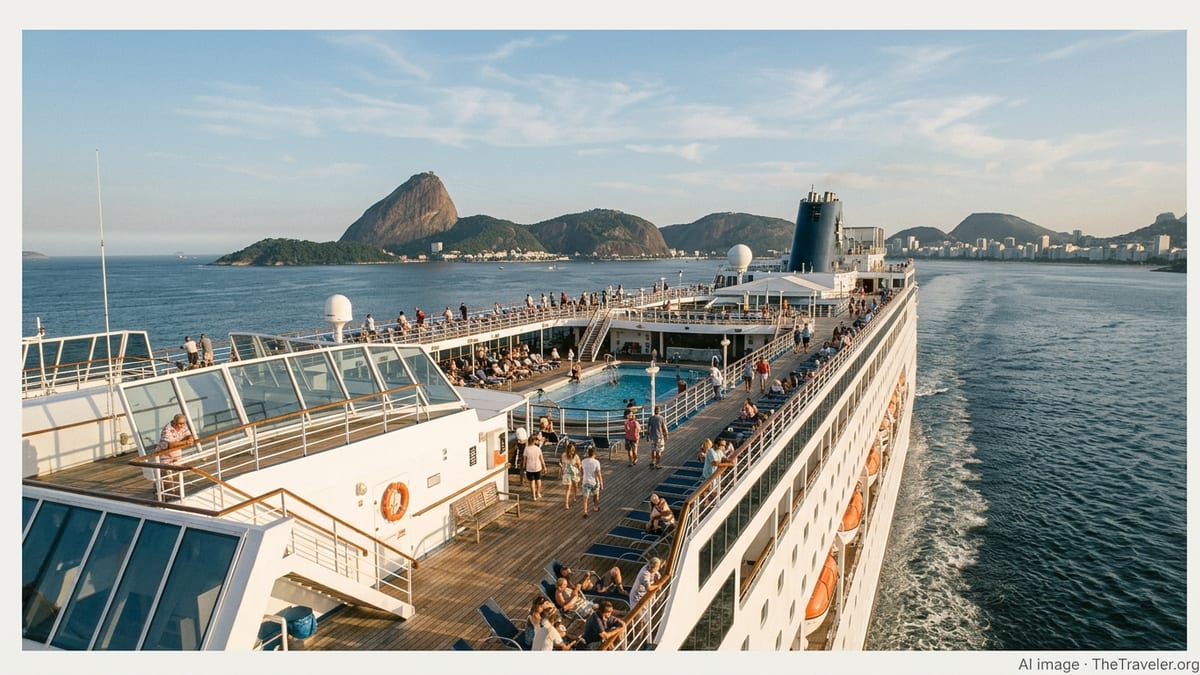
Season Wrap-Up After Busy Months in South America
MSC Armonia has spent the recent southern summer operating a series of short and medium-length itineraries along the South American coast, with a strong focus on Brazil. Publicly available schedules indicate the vessel has been sailing from key turnaround ports such as Rio de Janeiro and Santos, offering regional cruises that called at popular destinations including Salvador, Ilhabela, Búzios and other beach-focused resorts.
The deployment has positioned the 2001-built ship as part of a broader multi-ship program in the region, with MSC Cruises concentrating capacity in Brazil, Argentina and Uruguay for the 2025 to 2026 window. Company brochures and trade documentation highlight MSC Armonia among a group of vessels dedicated to the market, designed to capture strong demand from Brazilian holidaymakers and international guests seeking warm-weather escapes during the southern hemisphere summer.
As that seasonal program winds down, the current repositioning represents the traditional pivot point in MSC Armonia’s annual calendar, moving from domestic and regional South American routes to longer international sailings. The transatlantic crossing is timed to deliver the ship back to Europe in late March and early April, in line with the build-up to the northern summer Mediterranean cruise season.
For many guests on board, the sailing offers a chance to experience both sides of the operation in a single trip, beginning among the tropical coastlines and lively beach cities of Brazil before continuing across the Atlantic and into some of Europe’s most visited cruise ports.
Transatlantic Itinerary Links Brazil With the Mediterranean
Several cruise distribution platforms and itinerary planners list MSC Armonia’s current repositioning voyage as departing mid-March from Brazilian ports such as Rio de Janeiro and Santos and ending in major European homeports including Barcelona, Civitavecchia for Rome or Marghera, the new cruise gateway for Venice. The length of the sailing varies between 15 and 22 nights depending on the final configuration and disembarkation port, but all versions feature a classic West-to-East transatlantic route.
Day-by-day schedules published by cruise retailers show the voyage beginning with a final sail-away from Rio de Janeiro’s dramatic harbor, framed by Sugarloaf Mountain and the city’s sweeping beaches, or from Santos, the long-established cruise gateway to São Paulo. After leaving the Brazilian coast, the ship is scheduled to head northeast toward the Atlantic islands, with technical calls and guest stops typically programmed in places such as Madeira or the Canary Islands before turning toward mainland Europe.
On approach to the Mediterranean, MSC Armonia’s itinerary is set to include familiar cruise hubs known for their blend of culture and cruise infrastructure. Depending on the selected sailing, these may include calls in Spain, Italy or other Western Mediterranean countries before the voyage concludes at a turnaround port where the ship will begin its European program. The combination of sea days and port calls is designed to showcase the transition from tropical to temperate climates, as well as the contrast between South American beach culture and historic European cityscapes.
For transatlantic enthusiasts, the crossing offers extended time at sea, which remains a key appeal of repositioning cruises. Guests typically enjoy quieter decks, extended entertainment programming and a focus on shipboard life as the vessel traces one of cruising’s most storied routes between continents.
Strategic Role in MSC Cruises’ Global Fleet Rotation
MSC Armonia’s move from South America back to Europe is part of a well-established rotation model used across the MSC Cruises fleet. Public schedules and trade communications emphasize the company’s strategy of consolidating capacity in South America during the austral summer and redirecting ships to Europe as spring arrives in the northern hemisphere.
In this framework, MSC Armonia functions as a flexible mid-size unit, able to serve both as a workhorse for regional Brazilian itineraries and as a bridge between continents during seasonal transitions. Itineraries released for 2025 and 2026 show the ship returning to South America again for future seasons, underlining the importance of the Brazilian market in MSC’s long-term deployment plans while still maintaining a strong presence in the Mediterranean during the European summer.
Industry coverage also notes that MSC Cruises continues to refine its South American program, occasionally adjusting which specific ships operate from ports like Santos, Rio de Janeiro, Buenos Aires and Montevideo. Within that rotating lineup, MSC Armonia’s current transatlantic voyage signals the end of one chapter in the region before capacity is reshuffled and newer or larger vessels assume some of the itineraries in forthcoming seasons.
At the same time, the repositioning crossing supports MSC’s broader strategy of offering one-way grand voyages, giving loyal customers and new-to-cruise travelers the chance to experience longer itineraries that connect distant homeports without requiring round-trip itineraries or long-haul flights in both directions.
What Guests Can Expect On Board During the Crossing
As a smaller and more intimate ship by contemporary standards, MSC Armonia offers a different atmosphere from the line’s latest megaships. Reviews and ship profiles describe a vessel with classic interiors, a more compact promenade, multiple dining venues and lounges, as well as open deck spaces that remain central to the onboard experience, particularly during warm-weather sea days leaving South America.
During an extended transatlantic sailing, the onboard program is typically expanded to make the most of consecutive sea days, with added live music, enrichment talks, dance classes and themed evenings. While specific lineups vary by voyage, publicly available past schedules and passenger accounts indicate that MSC emphasizes its Mediterranean heritage in entertainment and cuisine, blending Italian and international offerings with regional touches that reflect both South American and European influences.
The gradual shift in climate across the Atlantic often shapes onboard life. Early in the voyage, guests can expect warm temperatures and strong sunshine on deck as the ship departs Brazil. As days progress and the itinerary moves toward the mid-Atlantic and the approach to Europe, conditions may become cooler and breezier, encouraging passengers to alternate between outdoor relaxation and indoor activities such as spa visits, fitness classes and performances in the main theater.
For travelers who choose transatlantic sailings specifically for their slower pace, MSC Armonia’s crossing offers an opportunity to settle into a routine, explore the ship in depth and enjoy long sea views that are increasingly rare in shorter, port-intensive itineraries. The voyage also appeals to guests using the cruise as an extended passage to Europe before continuing their travels by land or on additional regional cruises.
Looking Ahead to a European Season
Once MSC Armonia completes its ocean crossing and arrives in its designated European homeport, the ship will transition into a program centered on the Mediterranean and nearby regions. Cruise planners list a variety of itineraries for the coming months, including multi-port sailings that touch Italy, Spain, Croatia, Greece and other popular summer destinations.
These European deployments typically feature shorter cruise lengths than the transatlantic repositioning, focusing on seven-night or similar itineraries that appeal to both regional travelers and international visitors. The ship’s size and layout, originally tailored for more traditional cruising, align well with classic Mediterranean routes built around frequent port calls and compact historic harbors.
Meanwhile, MSC Cruises’ long-range schedules and publicly released brochures show that South America remains firmly in the company’s sights, with MSC Armonia expected to return for another warm-weather season in the region in late 2025. That forward planning underscores how the current farewell to South America is a seasonal pause rather than a permanent departure, with the ship set to continue shuttling between hemispheres as demand and deployment strategies evolve.
For now, however, attention remains on the Atlantic as MSC Armonia points its bow toward Europe, carrying guests on a voyage that links two cruise worlds and neatly encapsulates the seasonal rhythm of modern global cruising.