

More news on this day
MSC Cruises’ MSC Armonia is bidding farewell to its South America season and setting course across the Atlantic, launching a repositioning voyage to Europe that links Brazil’s beach-fringed coast with classic Mediterranean ports.
Get the latest news straight to your inbox!
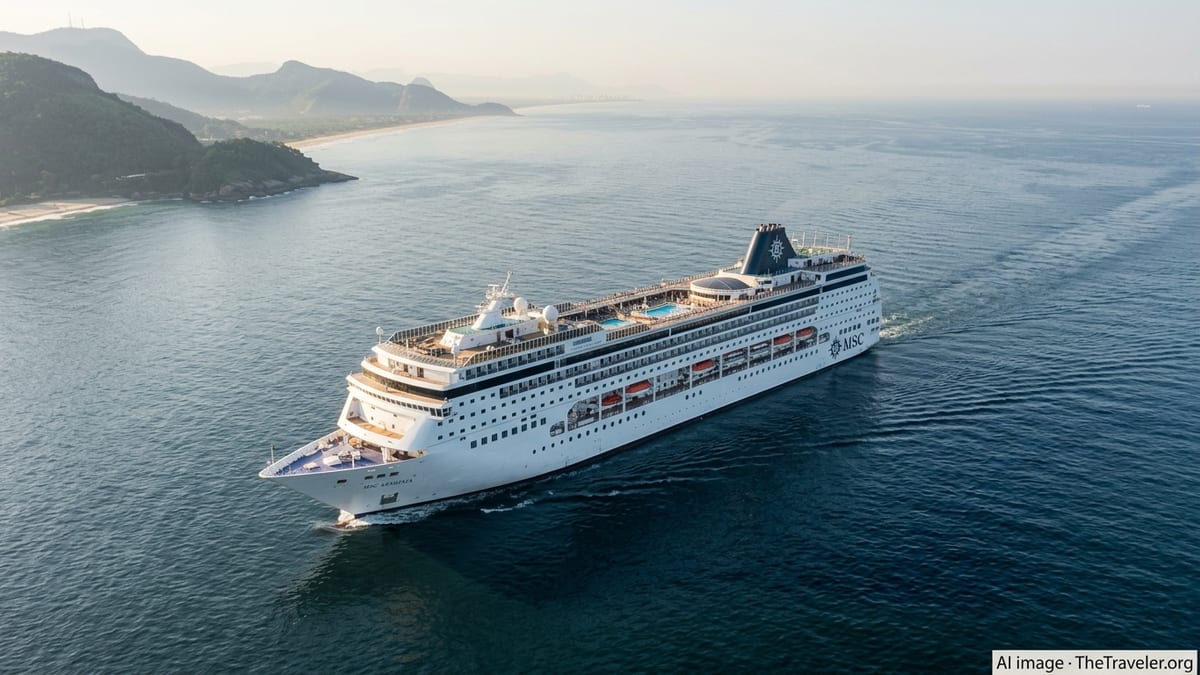
From Brazilian Summer to Atlantic Crossing
Publicly available deployment schedules show MSC Armonia wrapping up a busy 2025–26 winter program in Brazil, featuring seven and eight night sailings from Rio de Janeiro to popular northeastern ports such as Salvador, Ilhéus and Maceió. As the austral summer winds down in March, the 2,000 guest ship transitions from regional coastal itineraries to an extended ocean voyage bound for Europe.
Industry tracking platforms indicate that the current repositioning cruise is sailing one way from Rio de Janeiro to Barcelona in mid to late March 2026, marketed as a transatlantic and spring reposition itinerary. The voyage combines final calls along Brazil’s Atlantic seaboard with several consecutive days at sea, giving guests time to experience the ship in a more relaxed, sea day focused rhythm before reaching the Canary Islands and the Iberian Peninsula.
According to booking engines and cruise schedules, the crossing spans roughly two weeks, with departure from Brazil in mid March and arrival in the western Mediterranean at the end of the month. This timing allows MSC Armonia to leave the South American market just as local demand eases after the peak holiday and carnival period, while arriving in Europe in time for the build up to the northern summer cruise season.
Travel agencies promoting the itinerary highlight the appeal of combining South America’s tropical scenery with an extended ocean passage and a European city finale. For many guests, the cruise doubles as both a long haul journey between continents and a chance to sample a variety of cultures and climates in a single trip.
Route Highlights Between Brazil and the Mediterranean
Based on published itineraries, MSC Armonia’s route begins with familiar South American ports, typically including Ilhabela or Balneário Camboriú along Brazil’s coast before the ship turns northeast into the open Atlantic. These early calls offer one last taste of Brazilian beaches and colonial era waterfronts before the schedule shifts toward longer sea days.
Repositioning programs of this kind frequently feature the Canary Islands or other Spanish Atlantic territories as the first European landfall. Cruise industry reports and comparable MSC crossings suggest stops in ports such as Las Palmas or Santa Cruz de Tenerife, where guests can step ashore after several days at sea to explore volcanic landscapes, historic town centers and waterfront promenades.
From there, MSC Armonia is expected to continue toward mainland Spain, with Valencia and Barcelona commonly appearing as late March calls in similar itineraries. These ports provide a thematic bridge between Latin American and Mediterranean cultures, with palm lined boulevards, modernist architecture and lively food scenes that appeal to guests transitioning from one region to another.
The overall routing underscores the dual purpose of transatlantic cruises. While the primary objective is to reposition the ship efficiently for its next seasonal program, operators increasingly design these sailings as destination rich voyages in their own right, appealing to travelers who have the time and interest for a slower, sea focused journey.
Setting Up for a Mediterranean Summer Season
Cruise line planning documents and promotional material for 2026 show MSC Armonia scheduled for summer deployment in the Mediterranean after arriving from South America. The ship is listed on various European markets with itineraries running from April through October, often featuring weeklong circuits that call at popular ports across Italy, Croatia and the Greek islands.
These programs typically emphasize classic warm weather destinations, with Venice region gateways, Adriatic coastal towns and Aegean islands among the headline calls. The ship’s size and layout position it slightly below the newest mega classes in capacity, which can make it attractive for itineraries featuring smaller or more space constrained ports that still draw strong holiday demand.
Sales materials for the 2026 European season reference a mix of shorter five night breaks and longer sailings of up to two weeks, giving the vessel flexibility to serve both first time cruisers and repeat guests seeking more in depth regional exploration. Repositioning from Brazil to the western Mediterranean at the end of March allows the company to commence this schedule early in the European spring, capturing shoulder season interest before peak summer months.
The move also reflects the broader MSC Cruises strategy of using established mid sized ships to reinforce its footprint in core European markets. While the newest flagships draw attention in marquee ports, vessels such as MSC Armonia continue to underpin the line’s volume and variety of offerings across multiple embarkation hubs.
Seasonal Realignment in South America
MSC Armonia’s departure from South America comes amid a wider reshaping of the company’s Brazilian and Southern Cone programs. Cruise industry coverage over recent months has detailed adjustments to ship assignments and itineraries for the 2026–27 season, including redeployments and cancellations affecting other vessels originally slated to operate from ports such as Rio de Janeiro, Itajaí and Paranaguá.
Announcements covering the 2025–26 and 2026–27 Southern Hemisphere summers indicate that newer or higher capacity ships will take on a greater share of regional itineraries, particularly from marquee Brazilian gateways. At the same time, some planned transatlantic crossings in future seasons have been removed or reworked as the line fine tunes its network in response to demand patterns and operational considerations.
Within this context, MSC Armonia’s current transatlantic voyage can be seen as both a capstone to a strong Brazilian season and a pivot point in the brand’s evolving deployment mix. Maintaining a visible presence in South America remains a stated priority for MSC, but the composition of ships and routes continues to shift as the fleet grows and newer tonnage comes online.
For local ports and tourism partners along Brazil’s coast, the ship’s seasonal presence has brought a steady flow of international visitors during the summer months. Its exit for Europe at the end of March aligns with long established cruise patterns in the region, while leaving open the possibility of future seasonal returns under updated itineraries.
Transatlantic Voyages Gain Appeal With Travelers
Beyond the operational logic, MSC Armonia’s Atlantic crossing underscores the renewed interest in repositioning cruises among international travelers. Booking platforms report that extended one way itineraries linking South America with Europe, North America or Africa have drawn attention from guests seeking slower, more experiential travel alternatives to long haul flights.
Sea intensive voyages such as this March 2026 crossing often attract guests who value time on board as much as destination hopping. On smaller and mid sized ships, the atmosphere during these sailings tends to be more relaxed, with repeat cruisers, retirees and remote workers making up a sizable share of passengers.
The combination of relatively attractive per night pricing, multiple continents in a single itinerary and the romance associated with traditional ocean crossings has helped repositioning cruises carve out a distinct niche in the market. MSC Armonia’s journey from Brazil to the Mediterranean this month fits squarely within that trend, offering a snapshot of how modern cruise operations continue to blend logistical necessity with guest demand for memorable long haul voyages.