

More news on this day
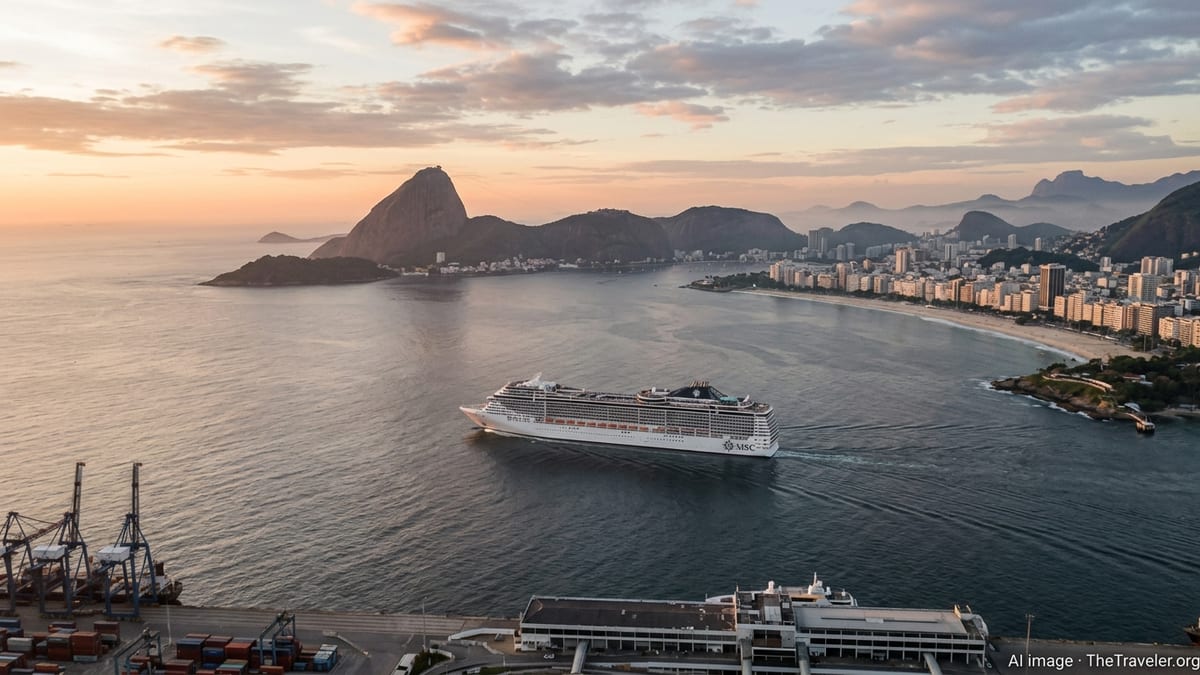
The redeployment of MSC Armonia away from its long-familiar South American routes is reshaping cruise tourism dynamics in Santos and Rio de Janeiro, prompting both ports to recalibrate expectations even as the wider regional market continues to grow.
Get the latest news straight to your inbox!
What Is Changing in MSC Armonia’s Deployment
Publicly available schedules show that MSC Armonia, a veteran of Brazil’s summer cruise seasons, is winding down its Rio de Janeiro and broader South America program after the 2025 to 2026 austral summer, before pivoting to other regions later in 2026. The ship is scheduled on seven and eight night itineraries in South America from December 2025 through March 2026, with departures from Rio de Janeiro and calls such as Salvador, Ilhéus and Maceió, after which it transitions to Mediterranean and other deployments.
Cruise search and booking platforms indicate that from late March 2026 MSC Armonia is slated to operate repositioning and Mediterranean sailings out of Italian ports including Civitavecchia for Rome and Venice, followed by a program that includes Eastern Mediterranean and later Caribbean itineraries. This pattern signals a clear seasonal shift away from Brazil rather than a year round presence in South America.
For travelers who became accustomed to booking Armonia as a recurring option from Brazilian ports, the upcoming change means that the 2025 to 2026 season is effectively the final one, at least for the foreseeable future, in which the ship features prominently in Rio de Janeiro based summer programs.
Impact on Santos and Rio de Janeiro Cruise Offerings
The departure of MSC Armonia from South America’s seasonal roster after March 2026 comes at a time when Santos and Rio de Janeiro are strengthening their positions as key turnaround and transit ports. Port schedules and cruise industry coverage show that Santos in particular has diversified its cruise portfolio, welcoming a mix of MSC and Costa ships and planning to receive more than a dozen vessels during the 2025 to 2026 season.
While Armonia itself has often focused on Rio de Janeiro embarkations in recent programs, Santos has benefited from the broader MSC deployment in Brazil. Recent seasons have seen ships such as MSC Grandiosa, MSC Seaview and MSC Splendida homeporting in Santos, supported by local fee reductions and infrastructure incentives designed to attract cruise traffic. Even as Armonia redeploys, these larger ships are expected to continue anchoring Santos’s role in the regional cruise network.
Rio de Janeiro, meanwhile, faces the more direct effect of losing a familiar ship that has been marketed with New Year and summer itineraries featuring classic Brazilian beach destinations. The city will remain on the maps of several cruise lines, but the removal of Armonia from future South American lineups slightly reduces capacity and choice for passengers who preferred a smaller, older vessel with itineraries focused on Brazil’s northeast coast.
How MSC Is Rebalancing Its South America Fleet
The shift in MSC Armonia’s deployment is part of a broader rebalancing of the company’s South American presence rather than a retreat from the region. Company announcements and industry reports indicate that MSC has steadily increased the number and size of ships serving South America in recent years, at one point deploying six vessels for the 2024 to 2025 season to meet rising demand.
For the 2025 to 2026 austral summer, MSC’s South America program is expected to feature a mix of larger, more modern ships, including MSC Seaview and MSC Preziosa, alongside other vessels such as MSC Fantasia and MSC Lirica serving Brazil, Argentina and Uruguay. This strategy places newer hardware on marquee itineraries while allowing older ships like Armonia to be reassigned to regions where their size and onboard product can fill different market niches.
In practical terms, this means that while Brazilian ports may see one fewer familiar funnel in future summers, overall capacity in the region is being sustained or even expanded through higher berth counts on the remaining ships. For port cities such as Santos and Rio de Janeiro, the emphasis is shifting from the presence of a specific vessel to the total number of passengers delivered across the season.
What Travelers From Brazil Need to Know Now
For Brazilian travelers and international visitors planning cruises out of Santos or Rio de Janeiro, the key takeaway is that MSC Armonia will still be available for the 2025 to 2026 summer, but options involving this specific ship become more limited afterward. Those seeking Armonia’s style of voyage from Brazilian ports will need to focus on departures between late 2025 and March 2026, when itineraries featuring classic coastal calls remain on offer.
From late March 2026, passengers looking to sail on Armonia will increasingly find itineraries centered on the Mediterranean, including Adriatic and Eastern Mediterranean routes, followed by longer repositioning and potentially Caribbean seasons advertised through international booking channels. Travelers loyal to the ship itself may opt to follow it abroad, while others are likely to transfer their bookings to newer MSC vessels based closer to home.
Given the evolving deployment picture, cruise specialists recommend that passengers verify itineraries and homeports carefully at the time of booking and monitor for schedule updates. Redeployments can change port combinations, sailing dates and even regions from one season to the next, particularly for older ships in large fleets undergoing continuous optimization.
Tourism Outlook for Santos and Rio After Armonia’s Exit
Despite concerns about the impact of individual ship moves, available data points to a resilient cruise tourism outlook for both Santos and Rio de Janeiro. Recent seasons have set or approached records for passenger numbers in Brazilian ports, supported by infrastructure upgrades, fee policies designed to attract more calls, and strong domestic demand for short coastal cruises.
With larger vessels such as MSC Seaview and MSC Preziosa rotating through Santos and continued calls in Rio from various lines, both cities are expected to remain prominent fixtures on South American cruise maps. For local tourism operators, the challenge will be to adapt marketing and shore excursion products to the profiles of passengers arriving on newer, often higher capacity ships.
The departure of MSC Armonia from South American deployment after the 2025 to 2026 season therefore appears less a withdrawal and more a milestone in the fleet’s generational shift. While nostalgic cruisers may miss the smaller ship’s regular appearances off Copacabana and along Brazil’s northeast coast, the broader trend for Santos and Rio de Janeiro points toward continued integration into a growing, increasingly modern regional cruise market.