

More news on this day
MSC Cruises has cancelled the remainder of its Arabian Gulf season and launched a large-scale airlift to repatriate thousands of passengers stranded in the United Arab Emirates, Qatar and Oman, as the rapidly escalating conflict around the Strait of Hormuz brings cruise operations in the region to an abrupt halt.
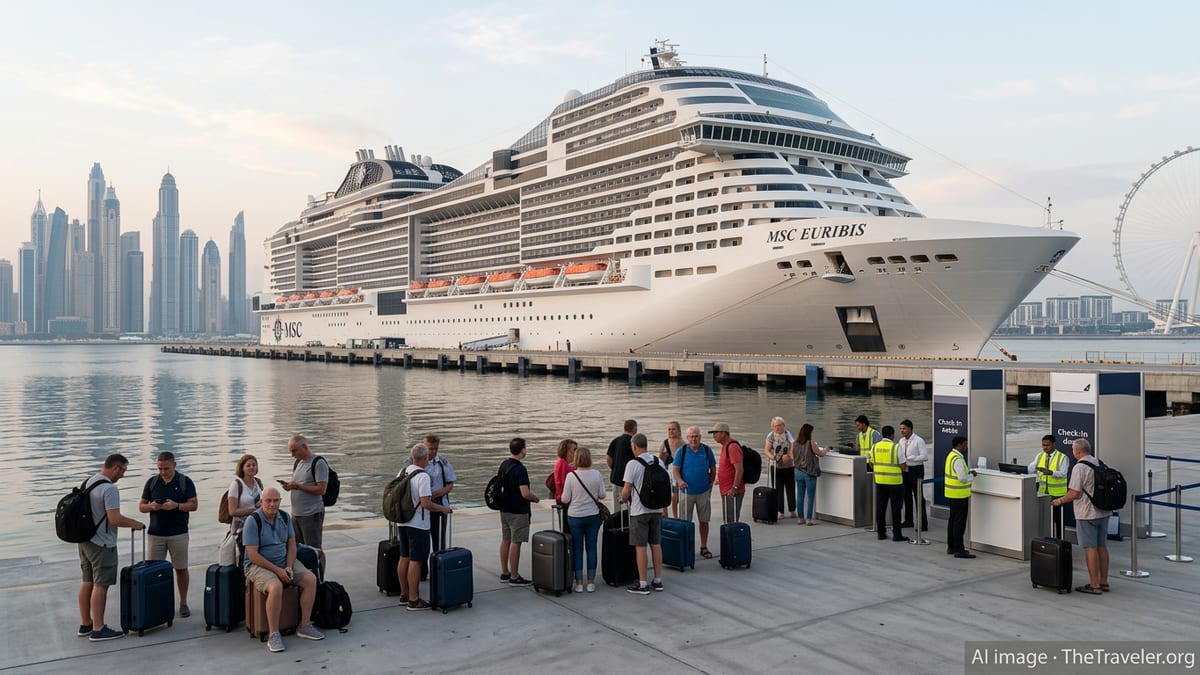
How the Middle East Crisis Halted MSC’s Gulf Season
The latest round of hostilities linked to the Iran conflict has effectively closed the Strait of Hormuz to cruise traffic, forcing major lines to suspend itineraries across the Arabian Gulf. For MSC Cruises, the security situation has already led to the immediate cancellation of all remaining winter sailings of MSC Euribia, the line’s flagship in the region, which had been offering week-long itineraries from Dubai with calls in Abu Dhabi, Doha and Sir Bani Yas Island.
The cancellations affect departures originally scheduled through late March 2026, including turnarounds in Dubai and shorter segments embarking in Doha and Abu Dhabi. MSC has confirmed that the ship will remain alongside in Dubai under the guidance of regional military and port authorities, with guests kept on board or disembarked in a controlled manner depending on local clearances.
Industry reports indicate that thousands of cruise guests are now caught up in a broader transport disruption that also involves commercial flight cancellations, reroutings and airspace closures across the Gulf. For many of those who had planned round-trip cruises from Dubai, Doha or Muscat, the end of the cruise has turned into an unplanned stay ashore as airlines and governments work to restore safe corridors out of the region.
Which MSC Cruises Sailings Are Cancelled
MSC has confirmed that all remaining MSC Euribia departures in the Middle East for March 2026 are cancelled, covering voyages that were due to sail from Dubai, Doha and Abu Dhabi. That includes end-of-season Gulf cruises that would normally carry thousands of guests through the busy spring travel period. The decision follows earlier scrapped sailings in late February as tensions rose and maritime risk assessments deteriorated.
Guests booked on the cancelled cruises are being contacted by either MSC directly or their travel agents. According to the line’s public statements, affected travellers are being offered a full refund of the cruise fare, with the option in many cases to take a future cruise credit instead. Taxes, fees and pre-purchased onboard packages are expected to be included in the reimbursement, though processing timelines may vary depending on the booking channel and method of payment.
The cancellations apply to both full-length itineraries and any shorter segments or partial voyages scheduled to embark in regional ports such as Doha or Abu Dhabi. MSC has suspended new bookings in the area and indicated that no further Gulf departures will operate until the security environment improves and maritime authorities reopen the key shipping lanes.
Repatriation Flights from UAE, Qatar and Oman
With ports effectively locked down for new cruise movements, MSC has shifted its focus to getting existing guests out of the region. The company says it is working “continuously” with major regional carriers, particularly Emirates and Etihad Airways, to secure limited seats on outbound flights from Dubai and Abu Dhabi. Where necessary, the line is also pursuing charter options to move larger groups of passengers in a single operation.
Flight capacity is severely constrained by airspace restrictions and high demand from stranded travellers, so seats are being allocated according to clear priority rules. Airlines are generally boarding passengers based on their original flight dates, with those who were due to travel first placed earlier in the queue. As a result, some cruise guests may find themselves waiting several days in the UAE before a suitable departure becomes available.
In Qatar and Oman, where air traffic has also been disrupted, MSC is coordinating with local authorities and partner airlines to organize onward travel for guests who disembarked earlier Gulf sailings or who were due to join cancelled cruises. Depending on airport operations, some passengers may be moved by ground transfer from one state to another to access flights with more available capacity, such as relocating guests from Dubai to Abu Dhabi or from Doha to alternative regional gateways.
MSC has emphasized that all repatriation flights arranged by the line will be coordinated directly with guests or their travel advisors. Travellers are being urged to keep their contact details up to date, monitor email and mobile messages, and avoid making independent last-minute changes that could complicate their eligibility for airline waivers or cruise-line support.
What Support Affected Passengers Can Expect
While MSC Euribia remains in port, guests still on board are being given access to normal hotel-style services and facilities, including dining, entertainment and medical support, as conditions permit. The line has indicated that it will cover necessary transfers between the ship and regional airports once outbound flights are confirmed, and that staff are on hand at both port and airport to assist with check-in, baggage and documentation issues.
For travellers who had not yet departed for the Gulf when their cruises were cancelled, MSC’s policy is to refund the cruise portion of the trip and provide documentation that may help with separate claims to airlines, hotels or travel insurers. Air and hotel arrangements purchased through MSC or its package partners may be handled differently from independently booked components, so passengers are being encouraged to review their original confirmations carefully.
On the financial side, guests should expect a distinction between statutory compensation, which may be limited in conflict-related cancellations, and the line’s own goodwill gestures, such as future cruise credits or discounts on rebooked sailings elsewhere in the world. Many travellers will also be turning to their travel insurance policies, especially those that include coverage for war-related disruptions or government travel advisories, to seek reimbursement for additional accommodation, meals and alternative flights.
Customer service channels are currently under heavy pressure, with call centres experiencing significant wait times. Travellers are being advised to use digital self-service tools where possible, including online forms and chat, and to avoid making duplicate refund requests, which can slow processing for everyone.
Practical Advice for Travellers Caught in the Disruption
For passengers already in the region, the strongest guidance from cruise and aviation operators is to stay in close contact with MSC or your travel advisor, rather than making independent travel arrangements that might not be reimbursed. Keeping boarding passes, cruise cards, receipts and any written communication from the line will be vital if you need to substantiate claims later with insurers or consumer-protection bodies.
Those still waiting for flights should monitor official airline channels and local airport announcements rather than relying solely on social media. Given the fluid security situation, departure times and routings may change at short notice, and travellers should be prepared for last-minute gate switches, additional security checks and longer processing times at immigration and check-in.
Looking ahead, would-be Gulf cruisers are being urged to consider flexible booking options, including refundable airfares, robust travel insurance and itineraries that can be switched to other regions if geopolitical tensions flare. Travel agents and industry analysts say the current shutdown of the Arabian Gulf cruise season is a stark reminder that even well-established winter cruise programs in popular ports can be vulnerable to rapid changes on the security front.