

More news on this day
As Alaska’s cruise industry prepares for a pivotal 2026 season, MSC Cruises is positioning its first-ever sailings in the region as a showcase of glacier-centered itineraries, upgraded hardware and lower-impact technology in one of the world’s most sensitive maritime environments.
Get the latest news straight to your inbox!
A New Player Arrives in the Last Frontier
MSC Cruises is set to enter the Alaska market in summer 2026, marking the company’s first deployment in the region and signaling intensifying competition for glacier-focused itineraries. Publicly available information indicates that MSC Poesia will operate roundtrip voyages from Seattle, sailing the storied Inside Passage and offering close-up views of tidewater glaciers and ice-carved fjords.
Company materials describe itineraries that include classic Alaska highlights such as the Inside Passage and glacier-dominated scenery, promoted as opportunities to “sail past” dramatic fjords and icebergs on seven-night voyages. The move aligns MSC with rival brands that already emphasize glacier viewing as the emotional centerpiece of an Alaska cruise, from towering ice faces to the chance of witnessing live calving.
Travel trade coverage notes that 2026 Alaska departures are also part of a broader North American expansion strategy for the Europe-based line, which has been steadily adding U.S. homeports on both coasts. Seattle is expected to become MSC’s fifth U.S. embarkation city, placing the brand directly into one of the most competitive cruise corridors in the world.
For Alaska, the arrival of a global brand that is still relatively new to the U.S. mainstream market adds fresh capacity and product variety just as ports and state agencies balance record visitor numbers with calls for stricter environmental protections.
Glacier Viewing, Rerouted Fjords and Evolving Itineraries
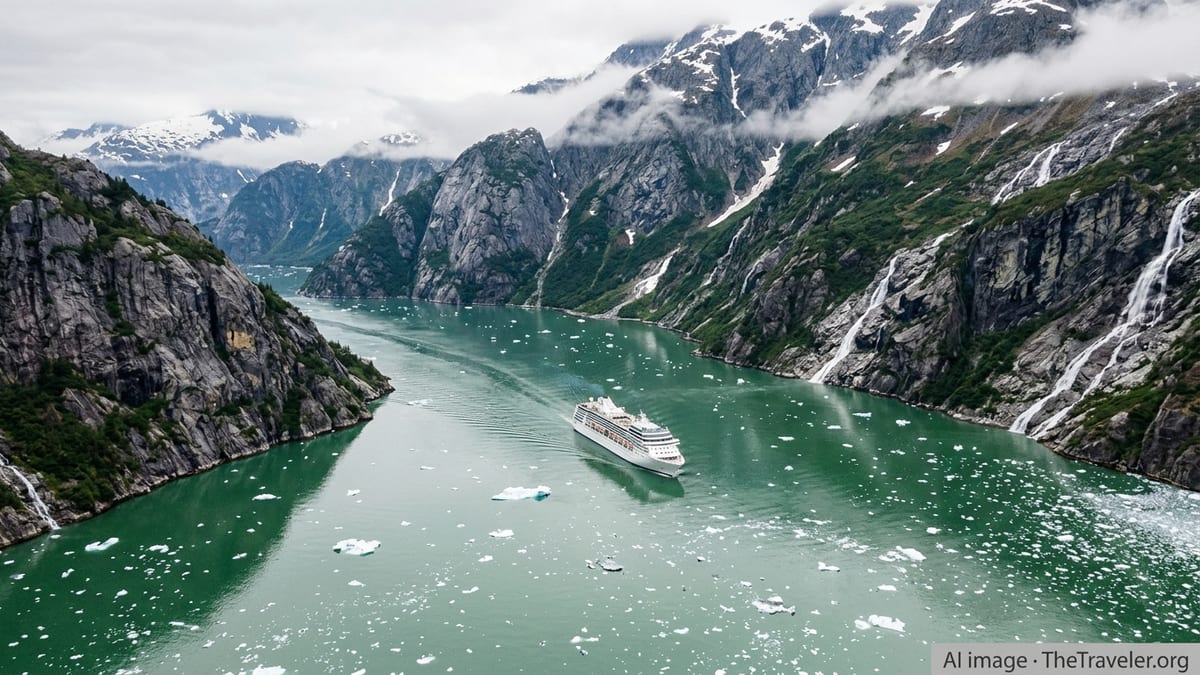
Glaciers remain the headline attraction in southeast Alaska, but the ways cruise lines access them are shifting. Recent reporting indicates that multiple lines, including MSC Cruises, are favoring Endicott Arm and Dawes Glacier as alternatives to the narrow Tracy Arm fjord after a 2025 landslide raised safety concerns around its steep, unstable slopes.
Endicott Arm offers a broad, ice-filled waterway that can provide similarly dramatic glacier vistas while giving navigators more room to maneuver amid floating ice. For guests, that can translate into long, unbroken stretches of wilderness scenery, punctuated by views of calving ice fronts, cascading waterfalls and wildlife on the shorelines and bergs.
Published itineraries for MSC’s Alaska program highlight the Inside Passage as a signature feature, emphasizing the region’s network of channels sculpted by ancient ice. These routes are designed to thread ships between forested islands and along fjords where glaciers once stood, framing modern-day glacier viewing with a sense of geological time.
At the same time, operators are adjusting to new policies and capacity constraints in major ports such as Juneau and Glacier Bay. Juneau has adopted a daily cap on cruise passengers beginning in 2026, and Glacier Bay National Park continues to apply its own environmental standards and limited ship permits, influencing how often, and by whom, its glaciers can be approached.
Ships Built for Colder, Cleaner Cruising
MSC Poesia, the workhorse for the brand’s 2026 Alaska debut, has been highlighted in promotional material for upgrades aimed at enhancing cold-weather comfort and scenery-focused experiences. These include expanded viewing spaces, heated outdoor areas and new interpretations of the line’s Yacht Club concept, marketed as a ship-within-a-ship enclave offering more private vantage points on glacial landscapes.
MSC’s broader fleet roadmap also reinforces its emphasis on polar and near-polar travel. Industry analysis of the company’s shipbuilding plans shows a push toward vessels with strengthened hulls and Polar Code compliance, including ice-classed designs intended for Arctic and Alaskan circuits later in the decade. These ships are being configured with advanced navigation and stabilizer systems to better handle narrow channels, variable ice conditions and the often-unpredictable weather patterns of high-latitude cruising.
Across the Alaska market, environmental scrutiny is accelerating adoption of cleaner technologies, and MSC is positioning its newer ship classes, particularly the LNG-powered World Class vessels, as part of a lower-emissions future. While these mega-ships are not scheduled to sail Alaska in 2026, the line’s public sustainability strategy points to wider use of LNG, exhaust treatment systems and shore-power connectivity, developments that directly affect how cruise traffic is perceived near glaciers and coastal communities.
In Glacier Bay and other sensitive areas, federal and park-level rules already impose stricter discharge and monitoring requirements on visiting ships. As new terminals in ports such as Seward and other Southcentral gateways add shore power and modernized berths, MSC and its competitors are expected to plug in more frequently, reducing emissions while docked and shifting more of the sector’s energy footprint away from the very views it markets.
Ports Race to Modernize for 2026
Alaska’s port infrastructure is undergoing rapid change ahead of the 2026 season, reinforcing the state’s role as one of the world’s largest cruise regions by passenger volume. In Seward, a new two-berth cruise dock and terminal complex is scheduled to open in spring 2026, with project documents outlining a modern “Port of Tomorrow” concept centered on shore-power capability and improved passenger flow.
The Seward redevelopment follows years of planning and state-level funding measures and is designed to accommodate some of the largest ships visiting Alaska. Cruise industry observers note that the combination of expanded berthing, new passenger facilities and direct rail and highway links inland could make Seward an increasingly important gateway for one-way itineraries and cruise-tour combinations that tie coastal glacial scenery to interior destinations.
Elsewhere, Juneau is preparing to implement new fee structures in 2026 that shift port charges toward passenger capacity rather than ship tonnage, aiming to better correlate revenue with the actual volume of visitors. A planned additional dock is expected to increase flexibility in handling multiple large vessels during peak summer days, even as the city works within its agreed daily passenger cap.
These port upgrades coincide with regional forecasts that anticipate sustained high demand for Alaska sailings through the second half of the decade. For cruise lines, the projects provide the physical backbone needed to run more glacier-centric itineraries, with smoother embarkation processes, expanded shore excursion staging areas and safer approaches for large ships navigating tight harbors and fjord entrances.
Balancing Peak Adventure with Environmental Limits
MSC Cruises’ entry into Alaska in 2026 comes at a time when the very concept of “peak adventure” is being redefined by environmental constraints. Communities from Juneau to smaller towns in Southeast have pressed for limits on daily visitor numbers, citing congestion and pressure on local services, while scientists and regulators track the health of glaciers that are both key attractions and barometers of climate change.
In Glacier Bay, long-standing environmental monitoring programs require cruise ships to meet standards that go beyond general state and federal regulations, from wastewater rules to speed and distance limitations around wildlife. These measures influence how close vessels can approach glaciers, how long they can linger in sensitive areas and how operators design scenic cruising segments that remain marketable while compliant.
For MSC, navigating this landscape means aligning guest expectations for dramatic, up-close glacier encounters with itineraries that respect new fjord access patterns and port agreements. Marketing materials emphasize immersive scenery, wildlife viewing and cultural experiences in coastal communities, suggesting a broader narrative of Alaska as an evolving destination where adventure is increasingly measured in responsible encounters rather than pure proximity.
As bookings open and 2026 draws nearer, Alaska’s cruise season is shaping into a test case for how new entrants like MSC Cruises can leverage upgraded ships, modernized ports and route flexibility to keep glacial travel aspirational, even as the ice itself and the regulations that protect it continue to change.