

More news on this day
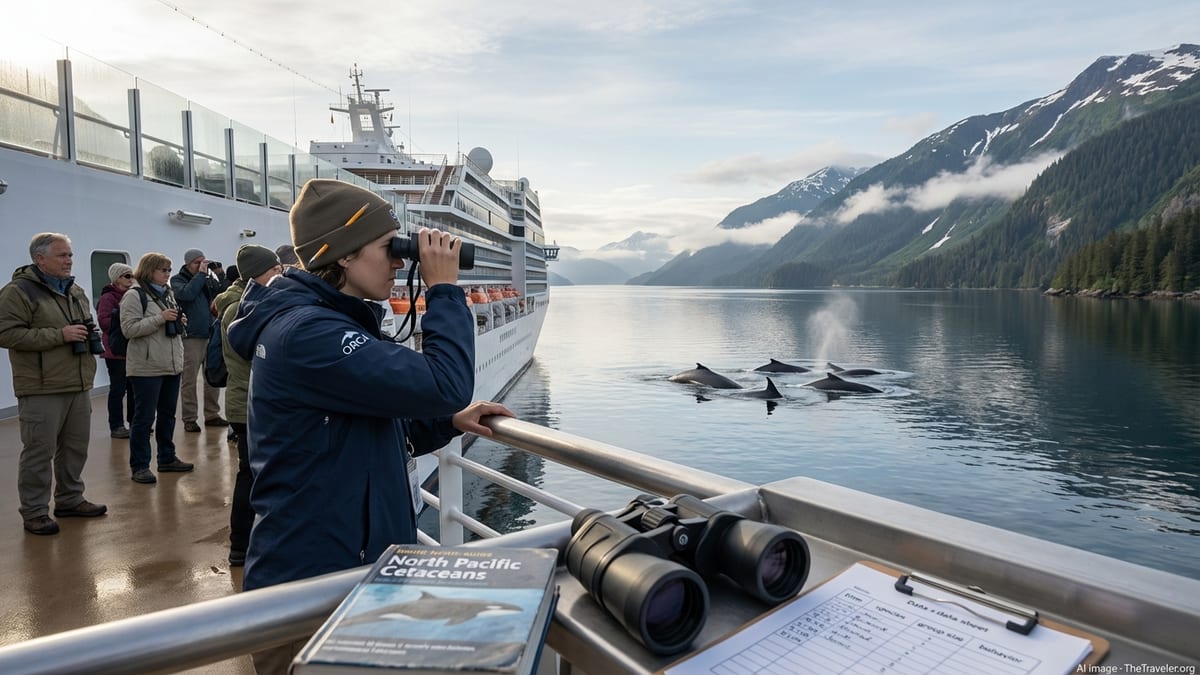
MSC Cruises is sharpening its sustainability focus ahead of its debut Alaska program in 2026, unveiling a new partnership with marine conservation charity ORCA that will put a dedicated marine mammal observer on board MSC Poesia during the peak whale season.
The move positions the Geneva-based cruise line at the center of the industry conversation around science-led wildlife protection as Alaska demand soars and environmental scrutiny intensifies.
More News
- Caribbean Travel to U.S. Upended by New Visa Freezes and Expanded Bans
- Mexico Restores E-Visas for Brazilians, Paving the Way for Borderless Tourism
- Philippine Airlines Joins Regional Carriers Powering Southeast Asia’s Tourism Boom
Landmark ORCA Partnership Anchors 2026 Alaska Debut
Announced on February 4, 2026, during the Cruise Lines International Association Pacific Northwest Symposium in Anchorage, the collaboration will see an ORCA-trained Marine Mammal Observer join MSC Poesia for one month at the height of Alaska’s whale season, from late July through late August 2026. The observer will conduct real-time behavioral research as the ship sails seven-night itineraries roundtrip from Seattle, calling at Ketchikan, Icy Strait Point, Juneau, Tracy Arm Fjord and Victoria, British Columbia.
The initiative is designed to collect robust data on how whales and other marine mammals respond to cruise ship presence and movements along busy Inside Passage routes. ORCA’s specialist will document sightings, track behavior patterns and monitor environmental conditions from the bridge and outer decks, focusing on areas known for high concentrations of humpbacks, orcas and other cetaceans.
MSC Cruises frames the partnership as a cornerstone of its expansion into one of the most environmentally sensitive cruise regions in the world. Company executives describe the program as a tangible example of environmental responsibility in action, aimed at safeguarding biodiversity while still meeting growing consumer interest in Alaska’s glaciers, fjords and wildlife.
By linking its first Alaska season to an independently managed research effort, MSC Cruises is also signaling that scientific insight, rather than marketing alone, will shape how it operates in North Pacific waters over the long term.
Science-Led Whale Monitoring on MSC Poesia
The ORCA Marine Mammal Observer will live and work aboard MSC Poesia during the peak of the 2026 Alaska season, when whale activity is at its highest and vessel traffic is intense. From vantage points on the bridge and open decks, the observer will log species, group sizes, distances, and reactions to the ship’s heading, speed and maneuvering, building an extensive dataset across multiple sailings.
This research will contribute to a deeper understanding of how large vessels interact with whales in key migratory and feeding zones. Observations will help identify potential risk factors such as ship speed in known feeding grounds, the impact of routing choices near whale hotspots, and how animals respond to different operational profiles as MSC Poesia navigates narrow fjords and coastal channels.
Data gathered in summer 2026 will be shared with the wider scientific community and contribute to ORCA’s broader mapping of whale and dolphin populations in the North Pacific. For MSC Cruises, the findings are expected to inform fine-tuning of bridge procedures, seasonal routing preferences and speed management in sensitive areas, as well as future cooperation with regulators and port authorities.
The research remit underscores a shift away from passive wildlife viewing toward an active, measurable conservation role, where guest-facing itineraries and back-of-bridge operational choices are both shaped by ongoing scientific evidence.
From Research to Crew Training and Operational Practice
Beyond data collection, the ORCA observer on MSC Poesia will play a direct role in crew training across the Alaska season. Working with deck and bridge teams, the specialist will deliver on-the-job instruction in whale identification, distance estimation, and early detection techniques that support safe navigation when marine mammals are nearby.
ORCA already runs whale-avoidance training programs for officers and crew across several cruise lines and cargo fleets. The MSC partnership extends this approach by integrating training with live observations conducted across consecutive voyages, ensuring that theory and practice are closely aligned. Officers will be able to compare standard operating procedures with observed animal behavior, strengthening situational awareness on the bridge.
The training component is expected to help MSC refine its mitigation measures, such as dynamic speed reductions in high-density whale areas and more responsive avoidance maneuvers when animals are sighted ahead. Over time, those operational changes can reduce the risk of ship strikes and disturbance, an issue that regulators and conservationists have identified as a growing concern in busy Alaska corridors.
For MSC, the partnership also offers a blueprint that could be adapted to other sensitive regions, from the Mediterranean to the Antarctic Peninsula, as the company builds out its global itineraries under intensifying environmental expectations.
Raising the Bar for Sustainable Wildlife Tourism
ORCA’s role will extend beyond the bridge and into the design and vetting of shore excursions that bring guests closer to Alaska’s marine life. Drawing on 25 years of experience in ethical whale and dolphin watching, the organization will review existing whale-watching tours and help MSC Cruises identify operators using best-practice approaches that limit stress and disturbance to animals.
As part of the 2026 season, ORCA will conduct ongoing assessments of excursion performance, gathering near real-time feedback and recommending adjustments if wildlife pressure points emerge. That may include advising on vessel approach distances, time spent with individual whale groups, or the number of tour departures in particularly sensitive feeding grounds.
The collaboration reflects a wider industry shift toward sustainable wildlife tourism, where guest expectations for close encounters have to be balanced with strict guidelines that protect animals’ natural behavior. For Alaska, where iconic whale sightings often top cruise passengers’ wish lists, the quality and ethics of these experiences are increasingly a differentiating factor among competing brands.
By embedding an independent conservation charity into its excursion planning, MSC Cruises is seeking to reassure travelers that the pursuit of memorable wildlife moments will not come at the expense of the very species that make Alaska such a coveted destination.
Guest Engagement and Citizen Science at Sea
Central to the MSC–ORCA collaboration is a concerted effort to involve guests directly in the conservation story unfolding around them. On each Alaska itinerary, the onboard ORCA observer will host public sessions to explain the research underway, share early insights on whale behavior and migration, and outline how guests can contribute as citizen scientists.
Passengers will be invited to log their own sightings with guidance from ORCA’s protocols, noting time, location, species and behavior, which can supplement data collected from the bridge. This participatory approach turns passive viewing into active observation and gives travelers a tangible role in documenting Alaska’s marine life.
Educational content will likely extend beyond scheduled talks, with interpretive materials, wildlife-spotting tips and updates on notable sightings delivered through the ship’s daily programs and announcements. The aim is to deepen passenger awareness of the complex ecosystems they are sailing through and to show how small contributions can feed into larger conservation datasets.
For a growing segment of environmentally conscious travelers, the chance to join a structured science effort can be a compelling reason to choose one cruise product over another. MSC Cruises is betting that the blend of classic scenic cruising, immersive itineraries and hands-on conservation engagement will resonate strongly in the competitive Alaska market.
Alaska as a Strategic Testbed for MSC’s Sustainability Agenda
The ORCA partnership sits within a larger strategic push by MSC Cruises as it moves into Alaska for the first time. The line confirmed its debut in the region in late 2024, selecting Seattle as its fifth United States homeport and assigning the mid-sized MSC Poesia to operate seven-night sailings from May 11, 2026. The ship is undergoing a substantial upgrade that includes new premium facilities and refreshed wellness areas, positioning it squarely for a demanding North American audience.
Alaska’s regulatory landscape and heightened public scrutiny make it a proving ground for cruise sustainability. From air emissions and fuel use to waste management and wildlife protection, operators in the region face some of the strictest expectations in the industry. MSC’s decision to pair its inaugural program with a visible, research-led conservation initiative suggests that the company views its Alaska deployment as a showcase for its environmental credentials.
The move also dovetails with the line’s broader climate and biodiversity goals, which include investments in cleaner propulsion, shore power capabilities where available, and enhanced environmental management systems across the fleet. In this context, the ORCA collaboration acts as a focused, region-specific layer that addresses a particularly emotive aspect of the Alaska debate: the risk large ships pose to whales.
Early learnings from the 2026 season are likely to inform preparations for MSC Poesia’s already announced second Alaska season in summer 2027. With bookings open well in advance, the company is signaling a long-term commitment to the region and an intention to refine its sustainability playbook year over year.
Industry Signals and Competitive Pressure
By revealing the ORCA partnership at a high-profile regional symposium, MSC Cruises has challenged other operators to match or exceed its level of transparency and scientific engagement in Alaska. Marine mammal protection has been creeping up the industry agenda for years, but dedicated onboard observers remain relatively rare outside specific regulatory requirements or pilot programs.
As cruise lines face growing calls from local communities, policymakers and advocacy groups to demonstrate tangible conservation outcomes, tie-ups with independent science organizations like ORCA may quickly shift from stand-out differentiator to baseline expectation. Research-led programs can help companies satisfy local stakeholders while providing guests with richer context for the landscapes and wildlife they encounter.
MSC’s move also underlines the extent to which Alaska has become a battleground for cruise lines seeking to prove their sustainability credentials to a new generation of travelers. Younger guests in particular are more likely to interrogate how their holidays intersect with climate, biodiversity and Indigenous rights concerns, and to factor perceived responsibility into their booking decisions.
If the 2026 whale monitoring program demonstrates measurable benefits, such as refined routing that reduces overlap with whale hotspots or more robust avoidance protocols, it could provide a model adopted not only within MSC’s own fleet but across the wider industry, reshaping how large vessels share the waterways with some of the North Pacific’s most iconic residents.
FAQ
Q1. What is the new partnership between MSC Cruises and ORCA for the 2026 Alaska season?
MSC Cruises has partnered with marine conservation charity ORCA to place a dedicated, ORCA-trained Marine Mammal Observer on board MSC Poesia during part of its inaugural Alaska season in summer 2026. The observer will conduct scientific research on whale behavior, support crew training and lead guest education focused on marine conservation.
Q2. When will the ORCA Marine Mammal Observer be on board MSC Poesia?
The ORCA observer is scheduled to sail for one month during the peak whale season from late July through late August 2026, a period when whale activity and cruise traffic are both particularly high in Alaskan waters.
Q3. What exactly will the ORCA observer do during the cruises?
The observer will monitor and record sightings of whales and other marine mammals from the bridge and outer decks, logging species, group sizes, locations and behaviors. They will also analyze how whales respond to the ship’s presence and maneuvers, helping build a detailed dataset that can inform safer, more responsible navigation practices.
Q4. How will this partnership affect the crew on MSC Poesia?
Deck and bridge teams will receive targeted training from ORCA on marine mammal identification, early detection techniques and whale avoidance procedures. This training, combined with real-time observations, is intended to enhance situational awareness and support operational decisions such as speed adjustments and course alterations in areas with high whale activity.
Q5. Will guests be able to participate in the conservation efforts?
Yes. The ORCA observer will host onboard talks explaining the research and its importance, and guests may be invited to take part in citizen science by logging their own whale and dolphin sightings following ORCA guidelines. Educational materials and updates about notable sightings will help guests engage more deeply with Alaska’s marine environment.
Q6. What itineraries will MSC Poesia sail during the 2026 Alaska season?
From May 11, 2026, MSC Poesia is scheduled to operate seven-night roundtrip cruises from Seattle, calling at Ketchikan, Icy Strait Point, Juneau and Tracy Arm in Alaska, along with Victoria in British Columbia. The ship will also transit scenic routes such as Tracy Arm Fjord, known for dramatic glaciers and rich wildlife.
Q7. How does this initiative contribute to sustainable tourism in Alaska?
The program aims to reduce risks to whales by using scientific data to fine-tune ship operations and by elevating standards for whale-watching excursions through ORCA’s guidance. At the same time, the initiative helps travelers understand the ecosystems they are visiting, aligning guest experiences with long-term protection of Alaska’s marine life.
Q8. Will the research data be shared outside MSC Cruises?
Yes. ORCA plans to share the data collected during the 2026 season with the broader scientific community and use it to inform its existing whale-avoidance training across multiple shipping and cruise companies. The findings may also support wider discussions with regulators and local stakeholders about best practices in Alaska’s key whale habitats.
Q9. Is this partnership expected to continue beyond 2026?
While the initial focus is on MSC’s inaugural Alaska season, company statements position the ORCA collaboration as part of a longer-term commitment to responsible operations in the region. With a second Alaska season already on sale for summer 2027, the 2026 results are likely to shape future deployments and potentially inspire similar programs on other routes.
Q10. What does this mean for travelers choosing an Alaska cruise in 2026?
For travelers, the partnership means that an Alaska voyage on MSC Poesia will combine traditional scenic cruising and wildlife viewing with access to scientific insights and conservation programming on board. Guests can expect enhanced opportunities to learn about whales and other marine life, participate in citizen science, and know that their holiday is contributing to research aimed at making cruise tourism more sustainable.