

Getting to and from the cruise terminal is one of the least glamorous but most important parts of any MSC cruise. Whether you are flying in on embarkation day, staying in the city beforehand, or disembarking with a tight flight connection, understanding how MSC port transfers work will help you avoid stress, surprise costs, and missed connections. This guide breaks down MSC shuttle and private transfer options, with practical tips to help you choose the right solution for your itinerary and travel style.
How MSC Port Transfers Work
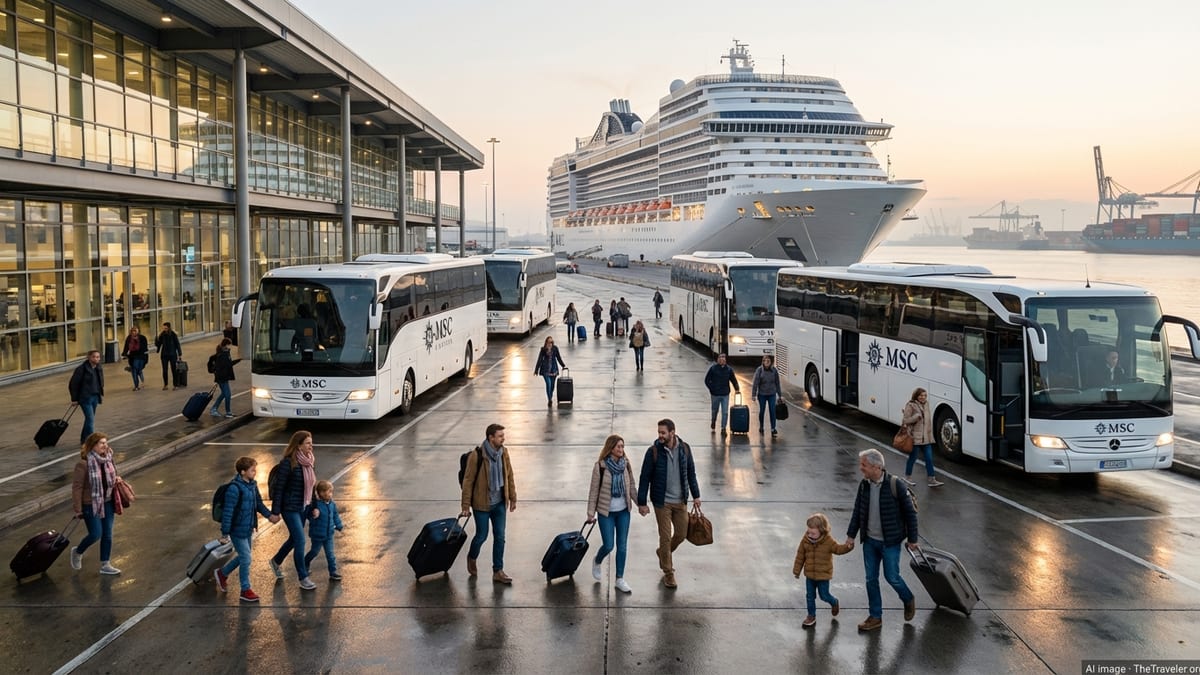
MSC Cruises offers structured port transfer solutions that are designed to connect your flight or city stay with the ship. At most major embarkation ports, MSC operates coach shuttles between the airport and the cruise terminal on embarkation and disembarkation days. These services are scheduled around ship arrival and departure times and are only available to book for the same day that you board or leave the ship. They are not a general airport shuttle for other travel plans.
In addition to coach transfers, MSC also provides private transfer options in many ports. These are typically cars, minivans, or vans booked just for your party, operating on a fixed route such as airport to port or city hotel to port. Private transfers are usually priced per vehicle rather than per person and must be arranged in advance through MSC or via a travel agent working with MSC’s systems. They are intended for guests who want more convenience, privacy, or have specific mobility or timing needs.
It is important to understand that MSC transfers are an add on, not an automatic entitlement with every cruise fare. Transfers may be included if you book a bundled Fly & Cruise or rail package through MSC, where flights or trains are packaged together with cruise tickets and transfers. If you book your own flights or arrive independently by train or car, you will normally need to purchase transfers separately or arrange your own transportation to the port.
Availability, routes, and pricing vary by region and season, and MSC adjusts services as it adds new homeports and terminals. Ports like PortMiami, Port Canaveral, Civitavecchia for Rome, Barcelona, Hamburg, Dubai, and others typically have well established transfer infrastructures, but specific details for your sailing are always listed in your booking documents or available through MSC’s call center or your travel adviser. Because schedules and offerings can change, it is wise to confirm transfer options once your cruise and flight times are finalized.
Shuttle Bus Transfers: When They Make Sense
MSC’s most common port transfer product is the shared coach shuttle. These buses run on embarkation and disembarkation days and serve key transport hubs such as nearby airports or central stations. In practice, this might look like an airport to terminal service in Miami or Orlando for Port Canaveral, or airport connections to Mediterranean homeports such as Barcelona, Genoa, or Athens. The shuttles are typically timed to match the ship’s boarding window and final disembarkation times.
Shuttle transfers are generally sold per person and work best for travelers who value simplicity over maximum flexibility. Once you book the transfer and provide your flight details, MSC aligns you with an appropriate departure window and communicates a meeting point, often marked as an MSC desk or representative in the arrivals hall. Because departures are grouped, you may wait for other guests to arrive, but the trade off is a relatively straightforward, cruise focused experience that takes you directly to the terminal without needing to negotiate local taxis or ride share apps.
Shared shuttle buses particularly suit families or groups who would otherwise need several taxis, solo travelers uncomfortable with local transport logistics, and anyone arriving on MSC arranged flights inside the recommended windows. They are also useful in ports where public transport to the terminal is limited or inconvenient. In Port Canaveral, for instance, cruise focused transfers from Orlando International Airport are marketed as one of the simplest ways to cover the roughly 45 minute drive to the pier.
However, shuttles are less flexible than private options. They normally run only on the day your cruise starts and ends, with cut off times that reflect boarding and disembarkation windows. If you plan to arrive several days early for independent sightseeing or stay on after your cruise, coach transfers may not operate on your chosen dates. Similarly, guests arriving late in the day or with very early post cruise flights may find that shuttle schedules do not fully match their needs, and alternative arrangements become necessary.
Private Transfers: Comfort, Flexibility, and Door to Door Service
For travelers who prefer a more personalized journey, MSC can arrange private transfers in many embarkation ports. These services provide a dedicated vehicle for your party, with pickup at the airport or designated city point and direct delivery to the cruise terminal. Vehicle types range from standard sedans to minivans or larger vans, depending on group size and luggage requirements. Private transfers are especially popular in busy ports such as Civitavecchia for Rome, where the cruise terminals sit a substantial distance from both the airport and city center.
The key advantages of private transfers revolve around flexibility and comfort. You typically specify your preferred pickup time within a reasonable window, and your driver meets you at an agreed location. Travel times are not extended by multiple hotel pickups or large group loading, and you can adapt to individual needs such as child seats, mobility aids, or extra luggage. For couples or families traveling long haul, this can significantly reduce stress at the beginning or end of a cruise.
Private transfers are also a strong option where flight times fall near the limits of shared shuttle operations. For example, if your flight lands closer to final boarding or departs earlier than most disembarkation transfers can accommodate, a private car can leave as soon as you are ready, as long as there is still enough time to meet MSC’s recommended arrival and departure windows. Similarly, if you are staying in a city hotel rather than at the airport, a private service that collects you from your accommodation can be more efficient than making your way back to a central coach pickup point.
These advantages come at a higher price point than shared shuttles, particularly on longer routes such as those linking major airports with out of town cruise terminals. Costs are typically per vehicle rather than per passenger, which may be economical for families or small groups but relatively expensive for solo travelers. Because private transfer capacity can be limited, especially at peak times, it is sensible to book well in advance and always verify what is included, such as waiting time in case of flight delays or assistance with luggage.
Fly & Cruise Packages and Included Transfers
One of the most convenient ways to handle port transfers with MSC is to book a Fly & Cruise package, available on selected itineraries and departure ports. With these bundled products, MSC arranges flights that align with the cruise embarkation and disembarkation schedule and includes transfers between the airport and ship as part of the package price. This effectively turns your journey into a single, coordinated itinerary, backed by MSC’s support if disruptions occur during your travel.
When you book Fly & Cruise, MSC’s responsibility extends beyond the pier. If a delay or airline issue impacts your arrival, the cruise line’s team can adjust your transfers or make alternative arrangements to help you reach the ship, subject to operational constraints. This is particularly reassuring for itineraries involving multiple connections or long haul flights, where missed connections can be difficult to resolve independently. With the package model, you also have a single point of contact for questions about flight times, transfer logistics, and embarkation windows.
Transfers included in Fly & Cruise packages are typically shared coach services scheduled specifically around the arriving and departing flights used for that program. In practice, that means you are likely to travel with other MSC guests whose flights have been coordinated on similar schedules. While this can mean some waiting time at the airport, it also simplifies the overall journey by removing the need to investigate local transport options, compare prices, or navigate language barriers at the end of a long flight.
Travelers who prefer to assemble their own air and hotel combinations may still opt to buy transfers through MSC on a standalone basis, but they will not have the same integrated disruption support as Fly & Cruise customers. In such cases, it is particularly important to respect MSC’s recommended minimum connection times between flights and port transfers, as well as to verify any rules about how long transfer drivers will wait if your flight arrives late. Reading your booking confirmation carefully and cross checking details close to departure will help ensure that the included or purchased transfers operate as expected.
Timing, Meeting Points, and Practical Logistics
Regardless of whether you choose a shuttle or a private transfer, timing is critical. MSC recommends that guests arrive at the port no later than the check in window indicated on their ticket and generally several hours before the ship’s scheduled departure. On the return side, disembarkation can take up to a few hours from the time the vessel docks, especially on larger ships or when immigration formalities are involved. Your transfer schedule needs to account for both these factors, as well as the driving time between the port and airport.
When you book a transfer through MSC, your e ticket or travel documents will typically include a transfer voucher and meeting point instructions. At airports, this might be an MSC desk in the arrivals hall or a named exit where representatives wait with signage. At the port, meeting points for disembarkation transfers are often inside or just outside the terminal after you clear customs and collect luggage. It is your responsibility to locate the meeting point and present your voucher or identification, so keeping printed or easily accessible digital copies is helpful.
In many ports, transfer operations have cut off times linked to the last boarding or first disembarkation waves. For embarkation, buses and private cars generally stop accepting new passengers well before boarding closes, to ensure a safe margin for check in and security screening. For disembarkation, booked transfers are scheduled across specific timeslots to match when guests are called off the ship. If your cruise offers a disembarkation excursion that ends at the airport, this may be an alternative to a standard transfer, provided the timing matches your flight.
Travelers should build in additional time for seasonal traffic, local events, and security procedures at both ports and airports. Popular holiday periods and peak summer weekends can significantly extend travel times on access roads near cruise terminals. Large or newly opened terminals also sometimes have more complex boarding flows while procedures bed in. Planning conservative transfers rather than aiming for the tightest possible connection reduces the risk of missed flights or hurried, stressful check in experiences.
Accessibility, Special Requests, and Traveling with Children
MSC recognizes that not all guests have the same mobility or family needs, and this has a direct impact on transfer planning. Transfers suitable for guests with disabilities or reduced mobility are typically available on request. This may involve vehicles with ramps or lifts, step free access, or extra assistance with luggage. To secure the right arrangements, it is important to flag your requirements to MSC or your travel agent well before departure, ideally at the time of booking or at least several weeks beforehand.
For guests using wheelchairs or mobility scooters, private transfers often provide a smoother experience than standard coaches, since boarding and seating can be tailored to the individual. However, in some ports the dedicated shuttle fleet includes accessible coaches, and MSC can assign appropriate vehicles when notified in advance. Clear communication about the dimensions and type of mobility device is essential so that capacity and securement points can be confirmed.
Families traveling with young children should also think ahead about car seats, stroller storage, and rest breaks. Local regulations in some countries require child restraint systems in private cars and may treat large coaches differently. MSC’s policies on car seats in transfers can vary by destination, so parents should ask specifically whether child seats are provided, or if they need to bring their own. Using a private vehicle makes it easier to install and manage child seats, and provides a quieter, more controlled environment for children who may already be tired from flights.
Special requests related to luggage are another consideration. Large families, guests on long voyages, or those carrying sports equipment may exceed standard baggage assumptions. While coaches can carry significant luggage, each passenger still needs to manage their own bags between the bus and ship. In private transfers, vehicle selection should account for both passenger numbers and baggage volume. Notifying the provider of unusual items or extra suitcases helps avoid last minute issues with space or the need to send a second vehicle.
Choosing Between MSC Transfers and Independent Options
Once you understand the structure of MSC’s transfer offerings, the key decision is whether to book directly with the cruise line or arrange transportation independently through taxis, ride share services, trains, or private transport companies. Each approach has strengths and trade offs, and the best solution depends on your priorities, local infrastructure, and budget.
Booking through MSC delivers a high level of integration with your cruise schedule. Transfer timings, meeting points, and capacity are coordinated around ship movements, and where flights are also booked through MSC, the line can assist more readily in case of disruptions. You also benefit from clear documentation that connects your transport arrangements to your cruise booking, which can be valuable if questions arise during travel. For first time cruisers, those uncomfortable with local languages, or anyone sailing from a complex or unfamiliar port, this peace of mind is a strong advantage.
Independent arrangements can offer cost savings, flexibility, or a particular style of service that suits your preferences. In some ports, ride share or local taxis between airport and pier are common and competitively priced, especially for short distances. In others, third party shuttle and private car companies specialize in cruise transfers, offering door to door service similar to MSC’s private transfers but with different pricing structures or inclusions. Travelers familiar with a city may also be happy to use public transportation for at least part of the journey, particularly when the cruise terminal is well linked to metro or rail networks.
However, arranging your own transport means you assume responsibility for timing and contingencies. If a flight delay causes you to miss an independently booked transfer, the provider’s ability or obligation to wait will be governed by their own terms and conditions. In contrast, when transfers are part of an MSC package, the cruise line has more incentive and visibility to adjust plans where feasible. Deciding between the two routes ultimately comes down to how much control you want to retain versus how much you value having the cruise line manage the logistical chain from airport to ship and back.
The Takeaway
Port transfers are a relatively small portion of your MSC cruise budget but play an outsized role in shaping how relaxed or rushed your vacation feels. MSC’s shuttle and private transfer offerings are designed to bridge the gap between airports, city centers, and increasingly busy cruise terminals across its global network, from Florida to the Mediterranean and beyond. Understanding the differences between shared coaches, private cars, and bundled Fly & Cruise packages allows you to match the product to your own comfort level, schedule, and mobility needs.
For many guests, especially first timers or those flying long haul, MSC arranged transfers are a straightforward way to remove uncertainty at the beginning and end of a voyage. More experienced travelers may find that a mix of MSC services and independent options delivers the best combination of value and flexibility. Whichever path you choose, planning early, confirming details close to departure, and allowing generous time buffers will help ensure that your journey from sky or city to ship is as smooth as the sea days that follow.
FAQ
Q1. Are MSC port transfers automatically included with my cruise fare?
Transfers are only automatically included when you buy specific packages, such as Fly & Cruise or certain rail packages. If you book a cruise only fare, airport or city transfers are normally extra and must be purchased separately or arranged independently.
Q2. What is the difference between an MSC shuttle transfer and a private transfer?
A shuttle transfer is a shared coach operating on fixed schedules and priced per person, while a private transfer provides a dedicated vehicle for your party, usually priced per vehicle with more flexible pickup times.
Q3. Can I book MSC transfers if I arranged my own flights?
Yes, in most cases you can purchase MSC transfers even if you booked flights independently, as long as your arrival and departure times fit within the operating windows published for your embarkation and disembarkation days.
Q4. How far in advance should I book an MSC transfer?
It is advisable to book transfers at least several days before departure, and preferably as soon as your flight times are confirmed, since capacity on some routes and departure times can be limited during peak seasons.
Q5. What happens if my flight is delayed and I miss my MSC shuttle?
If your flights are booked through MSC, the line is usually informed of delays and can attempt to adjust your transfer. If you booked flights independently, the transfer may only wait a limited time, and you may need to contact MSC or make alternate arrangements depending on the circumstances.
Q6. Are MSC transfers suitable for guests with reduced mobility or wheelchairs?
Yes, but you must notify MSC or your travel agent in advance so that accessible vehicles or appropriate seating can be arranged, whether on a shared coach or through a private adapted vehicle where available.
Q7. Do MSC transfers provide child car seats?
Provision of child seats depends on local regulations and the type of vehicle used. Parents should ask at the time of booking whether seats are supplied or whether they need to bring and install their own restraint systems for private transfers.
Q8. Can I use an MSC transfer if I am staying at a hotel instead of coming directly from the airport?
In some ports MSC offers city to port coach services or can arrange private transfers from designated hotels or central meeting points. You should confirm availability and pickup locations for your specific itinerary before relying on this.
Q9. Is it cheaper to book MSC transfers or arrange my own taxi or ride share?
Pricing varies by port, distance, and the number of people traveling together. Shared shuttles can be good value for solo travelers, while families or groups may find that a taxi, ride share, or independent private transfer is comparable or cheaper than per person coach fares.
Q10. How do I find my MSC transfer meeting point at the airport or port?
Your travel documents and transfer voucher will indicate the exact meeting point, which is often an MSC desk or a clearly signed waiting area. Look for MSC staff or signage on arrival and have your voucher ready to show when you check in for the transfer.