

More news on this day
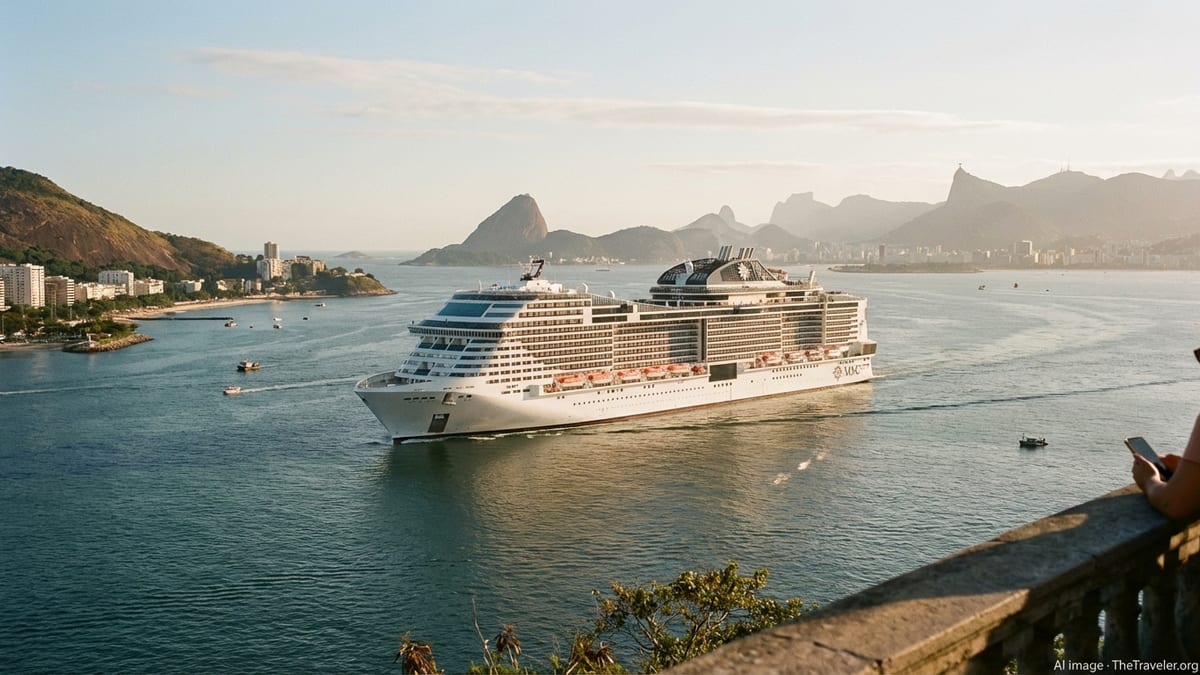
MSC Cruises is reshaping its South American program for the 2026–27 season, signaling both growing demand and strategic fine-tuning across Brazil, Argentina and Uruguay. With a larger, more modern fleet and adjusted deployment that favors bigger vessels and higher-capacity itineraries, the region is set to host one of MSC’s most ambitious seasons yet.
Recent schedule changes, including the redeployment of MSC Lirica and an expanded role for ships such as MSC Musica, Virtuosa, Divina and Splendida, underline how the company is consolidating capacity while seeking to deliver more immersive itineraries along some of South America’s most sought-after coasts.
More News
- Hilton Accelerates Türkiye Expansion With Five New Hotels in Antalya, Istanbul and Kocaeli
- Caribbean Travel to U.S. Upended by New Visa Freezes and Expanded Bans
- Mexico Restores E-Visas for Brazilians, Paving the Way for Borderless Tourism
Strategic Shake-Up: Lirica Canceled, Capacity Consolidated
MSC’s most recent adjustment in South America for winter 2026–27 centers on MSC Lirica, a 2,000-guest vessel that had been scheduled to operate a mix of itineraries sailing from Paranaguá, Itajaí and Rio de Janeiro between December 2026 and March 2027. Those sailings, including transatlantic crossings that would have linked Europe with Brazilian ports, have now been canceled outright as the line reassigns Lirica to the Mediterranean for the same period.
The decision removes one of the line’s smaller ships from the South American lineup but is paired with a broader recalibration designed to keep total capacity robust, if not higher, by leaning on larger and more versatile vessels. MSC has confirmed that Lirica’s redeployment is part of a refocused strategy that emphasizes scale, newer hardware and more standardized itineraries in key markets, including Brazil’s booming cruise sector.
Guests booked on the canceled Lirica voyages are being offered rebooking options and support via travel partners, reflecting a wider industry pattern in which lines pivot capacity in response to regional demand and operational constraints. While the shift represents disruption for some travelers, it sets the stage for bigger ships to take a more prominent role in South America during the 2026–27 season.
Musica’s New Role: Multi-Port Operations Along the Brazilian Coast
Among the biggest beneficiaries of the Lirica reshuffle is MSC Musica, which is now positioned to play a more complex and central role in the South American program. Originally slated to focus largely on short cruises from Santos for the 2026–27 season, the ship’s schedule has been redesigned after its refit timeline forced the cancellation of a planned transatlantic repositioning from Italy to Brazil in November.
In place of that canceled crossing, Musica will now offer a varied portfolio of itineraries departing from Santos, Rio de Janeiro, Itajaí and Paranaguá. This expanded deployment effectively spreads the ship’s capacity across multiple hubs, boosting choice for Brazilian passengers who prefer to embark closer to home and creating a dense network of coastal sailings that link key leisure destinations.
The multi-port strategy also enhances flexibility for MSC, allowing it to respond to local holiday patterns and school breaks with targeted short cruises, while still maintaining longer itineraries that stretch north to beach destinations and south toward the River Plate region. By anchoring Musica so firmly in Brazil, the company is signaling confidence in the country’s cruise demand through 2027, even as it fine-tunes exact routes closer to departure.
Flagship Presence: Virtuosa, Divina and Splendida in the Spotlight
While Lirica exits the 2026–27 South America lineup, MSC has reaffirmed plans for three larger and higher-profile ships in the region: MSC Virtuosa, MSC Divina and MSC Splendida. Together, they frame a season built around scale, modern amenities and itineraries that connect Brazil with Argentina and Uruguay, as well as extensive domestic Brazilian coastal routes.
MSC Virtuosa, one of the line’s newer and larger vessels, is set to sail in South America for the first time during this period. The ship is scheduled to offer a series of seven-night cruises drawing on ports such as Santos, Salvador and Maceió, creating a North–South arc along the Brazilian coastline. Its arrival brings enhanced onboard facilities, including expanded dining and entertainment, into the regional market and marks a step up in the brand’s local product offering.
MSC Divina, already familiar to many South American cruisers, will continue to serve as a bridge between Brazilian homeports and the River Plate countries. Departing from Santos and Balneário Camboriú, Divina’s short cruises along the Brazilian coast will be complemented by seven- and eight-night itineraries that reach Buenos Aires and Montevideo. The ship’s blend of mini-breaks and longer international routes is positioned to appeal both to first-time Brazilian cruisers and to repeat guests looking for multi-country vacations.
Completing the core lineup, MSC Splendida will sail from Buenos Aires and Montevideo for a series of cruises along the Brazilian coast. This positioning allows the ship to capture demand from Argentine and Uruguayan travelers eager for beach-focused itineraries that still feel close to home, while reinforcing the importance of the River Plate as a key gateway for MSC’s South American ambitions.
Record Capacity and a Growing Fleet Behind the Scenes
The South American adjustments for 2026–27 take place against a backdrop of significant fleet growth and rising global capacity for MSC Cruises. The company, which is already the market leader in South America, is expanding its worldwide deployment through 2027 with new ships scheduled to enter service and with major investments in U.S. homeports and terminals.
MSC’s fleet currently counts more than twenty ships, with additional vessels slated for delivery in 2025, 2026 and 2027. This expansion is enabling the line to stage more ambitious seasonal programs across multiple continents, including a denser deployment in North America that in turn frees up existing ships to be repositioned to South America during peak months.
In the U.S., the company has recently announced winter 2026–27 plans featuring seven ships across several homeports and a record four ships based in Miami. Those deployments, centered on vessels like MSC World America, MSC Grandiosa, MSC Seascape and MSC Poesia, showcase a strategy that clusters capacity into key hubs while still maintaining substantial seasonal presence in markets such as Brazil and the wider South Atlantic.
The larger pattern suggests that South America will continue to benefit from MSC’s fleet growth, even as specific ships and itineraries are fine-tuned. Bigger ships like Virtuosa and Splendida taking over from smaller units such as Lirica translate into more cabins and more onboard revenue potential, helping the line sustain its leadership position in the region.
Key South American Gateways: Brazil, Argentina and Uruguay
For travelers, the 2026–27 MSC season in South America will once again revolve around a handful of strategic gateway ports, many of which have become mainstays in the company’s regional deployment. On the Brazilian side, Santos, Rio de Janeiro, Itajaí, Balneário Camboriú, Paranaguá and Salvador figure prominently in the line’s plans, either as homeports or frequent calls for coastal itineraries.
Santos, serving the São Paulo metropolitan area, remains one of MSC’s workhorses in the region, providing a large source market for domestic voyages as well as sailings to Argentina and Uruguay. Rio de Janeiro, with its global brand appeal, continues to attract international guests looking for iconic sights combined with cruise itineraries along the Atlantic coast.
Further south, Buenos Aires and Montevideo hold their roles as twin pillars for itineraries that blend cosmopolitan city breaks with beach escapes. MSC Splendida’s deployment from these ports highlights their continued importance, especially for regional guests eyeing Brazil’s resort destinations but preferring departures closer to home. The mix of three-night mini-cruises, weeklong routes and longer sailings that link multiple countries aims to keep both local and international cruisers engaged across the season.
For coastal communities such as Itajaí and Paranaguá, Musica’s revised schedule offers additional economic opportunities by bringing more embarkations and turnarounds outside the traditional hubs. That dispersion of homeports could help spread tourism impacts more evenly along the Brazilian coastline during the core months of the 2026–27 season.
Impact on Travelers: Cancellations, Rebookings and New Options
As with any large-scale deployment shift, MSC’s revised South American plans for 2026–27 come with direct implications for passengers who had already booked or were planning to book specific itineraries. The cancellation of MSC Lirica’s season, in particular, affects guests who had secured voyages departing from Paranaguá, Itajaí and Rio de Janeiro, as well as those counting on its transatlantic crossings to or from Europe.
In line with industry practice, affected travelers are typically offered a menu of alternatives that may include rebooking on similar dates with different ships, selecting revised itineraries that call at comparable ports, or requesting full refunds. For many, the expanded deployment of Musica and the confirmed schedules of Virtuosa, Divina and Splendida should present viable options, albeit with different ship sizes and onboard experiences.
From a planning standpoint, the current round of adjustments underscores the importance of booking through informed travel advisors and keeping a close eye on official communications from the cruise line. As shipyards adjust refit dates and global events influence routing, itineraries can still evolve months or even years ahead of sailing, particularly in a region as seasonally sensitive as South America.
For future passengers eyeing the 2026–27 season, the upside is a lineup that increasingly features newer or recently refurbished ships, larger capacity across popular routes and a wider range of departure points, making it easier to tailor a cruise to preferred dates, budgets and embarkation cities.
Sustainability and Long-Term Commitment to the Region
Beyond capacity and scheduling, MSC is also positioning its South American expansion within a broader narrative of long-term investment and environmental responsibility. The company has publicly committed to achieving net-zero greenhouse gas emissions in its marine operations by 2050, a target that influences ship design, fuel choices and operational practices across every region, including South America.
Newer ships such as Virtuosa are equipped with more efficient engines and advanced emissions-control technologies, reducing the per-passenger environmental footprint of regional itineraries. As ports in Brazil, Argentina and Uruguay continue to develop shore-side infrastructure, there is growing scope for further improvements in areas such as waste management, water treatment and eventually alternative fuels.
For coastal destinations, MSC’s long-term presence provides both opportunities and responsibilities. Local authorities and port operators are increasingly focused on managing visitor flows, protecting sensitive ecosystems and ensuring that rising cruise traffic delivers tangible economic benefits. The 2026–27 season, with its emphasis on larger ships and more complex deployment, will serve as another test of how the industry and local stakeholders can balance growth with sustainability goals.
As the region moves deeper into the latter half of the decade, observers will be watching how MSC’s South American operations evolve in tandem with its global expansion, and whether new technologies or port partnerships will further reshape the way passengers experience the continent by sea.
FAQ
Q1. Which MSC ships are confirmed for South America in the 2026–27 season?
MSC has confirmed plans for MSC Virtuosa, MSC Divina and MSC Splendida to operate in South America for the 2026–27 season, with MSC Musica also taking on an expanded role along the Brazilian coast after schedule adjustments linked to its refit.
Q2. What happened to MSC Lirica’s 2026–27 South America program?
MSC Lirica was originally scheduled to sail from Paranaguá, Itajaí and Rio de Janeiro between December 2026 and March 2027, including transatlantic crossings. Those voyages have since been canceled, with the ship reassigned to Mediterranean itineraries during the same period.
Q3. How is MSC Musica’s deployment changing for 2026–27?
Instead of focusing primarily on short cruises from Santos, MSC Musica will now operate a mix of itineraries from Santos, Rio de Janeiro, Itajaí and Paranaguá. This expanded deployment spreads the ship’s capacity across several Brazilian ports and supports both short coastal breaks and longer regional sailings.
Q4. Will the changes reduce MSC’s overall capacity in South America?
Although MSC Lirica’s season has been canceled, the presence of larger ships such as Virtuosa, Divina and Splendida, along with Musica’s expanded schedule, means overall capacity in South America remains strong. The strategy is shifting toward fewer but generally larger ships rather than reducing the company’s footprint in the region.
Q5. Which ports will feature most prominently in MSC’s 2026–27 South American itineraries?
The core gateway ports are expected to include Santos and Rio de Janeiro in Brazil, Buenos Aires in Argentina and Montevideo in Uruguay, with additional embarkations and calls at coastal Brazilian cities such as Itajaí, Balneário Camboriú, Paranaguá and Salvador.
Q6. I had a booking on a canceled MSC Lirica cruise. What are my options?
Passengers affected by the Lirica cancellations are generally offered options that may include rebooking on an alternative sailing in the same season, choosing a different itinerary on another MSC ship in the region or requesting a full refund. Specific arrangements depend on the original booking and should be confirmed through MSC Cruises or your travel advisor.
Q7. Are there still itineraries that visit more than one South American country?
Yes. MSC Divina and MSC Splendida in particular are expected to continue operating itineraries that link Brazil with Argentina and Uruguay, offering weeklong and slightly longer routes that combine major cities like Santos, Buenos Aires and Montevideo with popular beach destinations.
Q8. How far in advance should travelers book South America cruises for 2026–27?
Given the strong demand for regional cruises and the ongoing fine-tuning of deployment, travelers looking at the 2026–27 season are generally advised to book well in advance, often 12 to 18 months before departure, especially for peak holiday periods and higher-category cabins.
Q9. Will there be new ship classes or major product upgrades in South America by 2026–27?
While the latest World Class vessels are being focused heavily on North America and the Caribbean, South America will benefit from the deployment of larger and more modern ships such as MSC Virtuosa, along with refitted vessels like Musica. These ships bring updated dining, entertainment and family offerings compared with older tonnage.
Q10. How might sustainability initiatives affect MSC’s South American cruises?
MSC’s commitment to net-zero greenhouse gas emissions by 2050 guides investments in more efficient ships and cleaner operations. In South America, this means newer vessels with advanced technologies are increasingly taking over regional itineraries, and ports are gradually adapting infrastructure to support more sustainable cruise operations over the coming years.