

More news on this day
MSC Cruises is sharpening its focus on Brazil for the 2026-27 Southern Hemisphere summer, announcing that MSC Musica will operate new departures from the ports of Paranaguá, Itajaí and Rio de Janeiro in a move designed to widen access to cruising along the country’s bustling South Atlantic coast.
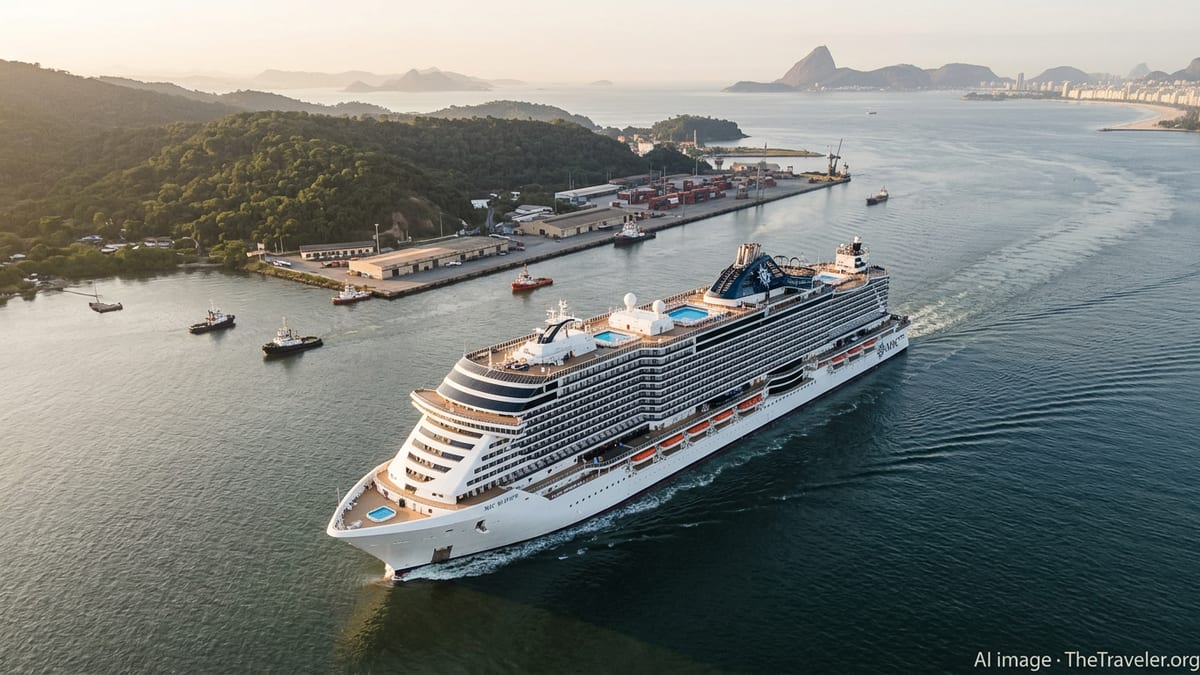
New Homeports Highlight Brazil Growth Strategy
The decision to base MSC Musica across three additional Brazilian homeports between January and February of the 2026-27 season underlines how central the country has become to the line’s South America deployment. By adding regular turnarounds in Paranaguá, Itajaí and Rio de Janeiro, MSC Cruises is moving beyond its traditional hubs such as Santos and Salvador to reach fast-growing coastal markets further south.
According to the deployment plan, MSC Musica will rotate embarkation and disembarkation among the three ports during the heart of the regional summer, giving travelers in Paraná, Santa Catarina and Rio de Janeiro states more direct access to weeklong and mini-cruise itineraries without the need for domestic flights. The move also responds to rising demand from Brazilian guests who, in recent seasons, have increasingly filled MSC ships operating from Santos and Rio.
Brazil has been one of the strongest-performing markets in MSC Cruises’ global network, with the line steadily increasing capacity over multiple seasons. The addition of new homeports for MSC Musica builds on that trajectory, positioning the brand to capture both repeat cruisers looking for different departure points and first-time guests attracted by shorter travel times to the pier.
Industry observers note that the multi-port strategy also offers operational flexibility, allowing the company to fine-tune embarkation numbers by region and smooth out peak holiday congestion at any single terminal. For local tourism boards, the arrival of a large international ship on a regular schedule is expected to translate into more overnight stays, restaurant visits and ground-tour spending in each host city.
What Travelers Can Expect on MSC Musica Itineraries
While full itineraries are still being refined, the new departures from Paranaguá, Itajaí and Rio de Janeiro are expected to follow a familiar South America pattern that mixes iconic cities with beach-focused resort towns. Ports such as Búzios, Ilha Grande and Ilhabela, along with calls in Uruguay and Argentina on selected sailings, are likely to feature, creating a blend of urban culture and relaxed seaside escapes.
Cruise durations should range from short three- to four-night getaways timed around weekends and public holidays to seven-night voyages that trace a wider loop along the Brazilian and Plate River coasts. This variety allows MSC to appeal both to guests testing cruising for the first time and to seasoned travelers who prefer longer, more immersive itineraries at sea.
On board, guests will find MSC Musica positioned squarely in the family-friendly mainstream segment. The ship offers multiple dining venues serving Italian and international cuisine, expansive open decks, pools and whirlpools, as well as children’s and teens’ clubs that cater to the multigenerational profiles typical of the Brazilian cruise market. Evening entertainment, from theater productions to live music in lounges, is tailored to a late-night audience that often stays out well past midnight.
With embarkations spread across three ports, MSC Musica is also expected to attract more drive-to passengers from inland cities such as Curitiba, Joinville and the Rio de Janeiro metropolitan area. For many travelers, the ability to board closer to home could tip the balance in favor of a cruise holiday instead of a land-based beach trip.
Paranaguá and Itajaí Step Into the Cruise Spotlight
Paranaguá and Itajaí have long been important cargo gateways, but in recent years both ports have been investing in infrastructure to support regular cruise calls. The arrival of MSC Musica as a homeporting ship is being viewed locally as a milestone, signaling that these southern Brazilian harbors are ready to play a larger role in the country’s tourism economy.
In Paranaguá, known as the maritime access point to the scenic Ilha do Mel and the historic coastal railway linking Curitiba to the shoreline, additional cruise departures are expected to boost demand for shore excursions and overnight stays. Local authorities have promoted the region’s blend of preserved Atlantic Forest, colonial architecture and quieter beaches as a contrast to the bustle of Rio.
Itajaí, in Santa Catarina, has already featured in several South America itineraries and sits close to popular destinations such as Balneário Camboriú and the theme park Beto Carrero World. Expanded use of the port for embarkations is likely to reinforce its profile as a cruise hub for southern Brazil, feeding visitors into a cluster of nearby resorts, surf spots and coastal drives that are well known to domestic tourists but less familiar internationally.
By positioning a major international ship in both Paranaguá and Itajaí, MSC Cruises is effectively linking these regional tourism offerings into a broader network that also includes marquee ports like Rio de Janeiro. That integration could help distribute visitor flows more evenly along the coast, easing pressure on the most saturated destinations while opening up new revenue streams for smaller municipalities.
Rio de Janeiro Strengthens Its Role as a Regional Cruise Gateway
Rio de Janeiro will continue to function as one of MSC’s most important hubs in South America, and the inclusion of MSC Musica sailings from the city further underscores its status. For international travelers flying into Brazil, Rio remains the most recognizable entry point, with iconic attractions such as Christ the Redeemer, Sugarloaf Mountain and Copacabana Beach anchoring pre- and post-cruise stays.
The Pier Mauá terminal complex has seen steady investment in recent seasons, improving passenger flows and expanding the range of services available on turnaround days. With MSC Musica joining other ships calling and embarking in Rio during the 2026-27 season, the port is set to welcome a high volume of cruise guests, especially around the peak holiday period between Christmas, New Year and Carnival.
For MSC Cruises, the ability to combine Rio embarkations with those from Paranaguá and Itajaí expands its catchment area while still concentrating a significant share of operations in a city with mature tourism infrastructure. Hotels, inbound tour operators and local attractions stand to benefit from packaged stays that link several nights in Rio with a week at sea along the Brazilian coast.
As airlines continue to rebuild and expand their networks into Brazil, Rio’s role as a cruise gateway also carries strategic value. More long-haul connections give MSC additional opportunities to market combined air-and-cruise products to Europe and North America, using the new MSC Musica itineraries as a showcase for Brazil’s varied coastal experiences.
Boost for Brazil’s Coastal Tourism and Cruise Capacity
The deployment of MSC Musica across three Brazilian homeports is expected to provide a notable lift to local economies, particularly in the hospitality and service sectors surrounding each terminal. Seasonal employment in areas such as baggage handling, port operations, transportation and excursions typically rises when a ship homeports, while nearby restaurants and shops benefit from the influx of both embarking guests and accompanying friends and family.
The move also comes at a time when Brazilian authorities and port operators are looking to solidify the country’s position as South America’s leading cruise destination. Recent seasons have seen more infrastructure planning and coordination between federal, state and municipal stakeholders, aimed at handling larger ships, improving passenger experiences and smoothing regulatory processes for cruise lines.
For MSC Cruises, the expanded presence represents both a commercial opportunity and a test case for how diversified homeporting in Brazil can support future growth. If the 2026-27 deployment of MSC Musica across Paranaguá, Itajaí and Rio de Janeiro proves successful, similar multi-port strategies could be replicated with other ships or extended into subsequent seasons, further anchoring Brazil within the company’s global portfolio.
Travelers considering a cruise holiday in Brazil will see a broader set of options, more convenient embarkation points and an expanded menu of itineraries that connect cosmopolitan cities, nature-rich coastlines and neighboring countries. As bookings open for the 2026-27 season, the new departures on MSC Musica are set to become a focal point of MSC’s sales push in the region.