

More news on this day
MSC Foundation is strengthening its collaboration with the Perry Institute for Marine Science to accelerate coral reef restoration in The Bahamas, positioning Ocean Cay as a testing ground for climate-resilient “super corals” that could help secure the future of Caribbean marine ecosystems.
Get the latest news straight to your inbox!
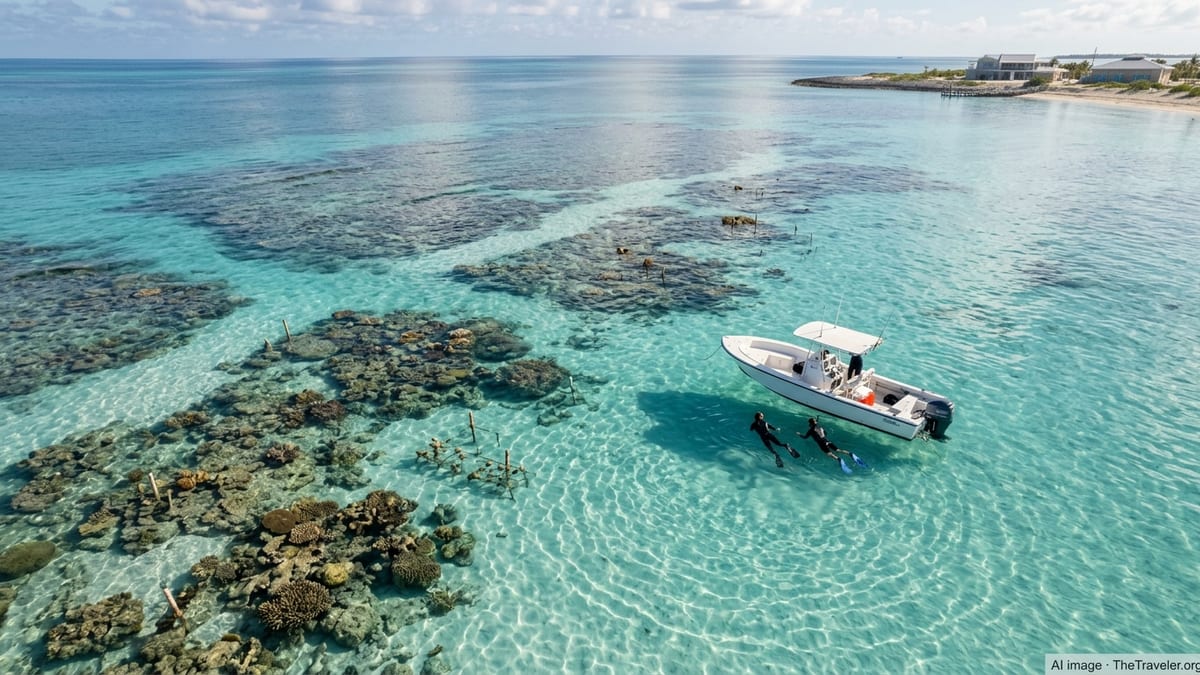
Climate-Smart Coral Restoration Gains Momentum in The Bahamas
Publicly available information on the MSC Foundation’s Super Coral Reefs Programme indicates that the partnership with the Perry Institute for Marine Science has moved from planning to active reef restoration in waters surrounding Ocean Cay in The Bahamas. The initiative focuses on selectively cultivating resilient coral genotypes capable of withstanding marine heatwaves and other stressors that have devastated reefs across the wider Caribbean.
The Super Coral Reefs Programme, launched in 2019, was designed to identify and propagate hardy coral species that have survived recent temperature extremes and bleaching events. According to MSC Foundation materials, coral fragments are first grown in offshore and land-based nurseries and then transplanted to degraded reef sites, where they are expected to help rebuild habitat complexity and biodiversity.
The Perry Institute, a long-standing research organization focused on Caribbean marine conservation, contributes scientific expertise and regional monitoring experience to the collaboration. Reports describe the Institute’s role as central to designing restoration strategies, assessing coral health and tracking ecological responses as outplanted corals begin to establish and grow on surrounding reefs.
The Bahamas hosts a substantial share of Caribbean coral cover, and science-based restoration in this archipelago is viewed as strategically significant. By situating the programme at Ocean Cay, a former industrial site transformed into a marine reserve and tourism destination, the partners are attempting to demonstrate how tourism infrastructure can coexist with and even fund large-scale reef recovery.
From Nursery to Reef: First Outplanting Milestones
Project updates from the MSC Foundation show that the Super Coral Reefs Programme has progressed from experimental nursery work to tangible in-water restoration. Coral nurseries at Ocean Cay were first established in 2022, beginning with fewer than 100 fragments of a single critically endangered species. Subsequent reporting indicates that the nursery population has increased severalfold, with hundreds of fragments and multiple genotypes now under active cultivation.
In 2024 and 2025, the collaboration with the Perry Institute advanced to a new phase as teams began outplanting nursery-grown corals onto selected reef sites near Ocean Cay. Programme descriptions highlight this first outplanting campaign as a critical milestone, marking the transition from controlled research to ecosystem-scale recovery efforts in the surrounding 64 to 65 square miles of protected waters.
Technical documentation emphasizes that the Perry Institute’s field experience in the Bahamas and wider region is helping to refine how and where corals are transplanted. Site selection considers factors such as depth, water flow, and existing reef structure to maximize survival rates and ecological impact. The partners are also testing different attachment methods and monitoring how outplanted colonies fare during seasonal temperature peaks.
Initial results reported by the programme suggest encouraging survival of nursery corals, including through the intense marine heatwave of 2023. Observers note that such performance, if sustained over longer time frames and larger spatial scales, could support a blueprint for restoration techniques that are viable under rapidly warming ocean conditions.
Ocean Cay Marine Conservation Center as Regional Hub
The collaboration is anchored at the Ocean Cay Marine Conservation Center, which opened in April 2025 as the on-island hub for MSC Foundation’s marine conservation work. The facility includes a biolab, coral aquaria, education spaces and infrastructure designed to support both research and public engagement.
Factsheets from the Foundation describe the Center as the operational base for the Super Coral Reefs Programme and its partnerships with the Perry Institute, the University of Miami, Nova Southeastern University, the University of The Bahamas and the Bahamas Agriculture and Marine Science Institute. The facility hosts coral tanks used to test new restoration methods, evaluate coral resilience and prepare fragments for outplanting.
Workshop records indicate that the Perry Institute has been consistently represented at technical meetings convened on Ocean Cay, joining government agencies, universities and international coral initiatives. These gatherings serve to align restoration strategies with regional science and policy efforts, including global assessments that identify many Atlantic coral species, such as elkhorn coral, as highly threatened.
By combining laboratory capacity, in-water sites and visiting researchers, the Center is emerging as a focal point for climate-smart reef restoration in the northern Caribbean. The MSC Foundation presents it as an open platform intended to host collaborative projects beyond its own programme, potentially allowing findings from Perry Institute-led studies and other partners to inform restoration across multiple islands.
Safeguarding Marine Ecosystems and Coastal Livelihoods
The collaboration is unfolding against a backdrop of escalating reef decline across the Caribbean. Scientific assessments referenced in MSC Foundation documents note that coral reefs occupy a tiny fraction of the seafloor but support roughly a quarter of known marine species. In The Bahamas and neighboring states, reefs underpin fisheries, coastal protection and tourism, making their degradation a direct concern for local communities.
Information from the Super Coral Reefs Programme highlights that The Bahamas holds a significant portion of remaining Caribbean reef habitat, yet faces rising pressure from ocean warming, pollution and storms. The Perry Institute’s long-term monitoring work, published separately, has previously documented declines in coral cover and shifts toward algae-dominated reefs in parts of the region, trends that the current restoration efforts aim to counteract.
By focusing on resilient coral strains and adaptive restoration techniques, the partnership seeks to enhance reef capacity to endure repeated heat stress and more frequent extreme events. Project materials underscore that successful coral outplanting has secondary benefits, from rebuilding three-dimensional reef structure for fish and invertebrates to improving natural coastal defenses in low-lying island chains.
Tourism-facing aspects of the project at Ocean Cay also carry economic and social dimensions. Visitors encounter restored reef areas, interpretive exhibits and guided activities that highlight both the fragility and value of coral ecosystems. Publicly available descriptions of these offerings suggest an emphasis on encouraging responsible marine recreation and building support for conservation among cruise passengers and Bahamian stakeholders alike.
Scaling Lessons for the Wider Caribbean
As the MSC Foundation and Perry Institute deepen their collaboration in The Bahamas, observers point to the potential for the work to inform reef recovery elsewhere in the Caribbean. Programme summaries stress that the project is designed as a scalable model, with methods and data intended for replication in other island nations facing similar climate and biodiversity challenges.
The focus on hardy “super coral” genotypes, coupled with rigorous field monitoring, is being framed as a way to build a transferable toolkit for restoration. According to publicly shared information, the programme is already generating graduate research projects and technical studies on coral growth supplements, predator exclusion and improved outplanting techniques, all of which may be applicable beyond Ocean Cay.
Regional collaboration is likely to remain central. Meeting notes and partner lists show that the Perry Institute, MSC Foundation and other institutions are engaging with global coral initiatives and multilateral conservation platforms that aim to coordinate funding and scientific priorities for reef recovery. Insights from the Bahamian pilot sites may contribute to broader guidance on how to triage restoration investments and prioritize the most resilient species and locations.
For now, Ocean Cay functions as a living laboratory, with the MSC Foundation and the Perry Institute using its surrounding reefs to test how far targeted interventions can push back against climate-driven decline. As additional outplanting phases proceed and more data are collected, the collaboration is expected to provide a clearer picture of what it will take to preserve the Caribbean’s coral-based marine ecosystems in a rapidly changing ocean.