

More news on this day
The MSC Foundation is reinforcing its partnership with the Perry Institute for Marine Science in a bid to accelerate coral reef restoration around Ocean Cay in The Bahamas and across the wider Caribbean, a move that observers say is increasingly central to the long-term sustainability and growth of cruise tourism in the region.
Get the latest news straight to your inbox!
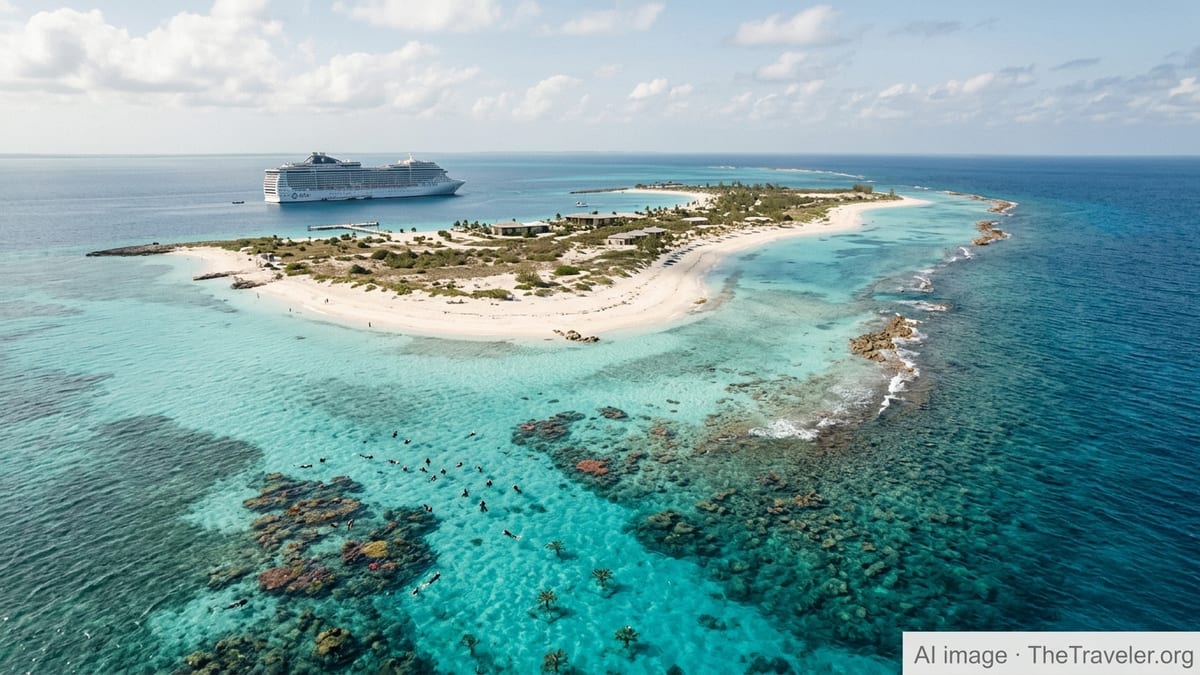
Partnership Scaled Up Around Ocean Cay Marine Reserve
Publicly available information shows that the MSC Foundation has positioned Ocean Cay MSC Marine Reserve in The Bahamas as the focal point of its Super Coral Reefs Programme, working alongside the Perry Institute for Marine Science to revive degraded reef systems. The once-industrial sand mining site has been converted into a 64 to 65-square-mile marine reserve, now used as a private destination for MSC Cruises ships and a living laboratory for reef conservation.
Reports indicate that the collaboration with the Perry Institute has steadily expanded since 2022, when an offshore coral nursery near Ocean Cay began cultivating heat-tolerant corals. By April 2025, MSC Foundation updates noted that nursery-grown coral fragments were being outplanted onto surrounding reefs, signaling a shift from experimental husbandry to restoration at scale. The Perry Institute’s long-standing expertise in Caribbean reef science is regarded as a key element in selecting resilient coral genotypes and suitable restoration sites.
According to recent cruise industry coverage, this enhanced scientific partnership is intended to safeguard the natural assets that underpin Ocean Cay’s appeal to visitors, including its coral gardens, shallow lagoons and nearshore reef slopes. For the cruise line, maintaining healthy, biodiverse reefs has become a strategic priority, directly linked to guest satisfaction and the resilience of a flagship Caribbean destination.
New Marine Conservation Center Anchors Research and Education
In April 2025 the MSC Foundation formally opened its Marine Conservation Center on Ocean Cay, described in company and media reports as a major new hub for coral research and restoration. The facility houses a bio-laboratory, a land-based coral nursery with more than 20 aquaria, and a lecture space designed to host workshops and training sessions for students and visiting scientists.
Factsheets released by the MSC Foundation highlight that the center is home to the Super Coral Reefs Programme and was developed with input from the Perry Institute and other research partners. The Perry Institute has been cited in workshop reports as a contributor to scientific guidelines for reef restoration in The Bahamas, helping to shape protocols for coral propagation, outplanting and long-term monitoring.
The center’s design reflects three core pillars: research and conservation, education, and public awareness. Marine science students from institutions such as the University of The Bahamas and The Bahamas Agriculture and Marine Science Institute are expected to rotate through the site for hands-on internships. For the Perry Institute, the facility offers expanded capacity to test restoration techniques, track coral health through repeated surveys and share findings with regional conservation networks.
Observers note that the Ocean Cay complex is emerging as a model for how private cruise destinations can integrate scientific infrastructure into guest-focused environments, supporting both tourism and conservation objectives.
Caribbean Coral Restoration Gains Momentum After Extreme Heat
The expanded MSC Foundation and Perry Institute collaboration is unfolding against a backdrop of mounting stress on Caribbean reefs, including the unprecedented marine heatwave recorded in 2023. According to MSC Foundation communications, corals within the Ocean Cay nursery showed high survival rates through that regional heat event, strengthening interest in scaling up “super coral” approaches that favor thermally resilient strains.
Regional conservation updates from the Perry Institute describe widespread bleaching and disease outbreaks across Bahamian and Caribbean reefs in recent years, underscoring the urgency of active interventions. The organization has been involved in coral rescue, nursery development and pillar coral restoration expeditions across multiple islands, offering methodologies that can be adapted to Ocean Cay and neighboring archipelagos.
Recent workshop documentation produced by the MSC Foundation indicates that a 2024 Coral Experts Workshop, which included Perry Institute scientists, resulted in detailed recommendations to intensify reef restoration and to create stronger public outreach around coral conservation. The Marine Conservation Center has been presented as the mechanism to implement many of these measures, including expanded outplanting campaigns and enhanced monitoring of reef recovery.
Travel analysts suggest that, if successful, these interventions could help stabilize key reef habitats that support snorkeling, diving and beach experiences across the cruise-dominated Bahamas region, providing a buffer against future heatwaves and storm damage.
Linking Reef Health to Cruise Tourism Sustainability
Industry assessments increasingly frame coral restoration at Ocean Cay and other Caribbean sites as an investment in the long-term viability of cruise tourism. Healthy reefs contribute to clear water, living shorelines and diverse marine life, all of which are considered central to the marketing and guest experience strategies of cruise brands operating in the region.
Documents prepared for international forums on sustainable cruise travel have cited the MSC Foundation’s work with the Perry Institute as an example of how private islands can transition from purely recreational spaces to active conservation platforms. By channeling philanthropic funding into science-based projects, the Foundation aims to slow local biodiversity loss while maintaining the natural aesthetics that draw visitors.
According to these reports, reef-focused initiatives are also tied to climate adaptation planning. Restored coral structures can help dissipate wave energy and reduce coastal erosion around low-lying cays, potentially lowering the vulnerability of cruise infrastructure to intensifying storms and sea level rise. For operators, this dual role of reefs as both attractions and natural defenses is becoming more prominent in destination planning.
At the same time, environmental organizations continue to scrutinize the overall footprint of the cruise sector in the Caribbean, from emissions to waste management. Analysts say that transparent reporting on coral restoration outcomes, alongside broader decarbonization efforts, will be important for convincing travelers and regulators that cruise-related growth can align with conservation goals.
Guest Engagement and Community Benefits Around Ocean Cay
Publicly available descriptions of the Ocean Cay experience suggest that the MSC Foundation and its partners are incorporating guest engagement into the coral restoration effort. The Marine Conservation Center includes interactive exhibits and guided activities designed to explain reef ecology, climate pressures and restoration tools to cruise passengers spending the day on the island.
Travel media coverage notes that visitors can learn how nursery corals are grown, see restoration equipment up close and, in some cases, join educational excursions that highlight protected zones around the marine reserve. This strategy positions coral conservation as an integral part of the visitor narrative rather than a behind-the-scenes technical project.
The partnership with the Perry Institute is also linked to benefits for local and regional communities. Scholarship and internship schemes with Bahamian institutions, described in MSC Foundation updates, are intended to create pathways for young marine scientists from the Caribbean to gain field experience at Ocean Cay. The Perry Institute’s broader network across the region could help replicate successful techniques and build capacity in neighboring island states.
Tourism commentators argue that these community connections will be increasingly important as destinations look to demonstrate that cruise tourism supports local skills, employment and ecosystem stewardship, not only short-term visitor spending. In that context, the deepening of the MSC Foundation’s collaboration with the Perry Institute is being watched as a test case for how science-led reef restoration can underpin a more sustainable future for Caribbean cruise growth.