

More news on this day
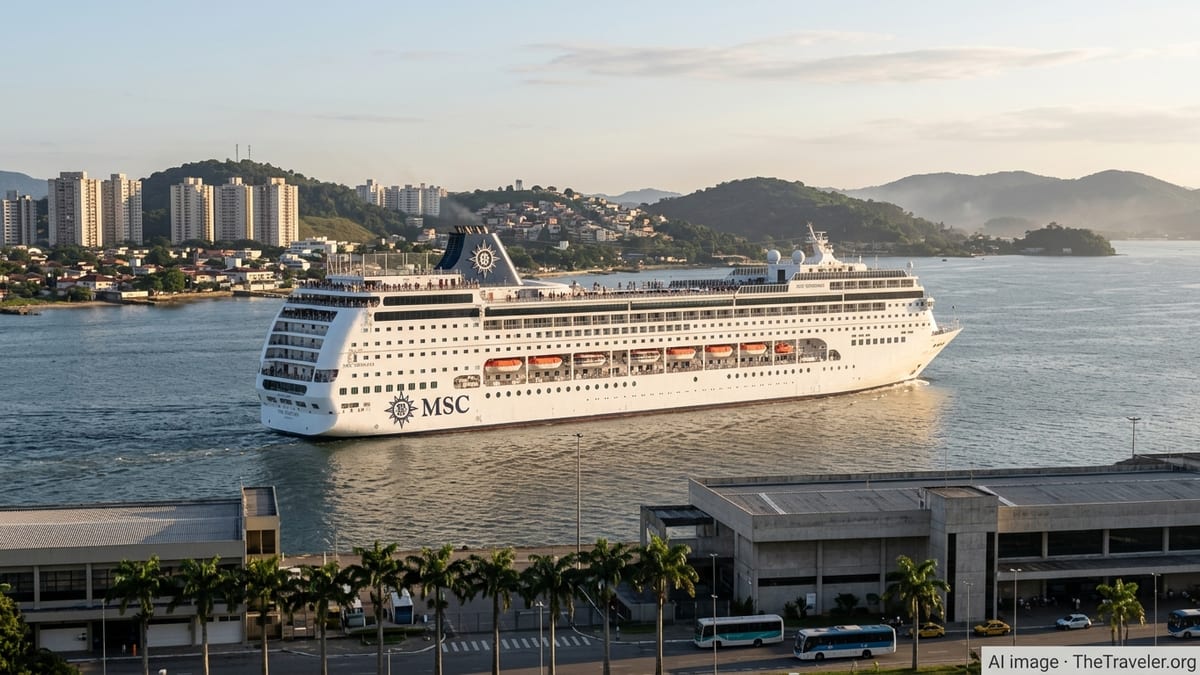
MSC Sinfonia is concluding its busy 2025–26 South America winter season and preparing to reposition to Europe for summer sailings, highlighting how rising demand is reshaping cruise deployment between Brazil and the Mediterranean.
Get the latest news straight to your inbox!
Ship Wraps Up Packed Winter Program in Brazil
Publicly available schedules indicate that MSC Sinfonia has spent the 2025–26 winter months based mainly in Santos, Brazil, operating a mix of three to seven night cruises along the Brazilian coast. The program has focused on popular resort destinations such as Búzios, Ilhabela, Ilha Grande and Salvador, along with calls at Rio de Janeiro and the southern port of Itajaí.
Cruise line deployment summaries and regional port data show that the season has run from late November through March, aligning with the peak summer holiday period in Brazil and neighboring markets. Shorter three and four night sailings have targeted first time cruisers and short break travelers, while week long itineraries have catered to families and international guests seeking a more in depth coastal experience.
Operational reports from Santos indicate that MSC Sinfonia has been part of a broader build up of cruise capacity in Brazil, sharing the market with larger vessels such as MSC Seaview, MSC Preziosa, MSC Fantasia and MSC Armonia. Port of call statistics point to record or near record passenger volumes over the season, reinforcing South America’s status as one of the fastest growing source markets for mainstream cruising.
Weather related schedule adjustments, including isolated delayed arrivals reported in early January, have not significantly disrupted the program. Industry coverage suggests that overall performance for the ship’s South American deployment has been strong, with itineraries largely operating as scheduled during the core holiday weeks.
Repositioning Voyages Bridge South America and Europe
As the Brazil summer cools and demand shifts back toward Europe, MSC Sinfonia is slated to complete its final short cruises from Santos in March before making a transoceanic repositioning toward the Mediterranean. Itinerary change tables and trade communications refer to an end of regular passenger operations in South America, followed by a return to European waters ahead of the northern summer season.
Some documentation indicates that a previously advertised long Grand Voyage between Santos and a northern Adriatic homeport has been withdrawn from sale, reflecting adjustments to the deployment plan. However, commercial listings and timetable aggregators show that the vessel is scheduled to reappear on European routes in early April, suggesting a non revenue or lightly sold repositioning segment across the Atlantic.
These seasonal shifts are part of a long established pattern in the mainstream cruise industry. Ships frequently migrate between hemispheres to match peak travel periods, with South America, South Africa and the Middle East typically hosting vessels in the northern winter, before many units move back to the Mediterranean and Northern Europe from April through October.
For ports such as Santos and Rio de Janeiro, each repositioning represents both an end and a beginning: the conclusion of intensive seasonal cruise activity, and the prospect of new itineraries when vessels return the following year. For European gateway ports, the arrival of repositioning ships like MSC Sinfonia adds capacity just as Mediterranean and Adriatic demand accelerates.
Summer Mediterranean Sailings Target Growing European Demand
Once back in Europe, MSC Sinfonia is scheduled to resume service with a series of weeklong Mediterranean itineraries, according to cruise schedule consolidators and booking platforms. These programs typically feature embarkation ports such as Bari and Venice area terminals, linking Italy to popular destinations in Greece, Croatia and other Eastern Mediterranean markets.
Deployment information released over recent months shows that the ship is set to operate classic seven night loops, a format that remains highly popular among European and international guests. These itineraries often combine historic port cities with beach focused islands, enabling cruise lines to market a mix of culture, gastronomy and warm weather relaxation.
Industry analysts note that the decision to assign MSC Sinfonia to these routes fits with a broader strategy of matching ship size and onboard product to regional demand. As a mid sized vessel that underwent a significant refurbishment and lengthening earlier in its career, the ship is seen as well suited to port intensive Mediterranean schedules where berth availability and maneuverability remain important factors.
Bookings data cited in trade coverage suggests that Mediterranean demand for summer 2026 is tracking ahead of previous years, helped by a combination of pent up travel interest, additional air capacity into Southern Europe and relatively competitive cruise pricing compared with land based holidays.
South America Emerges as a Key Seasonal Cruise Hub
The conclusion of MSC Sinfonia’s season in Brazil also underscores how South America has evolved into a strategic seasonal hub for global cruise brands. Over the 2025–26 period, the region has hosted multiple large ships based in Santos, Rio de Janeiro, Itajaí, Buenos Aires and Montevideo, collectively offering itineraries from short coastal escapes to longer regional voyages.
Brazilian port authorities and national tourism bodies have highlighted year on year increases in passenger movements, while trade publications report that more ships and extended seasons are being considered for upcoming years. The presence of several vessels from the same brand in one region allows cruise operators to segment the market, offering everything from entry level family products to more premium experiences on newer tonnage.
Experts quoted in regional tourism reports point to several structural supports for this growth: a large population concentrated near the coast, rising middle class incomes, and strong appeal among international travelers seeking warm weather holidays during the northern hemisphere winter. The gradual expansion of dedicated cruise terminals in Santos and Rio de Janeiro has also helped streamline operations and improve the passenger experience.
Against this backdrop, MSC Sinfonia’s successful season is being viewed as another indication that South America can sustain complex multi ship deployments, with itineraries that connect Brazil’s coastal cities to Argentina and Uruguay while complementing Caribbean and North American offerings elsewhere in the fleet.
Global Fleet Strategies Respond to Shifting Travel Patterns
The redeployment of MSC Sinfonia from South America back to Europe illustrates how cruise lines are continuously recalibrating their global fleets. Fleet planning documents and itinerary announcements across the industry show a pattern of fine tuning ship assignments in response to booking trends, economic conditions and port infrastructure developments.
In the case of MSC Sinfonia, the choice to alternate between Brazilian coastal cruises in the southern summer and Mediterranean voyages in the northern summer allows the vessel to operate in near peak conditions for most of the year. This kind of dual hemisphere strategy also spreads brand visibility across key markets, reinforcing loyalty among both South American and European guests.
Market observers note that similar patterns are being seen with other vessels, as operators deploy ships to regions where they can achieve higher yields or tap into emerging demand. Repositioning cruises themselves, whether sold as full voyages or operated largely without guests, remain a fundamental part of this model, enabling ships to follow the sun while keeping schedules aligned with port capacity and air connectivity.
As MSC Sinfonia closes its latest chapter in Brazil and prepares for another Mediterranean summer, industry data suggests that cruise tourism in both regions is set to continue expanding. The ship’s movements between Santos and European homeports reflect not only seasonal shifts, but also the increasingly global nature of mainstream cruising and the growing expectations of travelers who are willing to follow their favorite ships across oceans.