

More news on this day
MSC Cruises is working with Emirates and Etihad Airways on a complex repatriation effort for thousands of cruise guests stranded in the Gulf after regional conflict forced the abrupt suspension of winter sailings and left commercial air links heavily disrupted.
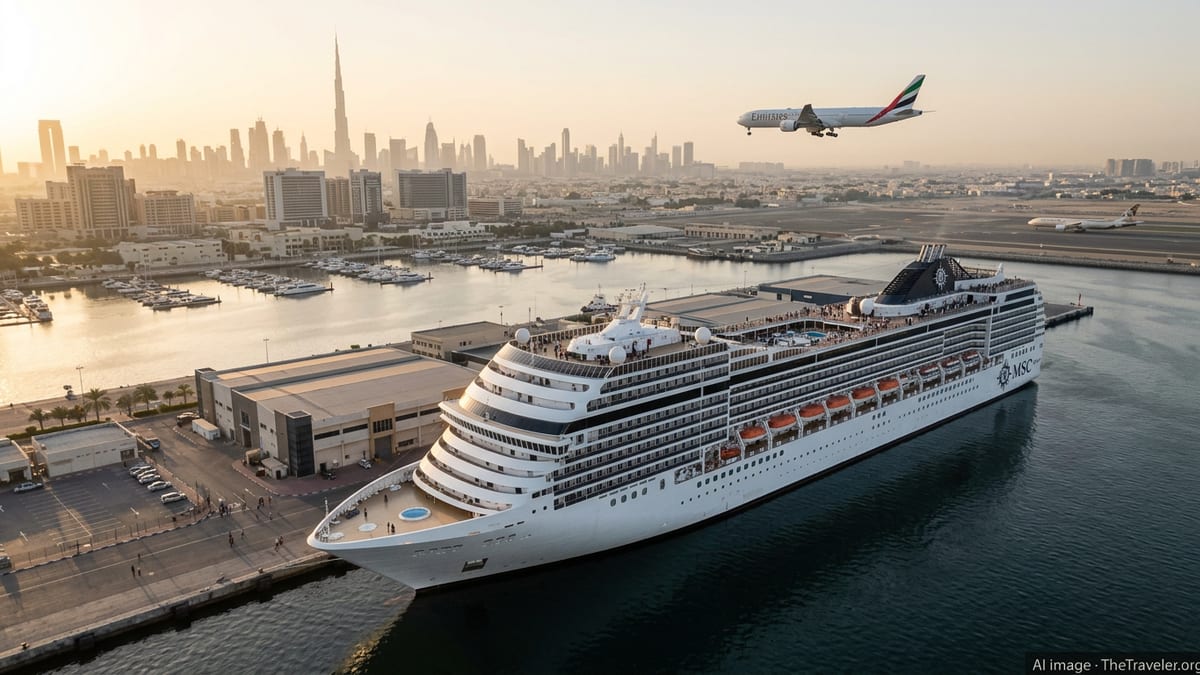
Coordinated Air Bridge as Gulf Conflict Halts Cruises
In a statement on March 4, 2026, MSC Cruises confirmed it is collaborating closely with Emirates and Etihad Airways to secure seats on remaining commercial services and explore charter options from Dubai, Abu Dhabi and Muscat, as governments and airlines pare back schedules across the region.
The measures follow the cancellation of the line’s remaining Middle East winter program on MSC Euribia, which had been operating seven night itineraries across the United Arab Emirates, Qatar and Bahrain. With ports such as Doha temporarily closed to cruise ships and airspace restrictions triggering widespread knock on delays, MSC has shifted rapidly from destination cruising to large scale guest repatriation.
According to regional industry reports, around 5,000 MSC guests are currently affected by the shutdown of Gulf itineraries. The company has asked its airline partners to give priority to these passengers as they rebook flights home, while warning that reduced capacity and a backlog of travelers mean departures will be staggered over several days.
MSC says it is keeping in constant contact with local authorities, embassies and foreign offices to align its plans with evolving restrictions, and to ensure that repatriation flights, whether scheduled or chartered, comply with the latest safety and security guidance.
Charter Flights Under Consideration to Ease Bottlenecks
With regular services from hubs in the United Arab Emirates under pressure, MSC has confirmed that dedicated charter flights are among the options under active review to speed up guest returns. Executives are assessing availability of wide body aircraft, crew scheduling and airport slots that would allow for high capacity movements from cruise ports to major European gateways.
Industry analysts note that chartering entire aircraft has become a key tool for cruise lines responding to sudden disruptions, from storms and port closures to public health emergencies. By consolidating passengers by nationality or onward destination, cruise operators can simplify immigration checks and onward connections, cutting the time guests spend in crowded terminals.
For MSC, existing commercial partnerships with Emirates and Etihad provide a foundation for these emergency arrangements. The carrier and the cruise line have spent more than a decade building coordinated air sea schedules and Fly & Cruise packages through Dubai, meaning operational teams are accustomed to working together on complex turnarounds and large group movements.
While no full schedule of charter flights has been announced, MSC has told guests that alternative lift, including possible special services, will be prioritized for those whose original return flights have been cancelled or significantly delayed, and that flight allocation will generally follow the order of original departure dates.
Maintaining Calm On Board as Plans Evolve
Despite the upheaval ashore, MSC reports that the atmosphere on board MSC Euribia and other vessels affected by Gulf restrictions remains calm. Guests have been given unrestricted access to onboard facilities, including dining, entertainment and wellness venues, while operations teams work around the clock to rebook travel and relay updates.
Cruise line representatives say regular briefings, delivered via public announcements, cabin televisions and mobile applications, have been central to maintaining reassurance. Passengers are being informed of airline cooperation, evolving repatriation timelines and local port conditions, with staff instructed to escalate urgent cases such as medical needs or imminent visa expiries.
Travel industry observers point out that how a cruise line manages communication during a crisis can heavily influence guest perception long after the event. By keeping services running as normal and emphasizing care and comfort while travel options are rebuilt, MSC aims to preserve guest confidence even as itineraries and return dates shift.
The company has also advised customers with upcoming Gulf sailings to liaise with their travel agents or MSC contact centers for rebooking and refund options, signaling that the suspension of Middle East cruises will extend beyond the immediate operational window.
Longstanding Airline Partnerships Underpin Rapid Response
MSC’s ability to pivot quickly into large scale air operations is rooted in long term collaborations with carriers based in the United Arab Emirates. Over recent years, the cruise line and Emirates have extended strategic agreements that align flight arrivals with cruise departures, streamline baggage handling and offer joint check in facilities for Fly & Cruise guests in Dubai.
Those frameworks, originally designed to make cruise holidays more convenient, are now being repurposed to move guests home. Shared data systems, established group booking channels and dedicated airport desks give the partners flexibility to prioritize cruise passengers when capacity tightens, and to bundle them onto specific services where immigration and transfer support can be concentrated.
Etihad’s regional network adds further resilience by opening additional corridors through Abu Dhabi, particularly for travelers heading to European and Asian destinations. Together, the airlines’ fleets of wide body aircraft provide the scale needed to clear large numbers of guests in a relatively short period, even as constraints persist at some Gulf gateways.
Officials in Dubai and Abu Dhabi have long framed integrated air and sea operations as central to their ambition of positioning the Gulf as a global cruise hub. The current disruption is testing that ecosystem under stress, but it is also highlighting the practical value of aviation cruise partnerships when itineraries are upended.
Resilience and Lessons for Future Cruise Tourism in the Gulf
The unfolding repatriation effort is being closely watched across the global cruise sector, where operators have faced repeated calls to prove they can respond swiftly and responsibly to fast moving crises. MSC’s coordinated approach with Emirates, Etihad and regional authorities offers an early case study in how integrated logistics can reduce uncertainty for guests caught mid voyage.
At the same time, the Gulf shutdown underscores the vulnerability of tightly scheduled winter programs that depend on a small cluster of ports and air hubs. Analysts suggest that future deployments in the region are likely to feature more flexible routing, contingency port options and pre arranged emergency airlift plans written into airline agreements.
For destination partners in the United Arab Emirates, Qatar and Bahrain, the abrupt end to the 2026 2027 winter cruise season represents a setback to ambitions in cruise tourism. Yet the rapid alignment of cruise lines, airports and airlines to get travelers home safely also reinforces the region’s capacity to manage high stakes disruptions.
As stranded guests gradually board flights out of Dubai, Abu Dhabi and other key gateways, the focus within the industry is already shifting to what comes next: restoring trust, refining protocols and ensuring that, when cruise ships eventually return to the Gulf, the air sea playbook for handling the unexpected is even more robust.