

More news on this day
Travelers moving through Minneapolis–Saint Paul International Airport on Friday faced a wave of disruption after four flights operated by Icelandair, SkyWest and Delta Air Lines were grounded, triggering delays and missed connections on routes spanning Grand Cayman, Keflavík, Detroit, Toronto, Atlanta and several domestic hubs.
Get the latest news straight to your inbox!
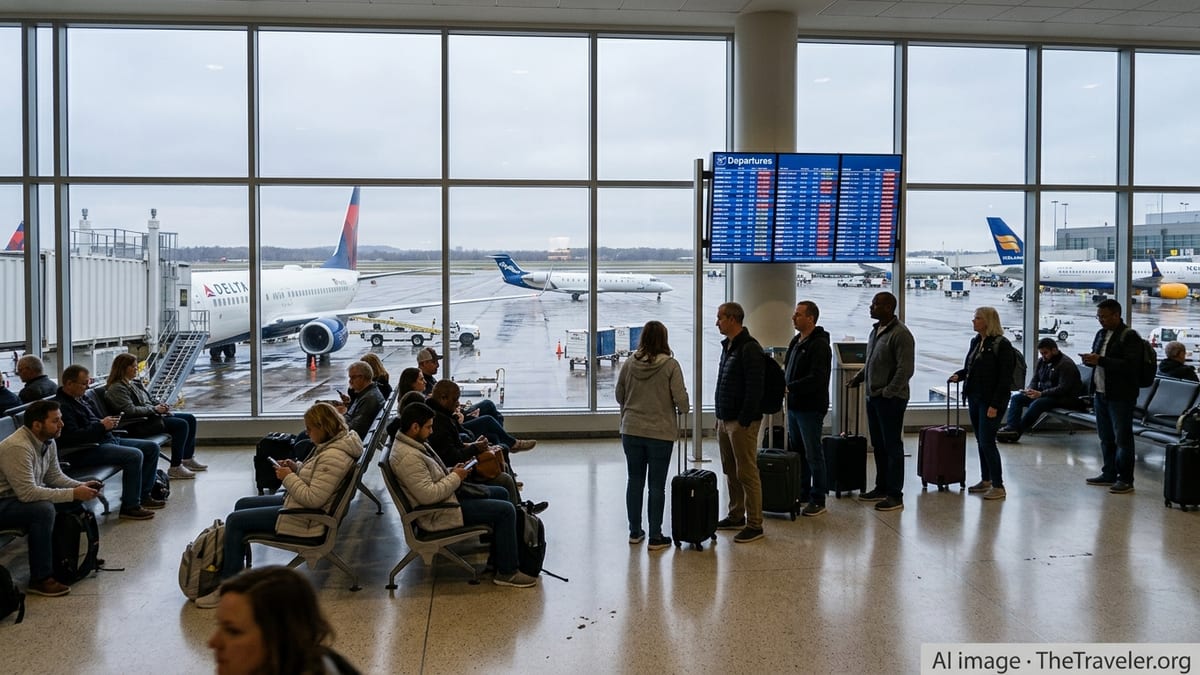
Chain Reaction Across Key North American and Transatlantic Routes
Publicly available flight-status boards and airline schedule data indicate that the grounded services at Minneapolis–Saint Paul International Airport involved one Icelandair transatlantic departure, a SkyWest-operated regional connection, and two mainline or Delta Connection flights. Together, these cancellations affected passengers headed to and from major nodes in the Delta and Icelandair networks, including Detroit, Atlanta and Toronto, as well as leisure destinations such as Grand Cayman and the Icelandic gateway at Keflavík.
The disruption at Minneapolis–Saint Paul came at a time when the airport is playing an increasingly important role as a connecting hub for both domestic and international traffic. Delta Air Lines and its regional affiliates, including SkyWest operating under the Delta Connection banner, link the Twin Cities with Detroit, Atlanta and Toronto, while seasonal schedules show Delta and partner airlines also serving Grand Cayman from Minneapolis.
On the transatlantic side, timetable information lists Icelandair’s Reykjavík–Keflavík flights operating from Minneapolis Terminal 2, forming a key bridge between the Upper Midwest and Europe via Iceland. With one of these departures grounded, travelers bound for Keflavík and onward European destinations faced rebooking challenges, tighter minimum connection times elsewhere in the network and, in some cases, overnight stays.
Although the number of grounded flights was limited, the combination of a transatlantic service and multiple hub-feeding routes created a cascading effect. Passengers traveling on multi-leg itineraries saw knock-on delays as missed connections propagated through the network, complicating travel plans for journeys that extended well beyond the immediate destinations listed on the canceled flights.
Passengers Confront Missed Connections and Rebooking Hurdles
For many travelers, the most immediate impact was felt not just in Minneapolis but at their final destinations. A canceled regional leg operated by SkyWest as Delta Connection can quickly disrupt a day of flying for passengers attempting to connect through Detroit or Atlanta, where tight connection windows are common. Missed onward links to Toronto or Grand Cayman left some travelers scrambling for alternative routings on already busy services.
Reports from publicly accessible flight-tracking platforms showed departure banks out of Minneapolis narrowing as the grounded flights removed capacity during peak travel periods. With limited spare seats on subsequent services to Detroit and Atlanta, rebooking options became more constrained, particularly for travelers who had booked economy-class tickets or were moving through on complex international itineraries involving Keflavík connections.
Travel discussion forums and social media posts from recent days have documented similar patterns when weather or operational issues hit Minneapolis, noting that regional cancellations often ripple outward to affect smaller communities that rely on Delta Connection and SkyWest-operated links. Friday’s groundings fit that wider pattern, as regional spokes feeding Minneapolis lost a key connection point for same-day travel to larger hubs.
Travelers connecting from Europe via Iceland also faced uncertainty. When a Keflavík-bound Icelandair flight does not depart on time from Minneapolis, missed banks of onward flights in Iceland can create delays stretching across multiple countries. Even when passengers are re-accommodated on alternative routings, their baggage and seat assignments may not follow seamlessly, adding to the overall strain of the disrupted journey.
Operational Strain at a Busy Upper Midwest Hub
Minneapolis–Saint Paul International Airport functions as one of Delta Air Lines’ primary hubs and as a key base for regional carriers such as SkyWest, which operate numerous flights under the Delta Connection brand. Airport data show that Delta and its partners handle a significant share of daily departures from Terminal 1, while Icelandair and other foreign carriers operate from Terminal 2, creating a complex, interconnected web of operations concentrated in a relatively compact airfield footprint.
Published schedules and traffic statistics highlight how heavily Minneapolis relies on precise coordination between mainline and regional operations. Domestic spokes to cities such as Detroit, Toronto and Atlanta feed long-haul routes and seasonal leisure services like Grand Cayman. When a single segment in that chain is removed, particularly during already busy travel periods, delays can ripple quickly through the system as aircraft and crews fall out of their planned rotations.
Recent commentary in online aviation communities has underscored how sensitive hub operations can be to localized disruption. Even when weather conditions at Minneapolis are manageable, constraints elsewhere in the network, such as storms over Detroit or traffic-control initiatives at other major hubs, can prompt airlines to proactively trim flights in and out of the Twin Cities to help stabilize schedules systemwide.
In this instance, the grounded flights involving Icelandair, SkyWest and Delta fit into a broader pattern of tactical adjustments that carriers use to recover from earlier delays or to prepare for anticipated bottlenecks. While such moves can help protect the integrity of the overall network, they tend to be felt most acutely by travelers whose particular flights are removed or significantly delayed.
What Travelers Can Expect in the Coming Days
Based on typical recovery patterns following isolated groundings at major hubs, publicly available information suggests that airlines at Minneapolis–Saint Paul are likely to focus on restoring core connections to Detroit, Atlanta and other large hubs as quickly as possible. Additional rebooking capacity may appear in the form of upgauged aircraft on select departures or the reinstatement of previously canceled segments once operational conditions allow.
Passengers with upcoming trips touching Minneapolis, especially those routing onward to Toronto, Grand Cayman or Keflavík, are likely to see ongoing schedule adjustments reflected in airline apps and departure boards. Industry practice in similar situations indicates that carriers often encourage travelers to accept earlier or later flights to spread demand more evenly across the schedule and to preserve connection integrity at downstream hubs.
Travel planning resources frequently advise that, during periods of irregular operations, travelers should allow extra buffer time for connections at major hubs like Minneapolis and consider routing options that minimize extremely tight layovers. For itineraries that rely on a single daily service, such as some seasonal routes to island destinations or transatlantic links, a missed departure can mean waiting until the next operating day, making contingency plans particularly important.
Observers note that the combination of a busy spring travel period, evolving weather patterns across the Upper Midwest and high load factors on key routes may continue to put pressure on Minneapolis–Saint Paul’s operations in the short term. While Friday’s four grounded flights represent only a fraction of the airport’s daily traffic, their outsized impact on long-haul and hub-to-hub connectivity underscores how even limited disruptions can reverberate through an interconnected global network.
MSP’s Strategic Role in Seasonal and International Connectivity
Minneapolis–Saint Paul’s role as both a domestic hub and a gateway for seasonal international routes gives context to the broader implications of disruptions like those seen on Friday. Airport and airline schedule data list a growing portfolio of seasonal services linking Minneapolis with popular leisure destinations, including Grand Cayman and Toronto, as well as transatlantic gateways such as Reykjavík–Keflavík.
Icelandair’s presence at Terminal 2 and Delta’s network at Terminal 1, complemented by regional operations from SkyWest and other partner airlines, allow travelers from smaller communities across the Upper Midwest to access long-haul flights with a single connection. When groundings interrupt those links, the effect is felt not only at Minneapolis but in the smaller origin and destination markets that rely on its connectivity.
Industry analyses of recent seasons point to a continued emphasis on flexible, seasonal scheduling as airlines adjust to shifting travel demand. Routes to sun destinations like Grand Cayman and popular Canadian and European cities are often timed around peak holiday and summer travel. Any loss of a single rotation on these thinner routes can therefore have a disproportionate impact, especially for travelers whose plans hinge on limited weekly frequencies.
Friday’s events at Minneapolis–Saint Paul highlight the vulnerability of such carefully balanced networks. As airlines refine schedules for upcoming seasons, observers will be watching how carriers like Delta, SkyWest and Icelandair factor recent operational challenges into decisions on capacity, frequency and contingency planning for one of the Upper Midwest’s most important aviation hubs.