

More news on this day
Travelers passing through Mumbai’s Chhatrapati Shivaji Maharaj International Airport in recent days have faced sweeping flight cancellations and delays, as airlines scramble to reroute services around volatile airspace in West Asia and cope with extended flying times to Europe and beyond.
Get the latest news straight to your inbox!
What Triggered the Wave of Cancellations
Publicly available flight tracking data and media reports indicate that disruptions escalated at Mumbai’s Chhatrapati Shivaji Maharaj International Airport from the start of March 2026, coinciding with the closure or restriction of key air corridors over parts of West Asia and continued limitations on Pakistani airspace for Indian carriers. This combination has left many long-haul routes from India to Europe and North America operating on lengthened and more complex paths, putting pressure on aircraft availability, crew schedules, and operating costs.
Coverage from regional and international outlets describes Indian airlines being forced to suspend or sharply reduce some services to the Middle East and to European hubs as routes that normally cross Pakistan and parts of the Gulf region became unavailable or operationally challenging. These constraints have had a ripple effect on major Indian gateways, with Mumbai particularly exposed because of its heavy traffic to West Asia, Europe, and onward transatlantic connections.
Reports from passenger forums and local newspapers suggest that on some days, dozens of departures and arrivals at Mumbai were cancelled or severely delayed in quick succession, with long-haul flights disproportionately affected. Travelers heading to or from cities such as London, Amsterdam, Frankfurt, Dubai, Abu Dhabi, and Jeddah have reported last-minute schedule changes, diversions, and outright cancellations as airlines attempt to balance safety, regulatory requirements, and limited viable routings.
The situation has been compounded by wider regional instability, which has led to temporary closures, restrictions, or capacity bottlenecks at several Gulf airports that typically serve as key transit points between India and the rest of the world. As airlines concentrate scarce resources on the most commercially and operationally essential routes, secondary services and some connections from Mumbai have borne the brunt of the adjustments.
How Airlines Are Adjusting Their Schedules
According to airline schedule notices and press materials, carriers serving Mumbai have adopted a mix of cancellations, consolidations, and special services to manage the disruption. Some airlines have suspended specific sectors where detours significantly increase flight time and fuel burn, while maintaining limited services on routes that can be more easily redirected via alternative airspace.
India’s larger full-service airlines have announced additional flights on a handful of trunk routes to Europe and North America, often from Delhi and Mumbai, to accommodate passengers whose original itineraries were cancelled. These extra services are typically short-term measures scheduled over a defined period in March, designed to clear backlogs and provide at least some predictability for travelers trying to reach or depart India.
Low-cost and hybrid carriers operating from Mumbai have introduced more flexible policies around date changes and cancellations for destinations in affected regions, aiming to encourage passengers to adjust their plans voluntarily rather than crowding already stretched airport facilities. Publicly posted advisories emphasize that schedules remain subject to change at short notice as the situation in West Asia evolves and as regulators update overflight permissions.
In addition to full cancellations, many flights are being retimed or rerouted to allow for added refueling stops or to make use of less congested corridors. As a result, itineraries that previously connected smoothly through Gulf hubs can now involve lengthy layovers, aircraft changes, or overnight stays, with Mumbai functioning as either the starting point or a crowded intermediary stop for disrupted journeys.
What Stranded Passengers Are Experiencing on the Ground
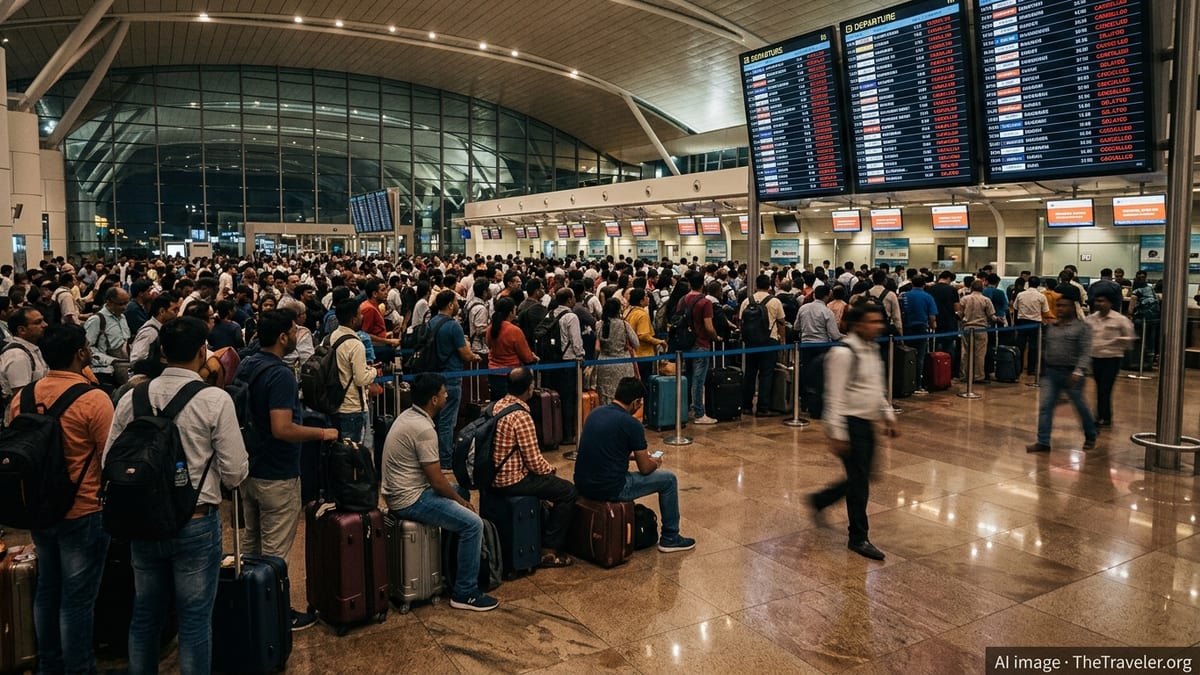
Accounts shared on social media, passenger discussion forums, and local news coverage describe packed terminals at Mumbai, particularly in the international departure and arrival areas, during peak disruption days. Travelers report long queues at airline counters, uncertainty about rebooking options, and confusion over the status of connecting flights, especially when onward sectors are operated by partner or codeshare airlines.
Some passengers have described repeated rolling delays that ultimately turned into cancellations after they had already cleared security and immigration. Others traveling to Europe and North America via Gulf hubs or Istanbul report unexpected diversions or missed connections, resulting in extended layovers and unplanned overnight stays either in Mumbai or in transit cities.
There are also widespread reports of frustration around communication, with some airlines reportedly sending last-minute text messages or emails but offering limited real-time updates at the gate or check-in counters. In several cases, travelers say they learned of cancellations only after checking airport departure boards or third-party flight tracking apps. This has made it difficult for passengers to make quick decisions about accommodation, alternative bookings, or changes to connecting rail or bus journeys.
Despite these challenges, publicly available information indicates that airlines are gradually reintroducing some suspended flights and operating special services to bring stranded passengers home, particularly on busy corridors between India and major Gulf or European hubs. However, capacity is still constrained, meaning that rebooking may take several days during peak periods of disruption.
Key Practical Steps for Travelers Using Mumbai Right Now
Consumer advisories and aviation forums stress that passengers traveling via Mumbai in the coming days should treat their itineraries as fluid, particularly when flying to or from West Asia, Europe, or North America. Travelers are encouraged to monitor their flight status frequently through official airline channels and to enable notification options, as schedules can change multiple times within 24 hours of departure.
Publicly available guidance suggests that passengers with flexible travel plans may benefit from rescheduling trips away from the most affected routes or opting for carriers that have publicly announced additional capacity or more stable operations on certain long-haul sectors. In many cases, airlines are offering limited-fee or fee-free changes for flights touching impacted regions, but the specific conditions vary by carrier and fare type.
For those already at the airport, passenger rights frameworks in India provide for certain forms of assistance during prolonged delays or cancellations, including meals or refreshments after extended waiting periods in some circumstances. Travelers are advised in publicly shared guidance to ask airline staff directly about available support, to retain boarding passes and receipts, and to document communication in case they need to pursue refunds or compensation later, depending on the reason for disruption and the applicable rules.
Travelers transiting through Mumbai on complex itineraries involving multiple carriers are also being advised to build in additional buffer time between flights and to consider travel insurance that specifically addresses disruptions arising from conflict-related airspace closures. Policy wording can vary significantly, and some insurers classify the current situation as a known event from certain dates, so careful review is essential before purchase.
Outlook for Operations at Mumbai in the Coming Days
Industry commentary and publicly available statements from airlines suggest that conditions at Mumbai are likely to remain unpredictable in the short term. As long as major airspace restrictions remain in place over parts of West Asia and Pakistani airspace access for Indian carriers is constrained, operators will continue facing complex decisions around routing, crew deployment, and fuel planning, all of which can translate into sudden schedule changes.
Some carriers have indicated through schedule filings and notices that they intend to maintain a core network of long-haul services while selectively restoring or expanding others as routing options stabilize. This could gradually reduce the number of last-minute cancellations out of Mumbai, but travelers may still face longer flight times, unconventional routings, and occasional diversions as airlines test alternative paths and manage operational risks.
Aviation analysts cited in open reports emphasize that the pace of normalization will depend heavily on geopolitical developments and regulatory decisions in the region, factors that lie outside the control of airports and airlines. As a result, there is no clear timeline for a full return to pre-disruption patterns at Mumbai, particularly on routes that rely on overflying restricted areas.
For now, passengers planning to use Chhatrapati Shivaji Maharaj International Airport are being urged in public advisories to remain flexible, keep documentation and travel apps handy, and prepare for the possibility of overnight delays or rerouting. While airlines and airport operators continue working to move as many people as possible within the available constraints, the travel environment around Mumbai remains challenging and subject to rapid change.