

More news on this day
Numerous international and domestic flights at Mumbai’s Chhatrapati Shivaji Maharaj International Airport were cancelled or severely disrupted in recent days, leaving many passengers stranded and forcing last-minute changes to travel plans.
Get the latest news straight to your inbox!
What caused the latest wave of cancellations in Mumbai
Published coverage and aviation data indicate that the latest disruption at Chhatrapati Shivaji Maharaj International Airport is closely linked to ongoing turbulence across West Asia’s airspace. A series of temporary airspace closures and route restrictions over parts of the Middle East has forced India’s largest private carriers to suspend or reroute flights, with Mumbai among the worst affected hubs.
According to publicly available reports, IndiGo and Air India have curtailed or suspended several services connecting Mumbai to key Gulf and onward long haul destinations, contributing to a spike in same day cancellations and significant delays. Some services have been consolidated or rescheduled, while others have been withdrawn on short notice as airlines adjust to longer diversion routes and limited slots at alternative airports.
Observers note that the disruption has been amplified by Mumbai’s already high traffic volumes and limited runway capacity. With more than 55 million passengers a year moving through the airport, even a relatively small reduction in available movements or a cluster of cancellations can quickly cascade into crowded terminals, long queues and difficulty rebooking stranded travellers on alternative flights.
Operational pressures are compounded by the lingering effects of earlier schedule upheavals, including the large scale IndiGo scheduling crisis in late 2025 that saw thousands of flights cancelled nationally. While that episode has largely been resolved, aviation watchers suggest that staffing levels, aircraft rotations and crew duty time rules remain tight, leaving little slack when external shocks such as airspace closures hit.
Scale of the disruption and who is most affected
Live flight tracking boards and recent reporting show that dozens of flights into and out of Mumbai have been cancelled in short succession, with a particular concentration on services linking India to Gulf hubs and onward Europe and North America connections. Many of these flights operate overnight or in tight connecting windows, so a single cancellation can disrupt onward journeys for hundreds of passengers at once.
Travelers most affected include those booked on multi segment itineraries that rely on Gulf or West Asian hubs for onward connections, as well as passengers on high demand domestic routes where spare seats are scarce. Short haul flights to cities such as Delhi, Bengaluru and Hyderabad can fill quickly with rebooked passengers, leaving others facing long waits before the next available seat.
Passengers on budget carriers may feel the disruption more acutely, as low cost operators often have less flexibility to add extra sections or swap larger aircraft at short notice. Travellers on sold out holiday or festival period flights also have fewer realistic alternatives, particularly when cancellations occur within hours of departure and competing airlines are already operating at or near capacity.
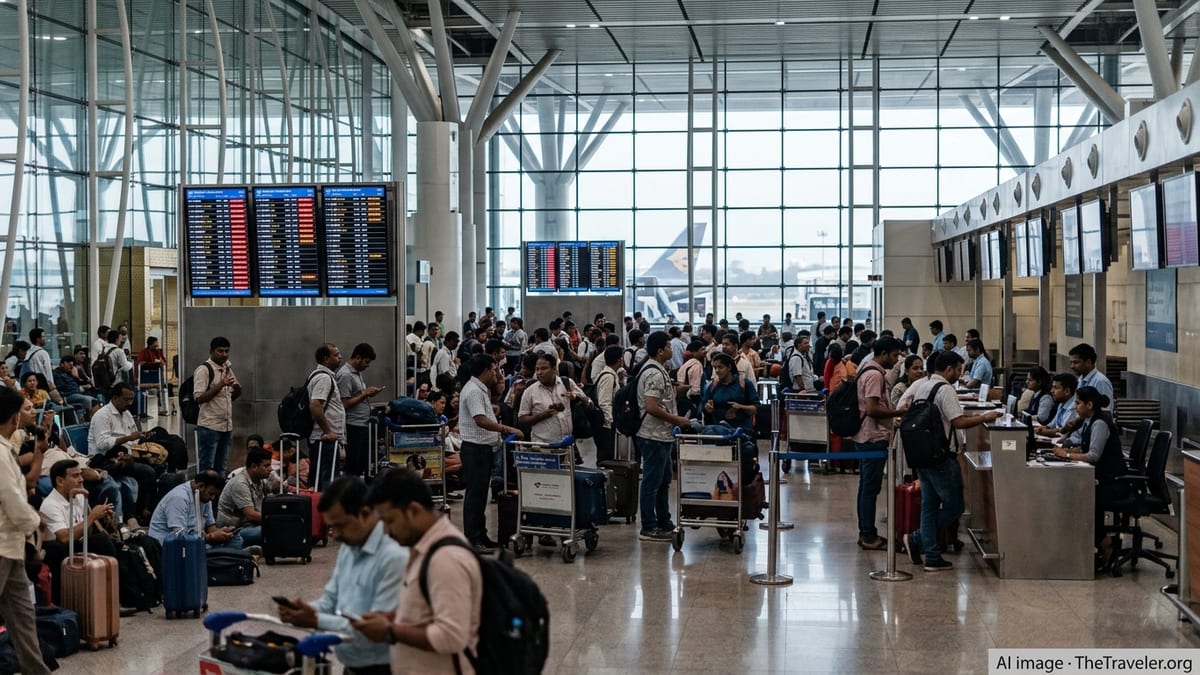
Reports from recent days describe crowded check in halls and long lines at customer service desks in Mumbai’s Terminal 2 as passengers seek information, food vouchers and rebooking options. While some airlines have provided hotel accommodation and organized replacement services, many travellers have had to arrange their own overnight stays or wait in the terminal while they search for new connections.
Your rights if your Mumbai flight is cancelled
For passengers stranded at Mumbai, understanding basic rights and options is critical. Under India’s civil aviation regulations, airlines are generally required to offer a choice of refund or an alternative flight when they cancel a service, particularly if the disruption is communicated less than 24 hours before scheduled departure and is within the carrier’s control. In practice, remedies can vary depending on the cause and duration of the disruption and the terms of the ticket.
When widespread flight cancellations arise from external factors such as airspace closures or security restrictions, airlines may classify them as extraordinary circumstances. Even then, publicly available consumer guidance stresses that travellers should still be offered rebooking on the next available service operated by the same carrier at no additional fare, or a full refund if the journey is no longer workable. Some carriers have also announced temporary fee waivers for date changes on affected routes.
Passengers facing long waits at the airport may also be entitled to basic assistance, such as meals or refreshments after several hours of delay, and hotel accommodation when an overnight stay becomes necessary and is tied to the airline’s disruption. The specific thresholds and entitlements differ by airline and fare class, but travellers are encouraged to review their booking conditions and refer to each carrier’s published passenger charter, which outlines commitments during irregular operations.
Regardless of the airline, it is important for passengers to keep boarding passes, booking confirmations and any written notices of cancellation or delay. These documents are often required to process refunds, travel insurance claims or any later requests for compensation or goodwill vouchers. Screenshots of updated schedules and messages received through apps or text can further support a case if there is a dispute.
Practical steps for stranded travellers at CSMIA
For those already at Chhatrapati Shivaji Maharaj International Airport when cancellations occur, the first step is to check the status of the specific flight using multiple channels. Airport displays, airline apps and customer service counters may not always update at the same pace, so cross checking can help clarify whether a flight is delayed, rescheduled or fully cancelled. Travellers should pay close attention to subsequent updates, as flights may be retimed rather than removed outright.
Once a cancellation is confirmed, passengers are generally advised to contact the airline directly through official channels before leaving the secure area or airport. Many carriers prioritize rebooking through their mobile apps and call centers, and some open dedicated disruption desks in the terminal during major events. Standing in a long queue at a single counter while also attempting to reach the airline digitally can improve the chances of securing an earlier alternative.
Given the strain on nearby hotels during large disruption events, travellers needing overnight accommodation may wish to make provisional bookings as soon as it becomes clear they will not depart the same day. Mumbai’s airport is linked to the wider city by the Western Express Highway and the Sahar Elevated Access Road, but journey times can be unpredictable in heavy traffic or rain. Factoring in extra time to return to the terminal for rebooked flights is essential.
Those with onward connections on separate tickets, whether domestic or international, should notify the other airline or rail operator as early as possible. Some may offer flexibility or standby options even if they have no formal obligation to do so. Travel insurance policies, particularly those that include missed connection or trip interruption cover, can also help recover additional costs for hotels, meals or new tickets, provided passengers keep detailed receipts and documentation.
Planning upcoming trips through Mumbai amid ongoing uncertainty
With airspace conditions over parts of West Asia still unsettled and airlines adjusting their schedules frequently, travellers planning to transit Mumbai in the coming days and weeks may wish to build in extra resilience. Booking longer connection windows, especially for itineraries involving Gulf or European hubs, can reduce the risk that a modest delay on the first leg will cause a missed onward flight.
Passengers who have not yet booked tickets may want to compare routings that avoid the most affected corridors where practical, though this is not always feasible or affordable. Where possible, selecting fares that allow date and time changes at low cost can provide useful flexibility if schedules shift. Registering contact details with airlines and enabling app notifications is also important, as many carriers are relying heavily on digital alerts when they retime or cancel services.
Even as airlines gradually restore normal operations, Mumbai’s status as one of India’s busiest and most capacity constrained airports means that weather events or further regional turbulence can rapidly trigger another wave of disruption. Travellers are therefore encouraged to monitor their flight status regularly in the 24 to 48 hours before departure, reconfirm transport to the airport, and carry essential items such as medications, chargers and a change of clothes in their hand luggage in case of unexpected overnight delays.
For now, the situation at Chhatrapati Shivaji Maharaj International Airport remains fluid, with schedules subject to change at short notice as airlines respond to external constraints and operational realities. Passengers who stay informed, understand their rights and act quickly when plans change are better placed to navigate the disruption and reach their destinations safely.