

More news on this day
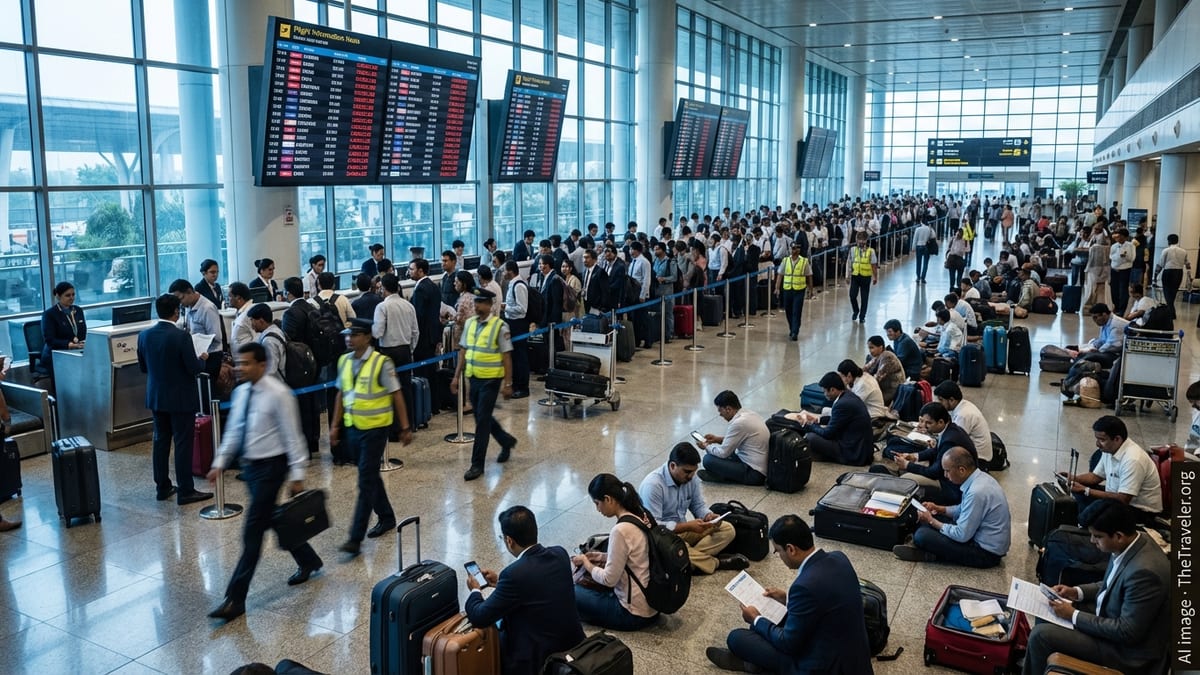
Hundreds of passengers at Mumbai’s Chhatrapati Shivaji Maharaj International Airport faced cascading disruption on March 1 as escalating conflict in the Middle East triggered sweeping airspace closures, forcing airlines to cancel or reroute scores of flights on one of the world’s busiest east–west corridors.
Middle East Conflict Ripples Into India’s Busiest Gateway
Mumbai’s international hub was among the hardest hit in India after multiple countries across the Middle East shut their skies in response to intensifying hostilities involving the United States, Israel and Iran. Airspaces from Iran and Iraq to Israel, Kuwait, Bahrain, Qatar and large parts of the United Arab Emirates were closed, abruptly severing the narrow corridor that carries much of the traffic between South Asia, Europe and North America.
By late Saturday night local time, at least 98 flights at Mumbai had been cancelled and several more diverted as airlines scrambled to avoid restricted airspace and comply with emergency safety advisories. The cancellations included a mix of domestic and international services, among them IndiGo’s flagship Mumbai to London flight and multiple long-haul routes operated by Air India.
With Dubai, Abu Dhabi and Doha suspending most flight operations, the shock rippled quickly through Indian aviation. The Ministry of Civil Aviation said more than 400 flights by Indian carriers were expected to be cancelled nationwide on March 1 alone, underscoring how dependent India’s international connectivity has become on Middle Eastern air hubs.
Industry analysts warned that the closures have effectively frozen one of the world’s busiest air corridors, impacting not only point to point traffic between India and the Gulf but also one-stop connections to Europe, North America and Africa that normally flow through the region’s big three hubs.
Airlines Cancel Key Mumbai Routes and Suspend Gulf Operations
Air India moved swiftly to halt a broad swathe of its international network touching the affected region. The carrier cancelled multiple long-haul services to and from Mumbai, including flights to London Heathrow, New York, Newark, Chicago via Vienna, Toronto via Vienna, Frankfurt and Paris. Airline officials cited both airspace closures and the impracticality of operating economically viable nonstop services on the longer diversionary routings now required.
Other Indian airlines followed with sweeping suspensions of Gulf services from Mumbai. IndiGo stopped all flights to and from the Middle East for the day, while Air India Express extended a suspension of its westbound international operations. Akasa Air temporarily halted flights from Mumbai to Abu Dhabi, Doha, Jeddah, Kuwait and Riyadh, offering passengers full refunds or date changes at no additional charge.
The Directorate General of Civil Aviation issued an urgent safety advisory instructing Indian operators to avoid the airspace of multiple Middle Eastern states at all altitudes until at least March 2. Carriers were told to closely monitor new notices to airmen and revise flight plans around the expanding no fly zones, effectively ruling out most direct routings from Mumbai across West Asia.
At the airport level, the strain was visible behind the scenes. By late evening, Mumbai’s air traffic control authorities warned that the airport could no longer accept diversions from closed Gulf hubs due to a lack of parking stands, temporarily shutting a vital escape valve for aircraft seeking safe alternate airports.
Stranded Passengers Face Long Queues, Skyrocketing Fares
For travelers, the geopolitical turmoil translated into hours of uncertainty and frustration. Long queues formed at airline counters across Mumbai International Airport as passengers attempted to rebook journeys or secure refunds on suddenly cancelled flights. With capacity sharply constrained, many were told it could take several days to find alternate routings.
Airfares on remaining available seats from Mumbai to Europe surged. One way economy tickets to London climbed into six figure rupee territory on Saturday afternoon, as travelers vied for limited options that avoided the closed airspace. Those trying to reach the Gulf itself had even fewer alternatives, with most direct services halted and regional airports focusing on handling diverted aircraft rather than new departures.
Terminal crowds swelled as passengers who had already cleared security were called back to landside check in areas to rearrange their plans. Airport staff and airline ground teams distributed water and basic refreshments in some zones, but many passengers reported confusion over changing departure boards as more cancellations were announced through the day.
Travel agents in Mumbai said they were inundated with requests from corporate clients and leisure travelers alike, with some companies postponing non essential trips and others shifting urgently needed travel onto more circuitous routings via Southeast Asia or direct services to Europe that could detour over central Asia.
Operational Challenges as Airlines Race to Reroute
The sudden loss of multiple Middle Eastern airspaces has forced airlines to redraw flight paths in real time. For long haul services from Mumbai to Europe and North America, the most viable detours involve routing further north over central Asia or south around the Arabian Peninsula, significantly increasing both flight time and fuel burn.
Aviation experts noted that these extended routings can quickly erode the operational range of aircraft, particularly on ultra long haul sectors such as Mumbai to New York or Mumbai to Toronto. In some cases, the detours make nonstop operations unworkable without payload restrictions that reduce the number of passengers and amount of cargo that can be carried.
The added complexity also places strain on air traffic control systems in countries whose airspace is now absorbing rerouted traffic. Controllers in Saudi Arabia and central Asian states are managing a sharp increase in overflights, while airlines must secure new overflight permissions and adjust crew duty rosters to accommodate longer duty periods.
Operational planners at Indian carriers described a rolling recalibration of their schedules, with flight control centers continuously updating routes, fuel loads and alternates as new advisories were issued. Many airlines opted to cancel outright rather than risk last minute diversions that could strand crews and aircraft in cities with limited handling capacity.
Uncertain Outlook for Mumbai Travelers in Coming Days
With military tensions still high and no clear timeline for the reopening of closed skies, travel out of Mumbai is expected to remain volatile for at least several days. The civil aviation regulator’s current advisory to avoid affected Middle Eastern airspace runs through March 2, but officials have signaled that it could be extended if security risks persist.
Airlines are encouraging passengers booked on international flights from Mumbai in the coming days to monitor their flight status closely and to allow additional time at the airport, given the likelihood of last minute schedule changes. Many carriers have activated flexible rebooking policies, allowing date and destination changes without standard penalties on affected itineraries.
Tourism bodies and corporate travel managers are bracing for a sustained period of disruption if the conflict continues. India’s outbound travel market has become heavily reliant on Gulf hubs for competitively priced one stop connections, and prolonged closures could push up fares and reduce seat availability well into the peak summer season.
For now, the crowded departure halls and departure boards filled with cancellations at Mumbai International Airport offer a stark reminder of how quickly geopolitical flashpoints far from India’s shores can bring one of the country’s busiest gateways to an abrupt halt.