

More news on this day
As airspace closures triggered by the Iran war ripple across West Asia, hundreds of travellers bound for Mumbai have found themselves unexpectedly stranded in Abu Dhabi, caught between rapidly shifting flight schedules and a constrained global route network.
Get the latest news straight to your inbox!
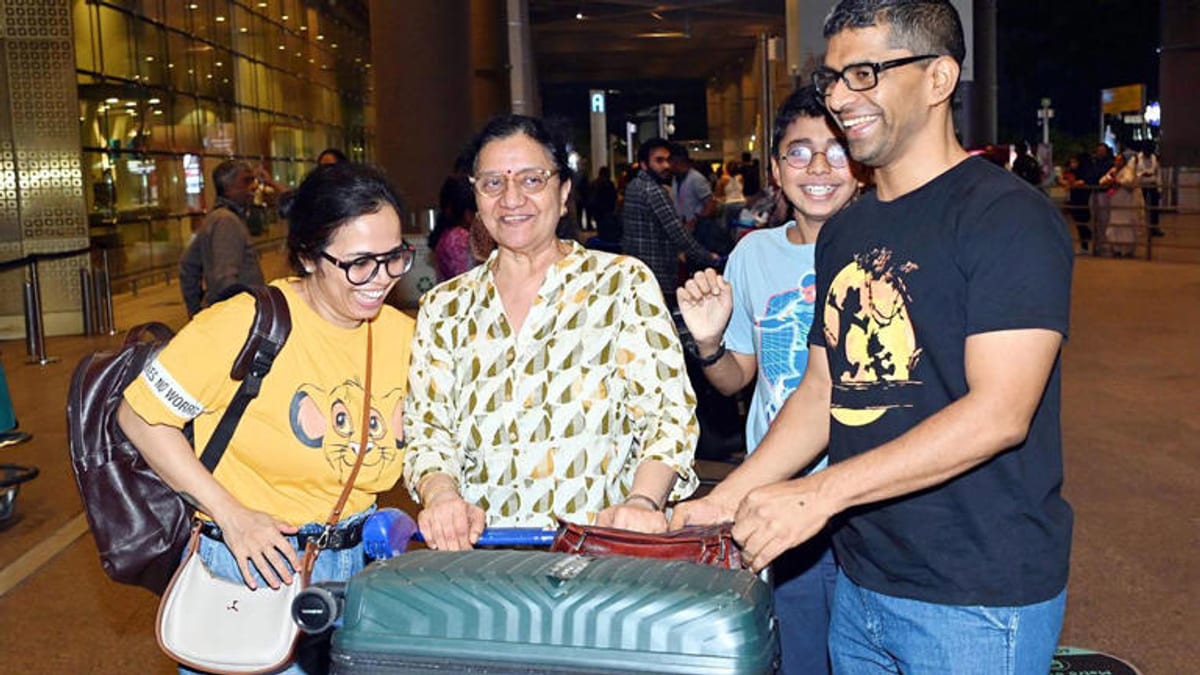
Image by MSN
War in West Asia Sends Shockwaves Through Gulf Aviation Hubs
The latest phase of the Iran conflict has transformed the skies over West Asia into one of the world’s most volatile corridors, forcing governments to restrict or temporarily close key airspace and prompting airlines to cancel or reroute thousands of flights. Publicly available aviation data shows that major hubs such as Abu Dhabi, Dubai and Doha have all seen large portions of their schedules disrupted since late February.
Reports on the aviation sector indicate that carriers based in the Gulf have been particularly hard hit, with significant shares of their planned operations cancelled or delayed as missile and drone attacks trigger precautionary shutdowns. Airlines have been forced to navigate a patchwork of restricted zones around Iran, Iraq, Israel and neighbouring states, pushing traffic north over the Caucasus or south via Egypt and the Arabian Sea.
For India, which relies heavily on Gulf hubs for connections to Europe and North America, the impact has been immediate. Coverage from Indian and international outlets shows that services operated by both Indian and foreign airlines to West Asian cities have been scaled back or suspended in recent weeks, including routes that funnel large numbers of passengers from Mumbai through Abu Dhabi.
Abu Dhabi’s Zayed International Airport, normally a smoothly functioning transit point, has instead become an involuntary waiting room for travellers whose journeys were disrupted mid-connection. As safety measures tightened and schedules were redrawn at short notice, transit passengers arriving from India or en route to Mumbai have found themselves without clear onward options.
Mumbai Passengers Face Long Waits, Patchy Information in Abu Dhabi
Among those most directly affected are passengers travelling between Mumbai and destinations in Europe or North America via Abu Dhabi. Social media posts, traveller forums and regional news coverage describe a pattern of abrupt cancellations that have left passengers from India, including many originating in Mumbai, stranded airside or in nearby hotels for days at a time.
Several travellers recount itineraries linking Mumbai to Abu Dhabi and onward to cities such as Amsterdam, Toronto or New York that were interrupted when security alerts at Abu Dhabi airport halted departures. In some cases, passengers report being evacuated from terminals during missile warnings, then returning to find their connecting flights cancelled and rebooking options limited.
Others describe confusion around schedule changes on Mumbai–Abu Dhabi services themselves, with flights showing as active on airline websites even as reduced operations circulated through unofficial channels and third-party trackers. This mismatch has contributed to anxiety among travellers who proceeded to the airport in Mumbai, only to learn that their connections via Abu Dhabi were no longer guaranteed.
While some stranded passengers have documented being moved to temporary accommodation or rerouted via alternative hubs once capacity became available, others report long waits for clarity on new travel dates. For many Mumbai-based travellers, the immediate concern has been the uncertainty of how long they would remain in Abu Dhabi while airlines and regulators reassess the evolving security picture in the region.
Airlines Adjust Schedules as India Seeks Alternatives
Airlines serving the India–Gulf–Europe corridor have responded with a mix of cancellations, limited resumptions and flexible ticket policies. Public statements and advisories indicate that some carriers have suspended regular services to and from Abu Dhabi at various points, operating only a reduced number of flights to clear backlogs of stranded passengers before gradually rebuilding their schedules.
According to aviation industry coverage, Indian carriers have also scaled back or temporarily halted flights on certain West Asia routes, including services from Mumbai to Gulf cities. At the same time, India’s aviation authorities and airport operators have moved to open up additional slots for foreign airlines at key gateways such as Delhi and Mumbai, seeking to ease congestion and offer more options to travellers impacted by the crisis.
International carriers have begun to reconfigure their networks to bypass the most restricted parts of West Asia, adding capacity on alternative routes where possible. Reports highlight examples of airlines increasing frequencies or deploying larger aircraft on Europe–India sectors that avoid Gulf airspace, in an effort to accommodate passengers who would normally transit through Abu Dhabi or neighbouring hubs.
For Mumbai passengers already caught in Abu Dhabi when airspace closures took effect, however, these adjustments have offered only gradual relief. Limited seat availability, changing safety assessments and crew positioning challenges have meant that repatriation and onward travel often proceed in stages, with priority given to those who have been stranded the longest or who face pressing humanitarian or visa deadlines.
Human and Economic Costs Mount as Disruption Drags On
The prolonged uncertainty has carried steep personal consequences for travellers from Mumbai and other Indian cities who depend on Gulf connections. Accounts compiled from public platforms describe missed family events, delayed medical treatments, exam clashes for students and mounting financial strain as hotel stays and incidental expenses pile up in Abu Dhabi.
Many stranded passengers are short-term visitors without local support networks, leaving them heavily reliant on airlines, travel agents and consular channels for information and assistance. While some report positive experiences with ground staff and accommodation arrangements, others highlight the emotional toll of repeated rebookings and the lack of firm timelines for safe departure.
The disruption is also reverberating through the wider India–Gulf travel market. Analysts cited in recent aviation reports note that the Iran war has significantly reduced the predictability of a corridor that had become central to India’s international connectivity, particularly for major metros such as Mumbai. Travel demand remains strong, but uncertainty around transit through Abu Dhabi and other Gulf hubs is prompting some passengers to delay trips or seek routings via Europe or Southeast Asia instead.
Industry observers suggest that the longer the conflict and associated airspace restrictions persist, the more pressure will mount on airlines and governments to diversify routes between India and the rest of the world. For now, though, many Mumbai passengers stranded in Abu Dhabi find themselves in a holding pattern, their experiences emblematic of how quickly a regional war can upend the finely tuned rhythms of global air travel.