

More news on this day
Central Railway’s latest Sunday mega block on March 22, 2026 is set to disrupt suburban train services across key sections of Mumbai’s network, with maintenance work leading to cancelled, diverted and delayed local trains for several hours during the day.
Get the latest news straight to your inbox!
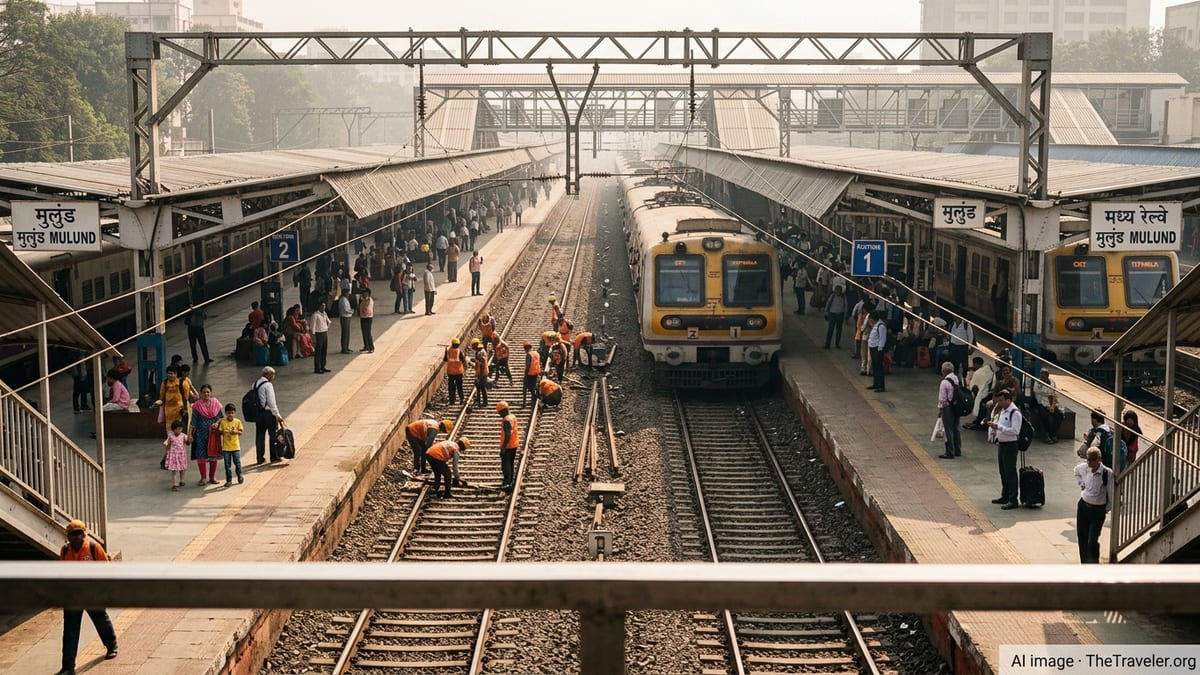
Scheduled Maintenance Shuts Key Central Railway Sections
Publicly available information for March 22 indicates that Central Railway has planned a multi-hour maintenance block on core stretches of its suburban system, part of its regular Sunday schedule of infrastructure work. These mega blocks typically involve shutting one or more lines between major junctions so that track, overhead equipment, signalling and related assets can be inspected, repaired or upgraded without the risk of live traffic.
For this Sunday’s program, reports indicate that suburban operations on central corridors are restricted in phases around late morning and afternoon, with the heaviest impact expected on fast lines. Slow lines generally continue at reduced frequency, allowing limited services for commuters who still need to travel. Harbour line connections are also affected for several hours, particularly on sections linking Navi Mumbai with the main city network, a pattern that has been seen in earlier 2026 maintenance schedules.
The objective of the work, according to recent published coverage on Central Railway’s Sunday blocks, is to carry out intensive upkeep that cannot be safely or efficiently managed during short night blocks on weekdays. Rail engineers use these windows to replace worn rails, weld joints, pack ballast, overhaul points and crossings, and check the stability of overhead equipment, all of which are crucial on a network that carries millions of daily passengers.
Although these efforts are framed as essential to long-term reliability and safety, they also mean that many weekend travelers face slower journeys, missed connections and overcrowding on the remaining operational services, especially in the mid-day peak when Mumbai’s leisure, shopping and event traffic increases.
Impact on Central, Harbour and Connecting Services
On March 22, the primary effect for Central line users is a curtailed timetable on the main suburban corridor, with fast trains either cancelled, short-terminated or diverted onto slow lines during the block hours. Commuters between key hubs such as CSMT, Dadar, Kurla, Thane and beyond can expect longer running times and platform changes, as trains share the reduced track capacity that remains open to traffic.
Harbour line passengers are also likely to encounter interruptions, particularly on the curving stretch that links Kurla with Vashi and Panvel. Recent Sunday block notices have frequently cited this corridor for extended maintenance, and the pattern continues this weekend with gaps in service and a reliance on special locals or diverted trains at specific times of day. For those travelling between Navi Mumbai and the central suburbs, this can translate into additional interchanges and uncertain waiting times on platforms.
The disruptions ripple into interchange hubs where multiple lines intersect. At stations like Kurla and Thane, passengers switching between mainline Central services and Harbour or Trans-Harbour routes encounter altered platforms and shifting crowd flows. Published advice for earlier Sunday blocks has recommended starting journeys earlier than usual, as even a small delay in one leg can cause missed connections where services are running on a stretched, maintenance-day timetable.
Western line trains generally continue under a more regular schedule during Central Railway’s maintenance blocks, but travel patterns often shift as some riders choose to reroute via alternative lines or use metro and bus links to avoid affected sections. This can create additional crowding on unaffected corridors, especially around hubs that offer interchange with the Central system.
Guidance for Commuters Traveling on March 22
For travelers planning to use Mumbai’s suburban trains on March 22, publicly available journey-planning tools and mobile apps are strongly advised. These platforms typically incorporate temporary timetables, platform changes and block notices, helping passengers navigate a complex, time-limited operating pattern. Checking live train status shortly before departure can reduce the risk of arriving to find a cancelled or significantly delayed service.
Commuters with fixed schedules, such as those catching long-distance trains or flights, are widely encouraged in local coverage to build in extra buffer time on maintenance Sundays. Travel advisories around recent mega blocks have suggested reaching interchange stations well ahead of departure, opting for earlier locals when possible, and avoiding tight connections that assume normal weekday frequencies.
Alternative modes also play a role in mitigating the disruption. Mumbai’s expanding metro network, along with BEST bus routes and app-based cabs, offers additional capacity for cross-city trips when sections of the suburban rail are unavailable. However, demand can spike on these services as well, particularly in the late morning and evening when weekend outings and returns coincide with maintenance-related gaps in the train schedule.
For those unfamiliar with the term, local commentary describes a mega block as a planned shutdown or severe restriction of specific track segments, rather than a system-wide halt. This means that while certain stretches may see no trains for several hours, other parts of the network continue to operate, albeit with modified running patterns. Understanding the precise section and timing of each block is therefore critical when planning a route.
Why Central Railway Relies on Sunday Mega Blocks
The reliance on Sunday mega blocks has become a defining feature of Central Railway’s maintenance strategy in Mumbai. Historical notices and recent press summaries highlight that traffic volumes on Sundays, although still significant, are lower than on the city’s intense weekday peaks. This makes it marginally easier to withdraw sections of track from service without causing the widespread gridlock that would occur if similar works were attempted on working days.
Mumbai’s suburban infrastructure is among the most heavily used in the world, with dense train schedules, short headways and high axle loads. Under these conditions, routine inspection and renewal are not optional; they are fundamental to preventing faults that could lead to major delays or safety incidents. Tasks such as replacing cracked rails, repairing turnout components, adjusting overhead line tension and cleaning drainage systems beneath the tracks often require extended access windows that only a mega block can provide.
Commentary in local transport forums frequently reflects a mix of frustration and acceptance: while many passengers question the inconvenience of Sunday downtime, there is also recognition that years of deferred maintenance or hurried overnight work can undermine reliability. The pattern emerging from published block programs in early 2026 suggests a continued emphasis on systematic Sunday interventions rather than ad hoc responses to failures.
In the longer term, transport analysts have noted that capacity upgrades, route diversions and technological improvements could reduce the need for such extensive blocks. Until that transformation is complete, however, the city’s rail users are likely to continue living with the weekly rhythm of restricted services in exchange for a more robust and resilient network for the rest of the week.
What Today’s Block Signals for Future Travel in Mumbai
The March 22 mega block fits into a broader narrative about how Mumbai is reshaping its transport infrastructure. While Central Railway carries out recurring maintenance on its suburban tracks, other large-scale projects, including new corridors and connections to national high-speed lines, are gradually changing the city’s mobility landscape. Each Sunday block serves as a reminder of the ongoing effort required to keep the legacy system functioning even as new layers are added.
For regular riders, adapting to this reality means integrating maintenance Sundays into travel habits, whether that is checking schedules earlier in the week, keeping backup routes in mind, or using a mix of rail, metro and road options when planning cross-town journeys. Travel reports around previous blocks show that commuters who anticipate the disruption and leave additional time typically fare better than those who rely on normal weekday assumptions.
From a visitor’s perspective, the mega block on March 22 illustrates both the challenges and resilience of Mumbai’s transport ecosystem. Even on a day of reduced train movements, the city’s vast network of lines, bus corridors and roads continues to move millions across the metropolis, albeit at a slower pace and with more transfers. For travel planners and tourism operators, understanding the timing and impact of these scheduled interruptions is increasingly important when organizing tours, events or airport transfers on Sundays.
As Central Railway advances its maintenance agenda through 2026, similar Sunday restrictions are likely to recur on different sections of the suburban grid. The March 22 block underscores how essential proactive communication, accurate travel information and flexible journey planning have become for anyone navigating Mumbai on a weekend.