

More news on this day
Mumbai is moving closer to launching a Kochi-style water metro system by late 2026, with new jetties, electric ferries and coastal routes expected to reshape both daily commutes and tourism across the metropolis and its satellite towns.
Get the latest news straight to your inbox!
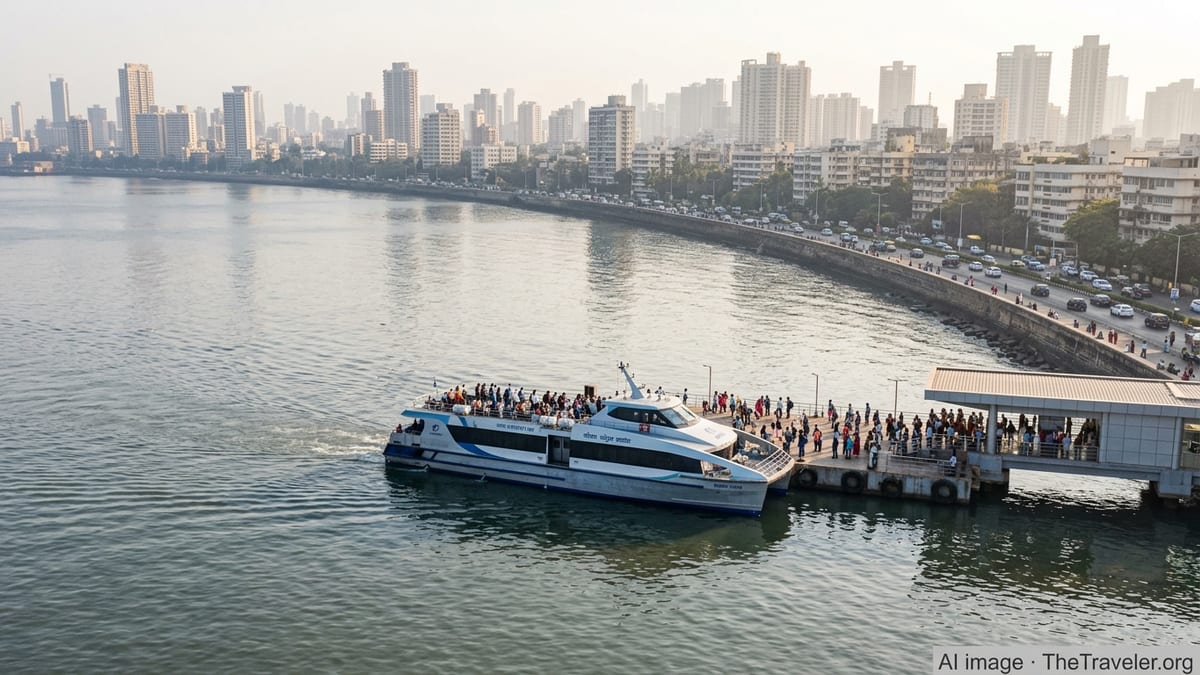
A Kochi-Inspired Blueprint for Mumbai’s Waterfront
Plans for a dedicated water metro in the Mumbai Metropolitan Region have gathered momentum, with a techno-economic feasibility study outlining an integrated network of routes across creeks, rivers and the Arabian Sea. Publicly available information indicates that the model closely follows Kochi’s electric water metro, emphasising frequent, short-hop services, modern terminals and seamless connections with land-based transport.
According to recent coverage on the project, the proposed system envisions a series of interlinked corridors serving both Mumbai and its fast-growing periphery, including Thane, Palghar and Raigad districts. The water metro label reflects an intention to operate ferry services with metro-like regularity and ticketing, rather than occasional or purely tourist-oriented sailings.
The detailed project report is being prepared with technical inputs from Kochi Water Metro’s planners, indicating a transfer of design and operational know-how from India’s first modern urban water transit network. Reports suggest that this collaboration is helping refine vessel specifications, route selection and terminal design for Mumbai’s more complex coastal geography.
Planning documents point to an initial launch window around early to mid-2026, with services expected to expand in phases through the end of that year. December 2026 is emerging as a notional milestone for a more fully developed water metro spine, aligned with the commissioning of key jetties now under construction.
New Jetties to Anchor a Coastal Commute Network
The foundation of Mumbai’s water metro lies in a dense grid of passenger jetties and terminals. Recent government approvals and budget allocations have focused on building and upgrading dozens of such access points, particularly along creeks and inland waterways that feed into Mumbai’s harbour.
Reports indicate that multiple passenger jetties along the Kalyan-Vasai corridor and within the Mira-Bhayandar to Dombivli belt are scheduled to be ready by 2026, funded in part through the national Sagarmala programme. These facilities are being designed with waiting halls, ticketing areas, toilets and basic retail, bringing them closer in feel to metro stations than to traditional bare-bones ferry steps.
In parallel, a new passenger jetty and terminal at Mumbai’s historic Gateway of India is slated to be operational by mid-2026, following a court go-ahead. Once complete, this hub is expected to streamline existing tourist ferry traffic to Elephanta and Mandwa while also serving as a central node for future water metro services across the harbour.
Further north along the western waterfront, planning documents from the state maritime authority list potential jetties at locations such as Borivali, Marve, Versova, Juhu, Bandra and Worli. Together, these points would create a coastal arc that complements the city’s coastal road and sea link infrastructure, offering an alternative route to some of the most congested surface corridors.
Tourism Circuits Poised for a Major Upgrade
While easing commuter pressure is a central goal, the proposed Mumbai water metro is also being framed as a tourism catalyst. Feasibility studies for water taxi and metro-style services outline routes that link major leisure destinations, from the beaches and entertainment parks of Gorai and Marve to heritage precincts near Nariman Point and the Gateway of India.
One set of proposed corridors includes links such as Borivali–Gorai–Marve–Manori and Vasai–Marve–Nariman Point, positioning the western waterfront as an easily accessible chain of beaches and recreation zones. On the eastern side, routes connecting Gateway, Elephanta Island, Nhava, Mandwa and Navi Mumbai are expected to knit together heritage sites, seaside resorts and emerging coastal townships.
Tourism planners note that faster and more predictable water connections could help disperse visitor footfall beyond a handful of overburdened hotspots like Marine Drive and Colaba. The combination of shorter journey times and scenic coastal views is seen as particularly attractive to both domestic travellers and international visitors seeking half-day and full-day excursions.
By the time a more complete water metro grid is in place around December 2026, industry observers expect operators to package integrated experiences that combine ferry rides, coastal cycling paths and waterfront promenades developed along the new coastal road, positioning Mumbai as a more walkable and water-oriented city break.
Cleaner, Electric Vessels and Sustainability Goals
A notable feature of the emerging Mumbai water metro concept is its stated emphasis on cleaner propulsion technologies. Drawing lessons from Kochi’s fully electric fleet, the Mumbai plan is expected to feature a mix of battery-powered and low-emission vessels, reducing both local air pollution and noise compared with traditional diesel ferries.
Project documents and policy statements on coastal mobility in Maharashtra highlight the role of inland water transport in lowering the city’s overall carbon footprint. By shifting some commuter and tourist journeys away from congested road corridors, the water metro is projected to cut fuel consumption and particulate emissions associated with private vehicles and conventional buses.
Shore-side infrastructure is being designed to support these sustainability goals. Terminals and jetties under development are expected to incorporate charging points, floating pontoons that minimise dredging and softer engineering solutions where possible. Some planning notes also mention improved access for non-motorised transport, such as bicycle parking and pedestrian-friendly approaches, in line with broader urban mobility policies.
Environmental groups have nonetheless called for careful monitoring of dredging, wake impacts and coastal reclamation associated with new terminals and breakwaters. The final configuration of Mumbai’s water metro is likely to be shaped by these assessments, as well as by ongoing legal scrutiny of major waterfront projects in and around the city.
Integration With Mumbai’s Expanding Transport Web
The water metro is being developed at a time when Mumbai is experiencing one of its most intense phases of transport investment in decades. New metro lines, the coastal road, expanded sea links and the Mumbai Trans Harbour Link are all reshaping how residents move across the region.
According to recent planning documents from regional agencies, the water metro is intended to slot into this wider network as a complementary mode rather than a standalone system. Proposed routes reference interchanges with suburban railway stations, metro nodes, bus depots and, eventually, the Navi Mumbai international airport, enabling through journeys that combine water and land legs.
Harbour-side terminals near key business districts such as Nariman Point and Bandra-Kurla are expected to give commuters from distant suburbs a new option that bypasses perennial road bottlenecks. On the eastern flank, links over Thane Creek and to the mainland are projected to support long-term growth corridors tied to port-led development and logistics hubs.
By December 2026, if construction and procurement remain on schedule, Mumbai’s first phase of water metro operations could provide a visible demonstration of how ferries, jetties and shore infrastructure can be woven into a multimodal system. The experience of Kochi suggests that predictable frequency, integrated ticketing and comfortable terminals will be critical to persuading daily commuters and tourists alike to embrace the city’s newest way of travelling along the water.