

More news on this day
Munich Airport is deepening its long-standing partnership with Lufthansa as both groups move to reshape the Bavarian hub’s infrastructure, sustainability strategy and passenger experience in anticipation of significantly higher traffic by 2035.
Get the latest news straight to your inbox!
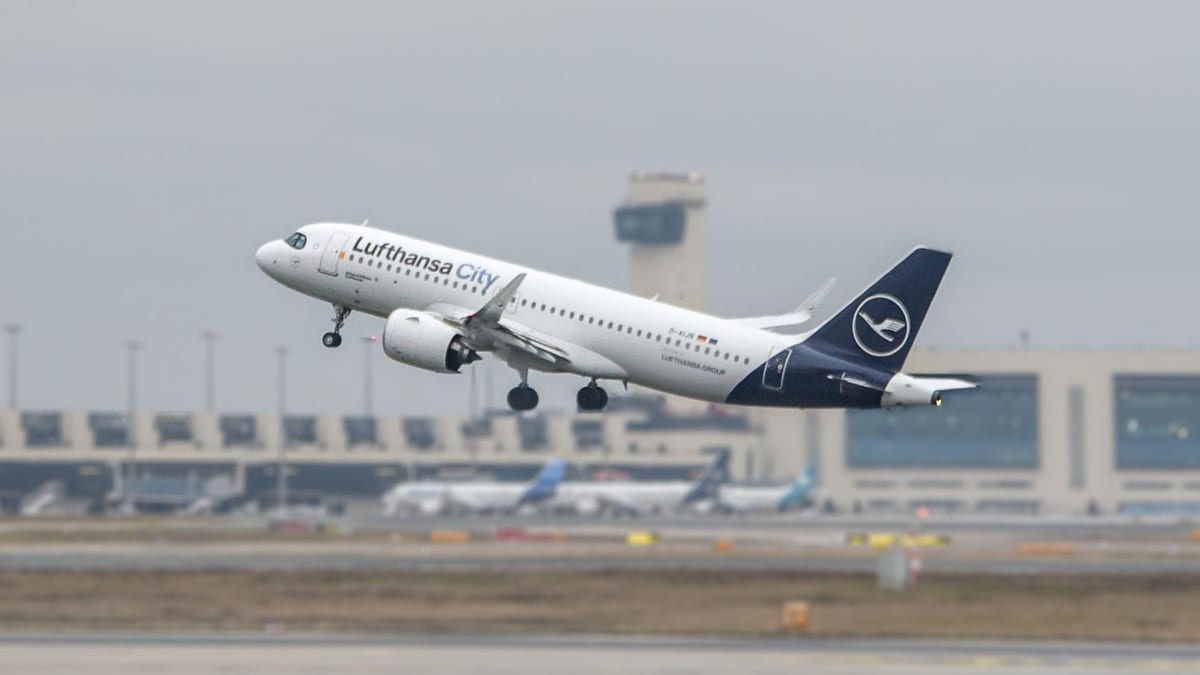
Image by Latest International / Global Travel News, Breaking World Travel News
A joint roadmap for a high-growth hub
Publicly available corporate reports show that Munich Airport and Deutsche Lufthansa AG have set a shared strategy to secure the airport’s position as a premium European hub as air travel demand continues to recover and grow. A letter of intent signed in 2023 outlines cooperation on infrastructure expansion based on demand, digitalization of operations, and the development of Munich into an intermodal traffic hub with strong rail and ground transport links.
The partnership builds on the joint venture behind Terminal 2, which opened in 2003 and is operated by a company co-owned by the airport and Lufthansa. The terminal, together with its midfield satellite facility that entered service in 2016, already serves Lufthansa and its Star Alliance partners as a dedicated hub complex designed for high transfer volumes and short walking distances.
Recent traffic data cited in Munich Airport’s latest disclosures indicate that the gateway handled more than 40 million passengers again in 2025, keeping it among Europe’s top ten hubs and underscoring the need for additional capacity. With long-haul demand and premium travel rebounding, the joint roadmap frames Munich as a growth platform for Lufthansa and partner airlines well into the next decade.
Terminal 2 expansion targets an extra 10 million passengers
According to updated planning information, Munich Airport and Lufthansa are preparing a major capacity increase in the Terminal 2 system, with an expansion currently scheduled to enter operation around 2035. Public documents describe the project as adding infrastructure for roughly 10 million additional passengers per year, effectively creating a second large growth step after the satellite building.
The planned extension is intended to be closely integrated with the existing Terminal 2 and satellite layout, preserving the hub’s emphasis on efficient connections. The design direction calls for short transfer paths, additional aircraft contact stands and optimized baggage handling to support higher frequencies on Lufthansa’s European feeder network as well as more widebody operations.
While detailed architectural concepts have not yet been publicly finalized, the airport’s long-term masterplanning points to further development to the east of the current satellite building. Industry commentary suggests that future phases could lay the groundwork for an eventual Terminal 3 zone, providing additional flexibility to separate traffic flows as passenger numbers rise.
Near-term projects lay the groundwork for 2035
Even as the longer-term Terminal 2 expansion targets the mid-2030s, several construction projects already under way at Munich Airport are intended to support growth and improve resilience well before that date. The most prominent is the expansion of Terminal 1, where a new pier is on track to open in the first half of 2026, according to recent press material from the airport and industry publications.
The Terminal 1 project is described as one of Bavaria’s largest current infrastructure schemes, adding modern gate areas, additional security and border-control capacity, and upgraded retail space. Reports indicate that the pier has been structurally completed, with interior fit-out and systems integration progressing and airlines expected to move into the new area once operational testing is finished.
By enlarging Terminal 1 while retaining Lufthansa and Star Alliance traffic in Terminal 2 and the satellite, Munich Airport aims to balance alliance operations with a substantial presence of non-aligned and leisure carriers. This dual-terminal strategy is seen in sector analysis as a way to diversify airline partners, capture growing holiday and point-to-point demand, and relieve peak pressure on the hub system serving Lufthansa.
Sustainability and digitalization at the core of the plan
Munich Airport’s latest integrated and sustainability reports place significant emphasis on climate goals as part of its Strategy 2030+ framework. The airport operator reiterates an ambition to reach carbon neutrality on the campus level by the middle of the next decade, with the Terminal 2 system, including the joint venture with Lufthansa, targeted to be carbon neutral by 2030.
To reach these objectives, the partners are increasing the use of on-site photovoltaic installations, moving ground operations to low-emission fleets and tightening building efficiency standards for new projects. Earlier projects such as the Terminal 2 satellite already incorporated climate-optimized facades and energy-efficient systems, and planners indicate that future expansions will be designed to meet or exceed those benchmarks.
Digitalization is another pillar of the joint agenda. Publicly available information highlights investments in advanced baggage systems, automated checkpoints and data-driven resource management to stabilize operations as volumes rise. Lufthansa’s hub strategy for Munich increasingly relies on real-time data tools for turnarounds and connection management, with the goal of preserving the airport’s reputation for smooth transfers even at higher passenger levels.
Planning around political limits and regional connectivity
The expansion drive is unfolding against a backdrop of political conditions that shape how Munich Airport can grow. The state government of Bavaria has maintained a moratorium on construction of a long-debated third runway for the current legislative period, despite the fact that the runway project holds a valid planning approval following court decisions in the mid-2010s. Current airport strategy documents explicitly note that the moratorium remains in force, and that current capacity measures are focused on terminal and process improvements instead.
This constraint has placed additional importance on optimizing existing airfield operations, enlarging terminal capacity and strengthening intermodal links. Munich Airport’s partnership with Lufthansa includes commitments to enhance the hub’s role as a junction between air services and long-distance rail, building on Germany’s wider trend toward integrated air-rail products and improved connectivity between airports and city centers.
Industry observers point to Munich’s strong regional rail and road links, as well as the airport’s location within southern Germany’s industrial heartland, as key reasons why both the airport and Lufthansa view the site as a long-term growth platform. With European competition increasing and several rival hubs also planning large-scale expansions by the mid-2030s, the coordinated strategy in Munich is framed as essential to retaining traffic and capturing future demand.