

More news on this day
Germany is marking a symbolic aviation milestone as Munich Airport celebrates serving its one billionth passenger, a landmark moment that underlines the hub’s transformation into one of Europe’s fastest-growing gateways.
Get the latest news straight to your inbox!
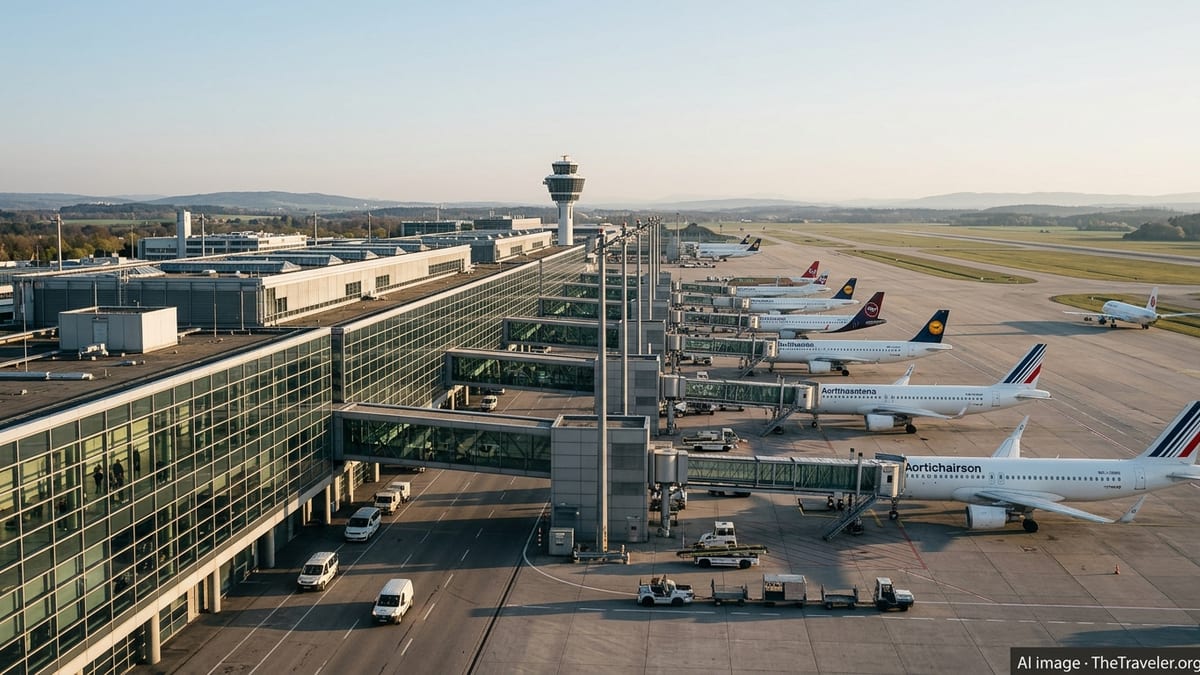
A Symbolic Milestone for Germany’s Second-Busiest Hub
The one billionth passenger mark represents the cumulative total of travelers handled at Munich Airport since it opened in 1992, highlighting how a once-regional facility has grown into a major European hub. Publicly available historical traffic data shows that annual passenger volumes have climbed from the single-digit millions in the early years to more than 40 million in recent years, pushing the lifetime total into the ten-figure range.
Industry analyses point out that Munich is now one of the most important connecting airports in Central Europe, second only to Frankfurt within Germany by total passengers. Its role as a hub for extensive European and long-haul networks has steadily increased the airport’s share of Germany’s overall air traffic, contributing to the long-term build-up in cumulative passengers.
The billion-passenger threshold is being widely interpreted as both a symbolic and practical indicator of Germany’s broader aviation recovery after the pandemic. Continuous year-on-year gains since 2022, combined with robust forecasts for the remainder of the decade, suggest that Munich’s contribution to national passenger totals will continue to expand.
Record Traffic Growth and 2025 Performance
Recent data from airport reporting and specialist aviation outlets shows that Munich handled around 41.6 million passengers in 2024, followed by approximately 43.4 million passengers in 2025, marking an increase of about 1.8 million travelers within a single year. This growth rate placed Munich among the strongest climbers in the German-speaking aviation market, both in absolute numbers and in percentage terms.
Analyses note that intercontinental routes, particularly to Asia and North America, have been key drivers of this expansion, alongside resilient demand for European and Mediterranean leisure destinations. Traffic on routes to East Asia has set new records, while North Atlantic services have also seen notable gains, helping to fill long-haul aircraft and lift overall load factors.
Industry commentary describes Munich as Germany’s fastest-growing major airport in the post-pandemic recovery phase, citing not only passenger numbers but also rising cargo volumes and an expanding choice of destinations. The sustained rebound in premium and transfer traffic has further reinforced the airport’s position as a preferred connecting point for travelers across Central and Eastern Europe.
Capacity Expansions to Match Rising Demand
To accommodate this growth, Munich Airport is in the midst of a multi-year expansion of its infrastructure. Published information from regional and national news coverage indicates that a major enlargement of the Terminal 1 complex is scheduled to add capacity for several million additional passengers per year from 2026 onward, easing pressure on existing facilities.
At Terminal 2, security screening has been upgraded with computed tomography scanners, enabling passengers to keep electronics and liquids in their bags and helping to shorten waiting times. Reports indicate that the majority of travelers now pass through security within minutes during normal operating periods, an important factor in maintaining service quality as passenger volumes increase.
Longer-term plans include extending the satellite building and enhancing airside connections to support more long-haul operations and additional aircraft stands. These projects are designed to align the physical capacity of the airport with projected demand, ensuring that future traffic growth does not compromise punctuality or passenger experience.
Strengthening Munich’s Role in Europe’s Aviation Map
Munich’s one billionth passenger milestone comes as the airport consolidates its role as a key European hub with a wide-ranging route network. Recent schedules show connections to more than 200 destinations in Germany and abroad, served by close to 100 airlines, including a growing number of long-haul carriers from Asia and the Middle East.
Aviation industry rankings and surveys over the past two years have continued to place Munich among Europe’s leading airports in terms of passenger satisfaction, connectivity and service range. Recognition in international awards and traveler polls has reinforced its reputation as a high-quality transfer and origin–destination airport, which in turn supports further traffic growth.
Observers note that the airport’s connectivity is particularly valuable for southern Germany, Austria, Switzerland and parts of Central and Eastern Europe, where travelers frequently rely on Munich for long-haul links. The hub’s geographic position and extensive banked flight structure make it an efficient platform for one-stop journeys between secondary European cities and intercontinental destinations.
Economic and Tourism Impact Across Bavaria and Beyond
The accumulation of one billion passengers over a few decades also reflects Munich Airport’s increasing significance for the regional and national economy. Economic studies referenced in public reporting describe the airport as a major employer and an anchor for trade, tourism and investment in Bavaria, supporting tens of thousands of direct and indirect jobs.
Tourism boards and travel industry analyses point to the airport’s role in drawing international visitors to Munich, Bavaria’s alpine regions and destinations across southern Germany. The combination of strong long-haul connectivity and frequent European services has helped make the region more accessible for both leisure and business travelers, which in turn supports hotels, cultural institutions and conference venues.
As aviation continues to recover globally, Munich’s billion-passenger landmark is being viewed as a turning point that highlights how quickly demand has returned to and surpassed pre-crisis levels. With further capacity expansions underway and airlines adding new routes, the airport appears positioned to build on this historic achievement and solidify its status as a leading European gateway.