

More news on this day
Munich Airport has opened Germany’s first fully barrier-free security checkpoint in Terminal 2, a new inclusive screening area designed to transform the experience for passengers with special needs and families.
Get the latest news straight to your inbox!
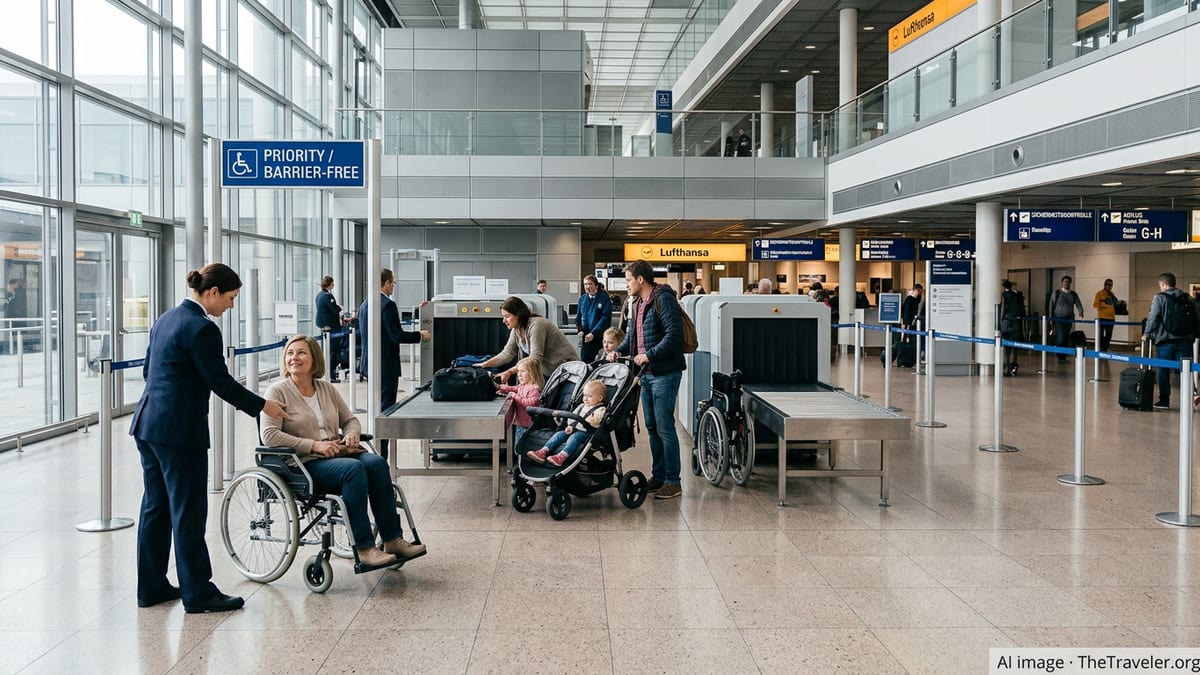
New Inclusive Checkpoint Sets a National First
The newly launched security checkpoint in Terminal 2 marks a milestone for German aviation, introducing the country’s first fully inclusive and barrier-free screening area. Designed from the ground up around passenger needs rather than technology, the checkpoint aims to reduce stress, waiting times and physical strain for travelers who often find airport security the most challenging part of their journey.
Located within the central security zone of Terminal 2, which is jointly operated by Munich Airport and Lufthansa, the new lane is available to passengers with reduced mobility, hidden disabilities and families with young children. Staff at the checkpoint have received specific training to recognize different needs and adapt the process accordingly, from the pace of screening to the way instructions are given.
The airport said the project is part of a broader push to make travel more seamless and accessible, complementing existing step-free routes, elevators and assistance services across the hub. By integrating inclusive design into one of the most sensitive points of the passenger journey, Munich is positioning itself as a testbed for the next generation of security infrastructure.
How the Barrier-Free Security Process Works
Unlike conventional security lines that rely heavily on automated boarding pass scanners and rigid queuing systems, passengers at the new Terminal 2 checkpoint are greeted personally by staff. Instead of swiping a boarding pass at a barrier, travelers are welcomed by an employee who checks travel documents and guides them through each stage of the process at an appropriate pace.
The physical layout provides more space around the screening area, giving additional room for wheelchairs, walkers and other mobility aids to maneuver. Conveyor belts and inspection areas have been configured to make it easier to place and retrieve bags, with staff on hand to assist if lifting or reaching is difficult. The design also reduces tight turns and sudden level changes that can pose problems for people using mobility devices.
Technology still plays an important role, but it is deployed to support comfort as well as security. Larger baggage inspection systems can handle bulky items such as wheelchairs and strollers without repeated lifting or disassembly. The checkpoint is integrated into the wider Terminal 2 security operation, helping to spread passenger volumes more evenly and reduce congestion at peak times.
Support for Hidden Disabilities and the Sunflower Initiative
The new checkpoint has been shaped in part by Munich Airport’s participation in the Sunflower Initiative, an international program that raises awareness of hidden or non-visible disabilities. Passengers who choose to wear the Sunflower lanyard can discreetly signal that they may need extra time, clearer communication or a quieter environment during security screening.
Staff at the barrier-free lane are trained to respond sensitively to these signals, adjusting their approach without drawing unwanted attention. That may include offering more detailed explanations, avoiding rushed instructions, or allowing passengers to stay together with their companions for reassurance. Visual cues and clear signage are used to make navigation straightforward for travelers who may have cognitive challenges or heightened anxiety.
The emphasis on hidden disabilities reflects a growing recognition in the aviation sector that accessibility is not only about ramps and elevators. By building the needs of a diverse range of passengers into everyday procedures such as security screening, Munich Airport is seeking to normalize requests for assistance and reduce the stigma that some travelers feel when they ask for help.
Family-Friendly Design in a High-Stress Zone
Families with young children are another key focus of the Terminal 2 project. The checkpoint’s design includes bright, welcoming colors and a calmer visual layout intended to make the space feel less intimidating than traditional security halls. Short children’s animations are shown on screens to help keep kids occupied while parents prepare trays and manage documents.
Extra room around the conveyor belts and inspection stations is intended to simplify the handling of pushchairs, car seats and hand luggage. Parents can keep children in sight throughout the process, reducing the need to separate family members during screening. Staff are briefed to allow additional time where needed, recognizing that reorganizing bags and belongings with children in tow can take longer.
These adjustments are aimed at easing pressure at one of the most stressful points of family travel. By making the environment more predictable and child friendly, the airport hopes to cut last minute delays at the checkpoint and reduce the risk of missed flights caused by bottlenecks in family queues.
Capacity Gains and What Travelers Should Expect
Although the new checkpoint has been designed with comfort and accessibility in mind, it is also expected to deliver measurable improvements in efficiency. Munich Airport estimates that the inclusive security area will add capacity for around 400 additional passengers per hour to Terminal 2’s central screening operation, helping to relieve pressure at peak travel times.
For travelers, the new setup does not change the fundamental security requirements. All passengers and bags are still screened to the same federal standards applied across Germany, and the Southern Bavarian Aviation Authority continues to oversee the process. What changes is the way those checks are integrated into the journey, with more emphasis on space, communication and individual pacing.
Passengers who believe they could benefit from the inclusive checkpoint can expect a more personalized interaction at the start of screening and should allow normal security time in their travel plans. As airlines and the airport continue to refine wayfinding and pre-travel information, signage in Terminal 2 and staff at information desks will guide eligible travelers to the new facility.
The launch adds a new dimension to Munich Airport’s role as a major European hub, demonstrating how efficiency targets can be aligned with accessibility goals. If successful, the concept could provide a blueprint for barrier-free security checkpoints at other German airports and across the wider region.