

More news on this day
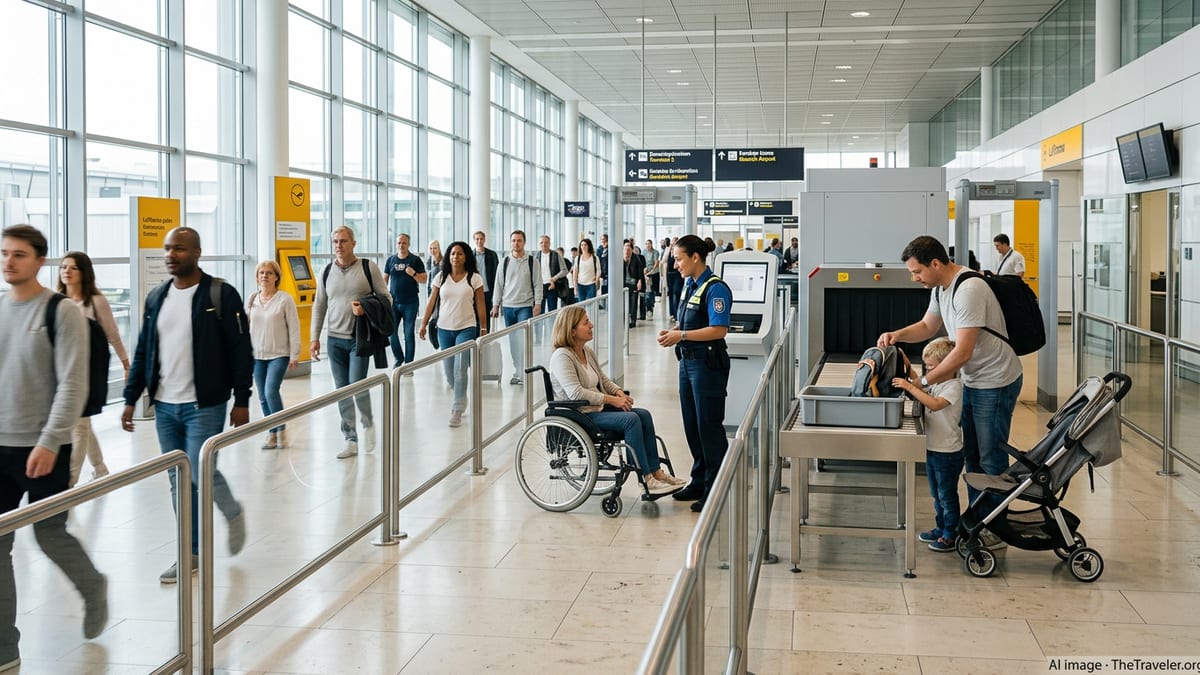
Munich Airport has opened Germany’s first inclusive security checkpoint in Terminal 2, a barrier-free screening area designed to make flying less stressful for passengers with special needs and families with young children.
A New Milestone for Accessible Air Travel
Unveiled on March 9, 2026, the new security area in Munich Airport’s Terminal 2 is being presented as a blueprint for more humane and accessible passenger screening in Germany. The airport describes the facility as the country’s first truly inclusive security checkpoint, built from the ground up around the needs of travelers who often find standard lanes overwhelming or impractical.
Located in the central security area of Terminal 2, the checkpoint is fully barrier free and configured to improve the experience for people with reduced mobility, sensory sensitivities or non-visible disabilities. The design also targets a second group that frequently struggles at security: families traveling with infants and young children, who must juggle strollers, bags and anxious kids while complying with aviation rules.
Airport officials say the project is part of a broader strategy to position Munich as a leading European hub for accessible travel, complementing recent investments in passenger assistance services and terminal upgrades. By combining comfort-oriented design with operational efficiency, the new checkpoint aims to prove that accessibility and capacity can be improved at the same time.
Human-Centered Screening Puts Staff Out Front
One of the most notable changes at the inclusive checkpoint is what passengers do not see: there is no automated boarding pass reader at the entrance. Instead, travelers are greeted personally by staff members who verify documents, explain each step of the process and adjust the pace to individual needs.
This human-centered approach is intended to reduce confusion and anxiety, particularly for travelers who may be uncomfortable with fast-moving queues or complex self-service technology. Staff can slow down for passengers who need extra time, offer clear verbal instructions, and respond immediately if someone appears overwhelmed or unsure.
The layout gives security personnel more room to work with mobility aids, medical devices and bulky items that often complicate screening in standard lanes. Wider passageways and a larger baggage inspection system help minimize bottlenecks when wheelchairs, walkers or specialized equipment must be screened separately from their users.
The airport emphasizes that the focus of the new checkpoint is on people rather than machines, while still meeting rigorous security standards overseen by the South Bavarian Aviation Authority. The model is being closely watched by other German airports under pressure to improve both accessibility and passenger satisfaction.
Designed With Hidden Disabilities and Sensory Needs in Mind
The checkpoint has also been shaped by Munich Airport’s participation in the Hidden Disabilities Sunflower initiative, a program that raises awareness of passengers whose disabilities are not immediately visible. Travelers can choose to wear discreet sunflower-branded lanyards to signal that they may need additional time, clearer communication or a quieter environment.
With this in mind, planners have aimed to create a calmer, more predictable space than many traditional security zones. Visual clutter is reduced, signage is clear, and staff are trained to recognize and respond sensitively to signs of stress or sensory overload. The goal is to avoid sudden instructions or rushed procedures that can be particularly challenging for people on the autism spectrum, those with anxiety disorders or cognitive impairments.
The inclusive security area’s lighting and color scheme have been selected to feel bright yet not harsh, helping to reduce fatigue during what is often the most nerve-racking part of the airport journey. By offering a more controlled and considerate environment, Munich Airport hopes to make air travel feasible for passengers who might previously have avoided flying altogether.
Airport representatives point out that better support for hidden disabilities benefits many other travelers as well, including older passengers, infrequent flyers and those recovering from illness or injury. In practice, they argue, accessibility enhancements often translate into a smoother experience for everyone in the queue.
Support for Families Traveling With Young Children
Families are another key focus of the new Terminal 2 checkpoint. The design anticipates the realities of traveling with small children, from managing strollers and car seats to keeping youngsters calm while parents focus on liquids, laptops and boarding passes.
The inclusive security area incorporates a bright, friendly aesthetic intended to feel less intimidating than a typical checkpoint. Short children’s films are played on screens to distract and entertain kids during moments when adults need to concentrate on instructions or repacking bags after inspection.
Extra space around the conveyor belts and inspection stations is meant to reduce the sense of chaos that often erupts when several family members are removing shoes, unloading bags and corralling children at once. Staff can step in to guide parents through the process, helping prioritize what needs to go on the belt and when to move forward, which can significantly cut down on delays and stress.
Travel industry observers say this family-friendly approach reflects a growing recognition that younger passengers are an important part of the customer base. Airports that can offer smoother, more predictable experiences for families may gain an edge with leisure travelers choosing between rival hubs.
Boosting Capacity While Setting a National Benchmark
While the new facility is framed first as an accessibility initiative, it also brings a tangible operational benefit. Munich Airport reports that the inclusive checkpoint will increase the capacity of Terminal 2’s central security area by around 400 passengers per hour, helping to ease congestion at peak times.
That additional throughput is significant for Munich, a major hub for both intra-European and long-haul traffic, where queues at security can stretch during busy holiday periods and major events. By channeling families and passengers with special needs into a space designed for their requirements, the airport expects to streamline flows in the standard lanes as well.
For Germany’s aviation sector, the opening marks a symbolic shift toward embedding inclusivity into core infrastructure rather than treating it as an add-on service. Industry analysts will be watching closely to see whether similar checkpoints appear at other major German airports in the coming years and how quickly best practices from Munich are adopted elsewhere in Europe.
For now, the Terminal 2 project gives Munich Airport a high-profile new talking point in the competitive landscape of international hubs: a security experience that aims to be more humane, more efficient and more accessible, all in the same space.