

More news on this day
Munich has officially launched Tram Line 14, a long-awaited new route linking Pasing station with Gondrellplatz via Laim and Fürstenrieder Straße, marking the first operational section of the city’s ambitious Westtangente project and a significant shift in how residents move across the western districts.
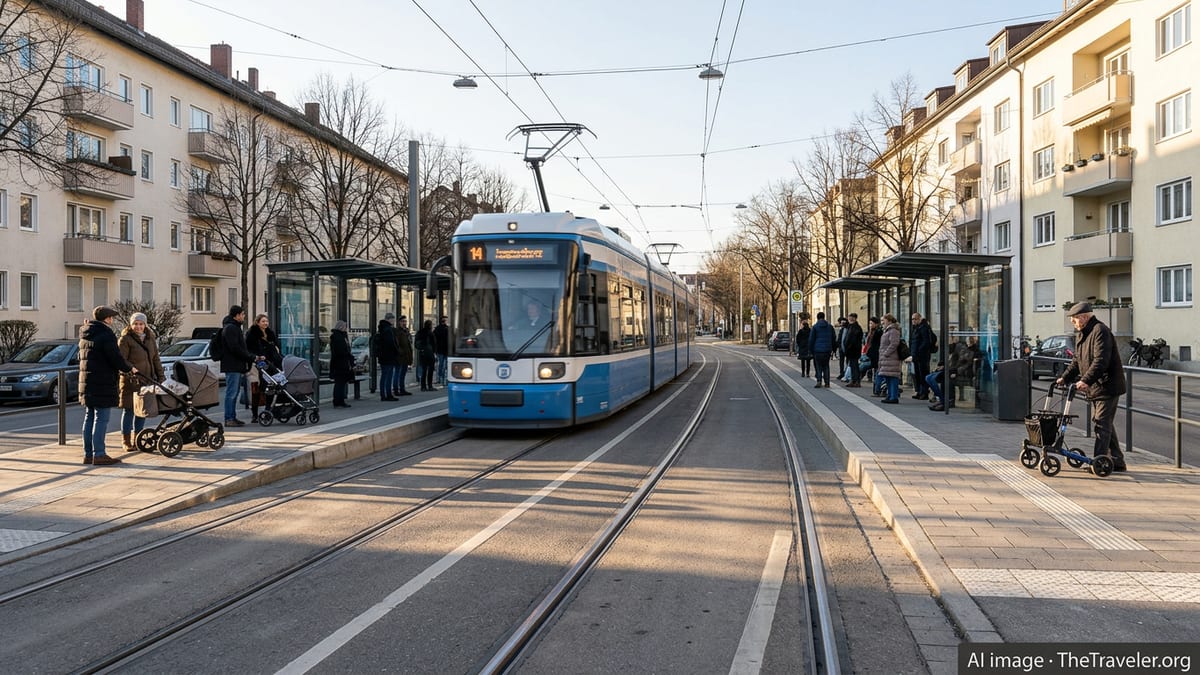
What Exactly Is New About Tram Line 14?
Tram Line 14 returned to Munich’s network on February 28, 2026, after more than four decades of absence from local timetables. The number has been revived for a brand-new role: serving as the first operational piece of the Westtangente, a planned north south tram corridor designed to connect key neighborhoods in the west without detouring through the city center.
The inaugural segment now in service runs between Pasing Bahnhof and Gondrellplatz, combining existing tram tracks with a 1.5-kilometer newly built section between Agnes-Bernauer-Straße and Ammerseestraße along Fürstenrieder Straße. This new build is the first entirely new tram corridor to open in Munich since 2016, underlining the scale of the upgrade for residents in Laim and the surrounding areas.
At present, Line 14 operates as an interim crosstown link while construction continues on the rest of the Westtangente. In practice, that means the line shares parts of its route with existing services before branching onto the new infrastructure. For everyday riders, the distinction matters less than the result: a direct, frequent tram link across the west side that did not exist before.
The opening comes after several months of test operations, including technical trial runs with both historic and modern tram vehicles, to ensure the new overhead wiring, track and signaling work smoothly under regular service conditions.
The Route: From Pasing to Gondrellplatz via Laim
Line 14 begins at Pasing Bahnhof, one of Munich’s most important rail hubs, and initially follows the familiar alignment of Tram 19 through the Pasing district toward Laim. This shared stretch ensures that passengers in Pasing gain an additional high-capacity tram option, easing pressure on existing services and improving access to the dense residential streets in between.
At Fürstenrieder Straße, the new line turns south and enters the freshly completed Westtangente section. Here, Line 14 serves new or completely rebuilt stops along Fürstenrieder Straße, including Aindorferstraße and Laimer Platz, where passengers can transfer directly to U-Bahn Line U5. The stops have been constructed as fully accessible platforms, ready in the long term for extra-long low-floor trams, even though shorter units are in use for now.
Continuing south, the tram reaches Ammerseestraße before switching to an alignment long used by Line 18, running onward to its terminus at Gondrellplatz. From end to end, this creates a continuous north south spine within the western districts, tying together S-Bahn in Pasing, the U-Bahn at Laim and neighborhood centers further south.
For visitors, this offers a straightforward way to explore Munich’s western residential quarters and parks without navigating the busy inner-city corridors. For locals, it simplifies daily journeys to workplaces, schools and shopping streets that previously required at least one extra transfer or a ride on crowded bus lines.
Service Pattern, Frequency and Interchanges
In its initial phase, Tram Line 14 is operating at a ten-minute interval for most of the day between Gondrellplatz and Pasing. This headway is designed to dovetail with existing tram and S-Bahn services, allowing passengers to change with minimal waiting time at key nodes such as Pasing Bahnhof, Laimer Platz and the interchange stops along Fürstenrieder Straße.
At Pasing Bahnhof, travelers arriving on regional and long-distance trains gain a direct tram connection into the western neighborhoods without detouring through the city center. The station already hosts several tram and bus lines, and the addition of Line 14 broadens options for passengers heading toward Laim or the southern districts.
Laimer Platz, a central interchange on the new route, links the tram with U-Bahn Line U5, giving residents along Fürstenrieder Straße a quicker path underground toward central Munich. The stop has been rebuilt with generous platforms and level boarding to handle future increases in passenger volume as subsequent segments of the Westtangente come on line.
Farther south, the shared tracks with Line 18 toward Gondrellplatz mean that riders benefit from a combined tram frequency, especially at busy times. The design anticipates a gradual ramp-up in capacity: once the full Westtangente is complete and additional long trams are deployed, the corridor is expected to carry substantially more passengers than the current interim service.
A Milestone for the Westtangente Project
The launch of Tram Line 14 is a visible milestone in a project that has been in planning for years and under construction since 2024. The full Westtangente is envisioned as an 8.25-kilometer arc linking Romanplatz in the north with Aidenbachstraße in the south, creating a true tangential route that allows cross-town trips between western districts without changing at central hubs.
The first segment between Agnes-Bernauer-Straße and Ammerseestraße faced delays after ground subsidence in Fürstenrieder Straße forced work to be paused and reinforced, pushing the original opening target from late 2025 into early 2026. With this section now in passenger service, attention turns to the northern extension toward Romanplatz and the southern continuation toward Aidenbachstraße, both of which are scheduled to follow in stages through 2028.
Once fully built, the Westtangente is expected to add around ten percent to Munich’s total tram network length and to bring high-capacity rail-based transit to several neighborhoods that currently rely heavily on buses. It also forms part of a broader strategy to shift more journeys from private cars to public transport, especially in fast-growing residential quarters.
City planners highlight that the new corridor will intersect multiple S-Bahn, U-Bahn and tram lines, creating a mesh of transfer opportunities. In combination with the future second S-Bahn main line and upgrades at Laim, the Westtangente is meant to help distribute passenger flows more evenly across the network.
What Riders Experience on the Ground
For passengers, the change is most noticeable on Fürstenrieder Straße, where construction fences, excavations and temporary traffic diversions had become part of everyday life. With trams now gliding along the newly laid rails, residents are beginning to see and feel the benefits in the form of shorter travel times and a quieter streetscape compared with heavy bus traffic.
The new and upgraded stops feature wide platforms, shelters and step-free access, making boarding easier for families with strollers, passengers with luggage and people using wheelchairs or walkers. The modern low-floor vehicles operating on Line 14 offer spacious interiors, clear passenger information displays and large windows that open up views of tree-lined residential streets and neighborhood squares.
During the opening weekend, the first regular services drew a mix of daily commuters, local families and tram enthusiasts photographing the route. Crowded cars reflected strong curiosity about the line, while the festive atmosphere at Laimer Anger underscored the symbolic importance of bringing trams back as a structuring element of urban life in the west.
In the longer term, transport operators expect demand to rise further as new sections of the Westtangente open and as development around Laim and Pasing continues. For now, Line 14 offers visitors and residents alike a new, straightforward way to traverse Munich’s western arc and a tangible preview of how the completed Westtangente will reshape the city’s public transport map.