

More news on this day
Operations at Muscat International Airport have been temporarily suspended and Saudi Arabia’s flag carrier Saudia has canceled a number of flights on Saturday, as a fast-moving military escalation between Iran and Israel ripples across Middle East aviation networks.
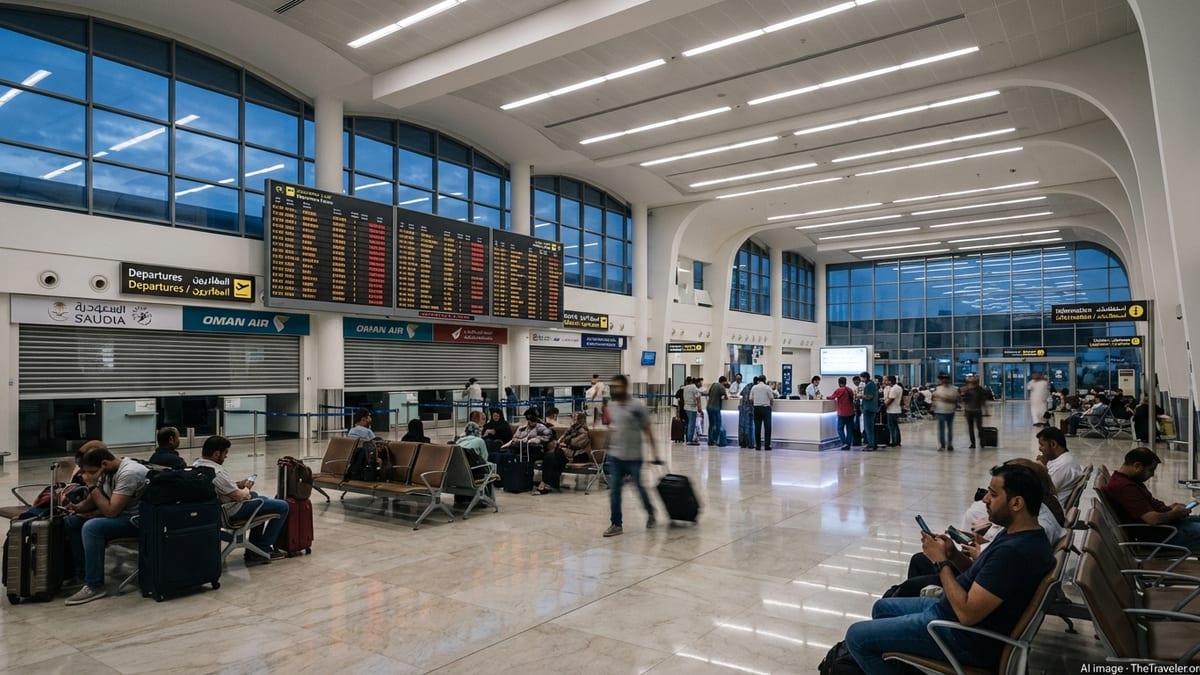
Muscat International Airport Falls Quiet Amid Airspace Clampdown
Muscat International Airport, a key transit hub on the southeastern edge of the Arabian Peninsula, temporarily shut its operations on Saturday after regional airspace closures spread across the Gulf. Flight tracking data showed departures and arrivals grinding to a halt as authorities moved to shield passengers and crew from the risks posed by nearby hostilities.
The shutdown in the Omani capital followed coordinated moves by Gulf states to restrict or close their skies in response to a wave of strikes involving Iran, Israel and the United States. Regional media reported that Oman’s main gateway, normally a busy waypoint for traffic skirting conflict zones further north, had joined other airports across the Gulf in suspending commercial operations until conditions improve.
The closure has immediate consequences for travelers who rely on Muscat as both an origin and a connection point. Airlines including Turkish low cost and European carriers listed Muscat among destinations affected by broad cancellations to Oman, while Egypt’s national airline also halted flights from Cairo to the Omani capital as part of a wider suspension to multiple Middle Eastern cities.
Omani authorities have previously urged passengers to stay in close contact with their airlines during periods of heightened regional tension, and travel advisers on Saturday again stressed that would-be flyers should verify flight status before heading to the airport.
Saudia Scraps Services as Saudi Airports Issue Passenger Alerts
In Saudi Arabia, national carrier Saudia confirmed that it had temporarily canceled and suspended a number of flights in line with evolving security assessments and partial airspace restrictions in neighboring countries. The airline said its emergency coordination teams were working with aviation regulators to monitor developments and adjust operations as needed.
Major Saudi airports in Riyadh, Jeddah and Dammam issued parallel advisories urging travelers to check directly with airlines before setting out. Airport operators highlighted that services to certain regional destinations were being disrupted by closures of foreign airspace and airport shutdowns, even as Saudi Arabia stopped short of announcing a complete closure of its own skies.
Data compiled by regional aviation analysts showed Saudia among several Gulf and international carriers forced to ax or reroute flights as conflict zones expanded. While domestic links within Saudi Arabia continued to operate, passengers booked on routes involving nearby hubs such as Muscat, Doha, Dubai and other Gulf capitals faced last minute schedule changes and extended layovers.
Industry observers noted that Saudi Arabia’s decision to avoid an immediate, full airspace closure has allowed some services to continue, but warned that further escalation or cross-border spillover could still prompt tighter restrictions affecting a larger share of the carrier’s network.
Regional Escalation Reverberates Across Middle East Skies
The disruption at Muscat International Airport and Saudia’s cancellations form part of a broader shock to aviation across the Middle East after Israel launched a large-scale attack on Iran, followed by retaliatory strikes on US-linked targets in the Gulf. Large swathes of airspace over Iran, Iraq and several Gulf states were closed or heavily restricted, forcing airlines to suspend flights or take long detours around the affected corridors.
Qatar, Kuwait, Bahrain and parts of the United Arab Emirates moved to suspend or curtail civil aviation activity, while Dubai’s two major airports halted all flights until further notice. Data from global flight trackers showed hundreds of cancellations and widespread diversions, with flights bound for destinations such as Dubai, Doha, Muscat and Riyadh returning to their origin airports or diverting to alternate hubs outside the region.
International carriers from Europe, Asia and North America reacted by canceling services into the Gulf or rerouting long haul flights to avoid the region entirely. Turkish and Indian airlines, among others, announced cancellations to Oman and multiple nearby states, and a growing list of Middle Eastern destinations, including Muscat, appeared on internal suspension notices issued by flag carriers as the day progressed.
Aviation consultants warned that if the airspace disruption lasts more than a few days, airlines could face higher fuel costs and scheduling congestion across their global networks, with Middle Eastern hubs losing their role as the most efficient transit points between continents.
Travelers Confront Cancellations, Diversions and Lengthy Delays
For passengers in the air and on the ground, Saturday’s shutdowns have translated into confusion, long waits and rapidly changing itineraries. Travelers heading to Muscat reported diversions to airports in South Asia and Europe, while some flights from South Asia to the Gulf turned back mid journey as new restrictions came into force.
Airport authorities in South Asia and Europe detailed a rising tally of cancellations on routes serving Gulf destinations, including Muscat, Dubai and Doha. At one Bangladeshi gateway, officials confirmed that several Middle East flights had been called off due to the regional situation, while a service from Muscat managed to arrive before subsequent movements were curtailed.
Airlines have activated crisis response teams to provide rebooking options, hotel accommodation where possible and limited compensation in line with local regulations. Carriers are also issuing fee waivers, allowing passengers to change their travel dates or reroute tickets once airspace reopens, though availability remains tight given the scale of the disruption.
Travel agents reported a surge in inquiries from customers seeking alternative paths between Europe, Asia and Africa that avoid the Gulf entirely, with some advising itineraries via Central Asia or southern Europe. However, the sudden contraction in capacity means many travelers may have to postpone or cancel journeys altogether until regional skies stabilize.
Outlook for Muscat and Saudia as Situation Remains Fluid
Aviation officials and security analysts cautioned that the situation remains highly fluid, with little clarity on when Muscat International Airport will resume normal operations or when Saudia will restore its full schedule. Much depends on whether the current confrontation escalates or gives way to a negotiated pause that allows regulators to reopen key air corridors.
For Oman, the shutdown at Muscat represents a significant setback for its ambitions to grow as a stable, alternative hub for east west traffic. The sultanate has invested heavily in its main airport and national carrier to attract transit passengers seeking routes that avoid more turbulent parts of the region, a role that is now complicated by hostilities reaching closer to Gulf airspace.
Saudia, meanwhile, faces the challenge of balancing safety imperatives with the need to maintain connectivity for one of the region’s largest domestic and religious travel markets. Any prolonged suspension of regional routes, including services touching Muscat, would ripple through its network, affecting business travelers, expatriate workers and pilgrims alike.
Airlines and airports across the Middle East continue to emphasize that safety remains the overriding priority. Until regional tensions ease and airspace regulators lift restrictions, passengers planning to travel through Muscat, Saudi Arabia or neighboring hubs are being urged to remain flexible, monitor official updates closely and prepare for last minute changes to even well established routes.