

More news on this day
British Airways is funnelling stranded passengers through Muscat as airspace closures and suspended routes across the Gulf turn the Omani capital into a crucial new escape route between the Middle East and London.
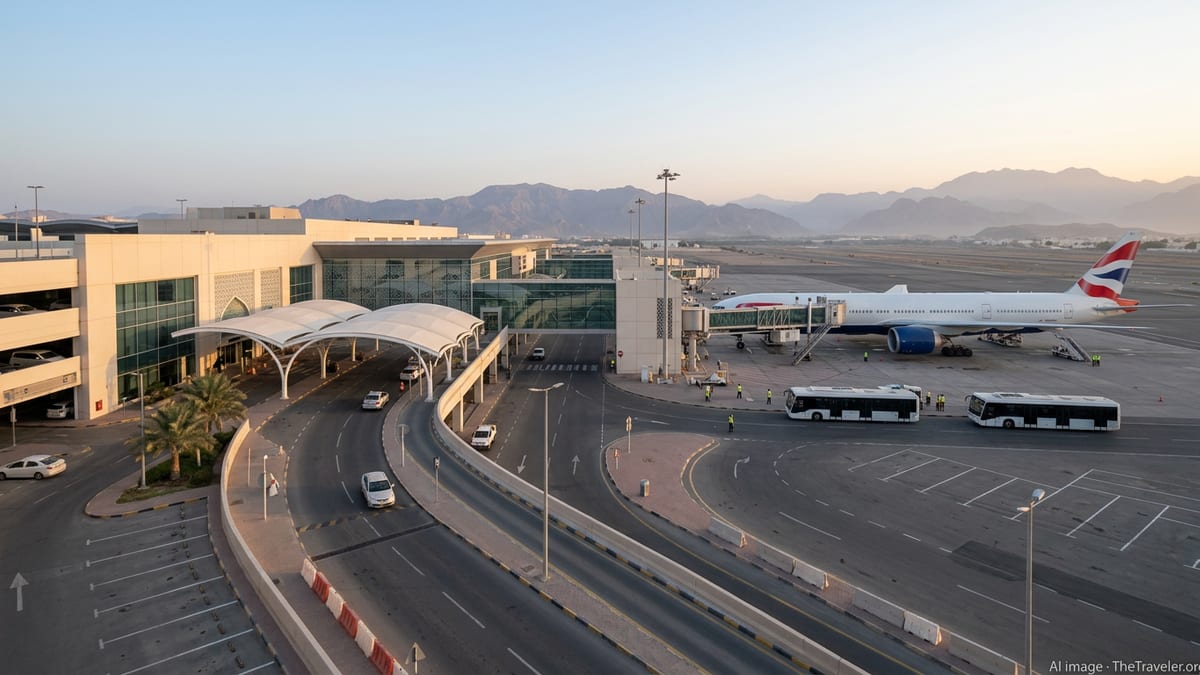
Muscat Steps In As Gulf Gateways Fall Silent
As conflict-linked airspace restrictions ripple across the region, British Airways has halted regular services to key Gulf hubs including Dubai, Abu Dhabi, Doha, Bahrain and Amman. In their place, the airline has pivoted to Muscat, coordinating special departures from the Omani capital to keep passengers moving between the Middle East and the UK.
Muscat’s value lies in its relatively unconstrained skies. While much of the Gulf’s upper airspace has been affected by safety advisories and operational shutdowns, Oman has remained open for overflight and long-haul operations, allowing British Airways to stage flights from the city without the diversions and delays facing other regional gateways.
British Airways has scheduled a limited series of Muscat to London Heathrow services around the current disruption window, including departures in the early hours of 5 March. Seats have filled rapidly as travellers scramble for any available way out of the region, with additional capacity under review depending on operational conditions and demand.
The move has effectively crowned Muscat as a temporary bridge between a fragmented Middle East network and Europe. What began as a contingency operation is now functioning as a de facto hub for evacuees, business travellers and tourists seeking to bypass grounded routes elsewhere in the Gulf.
Emergency Links Shaped by Government and Airline Coordination
The UK government has played a central role in shaping Muscat’s new status. Officials have worked alongside British Airways to arrange special flights for British nationals and other eligible travellers, combining chartered services with commercial operations to maximise the number of people able to leave the region.
Foreign Office updates over recent days have repeatedly directed citizens to Muscat as one of the most reliable departure points still connected to London. A dedicated repatriation flight and a British Airways-operated service in the small hours of 5 March were among the key options advised to those registered with consular teams across the affected countries.
In practice, the arrangement has created a two-step escape pattern. Travellers first seek any available seat into Muscat, typically via regional carriers or overland connections, before transferring to British Airways for the final sector to Heathrow. The pattern mirrors crisis responses seen in other regions, but with Muscat now firmly in the spotlight as the operational focal point.
Officials and airline executives stress that the set-up is temporary and tightly linked to prevailing security assessments. However, the rapid stand-up of Muscat-based services has underlined how quickly a secondary Gulf city can become a strategic lifeline when larger hubs are forced offline.
Stranded Travellers Converge on Oman
The sudden prominence of Muscat is being felt on the ground. Hotels around Muscat International Airport have reported a surge in last-minute bookings as travellers from the UAE, Qatar and beyond divert to Oman in search of a way home. Airport terminals, while calmer than major Gulf hubs, have seen steady queues at transfer desks and check-in counters for London-bound flights.
Passengers describe complex journeys involving multiple rebookings, cross-border drives and short-notice itinerary changes. With Emirates, Qatar Airways and other Gulf carriers still operating only a fraction of their usual schedules to the UK, the prospect of a confirmed British Airways seat out of Muscat has quickly become one of the most coveted options.
Demand has been particularly intense in the days leading up to the special Muscat departures. Travel agents report that economy cabins have sold out first, followed by a rapid spike in premium bookings as travellers opt to pay more for certainty. Frequent flyers with flexibility have been quick to seize any award or upgrade space as soon as it appears.
For many, Muscat is a transit point rather than a destination. Yet even brief stopovers are offering a glimpse of Oman’s capital to travellers who might otherwise have passed through Dubai or Doha. Some tourism stakeholders in Oman suggest that this unplanned exposure could yield longer-term benefits once the immediate crisis subsides.
Operational Challenges Behind the New Escape Route
Transforming Muscat into British Airways’ main Middle East outlet has required intricate operational planning. Flight paths have been redrawn to thread through approved airspace corridors, adding distance and fuel burn in some cases, while crews and aircraft have been repositioned at short notice to support the new pattern of departures.
Safety regulators in the UK and Oman have been closely involved, issuing guidance on risk assessments, route approvals and crew rest requirements. British Airways has emphasised that all Muscat services are being operated under enhanced safety protocols, reflecting both the changed airspace picture and the higher-than-usual proportion of vulnerable or distressed travellers on board.
On the customer side, the airline is contending with a backlog of disrupted itineraries that can no longer be completed via traditional Gulf entry points. Rebooking passengers through Muscat often involves reticketing on partner airlines into Oman, juggling limited seat inventories and dealing with varying rules on schedule changes and refunds.
Despite these hurdles, operational experts say the Muscat solution has provided a crucial outlet at a time when options are scarce. By concentrating scarce resources on a single reliable corridor, British Airways has been able to maintain at least one functioning bridge between the UK and the wider Middle East while wider airspace problems persist.
What Muscat’s Moment Means for Future Middle East Networks
While the current Muscat operation is framed as an emergency measure, it is likely to feed into longer-term thinking about British Airways’ Middle East strategy. The crisis has highlighted the vulnerability of airline networks that rely heavily on a small cluster of major hubs, as well as the value of cultivating secondary gateways that can be scaled up quickly when needed.
Aviation analysts suggest that Muscat, with its modern airport infrastructure and comparatively uncongested airspace, could emerge from the disruption with a stronger case for more regular long-haul links to Europe. Even if British Airways reverts to its pre-crisis schedule once conditions allow, the operational experience gained in Oman may encourage the carrier to keep Muscat in its contingency playbook.
Regional competitors will be watching closely. If Muscat’s role as a relief valve during this disruption wins it new traffic flows or corporate contracts, rival hubs from Kuwait City to Jeddah may seek similar partnerships with European airlines to safeguard connectivity in future crises.
For now, though, Muscat’s role is clear and immediate. As airlines navigate an uncertain security landscape, the Omani capital has become British Airways’ new escape route out of the Middle East, offering a rare thread of continuity for travellers trying to get home.