

More news on this day
Muscat International Airport is rapidly expanding its network of Europe and Asia flights, positioning Oman as a critical relief corridor for travelers seeking alternatives to more turbulent parts of the Gulf and wider Middle East.
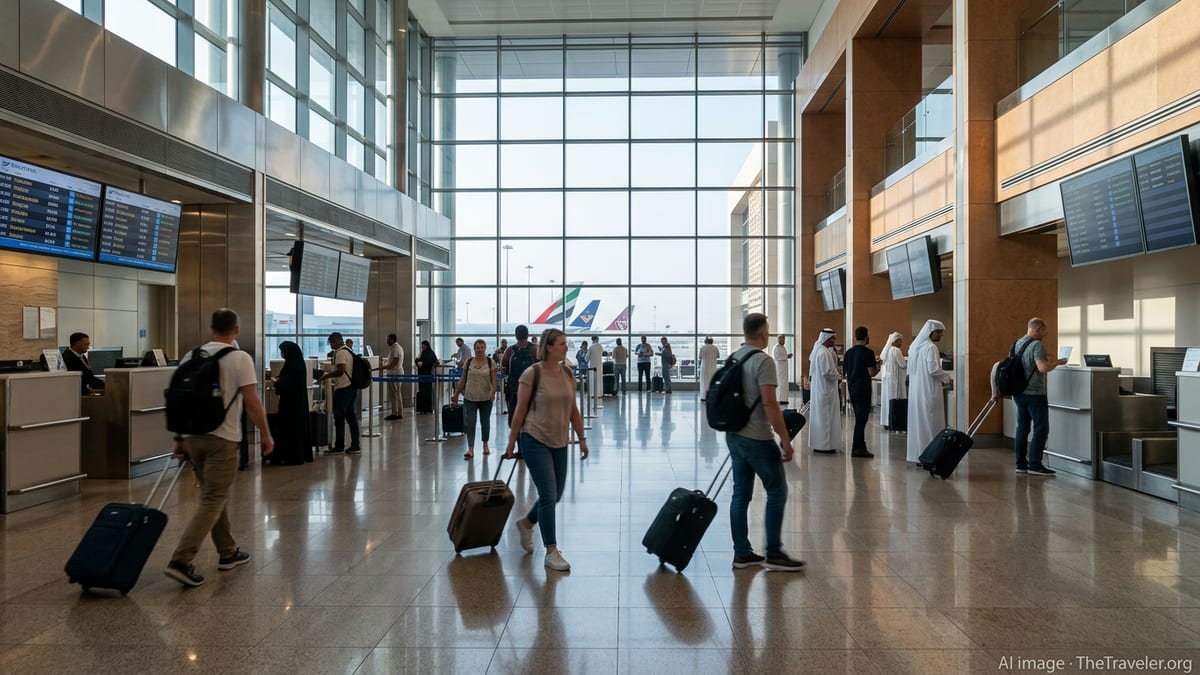
Muscat Emerges as a Strategic Transit Hub
Muscat’s main gateway has been quietly rebuilding and expanding its long-haul network over the past two years, and those efforts are now converging with a sharp spike in demand for rerouting options. As conflict and airspace disruptions ripple across parts of the region, Muscat International Airport is increasingly being used as a pressure valve, absorbing diverted services and passengers looking for a stable transit point between Europe and Asia.
Oman’s civil aviation strategy has focused on leveraging the country’s geographic position at the crossroads of the Arabian Sea and the Indian Ocean, slightly off the most congested Gulf corridors. That positioning is paying off: airlines can reach major European and Asian cities non-stop from Muscat while avoiding some of the most contested skies and busiest hubs.
National carriers Oman Air and SalamAir are leading this pivot, adding new routes and frequencies that knit together key cities across Europe, South Asia and Southeast Asia. At the same time, carriers from elsewhere in the Gulf have been using Omani airspace and airports as temporary refuges when conflict flares, further underlining Muscat’s role as a fallback transit option.
Oman Air Boosts European Network and Alliance Reach
Oman Air has spent the past year methodically deepening its footprint in Europe, adding new capitals and restoring suspended routes. The airline now serves a growing list of European cities from Muscat, including Rome, Amsterdam and, most recently, Copenhagen, with additional capacity planned through 2026. Industry schedule data shows Oman Air offering more than 200,000 one-way seats between Muscat and Europe in the first quarter of 2026, a clear sign of the carrier’s ambitions on the corridor.
The flagship airline has also been rebuilding its presence in high-yield markets such as London and Zurich. A second daily Muscat–London Heathrow rotation is scheduled to return in late 2025, significantly increasing options for travelers heading to or from the UK. Seasonal services between Muscat and Zurich are due back in the summer 2026 timetable, reconnecting Oman directly with one of Europe’s key banking and tourism hubs.
Oman Air’s entry into the oneworld alliance in mid-2025 has further enhanced Muscat’s appeal as a gateway. Alliance membership gives passengers from North America, Europe and Asia seamless access to Oman Air’s network via partner airlines, while Oman-based travelers gain smoother connections across oneworld’s global system. Crucially for the current moment, it means more rebooking options when disruption hits, spreading demand over a wider web of carriers and routings.
New Links to Asia Provide Alternative Eastbound Corridors
On the Asia side, Muscat’s connectivity has been expanding at a similar pace, offering travelers additional paths around congested or politically sensitive airspace. Oman Air has announced the relaunch of non-stop Muscat–Singapore flights from July 2026, restoring a key link into Southeast Asia’s busiest aviation market. The four-times-weekly service will reconnect Singapore with the Gulf through Muscat after a gap of nearly a decade, providing onward access to European cities via a single, relatively uncongested hub.
Low-cost carrier SalamAir has complemented this growth with rapid network diversification into Asia. By late 2025 the airline was serving more than 40 destinations, including new routes to Medan in Indonesia and expanded services into South Asia. Additional frequencies from Muscat to Istanbul and other near-Asian gateways in early 2026 underscore the carrier’s strategy of serving secondary and price-sensitive markets that are now seeing higher demand as travelers rethink their usual transit choices.
For passengers originating in South and Southeast Asia, Muscat’s expanding Asian links mean there are viable one-stop options into Europe that do not rely on the more congested mega-hubs further up the Gulf. Combined with relatively modern infrastructure at Muscat International Airport, these routes are drawing in both cost-conscious travelers and those prioritizing operational stability during a volatile period.
Relief Routes in a Time of Regional Disruption
The expansion of Muscat’s international network is taking place against a backdrop of heightened tension in parts of the Middle East and intermittent disruption to maritime and air traffic. Drone attacks and security incidents have raised concerns along some of the region’s traditional shipping and aviation corridors, prompting airlines and passengers alike to reassess routings and contingency plans.
While Oman itself has faced security challenges, the country has so far managed to keep Muscat International Airport and its primary air corridors operating. Regional airlines have periodically diverted flights into Omani airspace or to Omani airports when neighboring hubs have been constrained, temporarily swelling passenger numbers and testing the system’s resilience. Travelers transiting through Muscat report crowded terminals and longer queues at peak hours, but services have largely continued to operate on schedule.
For many passengers, particularly those trying to reach Europe from South Asia or the wider Asia-Pacific region, these conditions have made Muscat an attractive fallback. When services through other hubs are reduced, overbooked or perceived as higher risk, Muscat’s growing roster of European destinations offers a practical alternative. Fares on some last-minute departures remain elevated due to the surge in demand, but the very existence of additional routing options has offered a measure of relief to stranded or risk-averse travelers.
What Travelers Need to Know When Choosing Muscat
For would-be passengers in Oman and neighboring states, the shift in Muscat’s role brings both opportunities and practical considerations. On the plus side, the airport now offers a wider mix of full-service and low-cost options into Europe and Asia than at any point before the pandemic. Direct services to multiple European capitals, combined with new and returning Asian connections, mean many journeys that once required two stops can now be completed with a single transfer in Muscat.
However, the surge in demand around regional crises has also highlighted the importance of planning ahead. Travelers crossing into Oman by land to catch flights from Muscat have been warned to allow significantly more time than usual, with some advisories recommending arrival at border crossings half a day before departure. Inside the terminal, peak-hour congestion and occasional schedule changes mean passengers should build in generous buffers for connections and keep a close eye on airline communications.
Even with these caveats, Muscat’s growing international network is a clear net gain for mobility between Europe and Asia. As new routes bed in over 2026 and alliance ties deepen, the airport is likely to cement its status not just as a niche alternative, but as a mainstream hub for travelers seeking more options and greater flexibility in an unsettled region.