

More news on this day
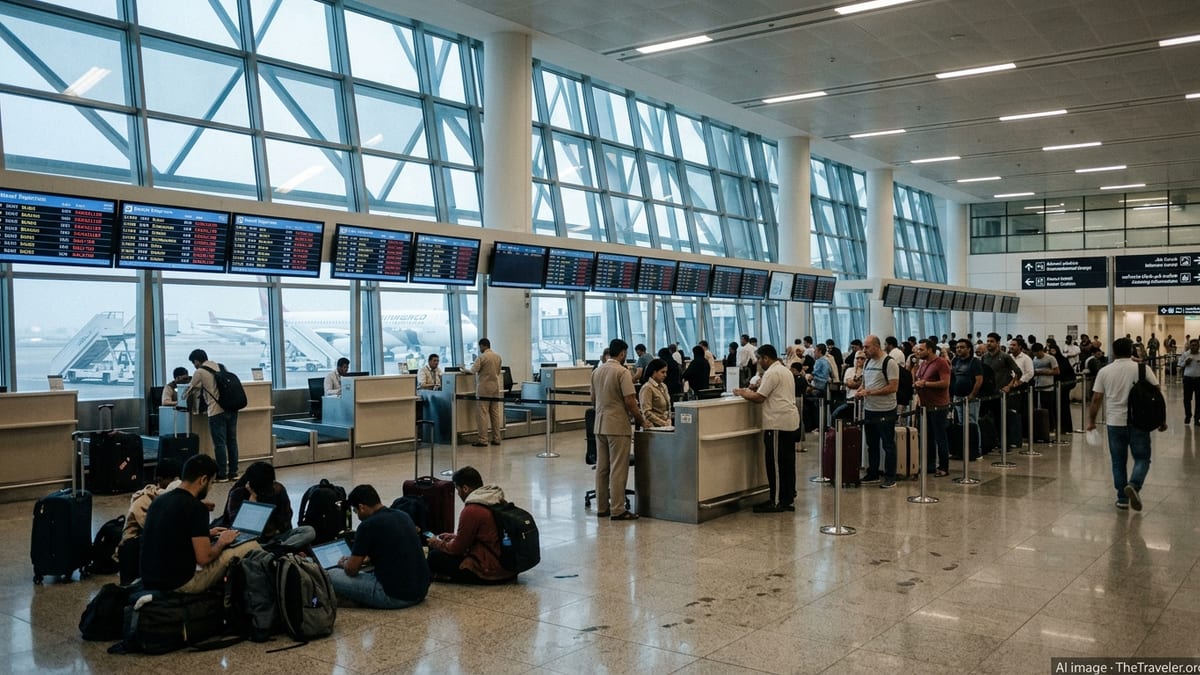
Travelers passing through Muscat are facing mounting disruption after a wave of abrupt flight cancellations from Muscat International Airport to Dubai, Bahrain, Doha and Kochi, creating a cascade of delays, diversions and overnight strandings across the Gulf and the wider region.
Get the latest news straight to your inbox!
Rapid Escalation of Cancellations Out of Muscat
Publicly available flight tracking data and airline updates show that services linking Muscat with major regional hubs Dubai, Bahrain and Doha, as well as the Indian city of Kochi, have been heavily disrupted in recent days. Multiple departures that typically move passengers onward to Europe, Asia and North America have been scrubbed from departure boards with limited notice, triggering what many travelers are describing as a sudden breakdown in normal schedules.
Schedule data indicates that several carriers operating Muscat to Dubai and Doha routes have either reduced frequencies or temporarily halted certain rotations. Passengers booked on Muscat to Bahrain services, which normally serve as a key bridge to onward flights via Bahrain International Airport, have reported repeated cancellations and rebookings, often shifting them to alternative routings through other Gulf cities or to different travel dates entirely.
On the India corridor, services between Muscat and Kochi have also seen cancellations and significant delays, adding pressure to one of the busiest labor and family travel markets in the Gulf. For many travelers, Muscat is not just a point-to-point destination but a vital connecting node, so each cancelled sector can unravel complex multi-leg itineraries within hours.
Although operations at Muscat International Airport itself are still functioning, the combination of reduced services, altered routings and short-notice schedule changes is creating a perception among passengers of an airport caught in fast-moving regional aviation turmoil.
Regional Airspace Turmoil and Network Knock-On Effects
The Muscat cancellations are unfolding against a wider backdrop of regional aviation instability. Recent travel advisories and corporate risk bulletins describe continuing airspace closures and capacity constraints affecting several Gulf hubs, including Bahrain and Kuwait, while major airports such as Dubai and Doha have experienced periods of heavy disruption with clusters of cancellations and delays across multiple carriers.
According to published coverage from aviation and business outlets, airlines have been forced to repeatedly reconfigure their networks throughout March 2026, rerouting flights around sensitive airspace and trimming frequencies on certain high-traffic corridors. This has had a pronounced effect on short regional hops such as Muscat to Dubai or Muscat to Doha, which serve as the first link in many longer journeys.
For Bahrain in particular, the temporary suspension of regular operations at Bahrain International Airport has broken a key chain in the Gulf’s hub-and-spoke system. Passengers who would typically travel Muscat to Bahrain and onward to Europe or South Asia are instead being rebooked via alternative gateways where capacity is already strained. This redirection of demand is helping to fuel the knock-on disruption now visible in Muscat’s departures.
Industry analyses note that even when individual airports such as Muscat are technically open and capable of handling flights, the interconnected nature of airline networks means that closures and constraints elsewhere can rapidly translate into local cancellations. As a result, Muscat-origin services to Dubai, Doha, Bahrain and Kochi have become collateral casualties of a broader regional aviation shock.
How Passengers Are Being Affected on the Ground
Traveler accounts shared on public forums describe a wide range of experiences at Muscat International Airport, from relatively smooth rebookings to days-long delays. Some passengers report that their flights from Muscat to Dubai or Doha have been cancelled multiple times in succession, with each change forcing them to rearrange onward connections, hotel bookings and even work or family commitments.
Others recount arriving at Muscat to find that their scheduled departure to Bahrain or Kochi no longer appears on the departure boards, or that their booking has been automatically shifted to a later date without clear explanation. For travelers who must reach onward flights in Dubai or Doha, that uncertainty can mean missing separate tickets, nonrefundable reservations and important events.
Airlines operating from Muscat have, in many cases, been offering rebookings on alternative routings or later dates, but capacity on remaining flights is limited. Reports indicate that some passengers are being advised to route through less affected hubs in Saudi Arabia or through longer transits in Asia in order to complete their journeys. Hotel stays, visa considerations and added ground transport are adding to the financial and emotional toll.
For residents of Oman and frequent regional travelers, the disruption is also altering established habits. Routes that once felt reliably routine, such as quick weekend trips from Muscat to Dubai or short work hops to Doha, are now being approached with greater caution, with many travelers closely monitoring schedules until the last moment.
What Travelers Through Muscat Need to Know Right Now
For anyone scheduled to fly from Muscat to Dubai, Bahrain, Doha or Kochi in the coming days, publicly available guidance from airlines and travel advisories highlight a few immediate priorities. First, passengers are urged to check their booking status and flight number repeatedly in the 24 hours before departure, as some cancellations and time changes are being announced with little lead time.
Airline policies indicate that travelers whose flights are cancelled are generally being offered rebooking on the next available service or, in some cases, alternative routings via different hubs. However, given the strain on capacity, there is no guarantee that a same-day or even next-day seat will be available on busy routes out of Muscat, particularly toward Dubai and Doha.
Passengers with separate onward tickets through other hubs should pay particular attention to minimum connection times and the risk of missed flights. Travel-insurance providers and consumer advocates often note that independently booked connections are especially vulnerable in disruption events like the current one, and travelers may need to proactively contact their insurers or credit card providers to understand coverage for delays and cancellations.
For Indian travelers and Gulf-based workers heading to or from Kochi, it may prove useful to review alternative gateways in southern India or nearby Gulf airports that retain more stable schedules, while remaining alert to evolving advisories. In all cases, experts emphasize the importance of keeping boarding passes, booking confirmations and written records of any cancellations or schedule changes, which can be critical for later claims or refund requests.
Outlook for Muscat’s Key Routes and Regional Connectivity
While there is no firm timeline yet in the public domain for a complete return to normal operations across the Gulf, recent notices from aviation and risk consultancies suggest that airlines are gradually attempting to restore more predictable schedules as airspace conditions allow. Some hubs have already seen partial resumptions of services after earlier suspensions, although the pattern remains uneven.
For Muscat, the outlook will depend heavily on how quickly neighboring hubs stabilize. If Bahrain’s operational pause continues and if Dubai and Doha remain under pressure from rerouted traffic, Muscat’s own schedules to these cities are likely to experience further short-notice adjustments. The Muscat to Kochi corridor, similarly, will be shaped by how airlines balance capacity between Gulf origin points and their Indian destinations.
Travel analysts note that airlines may use the coming weeks to consolidate flights, combining lightly booked services and favoring routes with strong demand. That could eventually translate into fewer but more reliable departures from Muscat to key hubs, as opposed to a higher number of flights vulnerable to cancellation. However, in the near term, volatility is expected to remain part of the travel landscape.
For now, passengers planning to travel via Muscat are advised by publicly available information to build extra time into itineraries, remain flexible on routing where possible and follow airline and airport updates closely. The current wave of cancellations to Dubai, Bahrain, Doha and Kochi underlines how quickly regional disruptions can reverberate through a single airport, turning routine short-haul hops into unpredictable journeys.