

More news on this day
Travelers across the Gulf and Indian Ocean corridor are facing a fresh wave of chaos after Muscat International Airport abruptly cancelled or rerouted multiple flights to Dubai, Bahrain, Doha and Kochi amid a wider regional airspace crisis.
Get the latest news straight to your inbox!
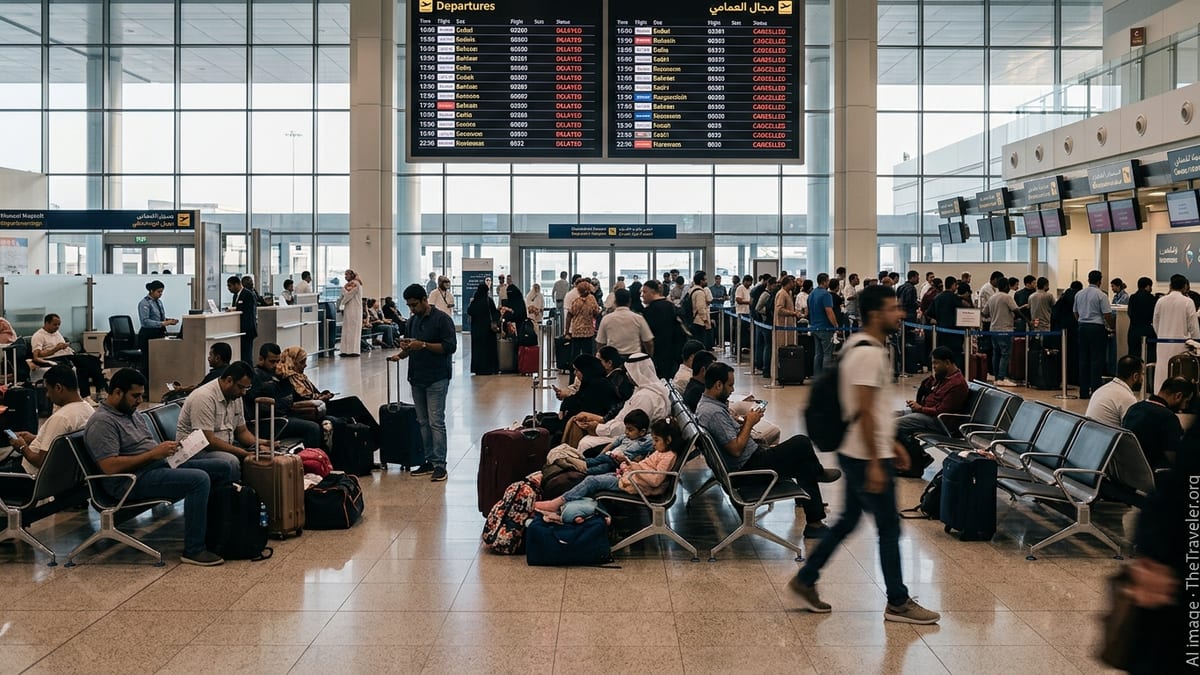
Regional Airspace Turmoil Spills Into Oman
Publicly available aviation data and regional advisories show that airspace closures and restrictions across the Middle East have intensified since late February 2026, following escalating military activity involving Iran and several neighboring states. Countries including Qatar, the United Arab Emirates, Bahrain, Kuwait and others have imposed full or partial airspace shutdowns at various points, triggering rolling disruptions to major hubs such as Dubai, Abu Dhabi and Doha.
While Oman’s airspace and airports initially remained relatively stable, the knock-on effect of neighboring closures is now reaching Muscat in force. Industry briefings in early March highlighted that Muscat International Airport was operating normally even as nearby hubs struggled with mass cancellations. As air corridors tightened further and airlines adjusted routings to avoid conflict-affected zones, Muscat shifted from being a safe diversion point to a pressure valve now straining under redirected traffic and schedule reshuffles.
Reports from airline notices and regional travel advisories in mid to late March indicate that several carriers have begun cancelling or consolidating services between Muscat and key Gulf destinations, including Dubai, Bahrain and Doha, as well as onward connections to Indian cities such as Kochi. The result is a patchwork of last-minute schedule changes that can shift from one day to the next, creating a confusing picture for passengers checking departures boards and airline apps.
The situation remains fluid, with some flights operating sporadically via alternative hubs or at unusual times, while others are cancelled outright as carriers wait for clearer guidance on available air corridors and operational risk levels.
Flights to Dubai, Bahrain, Doha and Kochi Hit Hard
Route maps and schedule updates show that short-haul Gulf sectors have borne the brunt of the latest disruption. Services linking Muscat with Dubai and Doha have long functioned as high-frequency shuttle routes, feeding long-haul connections to Europe, Asia and North America. As Dubai and Doha themselves navigate intermittent shutdowns, those links from Muscat have repeatedly appeared on cancellation lists or been rebooked onto limited replacement flights.
Bahrain connections have been especially volatile, as the country’s airspace and flag carrier remain closely entangled with the regional security picture. Travelers attempting to reach or transit Bahrain via Muscat report multiple short-notice cancellations, reroutings through Saudi airports, or the complete removal of certain options from airline booking systems. This pattern has turned what was once a routine 70–80 minute hop into an uncertain proposition that may involve overnight stops or long surface journeys.
The impact extends beyond the Gulf to India-bound passengers, particularly those booked from Muscat to Kochi with connections through Doha, Dubai or Bahrain. Publicly available travel forums and airline advisories describe repeated cancellations of itineraries linking Kochi to European and North American cities via Gulf hubs, affecting both outbound and return journeys. For some, Muscat has become an unexpected holding point, as original routings through Doha or Dubai become unworkable and seats on remaining alternatives rapidly sell out.
Even when flights do operate, they are often heavily overbooked with stranded passengers from earlier cancellations, leaving little flexibility for same-day changes at the airport. This dynamic is adding to the perception of a “massive aviation disruption” centered on Muscat and its traditional Gulf and India connections.
Passenger Experience: Confusion, Long Waits and Vanishing Bookings
Anecdotal accounts from travelers caught in the disruption around the region point to a similar pattern now playing out in Muscat: repeated cancellations, long queues at airline desks, and digital tools struggling to keep up. Some passengers report bookings that were rescheduled several times, only to later disappear from airline apps or show as “completed” despite the journey never being flown.
Such glitches are likely a byproduct of airlines processing thousands of schedule changes in compressed timeframes, while simultaneously handling refund and rebooking requests. With call centers overwhelmed and hold times stretching upwards of 45 minutes in multiple Gulf markets, many travelers are turning to airport ticket counters or third-party agents. These in-person channels, however, are also under strain, with reports of crowded queues and limited availability on remaining flights out of Muscat.
For those trying to move between Muscat and Dubai, Bahrain or Doha, options can change hourly. Some travelers have managed to secure seats on indirect routings via Saudi Arabia or more distant hubs, while others face the dilemma of paying significantly higher last-minute fares or waiting in the hope that additional flights are added. Students, short-stay visitors and those on expiring visas are among the most affected, as delays in leaving the region can have immigration and financial implications.
The uncertainty is compounded by the fact that many airlines are adjusting operations day by day as the security situation and airspace restrictions evolve. That leaves passengers with little forward visibility, even when holding valid tickets weeks into the future.
Practical Advice for Travelers Using Muscat Right Now
Travel experts and risk consultancies monitoring the region are emphasizing preparation and flexibility for anyone planning to travel via Muscat in the coming days. The most consistent message is that passengers should treat all itineraries involving Dubai, Bahrain, Doha or Kochi as subject to change, even if flights appear confirmed in booking systems.
Travelers are encouraged to check flight status frequently on official airline channels and to enable notifications for schedule changes. Given the speed at which flights can switch from “on time” to “cancelled,” same-day checks before leaving for Muscat International are especially important. Some airlines are publishing rolling lists of affected flights or temporary route suspensions, but these may not always reflect the very latest operational decisions.
Where possible, passengers are advised to build in additional buffer time for connections, avoid tight same-day transfers between Muscat and other Gulf hubs, and consider alternative routings that do not rely on the most heavily disrupted airports. Those with non-essential trips may find it safer to postpone travel until conditions stabilize, particularly if journeys involve multiple Gulf stops or complex connections through Kochi and other Indian cities.
Insurance coverage and fare rules also matter. Many standard policies exclude disruptions linked to war or political unrest, and some low-cost or promotional tickets may offer only limited flexibility. Travelers are therefore reviewing policy wording carefully and, where available, opting for tickets with more generous change and cancellation terms.
What to Watch in the Coming Days
Looking ahead, the outlook for Muscat and its key routes to Dubai, Bahrain, Doha and Kochi will depend heavily on how quickly regional airspace restrictions ease. If Gulf states move toward a coordinated reopening of key corridors, airlines are likely to restore frequencies in phases, prioritizing repatriation and essential travel before resuming full commercial schedules.
Publicly available comments from major carriers and airport operators across the region suggest that safety remains the primary consideration, with no fixed timeline yet for a return to normal operations. Any further deterioration in the security situation, or additional closures affecting Bahrain or Qatar, could prolong the period of instability and keep Muscat under pressure as airlines juggle diversion options.
For travelers, that means continued uncertainty, but also the possibility of gradual improvement as more temporary corridors open and airlines refine their contingency plans. Prospective passengers are watching for signs such as the reintroduction of previously suspended Muscat services, more consistent schedules to Dubai and Doha, and a reduction in the volume of last-minute cancellations.
Until those indicators emerge, Muscat International Airport is likely to remain both a lifeline and a flashpoint in the wider Middle East aviation disruption, central to efforts to keep people moving between the Gulf, India and the rest of the world despite a fast-changing and volatile environment.