

More news on this day
A major new tourism complex planned for Muscat is emerging as a flagship project in Oman’s drive to diversify its economy, expand visitor numbers and reshape the capital’s coastal skyline under Oman Vision 2040.
Get the latest news straight to your inbox!
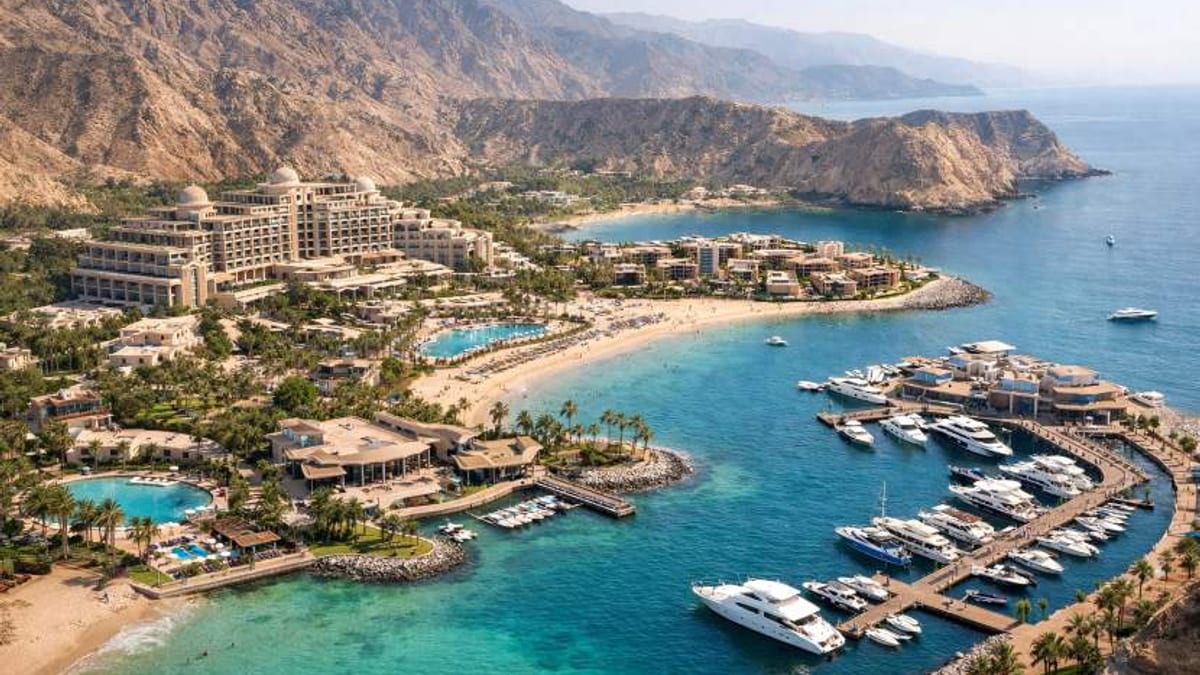
Image by Latest International / Global Travel News, Breaking World Travel News
A Strategic Tourism Hub for a Diversifying Economy
Publicly available planning documents and recent investment forums in Muscat indicate that the new tourism complex will form part of a wider coastal development corridor linking the city’s established resorts with emerging master-planned districts. The project is expected to bundle hotels, branded residences, retail promenades and entertainment venues within an integrated waterfront setting designed to attract both international visitors and long-stay residents.
The complex is being framed within Oman’s Vision 2040, which places tourism alongside logistics, manufacturing and mining as key sectors for reducing reliance on hydrocarbons. Policy papers describing the vision highlight targets to increase tourism’s contribution to gross domestic product, draw more high-spending visitors and create private-sector jobs for citizens. By clustering hospitality, leisure and mixed-use real estate in a single destination, the Muscat scheme is positioned to support these goals through year-round activity rather than purely seasonal demand.
Economic analysis published in local business digests suggests that large-scale tourism projects are also viewed as catalysts for foreign direct investment. In Muscat, authorities have pursued integrated tourism complexes to leverage the capital’s role as an air hub, its coastal setting and its proximity to cultural attractions. The new complex, conceived as a next-generation iteration of this model, is anticipated to appeal to hotel operators, lifestyle brands and real estate investors seeking exposure to Oman’s reform agenda.
According to recent commentary on Vision 2040 implementation, the tourism push is closely tied to national employment objectives. Large hospitality-led developments typically generate construction roles in the near term and longer-term positions in hotel management, retail, transport and facility operations. The Muscat complex is expected to contribute to this pipeline by embedding training, service and supplier opportunities for local businesses.
Masterplanned Coastal Living and Visitor Experiences
The emerging outline for the Muscat tourism complex mirrors a broader regional shift toward mixed-use coastal districts that combine leisure, living and workspaces in one destination. Concept descriptions point to a layout of beachfront hotels, serviced apartments, landscaped promenades and marina-style experiences, complemented by dining, retail and cultural offerings aimed at both tourists and residents.
Within Muscat, existing integrated tourism communities have demonstrated demand for waterfront homes, golf-front villas and serviced residences, often marketed to regional buyers seeking lifestyle second homes. The new complex is expected to build on this precedent but with a stronger emphasis on public realm, walkability and family-friendly attractions, reflecting Vision 2040’s focus on liveability and sustainable urban design.
Urban strategy material linked to Oman’s national development plans references smart infrastructure, green mobility corridors and energy-efficient building codes as guiding principles for new districts. In the Muscat complex, this is likely to translate into shaded pedestrian routes, cycling paths, energy-conscious architecture and landscape strategies that manage heat and water use. These elements are increasingly important as Gulf destinations position themselves as sustainable tourism hubs.
For visitors, the project is expected to offer curated experiences that highlight Oman’s coastal environment, from beachfront recreation to yacht excursions and water sports. Cultural interpretation, local cuisine and access to traditional souqs and heritage sites are anticipated to be part of the broader destination story, enabling the complex to serve as a gateway to the capital rather than a self-contained enclave.
Infrastructure, Connectivity and Urban Integration
The success of Muscat’s new tourism complex is closely tied to infrastructure upgrades that are reshaping how travellers move through the capital. Muscat International Airport, which has already expanded its capacity with a modern terminal, underpins efforts to attract more point-to-point and transit passengers, while arterial roads and proposed public transport enhancements are intended to improve connectivity between the airport, the city and coastal districts.
Recent reports from transport and urban planning agencies describe an ongoing programme of road expansions, junction improvements and new interchanges serving major commercial and residential zones. The tourism complex is expected to benefit from these upgrades, reducing travel times from the airport and central Muscat and supporting the flow of visitors to hotels, marinas and retail areas.
Urban integration is another priority. Planning material on Muscat’s growth corridor highlights the need to avoid fragmented, standalone projects by threading new districts into the existing urban fabric. In practice, this means developing continuous waterfront promenades, shared public spaces and complementary land uses that connect the tourism complex with nearby neighbourhoods, business parks and civic facilities.
Stakeholder presentations at recent government project forums suggest that digital infrastructure will also feature in the complex’s design. Smart parking, wayfinding, visitor data platforms and integrated ticketing for attractions are among the tools being adopted across Gulf tourism destinations. By embedding these systems at the masterplanning stage, Muscat’s new complex can position itself as a technologically advanced yet user-friendly gateway for both leisure and business travellers.
Aligning with Vision 2040’s Sustainability and Community Goals
Oman Vision 2040 attaches significant weight to environmental stewardship, cultural preservation and social cohesion, and the Muscat tourism complex is expected to be benchmarked against these criteria. National planning narratives increasingly highlight coastal protection, low-impact construction methods and climate resilience measures as prerequisites for large-scale developments, particularly those located along sensitive shorelines.
In line with this direction, the complex is anticipated to incorporate measures such as coastal setback zones, dune and mangrove conservation where applicable, and landscape designs that support local biodiversity. Energy-efficient buildings, water reuse systems and waste reduction initiatives are becoming standard across new tourism investments in the sultanate, reflecting both regulatory requirements and the expectations of international visitors.
Community integration is another pillar of Vision 2040 that is expected to influence the project’s evolution. Policy documents emphasise that tourism growth should create opportunities for small and medium-sized enterprises, artisans and service providers. In the Muscat complex, this may take the form of local retail kiosks, food and beverage concepts, tour operators and cultural programming that incorporate Omani crafts, music and storytelling.
Publicly available commentary on Oman’s tourism strategy also underlines the importance of ensuring access to open spaces and beaches for residents. Masterplanning guidance encourages developers to include public parks, waterfront promenades and event spaces that can host festivals and community gatherings. By embedding such amenities, the Muscat tourism complex could function as a shared civic asset as well as a commercial destination.
Regional Positioning and Competitive Landscape
The Muscat tourism complex is being conceived in a competitive regional environment where Gulf cities are racing to expand their hospitality offerings, host major events and attract investment. Developments in neighbouring states, from waterfront marinas to entertainment-led districts, are setting new benchmarks in scale and design, and Oman is positioning its capital as a complementary, more quietly upscale alternative.
Analysts covering Oman’s tourism sector point to the country’s distinct value proposition, which blends desert, mountain and coastal landscapes with a reputation for safety and cultural authenticity. The Muscat complex is expected to reinforce this positioning by offering contemporary hospitality and leisure options while maintaining an architectural and experiential language that reflects local identity rather than generic international formulas.
At the same time, the project aligns with broader efforts to extend visitor stays and increase per-trip spending by encouraging travellers to use Muscat as a base for exploring other governorates. Improved domestic air and road links to destinations such as Dhofar and Musandam, along with new urban projects in those regions, are part of an emerging network in which the capital’s tourism complex serves as a primary entry point.
As Oman advances toward its Vision 2040 milestones, Muscat’s new tourism complex is set to become one of the most closely watched indicators of how effectively the country can leverage large-scale real estate and hospitality projects to unlock long-term, sustainable growth. Investors, operators and travellers alike will be tracking its progress as a measure of the capital’s transformation into a diversified, globally competitive city.