

Across Canada, a growing number of museums are reshaping how travelers encounter history, memory, and justice. The Canadian Museum for Human Rights in Winnipeg is the most visible symbol of this shift, using immersive architecture and storytelling to explore past abuses and present-day struggles for dignity. Yet it is far from alone. From Quebec City to Vancouver, institutions devoted to Indigenous resilience, Holocaust remembrance, social justice, and difficult histories are inviting visitors to look inward as much as outward. For travelers who found the Canadian Museum for Human Rights moving and want to seek out similar experiences, these museums offer profound, often unforgettable encounters with the stories that continue to shape Canada.
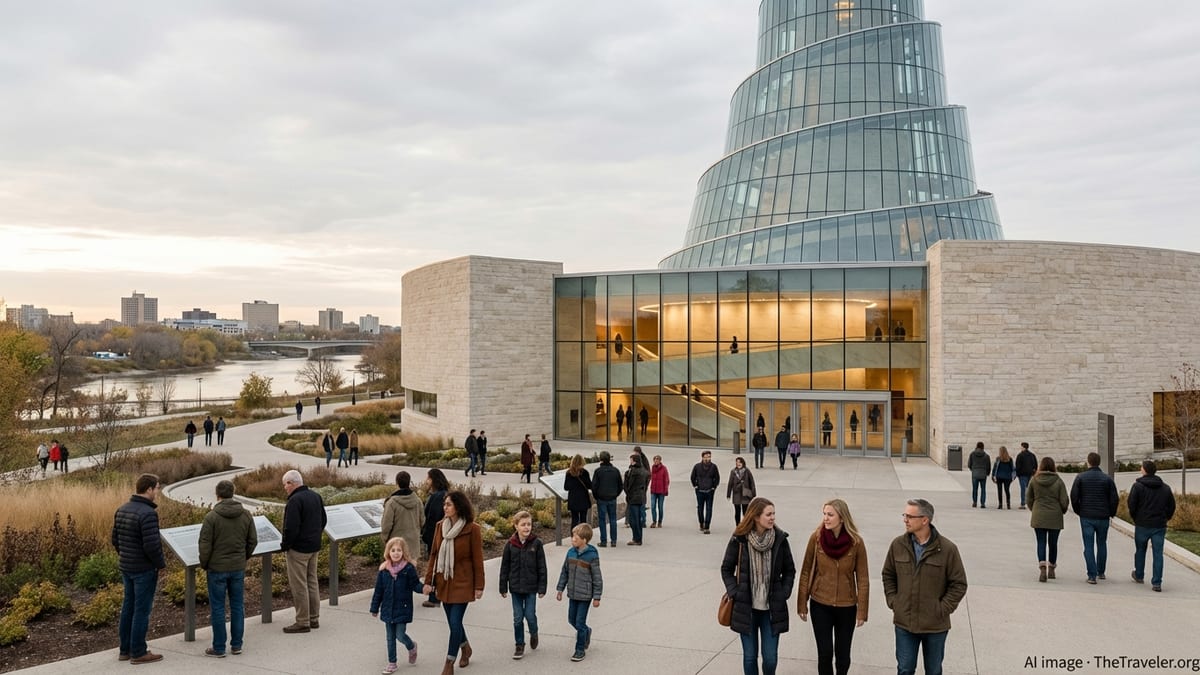
The Canadian Museum for Human Rights as a Starting Point
The Canadian Museum for Human Rights in Winnipeg has become a reference point for travelers interested in socially engaged museums. Opened to the public in 2014, it is Canada’s first national museum located outside the capital region. Its stated purpose is to explore human rights with a special but not exclusive focus on Canada, deepening public understanding and encouraging reflection and dialogue. Visitors move through a series of galleries on topics such as Indigenous rights, the Holocaust, genocides of the twentieth century, gender equality, disability rights, and contemporary struggles around the world. Exhibitions combine survivor testimony, artifacts, multimedia, and interactive elements that invite visitors to consider not only what happened, but how they themselves might respond to injustice today.
The building itself is part of the experience. Set at The Forks in Winnipeg, a historic Indigenous gathering place at the confluence of the Red and Assiniboine rivers, the museum rises from a rough stone base toward a glass tower known as the Tower of Hope. Inside, visitors walk along illuminated alabaster ramps that gradually climb through the galleries to a contemplative garden and finally to panoramic views of the city. This journey from darker, enclosed spaces to light and openness is meant to echo the movement from oppression toward hope, without ever suggesting that the work of protecting rights is complete.
What sets the museum apart is its insistence that human rights are not abstract principles, but lived realities shaped by power, policy, and everyday choices. Exhibitions address Canada’s own violations, including the legacy of residential schools and internment, alongside international case studies. Programs bring in activists, scholars, and community leaders for discussions on issues from climate justice to racism and digital rights. For travelers, the museum can be an intense stop, but many leave with a sense that tourism can be more than sightseeing: it can be an entry point into deeper ethical reflection.
For those who have experienced this museum and want to continue that journey, several other Canadian institutions offer comparable depth and focus on human rights, memory, and difficult histories. Each has its own lens, whether through Indigenous experiences, the Holocaust, colonialism, or social movements. Together, they form an informal network of places where visitors can confront uncomfortable truths, honor resilience, and imagine fairer futures.
Montreal Holocaust Museum: Memory, Antisemitism, and Human Rights
The Montreal Holocaust Museum is one of Canada’s most important institutions devoted to Holocaust history and its contemporary lessons. Founded in 1979, it grew from the work of survivors who settled in Montreal and sought to preserve their stories. The museum’s mission is twofold: to document the persecution and genocide of European Jews during the Second World War and to sensitize the public to the dangers of antisemitism, racism, and hate in the present. For visitors who appreciated the Canadian Museum for Human Rights’ focus on genocide and moral responsibility, Montreal’s Holocaust museum offers a more concentrated and intensely personal lens on one of the defining atrocities of the twentieth century.
The museum’s permanent exhibition weaves together artifacts, photographs, archival documents, and survivor testimony recorded over decades. Many of the stories are connected directly to Montreal families, making clear that the Holocaust is not a distant event but part of Canada’s own community fabric. Exhibits trace the rise of Nazi ideology, the machinery of persecution, and the choices of ordinary people, from collaborators to rescuers. Educational sections draw explicit connections between the Holocaust and modern forms of hatred, encouraging visitors to recognize early warning signs of discrimination and dehumanization in their own societies.
In recent years the Montreal Holocaust Museum has embarked on a major expansion and relocation project, reflecting rising public interest in both Holocaust education and broader human rights issues. Construction is under way on a new building along Saint-Laurent Boulevard in downtown Montreal’s cultural corridor, with the aim of opening to the public around 2026. The new facility will include expanded galleries for permanent and temporary exhibitions, classrooms for school groups, a 150-seat auditorium, and public spaces designed for community events and dialogue. The architecture, chosen through an international competition, is intended to honor Jewish traditions while engaging the wider urban landscape.
For travelers, the museum offers guided visits, educational programs, and commemorative events such as Yom HaShoah observances. Much like the Canadian Museum for Human Rights, its approach goes beyond commemoration to emphasize responsibility. Visitors are encouraged to reflect on the choices available to individuals and institutions when confronted with injustice, and to consider what concrete actions they can take in their own lives to resist antisemitism and protect vulnerable communities.
National Centre for Truth and Reconciliation: Confronting the Legacy of Residential Schools
Also based in Winnipeg, the National Centre for Truth and Reconciliation serves as the primary archive and research hub for the history and legacy of Canada’s residential school system. While it is not a museum in the traditional sense, it has become an essential stop for travelers seeking a deeper understanding of the human rights abuses faced by Indigenous peoples. The Centre was created as part of the Indian Residential Schools Settlement Agreement, and it now holds millions of government and church records as well as thousands of survivor statements gathered by the Truth and Reconciliation Commission.
The Centre’s work builds on the Commission’s 94 Calls to Action, which challenge all sectors of Canadian society to address the ongoing impacts of residential schools. Visitors can learn about the policies that removed Indigenous children from their families, the conditions they endured in state- and church-run institutions, and the intergenerational trauma that continues today. Exhibits and displays, when available, often focus on survivors’ own words and on community-led commemoration projects, rather than on institutional narratives. This is consistent with a broader shift toward centering Indigenous voices in public history and memory work.
Although the National Centre for Truth and Reconciliation functions primarily as an archive and educational institution, it periodically hosts public events, exhibitions, and ceremonies. These may coincide with significant dates such as the National Day for Truth and Reconciliation in late September or local gatherings organized by Indigenous communities and partners. For travelers, planning ahead and checking the Centre’s programming can reveal opportunities to attend talks, witness commemorations, or explore digital exhibitions that complement a visit to Winnipeg’s other cultural sites.
In combination with the Canadian Museum for Human Rights, a stop at the National Centre for Truth and Reconciliation allows visitors to see how human rights discourse intersects with Indigenous law, sovereignty, and lived experience. The two institutions share a city but perform different roles: one is a national museum oriented toward broad public engagement, while the other is an archive and memory-keeper dedicated to preserving evidence of specific harms. Together, they underscore that human rights in Canada cannot be discussed without grappling with the country’s colonial foundations.
Musée de la civilisation in Quebec City: Society, Identity, and Difficult Histories
In Quebec City, the Musée de la civilisation offers another model of a museum engaging with questions of identity, power, and social change. Opened in 1988 and located in the historic Old Quebec district near the St. Lawrence River, the museum is devoted broadly to the humanities. Its mandate is to explore civilizations past and present, including Quebec society and cultures from around the world. For visitors drawn to the Canadian Museum for Human Rights’ thematic galleries on law, culture, and social movements, this museum’s exhibitions provide a complementary, often comparative perspective.
The Musée de la civilisation is known for its mix of historical, anthropological, and contemporary shows. Permanent and long-running exhibitions examine the evolution of Quebec society, Indigenous cultures in the region, and global civilizations. Temporary exhibitions frequently tackle challenging subjects such as colonialism, migration, gender, mental health, and the ethics of technology. Rather than focusing explicitly on “human rights,” the museum probes the cultural and political forces that shape how societies treat their members, who is granted full belonging, and whose stories are marginalized.
Architecturally, the complex blends modern structures with historic buildings, including former bank and merchant houses incorporated into the design. Inside, open galleries and flexible exhibition spaces allow curators to juxtapose artifacts, multimedia installations, and personal testimonies. Interactive components invite visitors to compare past and present norms, question their own assumptions, and consider how cultural narratives can reinforce or challenge inequality. Exhibitions often feature close collaboration with Indigenous communities and other groups whose histories have been misrepresented or neglected, further aligning the museum with contemporary conversations about representation and justice.
For travelers, the Musée de la civilisation is particularly appealing because it combines intellectual depth with an accessible, engaging style. Families will find hands-on exhibits and programs for children, while more specialized visitors can explore nuanced treatments of topics such as language politics, urban change, or environmental stewardship. While the museum does not position itself as a human rights institution in the same way as the Canadian Museum for Human Rights, many of its exhibitions invite comparable reflection on how societies confront or conceal difficult aspects of their past.
Indigenous-Focused Museums and Cultural Centres Across Canada
Many of the most powerful human rights stories in Canada are told not in large national institutions, but in Indigenous museums and cultural centres rooted in specific homelands. These spaces foreground Indigenous worldviews, legal traditions, and experiences of colonialism, often in ways that challenge visitors to reconsider conventional narratives. Travelers who resonated with the Indigenous rights galleries in the Canadian Museum for Human Rights may find these institutions especially meaningful, as they are led by the communities whose histories and futures are at stake.
Across the country, Indigenous cultural centres present histories of displacement, treaty-making, and resistance alongside celebrations of language revival, art, and ceremony. Exhibitions may explore topics such as the seizure of land and resources, the impacts of residential and day schools, the struggle for recognition of Indigenous jurisdiction over child welfare, or campaigns to protect sacred sites. Importantly, many of these institutions emphasize continuity rather than victimhood. They highlight how communities have adapted and asserted their rights in courts, in international forums, and on the land.
These museums and centres often serve multiple roles at once: as cultural hubs, learning centers, community gathering spaces, and sites of ceremony. Visitors may encounter language classes, youth leadership programs, or land-based education projects alongside more conventional exhibits. Interpretive approaches tend to prioritize oral history, storytelling, and relational ways of knowing, sometimes unsettling expectations formed by mainstream museums. For non-Indigenous travelers, listening respectfully in these settings can be a powerful step toward understanding that reconciliation is not a finished project, but an ongoing negotiation of power and responsibility.
Practical considerations for travelers include checking in advance for opening hours, seasonal programming, and community protocols. Some sites may have areas reserved for community use or sacred practices, while others welcome visitors into public events such as powwows, feasts, or art workshops. Thoughtful engagement, including purchasing locally made art or books and following photography guidelines, can help ensure that visits contribute positively to the communities whose stories are being shared.
Urban Social History Museums: Rights in Everyday Life
In several Canadian cities, social history museums are increasingly leaning into questions of justice, equity, and belonging. Rather than framing history solely as a sequence of political events, these institutions spotlight everyday lives: workers, migrants, women, racialized communities, and people with disabilities. Their exhibitions often echo the Canadian Museum for Human Rights in showing how human rights principles are lived, violated, and defended in streets, workplaces, and homes, not only in courtrooms or international forums.
Urban museums in cities such as Vancouver, Toronto, and Halifax regularly mount exhibitions on topics like immigration, housing, public health, and labor struggles. Displays might trace the formation of historic neighborhoods, explore the experiences of newcomers navigating exclusionary policies, or examine campaigns for accessible public transit and safer workplaces. While the language of “human rights” may not always appear in gallery titles, the underlying themes of dignity, equality, and collective action are unmistakable.
Many of these institutions collaborate closely with community organizations, activists, and scholars to develop exhibitions that reflect lived realities. Co-curation processes can involve residents contributing photographs, objects, and oral histories, as well as shaping interpretive texts. This approach not only makes exhibitions richer, but also redistributes authority over how histories are told. Travelers visiting these museums may encounter stories of tenants organizing against eviction, queer communities fighting for recognition, or Black Canadians challenging discriminatory policing, all framed within the broader fabric of city life.
For visitors whose interest in the Canadian Museum for Human Rights grew from its contemporary focus, these social history museums offer a chance to see how rights debates unfold in local contexts. Spending an afternoon in such a museum can provide insight into why certain neighborhoods look the way they do, why particular monuments or street names are contested, or how municipal policies shape residents’ opportunities. It is an invitation to approach urban tourism not only through iconic landmarks, but through the histories of struggle and solidarity that have shaped them.
Planning a Rights-Focused Museum Journey Across Canada
Designing an itinerary around museums like the Canadian Museum for Human Rights requires a slightly different mindset than planning a trip around beaches or mountain views. These institutions invite emotional engagement and critical thinking, which means pacing matters. Many travelers find that visiting one major human rights or memory museum in a day is enough, leaving time before or after for quiet reflection, conversation, or a walk in a nearby park. In Winnipeg, for example, visitors often combine the Canadian Museum for Human Rights with time at The Forks or along the riverfront, giving themselves space to process what they have seen.
Practical details are also important. Admission policies and opening hours can change, particularly in response to public health guidelines or renovation schedules, so checking each institution’s current information before visiting is advisable. Some museums offer free or reduced admission at certain times, or special programs such as evening lectures, film screenings, or guided tours that can deepen the experience. Booking ahead may be necessary during school vacation periods or around national commemorations, when interest in human rights and history museums tends to spike.
Travelers should also consider how to prepare themselves for the emotional weight of these sites. Exhibitions about genocide, residential schools, or systemic discrimination can be painful, particularly for visitors whose families have direct connections to the histories being recounted. Many institutions now include quiet spaces for contemplation and clear content advisories, and some provide mental health resources or culturally specific supports. Acknowledging the potential impact in advance, planning breaks, and traveling with companions who are open to debriefing can all make the experience more sustainable.
Finally, a rights-focused museum journey can be an opportunity to think about reciprocity. Purchasing books, supporting on-site cafés, or donating to educational programs helps sustain institutions that often operate with limited resources despite high public expectations. More importantly, visitors can take the questions raised inside these museums back into their own communities, whether by engaging in local advocacy, supporting survivors’ initiatives, or simply having more informed conversations about the histories that shape contemporary debates.
The Takeaway
For many travelers, a first visit to the Canadian Museum for Human Rights marks a turning point in how they think about museums. Rather than static repositories of artifacts, such institutions become living forums where painful histories are confronted and better futures imagined. Canada now offers a constellation of museums and centres that share this spirit, from the Montreal Holocaust Museum’s survivor-led education work to the archival stewardship of the National Centre for Truth and Reconciliation, the socially engaged exhibitions of the Musée de la civilisation, and the community-rooted storytelling of Indigenous cultural centres and urban social history museums.
These places are not interchangeable, and each emerges from distinct histories and communities. Yet they are united by a commitment to listening to those who have been marginalized, documenting abuses with care, and insisting that remembrance must be paired with responsibility. Visiting them requires time, attention, and often a willingness to sit with discomfort. In return, they offer something rare in travel: the chance to connect leisure with learning, curiosity with conscience, and personal journeys with broader struggles for dignity and justice.
For travelers ready to move beyond postcard views and surface-level attractions, planning routes around these museums can be both challenging and deeply rewarding. The stories encountered inside their galleries do not end at the exit doors. They continue in the conversations we have, the choices we make, and the societies we help shape long after the trip is over.
FAQ
Q1. How does the Canadian Museum for Human Rights differ from traditional history museums?
The Canadian Museum for Human Rights focuses on themes and experiences rather than a single era or region, combining historical case studies with contemporary issues and emphasizing personal reflection, ethical questions, and visitor participation in ongoing conversations about rights and responsibility.
Q2. Is the Montreal Holocaust Museum only about the past, or does it address current forms of antisemitism?
The Montreal Holocaust Museum presents detailed historical narratives of the Holocaust while explicitly connecting them to present-day antisemitism, racism, and hate, encouraging visitors to recognize warning signs and consider how to respond to discrimination in their own contexts.
Q3. Can travelers visit the National Centre for Truth and Reconciliation in the same way they would a museum?
The National Centre for Truth and Reconciliation operates primarily as an archive and research hub, but it does host public events, educational programs, and occasional exhibitions; travelers interested in visiting should check its current programming and any visitor guidelines in advance.
Q4. Are Indigenous cultural centres appropriate for non-Indigenous visitors who are unfamiliar with the history?
Most Indigenous cultural centres welcome respectful visitors and are designed to share community histories, languages, and perspectives; approaching with openness, following posted protocols, and listening more than speaking are good starting points for those new to the subject matter.
Q5. Do these museums provide resources for visitors who find the content emotionally difficult?
Many institutions addressing genocide, residential schools, or systemic violence now offer quiet spaces, clear content advisories, and in some cases access to support resources; visitors are encouraged to take breaks, seek assistance if needed, and respect their own emotional limits.
Q6. How can I make the most of a visit to a human rights or memory museum?
Allow ample time, read interpretive texts carefully, join guided tours or talks when available, and plan space afterward for reflection; taking notes or discussing impressions with travel companions can also deepen understanding.
Q7. Are these museums suitable for children and teenagers?
Many human rights and history museums offer age-appropriate materials, school programs, and family guides; parents and guardians may wish to review content in advance and tailor visits or conversations to the maturity and sensitivities of younger visitors.
Q8. Can I take photographs inside these museums?
Photography policies vary by institution and sometimes by exhibition, especially where sensitive materials or sacred objects are displayed; it is important to check signage or ask staff and to avoid photographing visitors who may be in moments of reflection or grief without their consent.
Q9. How do these museums work with communities whose histories they present?
Many of the institutions highlighted here collaborate closely with survivors, descendants, Indigenous nations, and local organizations through advisory committees, co-curation, oral history projects, and community events, aiming to ensure that representation is accurate, respectful, and responsive.
Q10. What can I do after visiting to support the work of these museums?
Visitors can support by sharing what they learned, participating in related community initiatives, donating when possible, engaging with educational resources, and staying informed about the issues highlighted in the exhibitions so that the impact of the visit extends beyond the trip itself.