

More news on this day
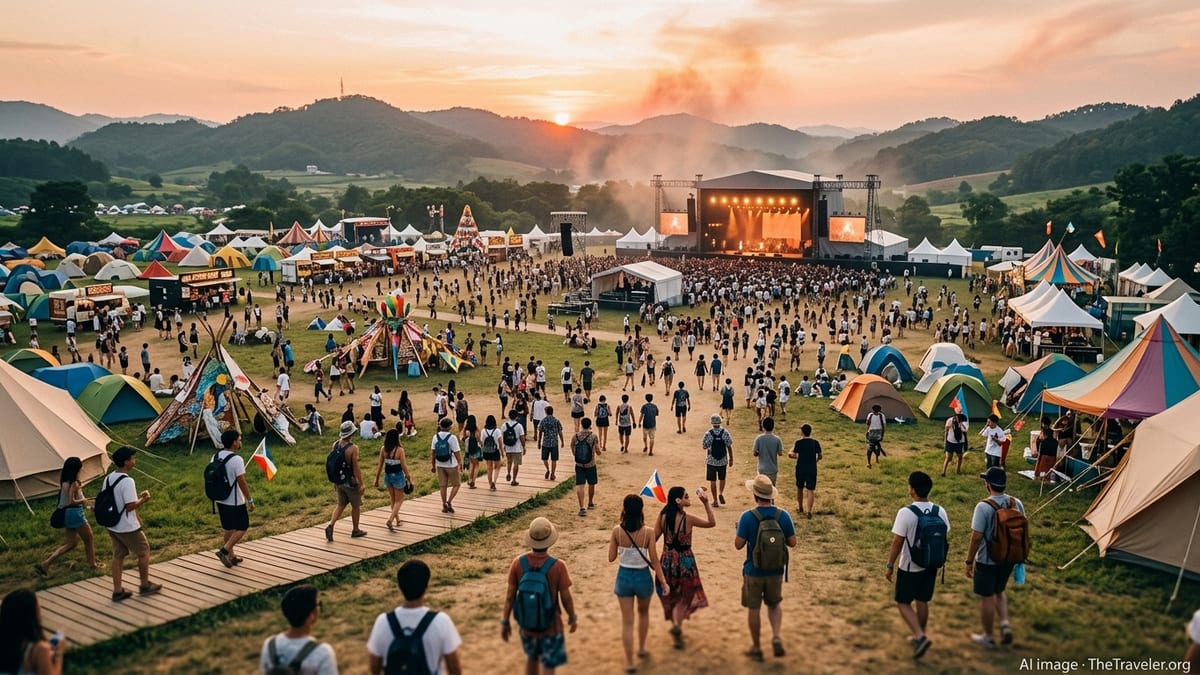
Asia’s music festival scene is entering a new phase, as large-scale events from Thailand to Japan and South Korea attract rising numbers of regional and long-haul visitors while geopolitical tensions, conflicts and boycott campaigns complicate travel to parts of Europe and the Middle East.
Get the latest news straight to your inbox!
Shifting Routes as Conflicts Reshape Global Festival Tourism
International travel patterns around live music have been unsettled by overlapping crises, including Russia’s invasion of Ukraine, unrest in parts of the Middle East and an expanding boycott movement targeting certain European festival groups over links to the war in Gaza. Publicly available coverage shows that some European events now face pressure from artists and fans questioning where they spend their money, while higher airfares and security concerns have made long-haul trips more complicated for some travelers.
At the same time, governments and tourism boards across Asia are investing heavily in what industry analysts describe as “concert tourism,” seeking to capture audiences who might once have planned their summer around European mega-festivals. Regional air connectivity, visa liberalization and the return of capacity on routes from North America and Europe into hubs such as Bangkok, Tokyo and Seoul are making it easier to build trips around Asian events that combine music with food, culture and nature.
Festival organizers in Asia are responding by lengthening their planning cycles, partnering with travel platforms and emphasizing stability and safety in marketing materials. The result is a landscape in which several flagship festivals are no longer positioned as niche or experimental alternatives, but as anchor events in the global calendar that can rival long-established gatherings in Europe.
Thailand’s Wonderfruit Becomes a Multi-Day Destination Anchor
Thailand’s Wonderfruit festival, held at The Fields at Siam Country Club near Pattaya, has become one of the clearest examples of a music event that now functions as a regional travel hub in its own right. Information from tourism promotions and festival guides indicates that the event, which blends music, art, gastronomy and wellness programming, draws visitors from across Asia, Europe and North America and encourages multi-day stays in the country.
Recent editions have been marketed around extended dates in December, with its 10th anniversary celebration set for mid-December 2025 and the next iteration already scheduled for early December 2026. Travel partners promote bundled hotel-and-ticket offers, shuttle transfers from Bangkok and Pattaya, and curated itineraries before and after the festival, effectively turning Wonderfruit into the centerpiece of a broader Thailand holiday.
As international conflicts and airline route adjustments complicate long-haul travel, industry commentary suggests that Thailand’s relative accessibility, extensive low-cost carrier network and established tourism infrastructure are helping Wonderfruit and similar events capture visitors who might previously have looked to European summer festivals. The festival’s focus on sustainability and local culture also appeals to travelers seeking experiences that feel grounded in place rather than purely commercial.
Japan’s Fuji Rock Draws Growing Overseas Crowds
Japan is seeing similar momentum, with Naeba’s Fuji Rock Festival emerging as a major draw for overseas visitors. According to recent coverage in Japanese and regional music media, the 2025 edition welcomed around 122,000 attendees over four days, with organizers reporting a steady share of inbound visitors and highlighting demand from North America, Europe and neighboring Asian markets. Additional reporting notes that roughly one in ten ticket buyers in 2024 were based overseas, a figure that does not account for foreign residents purchasing through local channels.
Fuji Rock’s position in late July, its reputation for well-managed operations and its setting in the mountains of Niigata Prefecture have helped it become a cornerstone of Japan-focused itineraries that combine days in Tokyo with a festival weekend. As Japan continues to benefit from a weak yen that makes on-the-ground costs relatively affordable for many foreign currencies, travel planners are increasingly packaging Fuji Rock alongside other cultural and nature experiences.
Policy changes have also played a part. Japan has incrementally eased entry rules since the pandemic and restored air links from major hubs, while local governments promote rural tourism to spread visitor spending beyond major cities. In this environment, a large-scale festival like Fuji Rock functions as both entertainment and an economic driver for accommodations, transport providers and nearby attractions.
South Korea and Regional Collaborations Expand the Map
South Korea is another focal point in Asia’s evolving festival geography. Events such as the DMZ Peace Train Music Festival, held near the border with North Korea, continue to blend music with themes of peace and cultural exchange, while newer K-culture festivals target the global popularity of K-pop and Korean media. Coverage from regional outlets points to Jeju Island’s Purple Festa in 2025 as an example of a free, outdoor K-culture event that is explicitly designed to attract foreign visitors, supported by targeted air links and accessibility initiatives.
Beyond individual festivals, collaborative events are helping connect markets across the region. The ASEAN–Korea Music Festival, branded as the ROUND Festival, rotates among host countries in Southeast Asia and South Korea and showcases artists from all ten ASEAN states alongside Korean acts. This model not only encourages cross-border tourism but also spreads the economic benefits of music travel among multiple destinations over several years.
These developments align with broader regional strategies discussed at tourism forums, where officials and industry representatives highlight concerts and festivals as tools for diversifying visitor arrivals beyond traditional sightseeing. As global travelers weigh value, safety and ethical considerations in choosing where to go, Asia’s network of festivals, from experimental boutique gatherings to stadium-scale pop events, appears increasingly well-positioned to capture the next wave of music-driven journeys.
Boycotts and Ethical Concerns Nudge Audiences Toward Asia
While Asia’s rise as a festival hub is driven by local investment and fan demand, shifts elsewhere are creating additional momentum. In Europe, publicly documented campaigns have called for boycotts of some festivals owned by large investment groups with ties to companies operating in conflict zones. Open letters signed by artists in 2025 urged fans and performers to reconsider appearances at certain events, arguing that ticket revenues and sponsorships risk normalizing or indirectly supporting military actions.
These campaigns do not automatically translate into mass cancellations, but they add another layer of complexity to decisions about where to tour and where to travel as a fan. Festivalgoers weighing high-cost trips to contested destinations may instead look to events in countries perceived as more stable or less directly implicated in current conflicts. Asia’s relative distance from some of the most acute flashpoints, coupled with competitive pricing and increasingly diverse lineups, has made the region an attractive alternative.
Industry observers note that Asian organizers are not immune from political and ethical scrutiny, and local controversies do arise. However, the current moment appears to favor destinations that can offer reliable logistics and a sense of escape from the headlines. For many travelers, planning around a festival in Thailand, Japan or South Korea provides that combination of cultural immersion and perceived safety, reinforcing the trend of music festivals putting down deeper roots across Asia as global tensions reshape how and where people choose to move.