

Arkansas surprised me. I arrived expecting a quiet, outdoorsy state and left with mud on my boots, mineral water in my backpack, and a phone full of photos from places I had barely heard of before I started planning this trip. After several weeks tracing a loose loop from the Ozark Mountains to Hot Springs and back through central and northern Arkansas, I came away with strong opinions about what truly deserves your time and what you can confidently leave off the itinerary. This is my honest Arkansas travel review: what I loved, what I would skip, and how to make the most of your own visit to the Natural State right now.
Setting the Scene: Why Arkansas Is Worth Your Time
Arkansas does not enjoy the automatic name recognition of neighboring travel darlings like Tennessee or Texas, yet tourism has quietly become one of the state’s most important industries in recent years, powered largely by its mountains, lakes, rivers, and small cities that are reinventing themselves around art and outdoor recreation. Visitor numbers and spending have climbed steadily, and the state’s parks and national sites now welcome millions of people each year. You feel that energy when you arrive. Trailhead parking lots are full of license plates from across the country, and downtown streets in places like Hot Springs and Bentonville mix locals with out-of-state visitors in a way that feels natural rather than forced.
What struck me most, though, was how accessible Arkansas feels. Distances are reasonable, and it is possible to pack mountains, rivers, caves, thermal baths, and world-class art into a single trip without spending days in a car. It is also, in many ways, still an underdog destination. That means fewer crowds than you might find in more famous national parks and a travel scene that, while growing, still has room for serendipity. Not every attraction is a hit, and some experiences feel overhyped for what they deliver, but when Arkansas gets it right the combination of scenery, affordability, and lack of pretense is hard to beat.
For my trip, I split time between northwest Arkansas, the Buffalo National River region, Hot Springs, and a handful of smaller stops in central and north-central Arkansas. I stayed in a mix of state park lodges, cabins, and downtown hotels, relying on a rental car to string everything together. What follows are the experiences that rose to the top, along with a few that looked good on paper but did not live up to the promise once I arrived.
Ozark High Country: Trails, Waterfalls and Mountain Towns I Loved
If you love big views and twisting forest roads, make the Ozarks your first stop. Northern Arkansas delivers more dramatic scenery than many travelers expect, with deep hollows, sheer bluffs, and waterfalls tucked just out of sight of the highway. I based myself near the Buffalo National River, the country’s first designated national river, where clear water curls between towering limestone walls and trailheads launch into some of the state’s most memorable hikes. A float trip here in spring or early summer is as quintessential an Arkansas experience as you will find, and even a short paddle gives you a sense of how wild the river corridor still feels compared to more manicured destinations.
Hiking the Ozark Highlands Trail gave me a deeper look at this landscape. The long-distance route runs for well over 200 miles through remote forest and across rugged ridges, but you do not have to be a thru-hiker to enjoy it. I tackled it in day-hike segments, picking stretches that linked scenic overlooks with creek crossings and quiet glades. In several sections I went hours without seeing another person. That solitude, combined with frequent glimpses of hawks soaring below the bluff line and the occasional wildflower-strewn clearing, was a reminder of how much of Arkansas remains genuinely undeveloped and peaceful.
Waterfall chasers will find plenty to love as well, especially after seasonal rains. Hiking into the Ponca Wilderness to see tall falls plunging into narrow hollows felt like walking into a hidden amphitheater carved by water and time. Trails can be rocky and steep, and in wet conditions they border on slick, but the payoff of standing in cool mist at the base of a high cascade makes the effort worthwhile. Small mountain towns like Jasper and Ponca serve as laid-back gateways, with just enough lodging and diners to keep you fueled without undercutting the feeling that you are somewhere far from the interstate.
State Parks and Scenic Lodges: Where Arkansas Shines
Arkansas state parks were the unexpected stars of my trip. I have visited state park systems across the United States, and Arkansas belongs near the top of the list for the combination of natural settings, thoughtfully preserved historic infrastructure, and comfortable but unpretentious lodging. Cabin and campsite reservations are increasingly popular, so booking ahead is smart, but once you are there the value is evident. These parks are where you feel the Natural State nickname in full.
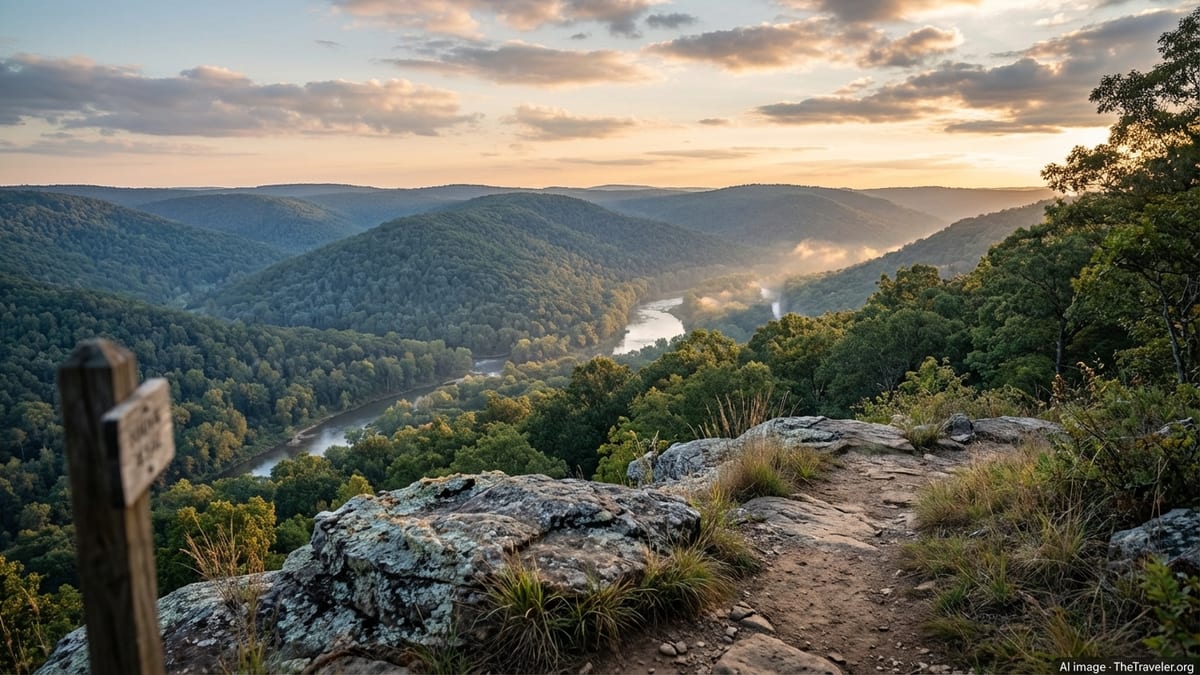
Mount Magazine State Park became my base for exploring the high country of western Arkansas. The mountain is the highest point in the state, and the lodge and cabins are set along the rim with broad views across miles of forest and distant ridges. Watching a sunset here is an event in itself, with layers of hills fading from green to blue and, on clear evenings, a blaze of color across the sky that seems to last longer than it should. Trails branch out from the developed area into quiet woods and rocky overlooks, and the air at elevation often runs noticeably cooler than the valleys even in warm months.
Further north, parks like Devil’s Den provide a different atmosphere, with stonework built by the Civilian Conservation Corps, small lakes, and dense hardwood forest. The mix of history and recreation is part of the appeal. You can hike under overhangs and along creeks in the morning, then return to rustic cabins for the evening and feel a quiet continuity with generations of travelers who did something similar decades ago. These parks are not luxury resorts, and the facilities show their age in places, but for travelers who prioritize setting and trails over spa menus, they represent the best kind of compromise between comfort and authenticity.
Not every park delivered the same spark, though. Some smaller, more developed parks near major highways felt generic, with crowded campgrounds and heavily engineered lakes that lacked the sense of place I found in the mountains. My advice is to prioritize parks that are destinations in themselves, especially those with clear geographic superlatives or distinctive historic features, rather than simply defaulting to whichever green patch is closest to your route on the map.
Hot Springs and Bathhouse Row: What Lives Up to the Hype
Hot Springs National Park is Arkansas’ best-known attraction, and it anchors one of the state’s busiest tourism hubs. I arrived cautiously optimistic, worried that the experience might feel overly commercial. Parts of it do, but Bathhouse Row delivers enough atmosphere and history to justify at least a couple of nights in town. The classic stone bathhouses, some converted into modern spas and others preserved as historic sites, line a promenade where the smell of mineral water occasionally rises from vents and fountains. Stepping into a traditional thermal bath treatment gives you a direct sensory connection to the late nineteenth and early twentieth century travelers who once came here for weeks of prescribed soaking.
The town itself has worked hard to evolve beyond its image as purely a spa destination. Downtown streets now blend bathhouses with galleries, bars, independent restaurants, and small museums. In the evenings, the sidewalks can feel almost festive, especially during event weekends when horse racing or festivals bring extra crowds to town. If your image of Arkansas is all pine trees and quiet lakes, the buzz of Hot Springs after dark is a pleasant surprise. It also functions as a convenient base for day trips to nearby lakes and hiking trails, so you can pair urban energy with daytime escapes outdoors.
What I loved most here was how compact and walkable the core of Hot Springs is. You can leave your car at a hotel and spend the day on foot, alternating between soaks in the thermal water, short hikes into the hills that rise abruptly behind downtown, and café stops on Central Avenue. When the balance is right, you end up with a satisfying blend of wellness, history, and casual people-watching in a single day. Travelers interested in architecture and historic preservation will find plenty to appreciate simply by slowing down and paying attention to the details of tile work, stained glass, and ornate bathhouse interiors.
Still, expectations matter. Anyone picturing steaming outdoor pools framed by wilderness will find Hot Springs more urban than imagined. The national park here is as much about cultural history as it is about raw nature, and some visitors may be surprised to find sections of the park woven directly into the fabric of the town. If you arrive ready for that hybrid identity, though, and accept that you are sharing space with many other travelers, Hot Springs more than earns its top billing.
Art, Gardens and Small Cities: Northwest Arkansas Surprises
Northwest Arkansas has transformed over the past decade from a quiet corner of the state to a cultural and outdoor hub with a distinct identity of its own. I centered my time here around Bentonville and Fayetteville, two cities that together offer a blend of mountain biking, contemporary art, university-town energy, and thoughtfully designed green spaces. The region’s network of paved and soft-surface trails can keep cyclists and runners entertained for days, while those less inclined to pedal can explore museums, gardens, and lively downtown squares.
The standout for many visitors, including me, is the major American art museum in Bentonville, set in a wooded ravine with architecture that plays off water and forest rather than dominating them. Walking through the galleries and then out along the sculpture trails feels like two linked but distinct experiences, each strengthening the other. Exhibitions rotate regularly, and it is worth checking the current lineup when planning a visit, especially if you are timing a trip around a particular artist or theme. Even casual art fans will likely find something here that resonates, whether in the permanent collection or in special exhibitions that often engage with questions of place and landscape.
In nearby Fayetteville, the Botanical Garden of the Ozarks offers a quieter, more contemplative counterpoint. Spread across several acres near a lake, the garden uses a series of themed spaces to showcase both native plants and more formal designs. It is not enormous, but that works in its favor, allowing you to slow your pace and linger in the butterfly house or under shaded pergolas without feeling rushed. Families in particular seemed to enjoy the approachable scale and interactive elements, while photographers found plenty of compositions in the changing blooms and small water features.
What I appreciated about northwest Arkansas as a whole was how integrated nature is into everyday life. It is easy to step from a coffee shop onto a trail or to spend the morning in climate-controlled galleries and the afternoon winding through forest on a bike. For travelers who like variety in their days, this region delivers, and it offers a more contemporary counterbalance to the historic focus of Hot Springs or the pure nature emphasis of the Buffalo River corridor.
What I Would Skip or Shorten Next Time
No trip is perfect, and part of honest travel reporting is admitting where the itinerary did not quite land. In Arkansas, the experiences I would skip or compress next time tended to fall into two categories: attractions that felt overly commercial relative to what they delivered, and stops that were simply too similar to stronger options elsewhere in the state. With limited time, it pays to be selective, because the true highlights here reward extra days while the weaker stops rarely improve with a longer stay.
On the commercial side, a few heavily advertised roadside attractions and indoor venues in the Hot Springs and Ozark regions left me cold. These are the sort of places that lean heavily on billboards and nostalgic marketing while offering fairly generic experiences inside. Admission fees add up quickly, and time spent standing in line for a brief, orchestrated thrill felt poorly spent when I knew quiet trailheads and genuine small-town main streets were only a short drive away. Families with young children may judge these differently, but for most adult travelers, channeling that money and time into state park activities, guided river trips, or museum visits yields a better return.
I would also advise against overpacking your schedule with similar scenic stops. Arkansas has many lakes, overlooks, and small visitor centers, some of which feel interchangeable once you have seen a few. After several days of ambitious driving, I realized I was spending too much time hopping between minor viewpoints rather than committing to deeper experiences like a full-day float or a longer hike. Next time, I would choose fewer bases and stay longer in each, particularly in the Buffalo National River area, the higher Ozarks, and northwest Arkansas’s urban hubs, while skipping smaller roadside parks that offer little more than a quick photo opportunity.
Finally, if you are traveling in high summer, be realistic about what the heat and humidity will allow. A couple of low-elevation trails near larger towns turned into slogging, buggy trudges with little shade and limited payoff at the end. In contrast, higher-elevation parks, shaded creek hikes, and water-based activities remained pleasant. With a bit of planning, you can avoid the sort of sufferfest outings that leave you wondering why you left the air-conditioned lodge in the first place.
Planning Tips for a Smarter Arkansas Itinerary
Designing an Arkansas trip that highlights the best of the state without wearing you out comes down to pacing, seasonality, and a bit of honest self-assessment. First, decide what kind of traveler you are. If your ideal day involves strenuous hikes and remote campsites, prioritize the Ozark Highlands, Buffalo National River region, and major state parks with backcountry access. If you prefer a softer adventure style, build your trip around Hot Springs, Bentonville, and Fayetteville, adding in day trips to nearby nature spots rather than committing to multi-day treks. There is no wrong approach here, but mixing both styles in a single short trip can leave you feeling rushed and unsatisfied.
Season matters. Spring and fall offer milder temperatures, higher river levels, and better chances for waterfalls to be flowing strongly, which makes them ideal for paddling and hiking. Summer brings long days and lively lake scenes but also sticky heat that favors water-based activities and higher-elevation escapes. Winter can be surprisingly beautiful on clear days, with bare trees revealing rock formations and long views, though some facilities and tours may operate on reduced schedules. Checking current conditions with park offices or visitor centers before committing to a specific trail or river section is always wise.
Logistics are straightforward but benefit from foresight. State park lodges and popular cabins often book out weekends and holidays well in advance, especially at marquee destinations like Mount Magazine. If you hope to stay in park lodging, reserve as early as you can, then build the rest of your route around those anchor dates. Consider driving distances between regions carefully; while Arkansas is not huge, mountain roads and small highways can stretch travel times beyond what the map suggests. Factor in extra time for scenic detours and unplanned stops, as some of my favorite memories came from pulling over at an unmarked overlook or wandering into a small-town café recommended by a park ranger.
Above all, leave room for weather flexibility. Strong storms and heavy rainfall can quickly change trail and river conditions, occasionally leading to closures or advisories. Having a backup plan that might include museum visits, cave tours, or garden walks will keep your trip enjoyable even when the forecast does not cooperate.
The Takeaway
Traveling through Arkansas left me with a deep appreciation for a state that often sits in the shadows of more famous neighbors. When you lean into its strengths, Arkansas delivers: miles of forested ridges, clear rivers, serene state park lodges perched on high bluffs, and small cities punching above their weight in art, gardens, and trail networks. The best experiences here feel grounded and authentic, shaped by the land itself and by communities that have grown up alongside it rather than around glossy, manufactured attractions.
At the same time, Arkansas is not immune to the usual travel pitfalls. Overly commercial roadside stops, repetitive viewpoints, and poorly timed lowland hikes in midsummer can erode the magic. The good news is that these are easy to avoid with a bit of planning and an honest look at how you want to spend your limited days on the road. Focus on the parks and regions that make Arkansas unique, give yourself enough time in each place to move beyond the obvious photo spots, and be willing to skip the billboards in favor of trailheads and historic downtown streets.
If you do, you are likely to leave, as I did, with a sense that Arkansas deserves far more attention than it gets, and with a quiet confidence that you discovered something still slightly under the radar. The Natural State rewards curiosity, patience, and a willingness to trade a few polished attractions for wild river bends, old stone bathhouses, and the soft light of sunset over a blue-green Ozark horizon.
FAQ
Q1. How many days do I need to see the best of Arkansas?
Most travelers will be happy with seven to ten days, which is enough time to combine Hot Springs, the Ozarks, and at least one stop in northwest Arkansas without rushing.
Q2. What is the best time of year to visit Arkansas for outdoor activities?
Spring and fall generally offer the most comfortable temperatures, better waterfall conditions, and more manageable humidity for hiking, paddling, and sightseeing.
Q3. Is Arkansas a good destination for first-time hikers?
Yes. Many state parks and popular areas offer clearly marked, short trails with modest elevation, making Arkansas accessible for beginners as well as seasoned hikers.
Q4. Do I need a car to explore Arkansas effectively?
In most cases, yes. Public transportation is limited outside a few cities, and a car makes it far easier to reach trailheads, state parks, and smaller towns.
Q5. Are Arkansas state parks suitable for families with children?
Very much so. Many parks have easy trails, playgrounds, lakes, ranger programs, and cabins or campsites that work well for multi-generational trips.
Q6. How crowded does Hot Springs get, and is it still worth visiting?
Hot Springs can be busy on weekends and during big events, but the historic bathhouses and walkable downtown still make it a worthwhile stop if you plan ahead.
Q7. Can I combine art and outdoor adventures in one Arkansas trip?
Yes. Northwest Arkansas in particular makes it easy to spend mornings in museums or gardens and afternoons on nearby biking or hiking trails.
Q8. Is summer too hot to enjoy Arkansas?
Summer can be hot and humid, but higher-elevation parks, shaded creek hikes, caves, and water activities help keep outdoor time enjoyable.
Q9. Do I need to book lodging in advance in Arkansas state parks?
Booking ahead is strongly recommended for lodges and popular cabins, especially for weekends, holidays, and peak seasons in spring and fall.
Q10. Is Arkansas safe for solo travelers?
Generally yes, especially in parks and established tourist areas, though solo visitors should follow usual precautions and check conditions before heading into remote areas.