

I checked into the InterContinental Montreal with fairly high expectations: a well-known luxury brand, an unbeatable location between downtown and Old Montreal, and glossy photos of marble, city views, and a lap pool.
What I actually experienced over several nights was a mixed bag: a property with undeniable strengths and one of the best locations in the city, but also obvious aging, inconsistent value, and moments that made me think, “I’ll be glad when this place finally gets its renovation.”
With the hotel now temporarily closed from February 1, 2026 for a full refresh, my stay felt like catching the InterContinental in its twilight phase. Here is what stood out to me, both good and bad, and what I would do differently next time.
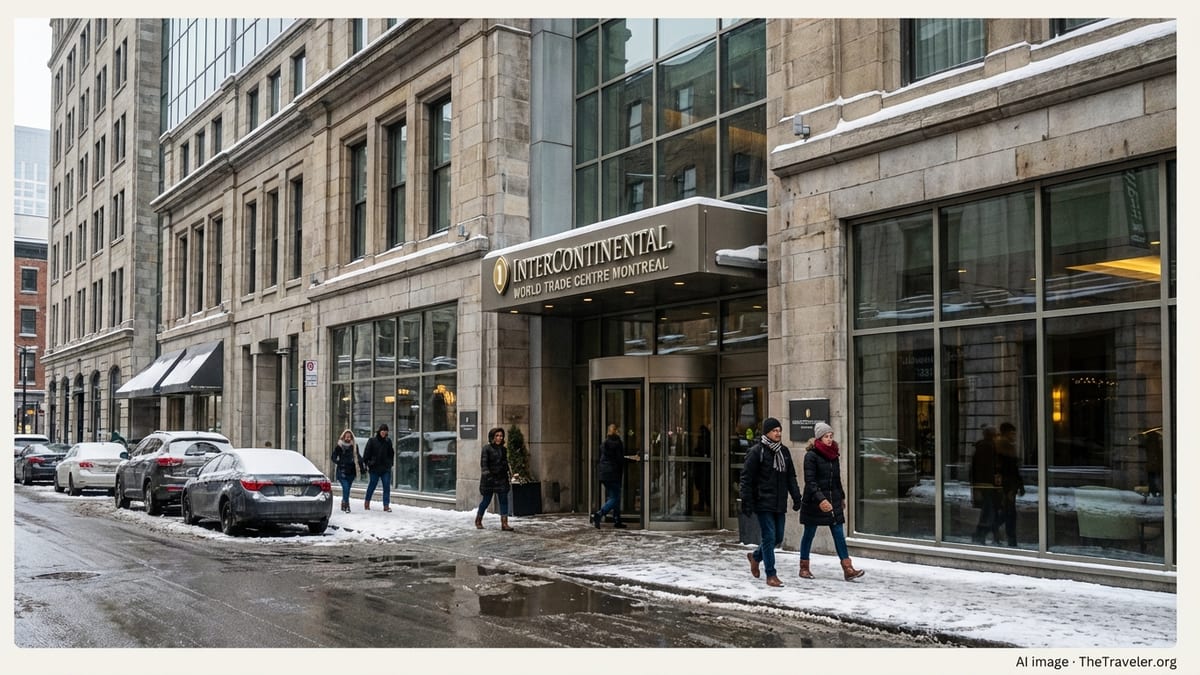
Arriving Between Downtown and Old Montreal
From the moment I stepped out of the taxi, the InterContinental Montreal had one thing working unequivocally in its favor: location. The hotel sits right on the edge of Old Montreal in the Quartier International, facing the convention center and directly connected to the underground city. In practical terms, that meant I could walk to the cobblestone streets of Vieux-Montréal, the business core, or the Palais des congrès in under ten minutes, and I barely had to go outside during bad weather if I did not want to. For a winter visit, that connectivity was a serious advantage.
The arrival experience itself was polished but not especially warm. The lobby, shared with the World Trade Centre complex, makes a strong first impression: high ceilings, marble finishes, and a sense of urban grandeur. It felt more corporate than cozy, but it set a tone of seriousness and professionalism that fits a convention-focused hotel. I did not feel like I was entering a boutique property full of personality; I felt like I was walking into a well-oiled business machine in a very strategic location.
Check-in was efficient rather than memorable. Staff were courteous and multilingual, and I was recognized quickly, but the interaction felt scripted. There was little proactive explanation about the pool, the underground access, or nearby neighborhoods. I had to ask specific questions about breakfast, club lounge access, and late checkout. It was not unfriendly service, just functional, which aligns with a lot of big-brand city hotels but falls slightly short of the “luxury” label the InterContinental name suggests.
One early frustration surfaced immediately: parking costs. Valet and self-parking are available on-site, but neither is inexpensive, and the hotel does not really soften that blow with any perks. If you are driving in, the convenience is good, but the add-on charges push the bill higher than you might expect, especially when you factor in taxes and fees.
The Room: Solid Bones, Noticeably Dated
My room was where the gap between the brand promise and the reality became obvious. The space was generous by city standards, with large windows, a decent seating area, and a proper desk. On paper, it ticked all the boxes: comfortable bed, marble bathroom, flat-screen TV, and enough outlets to keep my devices alive. But the overall look and feel clearly dated from an earlier design era, and that colored my entire impression of the stay.
The décor leaned heavily on dark woods, muted carpets, and color tones that felt more 1990s business hotel than contemporary urban luxury. Ceiling textures, trim, and some of the built-ins looked tired. Even small details, like slightly cloudy window glass and older-style climate control, reminded me that this was a property ready for a full refresh rather than a lightly refreshed one. It did not feel dirty, but it did feel worn and out of step with newer competitors across the city.
That said, comfort was generally good. The bed was supportive and I slept well most nights. Sound insulation was acceptable; I heard occasional hallway noise but not enough to keep me awake, and exterior noise was surprisingly limited given the central location. The bathroom, while not spa-like, had a decent shower with reliable water pressure and temperature. Nothing about the room wowed me, but nothing majorly failed either. It was “fine,” and given the room rates, I was hoping for more than fine.
On the cleanliness front, I did a closer-than-usual inspection because I had seen some online chatter about pests and maintenance issues at the property. In my particular room, linens and surfaces were clean, and I did not encounter any insects or obvious hygiene lapses. Still, the age of the furnishings and carpets made it hard to shake the feeling that maintenance had been in reactive mode rather than proactive. For a hotel charging premium prices during busy periods, I wanted to see a sharper, more modern product than the one I interacted with.
Service, Housekeeping, and the Human Element
My interactions with staff throughout the stay were a strange combination of efficient and slightly distant. Front-desk agents answered questions reliably, helped arrange directions and basic requests, and assisted with luggage with minimal delay. However, I rarely felt that extra touch of warmth or personalization that characterizes genuinely memorable hotel service. The tone was courteous and capable, but not particularly engaged.
Housekeeping was similarly mixed. My room was serviced daily, and the basics were taken care of: bed made, towels replaced, trash removed. On the other hand, there was little attention to detail. A used glass sat in the same spot for two days before it was swapped out. Amenities were occasionally restocked inconsistently, and one afternoon my room was not cleaned until well into the late afternoon, which was awkward when I returned between meetings and just wanted to rest for a bit. None of this rose to the level of a serious problem, but collectively it eroded the sense of staying at a truly top-tier property.
One interaction did stand out in a positive way. I asked the concierge for recommendations for a casual but good-quality dinner within walking distance, and the suggestions were spot on. They were realistic about what would require a reservation and what would not, and they did not try to steer me exclusively toward touristy spots. That conversation reminded me that there are people in the building who really understand Montreal and can enhance your stay if you take the time to engage with them.
If you value consistent, predictable service, the InterContinental Montreal does an adequate job. If you are chasing warmth, personality, or highly anticipatory service, you are likely to feel that something is missing. In a city with plenty of well-reviewed independent and boutique hotels, that lack of distinctive human touch becomes a meaningful differentiator.
Dining at Osco! and Evenings at Sarah B.
Osco!, the hotel’s Provencal-inspired brasserie, was one of the stronger features of my stay, though not without some caveats. Breakfast here is a classic upscale hotel buffet, with a solid range of hot and cold items, pastries, fruit, and made-to-order eggs. Quality was generally good; I appreciated the fresh fruit and decent coffee, and the staff moved efficiently during busier morning periods. It was not a destination breakfast, but it was better than average for a big city chain hotel.
The frustration comes with pricing and access. Unless you have specific room benefits or club access that include breakfast, you are paying a premium for what is essentially a well-executed but standard buffet. For a solo traveler or a couple, that can feel like a disproportionate spend, especially when excellent independent cafés and bakeries are a short walk away. I ended up alternating between breakfast at Osco! and grabbing something in the neighborhood, and I enjoyed the latter more in both atmosphere and value.
In the evening, Sarah B., the hotel’s absinthe-themed bar, proved to be more interesting. The design nods to historic absinthe culture without feeling too kitschy, and the cocktail list was both creative and well-executed. I liked that it did not feel like a rushed lobby bar bolted onto the side of a check-in desk; it had its own identity and ambiance. That said, service here could be oddly slow at times, especially when a few extra tables filled in quickly. On one visit, I waited longer than expected for a simple drink, with little acknowledgment from staff during the delay.
Overall, the hotel’s food and beverage program enhanced my stay but did not define it. Osco! is a good option if you need convenience and do not mind paying for it. Sarah B. is worth a visit if you are staying in the building and want a drink without going out. Neither, in my opinion, is compelling enough to justify choosing the property over competitors if location and room quality are your primary concerns.
Pool, Fitness, and Amenities: Practical but Not Exciting
One of the reasons I booked the InterContinental was the promise of an indoor saltwater lap pool and a proper fitness center. In reality, these amenities delivered function more than inspiration. The pool is a 15-meter indoor saltwater lap pool, pleasant enough for a quick swim or unwinding after a day of walking the city. It was never crowded during my visits, which I appreciated. The space, however, feels more like a slightly dated health club than a spa sanctuary. Lighting is adequate but not atmospheric, and the finishes show the same signs of age I noticed in the guest floors.
The fitness center is reasonably well equipped with cardio machines, free weights, and a few weight stations. For a business trip or a short leisure stay, it is more than sufficient to keep a workout routine going. Again, the key theme was practicality rather than wow factor. I used the space, got what I needed, and left without much desire to linger. The attached changing rooms and sauna were serviceable, but they also felt like they had not had a true design rethink in quite some time.
Other amenities, such as the business center and meeting spaces, seemed squarely aimed at conference and corporate guests. I did not use the meeting rooms myself, but I could see their appeal for events and conventions. The hotel’s direct connection to the underground city and proximity to the convention center makes it a logical choice for certain types of business travel, and the infrastructure reflects that. For a leisure traveler, those same spaces can feel a bit anonymous and impersonal.
If you are the type of guest who values resort-style wellness facilities or spa-level pampering, the InterContinental Montreal in its pre-renovation state likely will not impress you. If, on the other hand, you just want a place to swim laps, lift some weights, and maybe sit in a sauna, it gets the job done, albeit in a slightly tired package.
Club Lounge, Value, and the Question of Price
Club InterContinental access is marketed as a premium perk, and it can add value, but again the property’s age and general feel of mild fatigue crept in here too. The lounge offers a quieter space to work, a selection of drinks and snacks at certain times, and breakfast for those with access included in their rate or status benefits. When it was not too busy, I appreciated having a calmer environment than the main restaurant or lobby. The staff here tended to be slightly more attentive as well.
However, when I mentally calculated what the incremental cost of club access translated to in actual benefits, the math was not always convincing. The food offerings, while decent, were not particularly extensive, and the atmosphere did not feel especially luxurious. It struck me as an amenity that would make sense if you were here for a packed conference schedule and needed a convenient base of operations, but less compelling if you were simply visiting Montreal for a long weekend of sightseeing.
This leads to the broader question of value. Room rates at the InterContinental Montreal can fluctuate significantly depending on conventions and events at the Palais des congrès. On nights when rates spiked high, the condition of the rooms and common areas felt misaligned with the price point. On quieter nights or when a good deal surfaced, the calculation improved. In its pre-renovation phase, I would say the property made sense mostly at the right price, not at any price.
If I were booking again under similar conditions, I would pay closer attention to alternative options nearby, especially boutique properties in Old Montreal that have already been renovated or purpose-built in the last few years. The InterContinental brings brand familiarity, loyalty points, and great connectivity, but those strengths do not entirely compensate for the dated hardware when rates climb into the upper tier.
Renovations and How They Change the Equation
A major context for my stay, and for anyone considering this hotel in the future, is the comprehensive renovation program. As of February 1, 2026, the InterContinental Montreal has temporarily closed for a full modernization of all 357 rooms and suites, the lobby, common areas, Club InterContinental, Osco!, and Sarah B. The closure is expected to last roughly 14 to 18 months, which means the property is essentially hitting reset on its physical product.
Knowing this, a lot of what I experienced made more sense. The dated décor, the tired finishes, the slightly uninspired pool area: these all felt like elements that ownership had decided to tolerate a bit longer until they could shut everything down and rebuild. In one way, that provided reassurance that the hotel was not stuck in limbo indefinitely; in another, it explained why certain spaces felt more worn than a typical “refreshed” business hotel.
Of course, renovations are not a cure-all. How successful this reset will be depends on design choices, investment levels, and how well the hotel matches its refreshed look with improved service and attention to detail. But if the project delivers what has been promised, the InterContinental Montreal could emerge as a significantly more compelling option, particularly for travelers who want a modern, polished base in a prime location without sacrificing the connectivity to downtown and the underground network.
For me personally, I left with the sense that I had stayed at the end of one era. I saw the potential beneath the dated surfaces and the uneven value proposition, but I also felt that this was a property ready to go offline and come back in a more competitive form. If I return after the renovation, I will be looking carefully to see whether the service, amenities, and pricing evolve to match the upgraded hardware.
The Takeaway: Who This Hotel Suits and What I Would Do Differently
Looking back on my stay, my biggest takeaway is that the InterContinental Montreal, in its pre-renovation state, was a very practical but imperfect choice. The strengths were clear: an exceptional location bridging Old Montreal and downtown, direct access to the underground city and convention center, solid if unspectacular amenities, and the reassuring framework of a global brand. For a business traveler tied to the Palais des congrès schedule or someone prioritizing connectivity over character, those advantages might outweigh the drawbacks.
The drawbacks, however, are hard to ignore. Rooms and common areas felt dated and somewhat tired, service was competent but rarely memorable, and certain add-ons like breakfast and parking felt overpriced relative to the experience delivered. If I had to plan the same trip again, I would either look for a very good rate at the InterContinental or seriously consider a newer or more characterful property nearby, especially if this were a purely leisure-focused visit.
Would I stay here again after the renovation? Potentially, yes, but with conditions. I would want to see updated photos of the rooms, get a sense of how the new design balances business functionality with warmth, and read recent reports on service levels and value. If the renovation successfully brings the interiors in line with the outstanding location, the InterContinental Montreal could move from “good enough with caveats” to “genuinely competitive” in the city’s upper-upscale segment.
For now, my honest conclusion is this: before closing for its makeover, the InterContinental Montreal was worth considering if you needed maximum convenience in the Quartier International and could secure a reasonable rate, while accepting some dated charm and compromises. After it reopens, it may well be worth a fresh look, especially for travelers who like the combination of chain reliability and a walkable base for exploring one of Canada’s most compelling cities.
FAQ
Q1: Is the InterContinental Montreal currently open?
The hotel is temporarily closed as of February 1, 2026, for a comprehensive renovation project expected to last roughly 14 to 18 months.
Q2: How was the location of the InterContinental Montreal for sightseeing?
I found the location excellent, sitting between downtown and Old Montreal, with most major attractions and neighborhoods reachable on foot within minutes.
Q3: Were the rooms at the InterContinental Montreal modern and updated?
During my stay, the rooms were comfortable but clearly dated in design and finishes, which is a key reason the full property renovation is underway.
Q4: Did you experience any cleanliness or pest issues in your room?
In my particular room, cleanliness was acceptable and I did not personally encounter pests, although the aging furnishings made me more vigilant than usual.
Q5: Is breakfast included in the room rate at the InterContinental Montreal?
In my case, breakfast at Osco! was not included by default and came at a premium, though some rates or club access may bundle it in for certain guests.
Q6: How was the hotel for business travelers and conference attendees?
The hotel is very convenient for business, with direct access to the convention center, a solid business center, and multiple meeting spaces that clearly target corporate guests.
Q7: What was your impression of the pool and fitness center?
I found the indoor saltwater lap pool and fitness center functional and adequate for workouts, but the spaces felt more dated health club than modern wellness retreat.
Q8: Was Club InterContinental access worth the extra cost?
For me, lounge access added some convenience and a quieter space to work, but the food selection and ambiance did not fully justify a significant price premium.
Q9: Would you recommend this hotel for a first-time leisure trip to Montreal?
I would recommend it with caveats: the location is ideal, but before renovations the dated rooms and mixed value meant it was best when rates were reasonable, not at the very high end.
Q10: Would you stay at the InterContinental Montreal again after it reopens?
I would consider returning after the renovation, but I would first check updated photos, recent reviews, and pricing to be sure the refreshed interiors and service align with the rates being charged.