

I went to the Yamhill-Carlton wine region in Oregon with the kind of expectations that only glossy travel magazines and Instagram can create: endless vineyard views, intimate tastings with passionate winemakers, and a small-town core that felt both rustic and refined.
What I found was more complicated. Yamhill-Carlton is beautiful and often deeply rewarding, but it is also fragmented, occasionally pricey, and not nearly as polished or easy to navigate as the marketing suggests. Here is what my time there actually felt like, and the biggest takeaways I came home with.
First Impressions: Quiet, Pretty, And Less Seamless Than Advertised
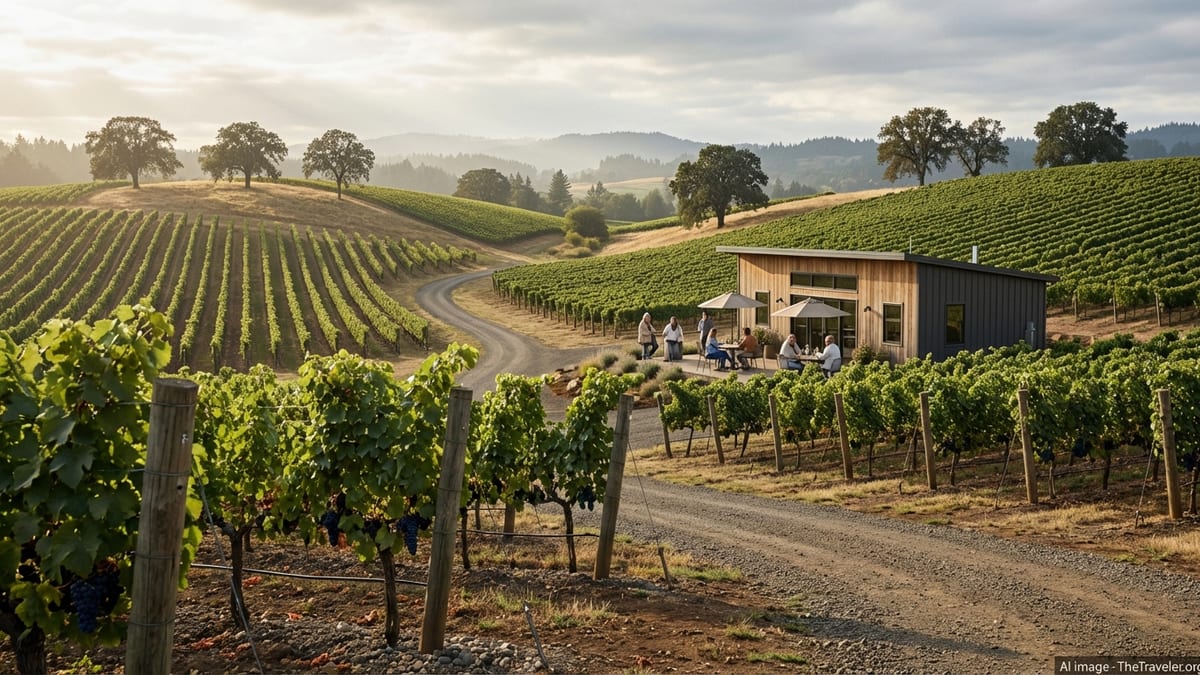
Driving into the Yamhill-Carlton AVA, I immediately understood why wine people talk about it with a kind of hushed reverence. The hills are a patchwork of vineyards, farms, and forests, with low, rounded ridges and a softness that feels very different from the more dramatic wine landscapes you see in places like Napa or Sonoma. It is not a showy beauty. It is quiet, subtle, and, at times, almost rural to a fault.
On paper, the region seems very straightforward: a compact wine appellation sitting above the towns of Yamhill and Carlton, about an hour from Portland and not far from McMinnville and Newberg. In reality, it felt more spread out and less intuitively organized than I expected. The AVA includes more than 50 wineries scattered across country roads, with tasting rooms both in town and out in the hills. I quickly realized that “minutes from Portland” sounds simpler than it is once you are actually navigating gravel drives and single-lane farm roads between appointments.
My first impression of the towns themselves was that they were smaller and sleepier than I had imagined. Carlton brands itself as Oregon’s “wine capital,” with a walkable downtown full of tasting rooms and restaurants, and that is broadly true. There are several spots clustered around Main Street, from wine bars and cheese-focused cafes to a distillery tasting room. But the concentration is not so dense that you can wander aimlessly and magically stumble into one great place after another. I had to do my homework in advance, and when I did not, I paid for it in the form of closed doors and awkward gaps in the day.
The overall feeling during my first afternoon was a mix of delight and disorientation. The scenery lived up to the promotional language, and the wines I started tasting were serious and distinctive. But logistics, hours, and the sheer spread of venues made the region feel more like a patchwork of individual experiences than a cohesive, effortless destination. I was glad I had a car and a realistic tolerance for some driving.
Wine Quality Versus Wine Logistics
The core reason I went to Yamhill-Carlton was wine, especially Pinot Noir and Chardonnay. On that front, the region largely delivered. The wines I tasted tended to be aromatic, textural, and a bit more generous than some of the leaner, higher-acid bottlings from other parts of the Willamette Valley. The local description of Yamhill-Carlton’s wines as silky and persistent did not feel like marketing fluff; it tracked with a lot of what I had in my glass.
That said, there was a tradeoff between quality and ease of access that shaped my entire experience. Some of the most interesting visits required advance reservations, strict time slots, and in at least one case a hefty pre-paid booking fee that was credited back toward purchases only if I bought enough wine. It made a tasting feel more like a transaction I needed to justify, and less like the relaxed, exploratory experience I had pictured when I first thought of “Oregon wine country.”
In the hills around Carlton, I found that many estate wineries operate on limited schedules or appointment-only models, even during peak season. This is understandable for small, high-touch producers, but it also means that if you are used to casually dropping into tasting rooms, you may be frustrated. I did manage a few walk-in tastings at more accessible spots, but some of the marquee vineyard visits took effort: planning days ahead, committing to specific times, and making sure I could physically get from one remote site to another without rushing.
What surprised me most was that the logistics sometimes overshadowed the wine itself. I would arrive for an appointment slightly stressed from navigating unfamiliar backroads, only to be immediately immersed in a highly curated flight and a well-rehearsed story of the estate. The wine was often excellent, and the hosts were genuinely passionate, but the whole setup felt less spontaneous than I wanted. If your ideal wine trip involves lingering, wandering, and discovering hidden gems by accident, Yamhill-Carlton does not always make that easy.
Atmosphere: Authentic Warmth With Some Rough Edges
One of the region’s main selling points is its authenticity, and on that front my experience was mostly positive. I had more than one tasting where I spoke directly with an owner, winemaker, or longtime local who clearly cared deeply about the land and the wines. There is a down-to-earth quality to many of the people pouring here that stands in contrast to more polished, corporate-feeling wineries in other regions. Conversations frequently drifted from soils and clonal selections to kids, weather, local gossip, and how the last harvest actually felt.
However, that authenticity also came with some inconsistencies. Not every visit felt welcoming. One appointment that I had booked well in advance started late, with little acknowledgement that I had been waiting awkwardly in a parking area that did not have any clear signage. Another tasting felt rushed, as if I was being moved through a script so the staff could reset for the next group. These moments were not the norm, but they were noticeable given the price point of the tastings.
In the towns themselves, the atmosphere varied block by block. Parts of Carlton have a wonderfully preserved small-town charm, with historic buildings adapted into tasting rooms and restaurants. Other corners feel more utilitarian and less curated, with gaps between storefronts and stretches that look more like a typical rural highway outpost than a polished wine destination. This mix is honest, but if you come expecting a fully “Instagrammable” town center, you will likely be surprised by how lived-in and unvarnished it feels.
Overall, I came away with the sense that Yamhill-Carlton’s greatest atmospheric strength is its lack of pretense. People are friendly without being fawning, and the region still feels like a working landscape first and a tourism product second. The downside is that, unlike more mature wine destinations, not every detail has been engineered to create a consistently charming visitor experience. You get moments of genuine connection and beauty, but also some awkwardness and the occasional letdown.
Food, Dining, And The Reality Of Small-Town Options
For a relatively small area, Yamhill-Carlton has a surprisingly strong food reputation, especially in and around Carlton. I did find a handful of very good meals, including one standout dinner built around locally sourced seafood and vegetables, and a couple of lunches that leaned heavily into cheese boards, charcuterie, and house-made sandwiches. The best meals were thoughtful and clearly rooted in the local agricultural landscape, with menus that changed seasonally rather than chasing trend-of-the-month dishes.
However, variety and timing were real constraints. This is not a place where you can roll into town late and expect a dozen options. Some restaurants were closed early in the week, others kept limited hours, and a few required reservations if I wanted a decent table at a reasonable time. I had one evening where I ended up eating something quick and forgettable simply because I had not planned ahead and everything more interesting was either booked, closed, or not serving by the time I was hungry.
There is also a certain sameness that creeps in if you stay for more than a couple of days and do not venture farther afield. Many tasting rooms offer charcuterie boards built around similar cheeses, cured meats, nuts, and olives. That is convenient and pleasant, but after a while it all blends together. Without a car and the willingness to drive to nearby McMinnville, Newberg, or Dundee, I would have felt a bit boxed in by the dining options.
At their best, meals in Yamhill-Carlton feel like an extension of the wine: local, seasonal, and crafted with care. At their worst, they remind you that this is still a small rural area with limited labor and infrastructure. If you are used to major-city dining scenes, recalibrating your expectations is important. The highs are genuinely satisfying, but you have to accept that there will be quieter nights and fewer spontaneous choices.
Staying Overnight: Tradeoffs Between Immersion And Convenience
Lodging in and around Yamhill-Carlton leans heavily toward small inns, vacation rentals, and vineyard-adjacent cottages. This can be a dream if you are looking for privacy and immersion in the countryside. Waking up with vineyard views and the sound of birds rather than traffic is genuinely special, and it shaped some of my favorite moments of the trip. I felt more connected to the landscape staying on the outskirts than I would have in a generic hotel.
The downside is that this style of accommodation comes with compromises. Many of the places I looked at were self-catering, which meant thinking ahead about groceries and snacks instead of relying on a quick walk to a corner store. Some properties were a 10 to 20 minute drive from the nearest town, which was fine during the day but less appealing after a long afternoon of tasting. Ride-share options were limited to nonexistent in practice, so someone in the group needed to stay sober enough to drive, or tastings had to be scheduled early and paced carefully.
I also found that the price-to-polish ratio was not always ideal. A few places commanded big-city rates while still feeling more rustic than refined, with older furnishings, thin walls, or minimal soundproofing. None of this ruined my stay, but it is worth knowing that “charming” sometimes translates to “slightly worn” in this region. If you prioritize design-forward interiors and hotel-level amenities, you may want to base yourself in a larger neighboring town and treat Yamhill-Carlton as a day-trip destination.
Looking back, I would probably split my time: one or two nights in a vineyard or countryside rental for the experience, and the rest in a more walkable town like McMinnville, which offers a denser concentration of restaurants, shops, and services. That balance would have preserved the sense of escape without making every errand and meal feel like a mini-road trip.
Getting Around: Beautiful Drives, But You Need A Plan
One of my biggest takeaways from Yamhill-Carlton is that the region rewards people who like to drive slow backroads and pay attention to maps. Some of my favorite moments had nothing to do with structured tastings at all, but with simply cruising along narrow lanes that wound past vineyards, barns, and stands of oak trees. On a clear day, the light over the hills is gorgeous, and there are endless spots where you just want to pull over, step out, and take it all in.
From a practical standpoint, though, transportation is a major planning concern. There is no realistic public transit solution for winery-hopping, and I found limited options when I looked into local drivers or small tour operators. They exist, but they are not everywhere, and they can be expensive or booked up, especially during harvest season or summer weekends. If you do not want to drive yourself, you need to lock in a driver or a tour well in advance.
Even with a car, distances add up quickly. Many of the wineries sit on hills or down long rural roads, so a day that looks simple on a map can turn into a series of 15 to 25 minute drives. The roads are generally safe, but often narrow, with limited lighting at night. I found that after two or three tastings, I was done for the day, both from palate fatigue and from not wanting to be on those roads any more than necessary after drinking.
If I went back, I would cluster my visits more aggressively, dedicating one day to in-town tasting rooms that I could walk between, and another to a specific loop in the hills. The scattershot approach I tried at first made the region feel more disjointed than it needed to. Once I started grouping appointments by geography and drive times instead of just by winery reputation, my days felt more relaxed and coherent.
Cost, Value, And Managing Expectations
Yamhill-Carlton is not an inexpensive place to visit. Tasting fees are high enough that you notice them, and while many can be waived or partially offset with bottle purchases, that only helps if you genuinely want to bring home multiple bottles from each stop. I encountered fees that felt fair for the level of attention and quality, and others that felt steep given the experience: quick pours, limited interaction, and no real sense of what made that site unique beyond a few rehearsed lines.
Food and lodging followed a similar pattern. When everything clicked, I felt like I was getting solid value: thoughtfully prepared farm-to-table meals, genuinely scenic places to stay, and wines that were clearly crafted with care. But there were also moments when the prices seemed more aligned with the region’s growing reputation than with the reality in front of me. A simple breakfast in a small town should not feel like a luxury item, and yet there were times when it did.
All of this is not to say that Yamhill-Carlton is overpriced across the board. It is more that visitors need to go in with clear eyes. This is a boutique wine region known for high-quality, small-production wines, and the tourism infrastructure reflects that. You are paying for limited capacity, hands-on producers, and a quieter, less commercialized atmosphere than in some bigger-name regions. If you expect bargain prices on top of that, you will likely walk away frustrated.
For me, the value felt best when I slowed down and focused on fewer, deeper experiences rather than trying to stack multiple tastings and activities into every day. Visiting three or four places I truly cared about, and allowing time to sit with a glass on a patio or by a fireplace, felt more rewarding than racing to hit every name I had heard of. In that slower mode, the region’s costs made more sense because I was actually absorbing what I was paying for.
The Takeaway: Who Yamhill-Carlton Is Really For
By the time I left Yamhill-Carlton, my impression had shifted from “this is the perfect, easy wine getaway” to something more nuanced. The region is beautiful, serious about wine, and full of genuine people, but it requires more effort, planning, and realistic expectations than the marketing gloss might suggest. It is not a plug-and-play destination for casual travelers who want everything at their fingertips; it is a place that reveals itself slowly to those willing to meet it more than halfway.
If you are an engaged wine drinker who cares deeply about Pinot Noir and Chardonnay, Yamhill-Carlton has a lot to offer. You will find producers who are closely tied to their vineyards, wines that speak distinctly of place, and an atmosphere that is more farmstead than theme park. You will, however, need to plan your reservations, accept that you may not be able to see every winery you want in a single trip, and budget accordingly for tasting fees and bottles.
If you are more of a general traveler who wants a lively, walkable town with endless dining options and nightlife, you might be better off basing yourself in a larger nearby community and treating Yamhill-Carlton as a day-trip or one component of a bigger Willamette Valley itinerary. The smaller towns here are charming in their way but quiet, and the experience leans more toward early evenings and long, slow conversations than late-night energy.
For me, the region was worth visiting, but not in the breezy, carefree way I first imagined. It rewarded me most when I slowed down, accepted the limitations of small-town infrastructure, and focused on the specific wines and places that genuinely interested me. Under those conditions, Yamhill-Carlton felt like a thoughtful, grounded corner of Oregon wine country that still has its feet planted firmly in the soil, even as more visitors arrive each year.
FAQ
Q1: How many days should I spend in Yamhill-Carlton?
I found that two to three full days was enough to visit a handful of wineries, enjoy a couple of good meals, and get a feel for the area without burning out.
Q2: Do I need to rent a car to visit the region?
Practically speaking, yes. The wineries and lodgings are spread out, public transit is limited, and ride-share services are unreliable once you get into the hills.
Q3: Is Yamhill-Carlton suitable for non-wine drinkers?
There are scenic drives, small-town shops, and some good food, but the core appeal is wine. Non-drinkers may feel like they are tagging along unless they love quiet countryside escapes.
Q4: How far in advance should I book winery reservations?
I was more relaxed when I booked key tastings at least a week or two ahead, especially for smaller estate wineries or busy weekends and harvest season.
Q5: What is the best time of year to visit?
Late spring through early fall offers the most reliable weather and the fullest set of open tasting rooms, but shoulder seasons can be quieter and more affordable.
Q6: Is it better to stay in town or in a vineyard rental?
Staying in town is more convenient for dining and walking, while vineyard rentals offer immersion and views. I would split time between the two if possible.
Q7: Are tasting fees worth it if I am on a budget?
If you are selective and focus on a few well-chosen wineries, the fees can feel justified. Trying to visit many in a short time adds up quickly and feels less worthwhile.
Q8: Can I visit Yamhill-Carlton as a day trip from Portland?
You can, but it will be a long day. I would limit it to two or three tastings and a meal, and accept that you will only get a surface-level glimpse in one day.
Q9: Is the region family-friendly?
Some wineries and rentals welcome children, but the overall focus is adult-oriented. Families looking for a lot of kid activities may find options limited.
Q10: How does Yamhill-Carlton compare to other Willamette Valley areas?
It felt quieter and more rural than some neighboring regions, with a strong focus on estate-driven Pinot Noir and fewer big, touristy attractions.