

I went to Spain expecting a pleasant break: sunny streets, good food, maybe a flamenco show and a few photos for social media. Instead, the country disarmed me. Somewhere between late dinners in Madrid, sea air on the Costa Brava, and slow afternoons in village plazas, Spain reached into places in me that everyday life usually keeps well protected. What was meant to be a simple holiday became something far more emotional than I had anticipated, a journey that lingers well beyond my return flight home.
Arriving With Light Expectations
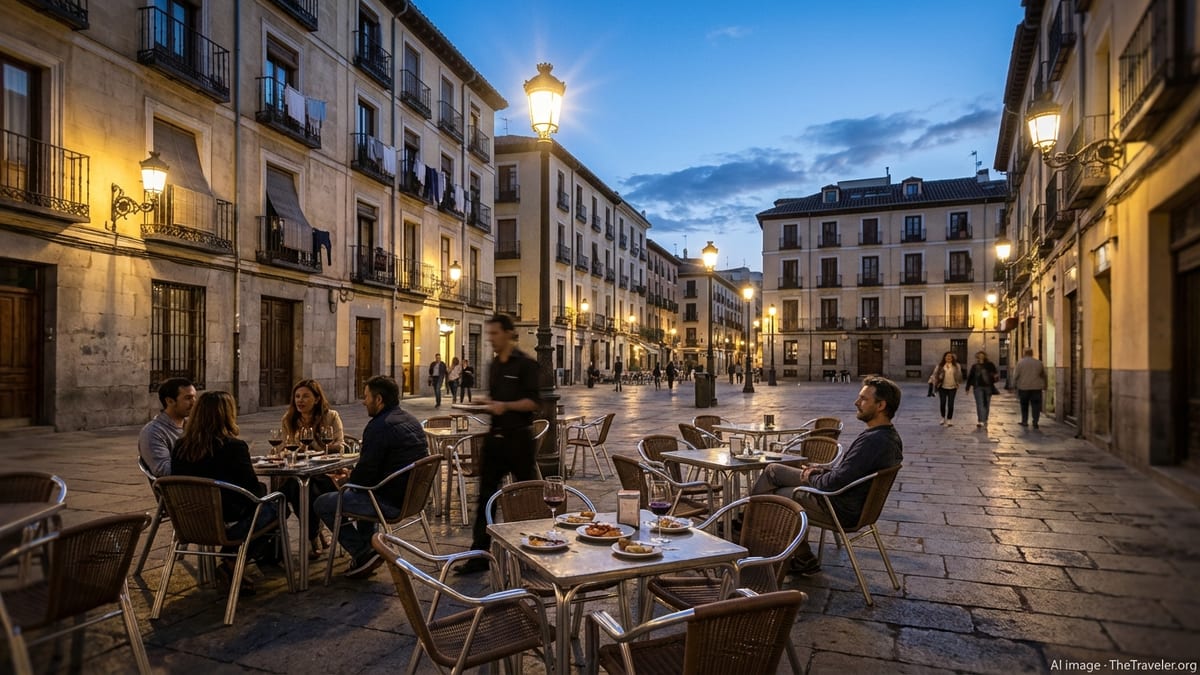
I landed in Madrid with the usual traveler’s checklist: see a few museums, eat tapas, find a nice viewpoint at sunset. The city greeted me with its familiar mix of grand boulevards and narrow streets, but what I remember most from those first hours was the sound. Conversations spilled out of bars into the street, plates clinked, a busker’s guitar floated up through the warm evening air. It felt energetic but not rushed, as if the city had decided that enjoyment was an obligation rather than an indulgence.
On paper, nothing extraordinary happened that first night. I checked into a modest guesthouse near La Latina, wandered out for a late dinner, and ordered with clumsy Spanish and plenty of pointing. Yet somewhere between the first sip of vermouth and the last shared plate of patatas bravas, I felt an unfamiliar sense of ease. The people at the next table folded me into their conversation without ceremony. Their curiosity was light but genuine, and I realized how rare it was, in my regular life, to sit at a table for hours without glancing at a clock.
That measured slowness loosened something in me. I had thought I was coming to Spain to escape routine, but it quickly became clear that I was also escaping the version of myself that measures days in emails answered and tasks completed. In those early hours in Madrid, the city quietly suggested that there was another way to move through time, and the suggestion struck me deeper than I knew.
The Rhythm That Rearranged My Days
The emotional shift I felt in Spain was not born from a single dramatic moment. It came instead from rhythm: the late breakfasts, long lunches, and evenings that did not really begin until the sky turned violet. The first afternoon I watched the city pause for its quiet hours, shop doors half closed and streets softening into silence, I felt impatience rise in me. Then, unexpectedly, that impatience turned into relief. For the first time in a long while, there was nothing to do but wait.
In that pause, I noticed details I usually overlook. A grandmother in a flowered dress slowly crossing a plaza, a child chasing pigeons, the smell of coffee drifting from a bar where two older men had clearly been discussing the same topics for years. The day was not divided into strict blocks of productivity and rest; instead, life and leisure braided together. By the third day, I found myself slipping into that cadence without effort, surrendering to late dinners and longer walks. The rigid timetable I had brought from home started to feel not efficient but strangely inhuman.
This new rhythm stirred up unexpected feelings. Part of me grieved for all the unhurried conversations I had rushed through in my own city, too focused on the next appointment to really be present. Another part felt quietly hopeful, as if Spain had handed me a practical blueprint for a less anxious life. It was not that people here lacked responsibilities. It was that daily pleasure was treated as necessary maintenance for the soul, not a reward postponed until everything else was done.
Meals That Turned Into Memories
It is almost impossible to separate my emotions in Spain from what I ate and where I ate it. Food there seemed less a mere meal and more an ongoing conversation, one that unfolded over shared plates and refilled glasses. Tapas in Madrid, pintxos in the Basque Country, paella near the Mediterranean coast: each experience nudged me further out of my habits and deeper into connection.
One night in Seville, a simple dinner turned unexpectedly intimate. I had found a small neighborhood bar, the kind with handwritten menus and old newspaper clippings on the wall. I perched at the counter and ordered salmorejo, tortilla, and a glass of local wine. The bartender, amused by my determined Spanish, corrected my pronunciation with a mix of patience and playful teasing. An older couple beside me joined in. Before long we were trading stories about families, work, and places we dreamed of visiting. None of us were in a hurry. Courses arrived slowly, conversation meandered, and time seemed to expand around the table.
Somewhere between laughter and shared silences, emotion crept in. I realized how starved I had been for exactly this kind of unstructured, face-to-face connection. Back home, I often ate in front of a screen or rushed through dinner on the way to another commitment. In Spain, meals pulled me firmly into the present. The warmth of the room, the clatter from the kitchen, the way everyone leaned in to hear one another over the background hum: it all combined into a feeling less like dining out and more like briefly belonging.
Moments of Stillness in Unexpected Places
While Spain is often described in terms of color and movement, some of my most emotional experiences there were quiet. I felt it on a misty morning in a coastal town, watching fishing boats return to harbor while the sky shifted from gray to pale gold. I felt it on a park bench in Valencia, where the old riverbed has been turned into a long green ribbon of gardens and paths. Joggers passed, children shouted in playgrounds, and above the trees, the city’s towers caught the afternoon light. I sat there for a long time, doing nothing in particular, and realized I did not feel the usual pressure to fill the moment.
In a hilltop village in Andalusia, I paused at an overlook where whitewashed houses cascaded down the slope and olive groves stretched to the horizon. A church bell marked the hour, followed by a brief, profound silence. It struck me then that travel often focuses on what we see, but Spain impressed itself on me through how it allowed me to feel. The country seemed to invite stillness, even within its busiest cities, and those pauses let buried thoughts surface.
In those quiet spaces, I found myself thinking about choices I had postponed, relationships that needed attention, and dreams I had considered impractical. The landscapes around me were undeniably beautiful, yet what moved me most was the permission they offered to consider my own life without distraction. Spain was not demanding that I change everything, but it was gently asking if the way I lived truly matched what mattered to me.
Language, Vulnerability, and Being a Beginner Again
My Spanish was functional but far from fluent, and that gap turned out to be one of the most emotional parts of the journey. Every conversation was an exercise in humility. I stumbled over verb tenses, confused similar words, and often needed people to repeat themselves. At home, I was used to expressing myself with precision. In Spain, I had to accept being clumsy, sometimes even silent.
That vulnerability created unexpected intimacy. When I searched for a word and failed, people often leaned in, meeting me halfway with patience, gestures, and guesses. Laughter smoothed over awkward moments. Shopkeepers corrected my phrasing without condescension. Fellow travelers and locals alike rewarded effort more than accuracy. Each small success, whether ordering coffee exactly how I liked it or following directions without needing them repeated, felt like a small but significant victory.
There was also an emotional honesty in speaking a language that was not my own. Without my usual verbal polish, I could not hide behind carefully chosen words. My gratitude, confusion, and curiosity all came out more directly. Somehow, that stripped-down communication made connections feel purer. I was reminded that being understood is one of the deepest human needs, and that it does not require perfect sentences, only a genuine desire to meet another person halfway.
Festivals, Flamenco, and the Shock of Shared Emotion
Before arriving, I associated Spain with certain images: swirling flamenco dresses, crowded festivals, fireworks over plazas. I half expected those experiences to feel theatrical, more performance than reality. Instead, when I encountered them in person, the emotion felt raw and unfiltered. Watching a small flamenco performance in a neighborhood venue in Seville, I was struck less by the technical skill and more by the intensity in the singer’s face. Each note carried something heavier than entertainment, as if memories and private sorrows were being pulled into the open.
The audience seemed to participate in that emotion, even if they sat in silence. There were moments when the room held its breath, when a single stomp of a heel or a sudden break in the singer’s voice felt like a confession. I did not understand every word, but I understood the feeling. It pressed against my chest, stirring griefs I had neatly filed away. It was a reminder that art, at its most honest, does not simply decorate life. It translates experiences that are too large or complex to name directly.
At a local festival in a small town, I experienced a different kind of shared emotion. Families filled the streets late into the night, children running in packs while older residents watched from plastic chairs outside building entrances. Music shifted from traditional to modern and back again. Strangers greeted each other with the warmth of long acquaintance. Standing there, swept into the current of movement and sound, I felt both deeply foreign and unexpectedly at home. It was moving to watch a community gather not for spectacle, but for the simple joy of being together.
Conversations That Quietly Changed Me
Looking back, the most lasting emotional impressions from Spain came from individual conversations, often brief, sometimes forgettable on the surface. A retired teacher on a train told me about growing up under a very different Spain, then living through decades of change. She spoke matter-of-factly about hardships and hopes, her tone neither bitter nor overly nostalgic. By the time I stepped off at my station, I felt newly aware of how recently some of the freedoms I took for granted had been won here.
Another afternoon, in a seaside café, I spoke with a young waiter who worked nights and studied during the day. He talked frankly about the challenges facing his generation, from precarious work to the rising cost of living. Yet he also described weekend visits to his grandparents’ village, where long lunches stretched into the evening and everyone still knew everyone else by name. His story captured the tension I felt everywhere in Spain: a country negotiating modern pressures while trying to hold on to a culture of connection.
These exchanges chipped away at the distance between tourist and local. They also made me rethink my own assumptions about success and security. Listening to people speak about their lives with a blend of realism and resilience, I realized how often I framed my own choices in terms of accumulation and control. Spain, in the voices of its people, suggested a different equation: that time, relationships, and small daily pleasures might be forms of wealth at least as important as anything measurable.
The Takeaway
When I boarded my flight home, I carried more than souvenirs and photos. I carried the weight of quiet questions Spain had asked me, questions about how I spend my days and what I prioritize when no one is watching. I had gone looking for sunlight and color and found them in abundance, but I had also found something subtler: a way of living that folds joy into the ordinary and treats connection as essential, not optional.
My experience in Spain felt more emotional than I ever expected because the country did not invite me to stand at a distance and observe. It pulled me into its daily rituals, its late-night streets, its shared tables and spontaneous conversations. It asked me to be vulnerable in another language, to sit still in plazas without purpose, to feel the full force of music and community. In doing so, it held up a mirror to the life I had left behind and gently asked whether it still fit.
I cannot claim that a single journey transformed everything. Real change is quieter and slower than travel brochures suggest. But Spain did leave a lasting imprint, a kind of internal reference point I return to whenever my days start to feel too compressed or my priorities too narrow. In my mind, there is always a seat waiting in a sunlit square, a plate on the table, and time enough to stay until the conversation naturally comes to an end.
FAQ
Q1. Is Spain an emotional destination for solo travelers?
Yes, Spain can be deeply emotional for solo travelers because its social culture, open public spaces, and long, lingering meals make it easy to connect with people and with yourself.
Q2. Which Spanish cities feel especially moving on a first visit?
Many travelers find Madrid, Barcelona, Seville, Granada, and coastal towns in the Basque Country or Costa Brava particularly moving for their mix of history, community life, and scenery.
Q3. Do I need to speak Spanish to have meaningful experiences?
No, but learning a few basic phrases helps. Even simple efforts in Spanish often lead to warmer interactions and a greater sense of belonging.
Q4. How can I connect more deeply with local culture in Spain?
Spending time in neighborhood bars, joining evening walks through plazas, attending small cultural events, and staying in family-run accommodations all help foster deeper connections.
Q5. Are smaller towns in Spain as emotional as the big cities?
Yes, sometimes even more so. Smaller towns often offer slower rhythms, stronger community ties, and quieter moments that invite reflection and emotional openness.
Q6. What surprised travelers most about daily life in Spain?
Many are surprised by the relaxed pace, later mealtimes, the importance of socializing in public spaces, and the way work and leisure are more evenly woven together.
Q7. Can festivals and flamenco feel overwhelming for sensitive travelers?
They can be intense, but in a positive way. If you are sensitive, choose smaller venues or local festivals, and allow yourself breaks between highly charged experiences.
Q8. How long should I stay in Spain to feel this emotional impact?
Even a week can be meaningful, but two weeks or more allow you to slow down, settle into a rhythm, and move beyond surface impressions.
Q9. Is it safe to explore Spain alone in the evenings?
Most Spanish cities feel safe in the evenings, especially in busy central areas, but as anywhere, it is wise to stay aware, stick to well-lit streets, and follow local advice.
Q10. How can I bring Spain’s slower, more connected lifestyle back home?
You can recreate elements by lingering over meals, meeting friends in public spaces, reducing screen time during social moments, and carving out regular pauses in your day.