

I thought I knew what to expect from Wisconsin. Like many outsiders, I pictured endless dairy farms, polite small talk at gas stations, and maybe a ballgame in Milwaukee if time allowed. Then I set out on a slow road trip that cut diagonally across the state, from the Mississippi River to Lake Michigan and up toward the far northern reaches of Lake Superior. What I found was a state that kept surprising me, mile after mile, with wild shorelines, unconventional food traditions, layered Indigenous and immigrant histories, and a quieter, more spacious kind of travel than I was used to.
The First Surprise: How Wild the Water Feels
The map tells you Wisconsin is a water state, bordered by Lake Michigan and Lake Superior and stitched together with rivers and lakes. It is only when you stand at the edge of those waters that the scale really sinks in. On the Lake Superior shore, watching waves roll in near Bayfield, the scene could easily be mistaken for an ocean coastline, with a horizon that seems to have no end and weather that changes by the hour.
Driving the Lake Superior shoreline on the Bayfield Peninsula, I pulled off at small roadside parks and tribal lands where the forest runs right up to the sand. The air had a cool, iron tang, and the water, even in midsummer, felt startlingly cold. It was not a place for a lazy float. It was a place that reminded you that these are inland seas, deep and unpredictable, and that life in the nearby communities has always been shaped by their moods.
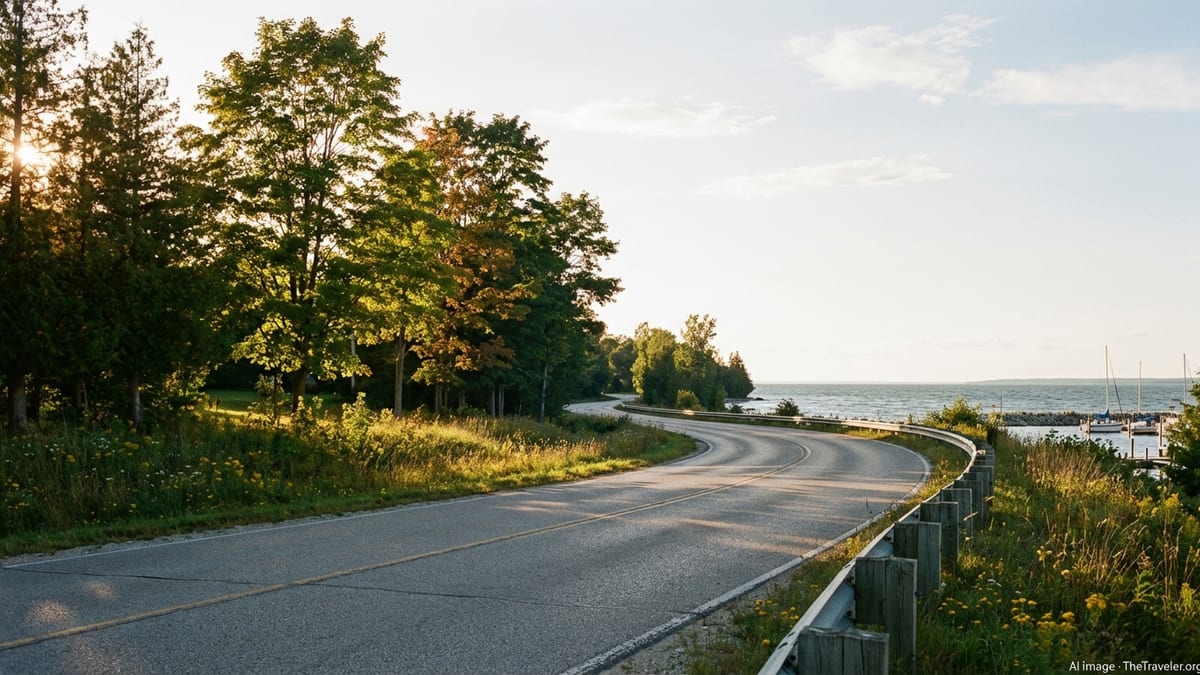
On Lake Michigan, the character shifted but the element of surprise remained. In Door County, bays were calm enough for paddleboards in the morning, only to be whipped into whitecaps by afternoon winds. Limestone cliffs rose straight from the water in some stretches, while elsewhere the shore softened into cedar lined beaches. I had expected a pleasant Midwestern lake. I got something closer to a rugged maritime coastline, threaded with lighthouses and working harbors.
Even the interior lakes could be unexpectedly dramatic. A short walk in a county park could end with a view of wave sculpted caves or a narrow staircase tumbling down to a hidden cove. The more time I spent by the water, the more I understood why local life, festivals, and even the state’s scenic byways are organized around these blue edges.
Landscapes That Refused to Match the Stereotypes
Before this trip, when someone mentioned Wisconsin, I pictured straight roads through flat cornfields. Those exist, but the most memorable parts of the drive were anything but flat. The western edge of the state, along the Mississippi River and into the Driftless Area, looked like it had been lifted from another part of the country entirely, with steep bluffs, winding valleys, and hillside farms clinging to curves instead of grid lines.
The Wisconsin Great River Road, which follows the Mississippi along the western border, twisted between high bluffs and small river towns. I would climb a short trail to a bluff top overlook and look down on a braided river framed by islands and sandbars. Barges moved slowly below, and train horns echoed off the rock. Agriculture still framed the view, but it was layered into the contours of the land instead of flattening it.
Farther east, the so called Driftless Area continued that sense of surprise. Here glacial ice never smoothed the land, so the hills roll and fold in on themselves. Roads dipped into narrow hollows where dairy farms, orchards, and tobacco sheds sat in the shadows of wooded ridges. This was not a backdrop. It felt intimate and almost hidden, the kind of landscape you only learn by driving slowly and turning off the highway whenever a town name on the sign intrigues you.
By the time I reached central Wisconsin, even the supposedly ordinary farmland had taken on a different character. Fields of corn and soy were broken up by patches of oak savanna, cranberry marshes, and pine plantations. The state parks I stopped at were varied enough that it was hard to believe they were all in one state, let alone a state whose national image still leans heavily on cheese and football.
The Quiet Power of Small Towns and Tribal Lands
Another surprise was how often the most memorable moments happened in communities with only a few hundred or a few thousand residents. On the Bayfield Peninsula, I followed signs to tribal lands managed by the Red Cliff Band of Lake Superior Chippewa and found wide, undeveloped beaches framed by forest. Interpretive panels told stories of treaties, displacement, and resilience. It was not a polished attraction, and that was part of what made it so powerful. It felt like being allowed to walk into a living story rather than a curated exhibit.
In river towns along the Mississippi, main streets were lined with brick storefronts and faded painted signs from another era. Some buildings held new coffee shops and art galleries, while others sat empty, slowly being reclaimed by time. I would stop for an hour and end up staying for three, talking with locals who were both realistic and hopeful about tourism. They wanted visitors, but they wanted the kind who would walk the side streets, spend time in the local museum, and understand that these are working communities, not theme parks.
Up north, on the Lake Superior shoreline, the presence of tribal nations was woven into everyday life. A roadside stand advertised wild rice harvested from local waters. A small grocery carried whitefish caught in the same lake that tourists sail for fun. In some places, tribal national parks and protected areas offered access to trails and beaches that felt both cared for and respectfully simple. These were places where visitors were clearly welcome, but where the land’s deeper meaning came first.
What struck me most in these smaller communities, whether tribal or non tribal, was the sense of pride in place, often expressed quietly. A volunteer docent unlocking a tiny lighthouse museum after hours because I had arrived just as they were closing. A park ranger suggesting a less known overlook instead of the crowded one. A cafe owner circling their favorite stretch of back road on my map. The hospitality was real, but it was grounded in a desire to share the places they loved on their own terms.
Supper Clubs, Fish Boils, and Other Unexpected Food Traditions
I expected to eat cheese curds in Wisconsin, and I did, often and happily. What I did not anticipate was how the state’s food traditions would shape my days on the road and give me such a clear window into local culture. The first revelation was the supper club, a distinctly regional institution that still thrives in small towns and on lake shores across the state.
At a supper club on a wooded lake, the evening began at the bar, not the table. Locals nursed brandy old fashioneds, a staple of Wisconsin cocktail culture, while catching up with neighbors and comparing notes on fishing conditions or high school sports. Dinner itself was unrushed and generous, often featuring prime rib, walleye, or lake perch, with a relish tray and baked potatoes that could have been lifted straight from another decade. It felt like a weekly ritual rather than a novelty, and being folded into it, even as an outsider, was one of the most authentic experiences of the trip.
On the Lake Michigan side, I finally experienced another regional tradition I had read about but never quite understood until seeing it in person: the Door County fish boil. At a small outdoor venue, a local boil master tended a large kettle of water over an open fire, adding potatoes, onions, and locally caught whitefish. As the crowd gathered, he stoked the flames until the pot erupted in a dramatic boil over, sending a plume of water and fish oils into the air. A few minutes later, the fish was ladled into trays, served with melted butter and coleslaw. The entire event lasted less than an hour, but it felt like stepping into a living piece of maritime history.
Beyond these headline experiences, food along the way often reflected the state’s mix of cultures. In one town, I found a bakery turning out Swiss style pastries that nodded to the community’s European roots. In another, a cafe served wild rice soup and fry bread tacos, linking everyday lunch to Indigenous foodways. Roadside stands offered cherries in Door County, apples in the Driftless Area, and berries in the north, each tied to the local growing season and microclimate. I came expecting to eat well, but I did not expect my meals to connect so directly with the places I was passing through.
State Parks and Scenic Byways That Feel Bigger Than Their Map Pins
When I began planning this trip, state parks were mostly dots on a map, places to break up the drive and stretch my legs. On the ground, they became some of the most compelling destinations in their own right, linked together by scenic byways that turned the drives between them into part of the experience rather than gaps between attractions.
On the Door Peninsula, a state park overlooking Green Bay offered sweeping views from high limestone bluffs, a historic lighthouse, and miles of shoreline trails. Campsites tucked into the trees filled quickly on summer weekends, a reminder of how deeply rooted camping culture is in Wisconsin families. In other parks, trails wound through dunes, boreal forests, and glacial kettles, each one highlighting a different chapter in the state’s geological story.
The formal scenic byways, designated routes that highlight landscapes and history, exceeded my expectations. The Great River Road along the Mississippi, the Lake Superior route on the Bayfield Peninsula, and lake focused drives in Door County were not just pleasant highways. They were curated experiences, often with wayside exhibits, small museums, and historic markers that encouraged me to slow down and look closer. What impressed me most was how much these routes were shaped by local communities and tribal governments who wanted to tell their own stories along the way.
Practical surprises came, too. Some of the most popular parks now use reservation systems for campsites and, in peak seasons, even day use parking. While this can take a bit of spontaneity out of a road trip, it also reflects the reality that interest in these natural places is growing. For a traveler, it means that planning ahead pays off, but it also means that even on a weekday morning, you may find yourself sharing a trail with families, birders, and hikers who care deeply about these landscapes.
Weather, Seasons, and the Art of Slowing Down
Another lesson from this trip was that Wisconsin is a state that rewards patience, especially when it comes to weather. In the course of a single afternoon on Lake Superior, I watched the sky shift from clear blue to low gray clouds to a golden sunset that exploded across the water. A sunny morning hike along a bluff trail could end in a chilly mist by lunch. Farther inland, summer thunderstorms rolled across the fields in dramatic fashion, then gave way to washed clean, luminous evenings.
Locals took this in stride. Nearly every conversation about plans included a quick glance at the sky and a contingency suggestion: a museum in case of rain, a sheltered lakeside trail if the wind came up, or an inland drive when fog settled thick along the water. Instead of fighting these shifts, I learned to adapt. A foggy morning that obscured a lighthouse became the perfect time for a slow walk in the forest. A windy afternoon by the lake turned into a chance to watch kite surfers and listen to waves pound the shore.
Traveling outside of peak summer added another layer of surprise. Early autumn in the north meant quieter campgrounds and small towns beginning to brace for colder months. It also meant that drives along the Mississippi or the Bayfield Peninsula were framed by leaves that seemed to change color by the day. Even in shoulder seasons, the state did not close down. It simply softened, replacing festivals and crowded marinas with harvested fields, migrating birds, and the smell of woodsmoke from cabins tucked back along gravel roads.
All of this nudged me into a different pace. Instead of racing to check off sights, I found myself lingering on docks, watching weather roll in, or accepting that a ferry delay or rainstorm was not an interruption but part of the story. Wisconsin, it turned out, is well suited to this slower style of travel, one built more around mood and place than rigid schedules.
Urban Anchors: Milwaukee and Madison Defying Expectations
Because this was a road trip, I had framed Wisconsin in my mind primarily as a rural state. Visiting Milwaukee and Madison on the same journey upended that assumption. Each city offered a distinct personality, and both served as cultural anchors that put the rest of the state in context.
Milwaukee, perched on Lake Michigan, presented itself as a working port city with a strong brewing heritage and a growing creative scene. Walking along the lakefront, I passed sailboats, public art installations, and families gathered in waterfront parks that felt as much a part of daily life as any neighborhood square. Neighborhoods away from the lake mixed historic brick buildings with new developments, small galleries, and cafes that reflected the city’s diverse communities.
Madison felt entirely different. Built on an isthmus between two lakes, it pulsed with the energy of a university town and the gravity of a state capital. Biking was clearly part of everyday life, with paths threading through parks and along the water. Farmers markets and food carts highlighted produce from the same rural counties I had just driven through, creating a visible and literal bridge between city and countryside. Civic life was on display, too, from public art to protests to community events staged on the steps of the capitol building.
What surprised me in both cities was how seamlessly urban life connected back to the broader landscape I had just explored. People talked about heading to cabins up north on weekends, about fall drives along the Mississippi, about fishing trips near Bayfield or camping reservations in popular state parks. Far from being separate worlds, the cities and small towns felt like different chapters in the same ongoing story of how people inhabit this remarkably varied state.
The Takeaway
Driving across Wisconsin changed my sense of what Midwestern travel can be. I arrived expecting a familiar mix of farmland, friendly towns, and a few well known lakes. I left with memories of wild shorelines that felt like ocean coasts, winding roads through glacially sculpted hills, and food traditions that carried the weight of both Indigenous histories and immigrant cultures.
The biggest surprise was not any single lighthouse, bluff, or festival. It was how consistently the state rewarded curiosity. Turning off a highway to follow a wood violet sign for a scenic byway, saying yes to a supper club recommendation from a stranger, or lingering at a tribal beach rather than rushing to the next viewpoint often led to the most meaningful experiences.
If there is one lesson I took from this journey, it is that Wisconsin is best approached with an open itinerary and a willingness to be surprised. The famous places are worth seeing, but the quiet stretches in between, the conversations at rural gas stations, the weather watching on docks and piers, and the small museums and parks that rarely appear on top ten lists are where the state reveals itself most fully. For travelers ready to slow down and look a little closer, Wisconsin offers far more than its stereotypes suggest.
FAQ
Q1. What is the best time of year to drive across Wisconsin?
Late spring through mid autumn is ideal, with June to September offering warm weather and October adding vivid fall colors but cooler temperatures.
Q2. How many days should I plan for a Wisconsin road trip like this?
A week allows for a relaxed pace across the state, though you can sample key highlights in four to five days if you focus on one or two regions.
Q3. Do I need to reserve campsites and lodging in advance?
Yes. Popular state parks and resort towns fill up months ahead for summer and fall weekends, so advance reservations are strongly recommended.
Q4. Is driving in winter across Wisconsin advisable for visitors?
Winter driving can be challenging due to snow and ice. It is best for experienced winter drivers with flexible plans and proper cold weather gear.
Q5. Are Wisconsin’s scenic byways well marked for travelers?
In general they are clearly signed, but having an updated map or navigation app and checking local tourism resources will make wayfinding easier.
Q6. Can I visit tribal lands and parks as a non Native traveler?
Yes, many tribal parks and attractions welcome visitors. It is important to respect signage, stay on designated areas, and follow local cultural guidelines.
Q7. What should I pack for a multi day Wisconsin road trip?
Layered clothing, rain gear, sturdy walking shoes, insect repellent, sun protection, and a small cooler for snacks and local produce are all helpful.
Q8. Is it easy to find local food like fish boils and supper clubs?
In regions such as Door County and lake districts, these traditions are common. Asking locals and checking community event boards is the best strategy.
Q9. Are there many opportunities for hiking and paddling along this route?
Yes. State parks, county parks, and national lakeshore areas offer abundant trails and water access points suitable for a range of skill levels.
Q10. Is Wisconsin a good destination for travelers who prefer slower, scenic travel?
Very much so. The mix of small towns, scenic byways, accessible nature, and relaxed food culture makes it well suited to unhurried exploration.