

I arrived in Manitoba expecting a gentle, flyover province: grain fields, a small capital city, maybe a lake or two. Instead, traveling across this central slice of Canada revealed one of the most surprising trips I have taken in years. Manitoba felt both rugged and refined, shaped by big skies, complex histories and a tourism industry that is evolving quickly in the face of climate change and surging domestic travel. Here is what surprised me most as I moved from Winnipeg’s riverside neighborhoods to boreal forest, prairie lakes and the windswept shores of Hudson Bay.
Winnipeg: A Capital City With More Edge Than I Expected
Like many outsiders, I had long thought of Winnipeg in shorthand: a cold city on the prairie, a place you fly over on the way to somewhere else. On the ground, that stereotype dissolved almost immediately. The city was more layered and cosmopolitan than I imagined, with a dense arts scene, a culinary landscape that draws on communities from the Philippines to Ukraine, and an unmistakable energy that comes from being a gathering point for much of northern Canada.
What surprised me first was how much the city is defined by water. Winnipeg sits at the meeting of the Red and Assiniboine rivers, and that confluence has been a crossroads for trade and ceremony for thousands of years. Walking along the riverside paths, I kept encountering small markers and artworks referencing these long histories. It shifted my sense of the city from an isolated outpost to an old meeting place that has simply taken on modern clothing.
I was also taken aback by how visible Indigenous cultures are in everyday Winnipeg life. This was not limited to galleries or museums, but extended to street murals, restaurant menus and public events. The result was a more honest, contemporary portrait of a city still working through its past, rather than the polished, simplified version that many destinations present to visitors.
Winnipeg’s festival calendar added another unexpected layer. I timed my visit around winter, expecting quiet streets and closed attractions. Instead, I found snow sculptures, outdoor music and crowds braving subzero temperatures to celebrate French-Canadian and Métis heritage at midwinter events. The city seemed to lean into its climate rather than apologize for it, turning a potential weakness into a source of identity.
Festival du Voyageur and Winter Culture: Choosing Joy in the Cold
Manitoba’s winters carry a certain reputation among Canadians and foreigners alike, and I approached February with cautious curiosity. The surprise was not that it was cold, but that so many people looked genuinely delighted to be outside. At the heart of this attitude in Winnipeg is Festival du Voyageur, a midwinter celebration that embraces snow, ice and Francophone culture as assets instead of obstacles.
Walking into the festival grounds, I expected a small regional gathering. Instead I found a busy site with music stages, snow sculptures, food tents and families bundled in bright parkas. Volunteers, performers and staff create something that feels much larger than the city’s size might suggest. It is a reminder that Manitoba is not merely enduring winter. It has built traditions and businesses around making those months memorable for visitors.
The festival also reshaped my understanding of Manitoba’s French and Métis roots. Performances and exhibits highlighted the role of voyageurs and fur trade routes, but in ways that connected past and present. Sitting in a crowded tent listening to contemporary francophone bands, eating local comfort food and watching children learn traditional dances, it became clear that this was living culture rather than re-enactment.
Perhaps most surprising was the sense of welcome. Festivals can sometimes feel like events put on for tourists. Here, I felt more like a guest at an enormous neighborhood party that happened to have international visitors in the crowd. That grounded, homegrown feeling is something Manitoba seems determined to preserve as tourism numbers rise year after year.
Northward to Churchill: Wildlife Encounters With More Complexity Than Hype
Churchill is often described in superlatives: polar bear capital of the world, one of the planet’s best places to see northern lights, a hub for beluga whales in summer. Those descriptions are not exaggerated, but what surprised me was the nuance behind the glossy wildlife images that dominate promotional material. Traveling there from Winnipeg felt less like a side trip and more like entering another country entirely.
Stepping off the plane, the first thing I noticed was the stark, treeless horizon and the immediate sense of exposure to the elements. It drives home how precarious life is this far north, for humans and animals alike. The standard polar bear tours deliver exactly what visitors hope for: close, carefully managed encounters that leave you in awe of the animals’ power. Yet guides consistently framed those moments within conversations about sea ice, changing migration patterns and the challenges of running remote lodges responsibly.
Another surprise was how much attention operators are now paying to low-impact tourism. In recent years, Manitoba-based companies have invested in smaller-group experiences, eco-lodges accessible only by tundra vehicles or planes, and walking safaris that emphasize respectful distance rather than adrenaline. The tone is increasingly about coexisting with wildlife instead of conquering it, and that shift is reshaping the reputation of Churchill from a niche adventure stop to a global example of how Arctic tourism can evolve.
Beyond the wildlife, I found Churchill’s community itself unexpectedly engaging. Local shops, small museums and cultural centers told stories of Indigenous life, military history and the importance of the rail line that links the town to the south. Talking with residents, I heard repeated references to how visitor numbers, while modest compared with big-city destinations, support year-round jobs and justify investments in new accommodations and attractions.
Land of Lakes and Quiet Parks: Solitude Closer to the Cities
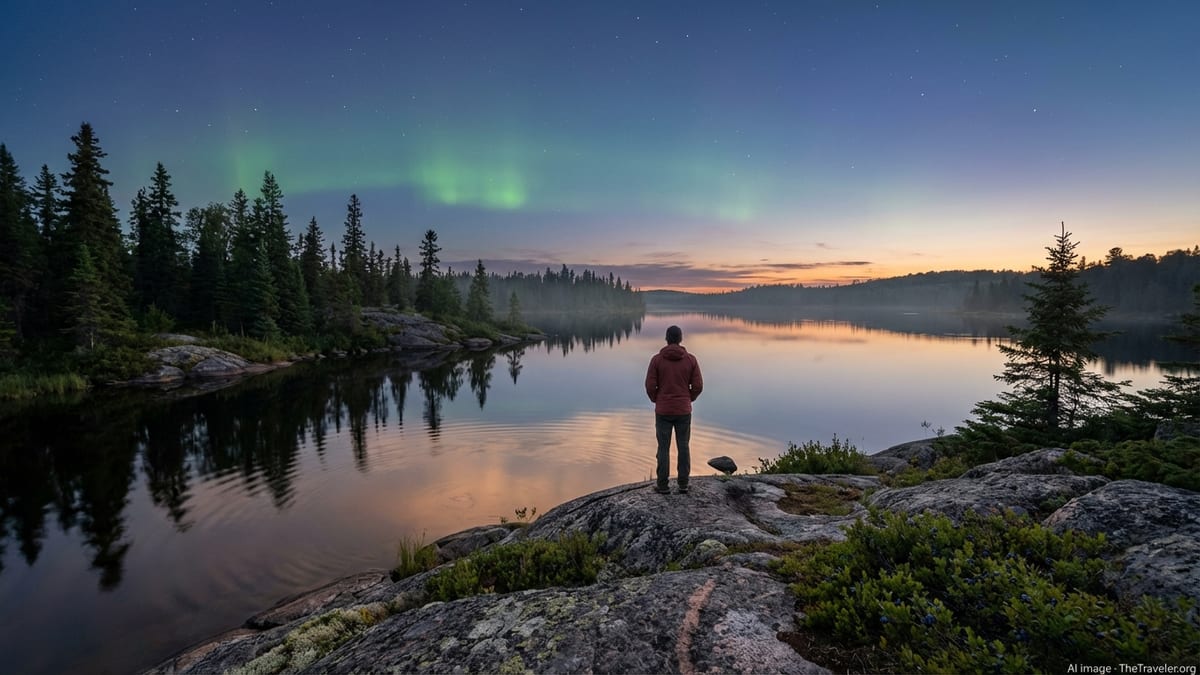
Before arriving, I had heard that Manitoba was a “land of 100,000 lakes,” but I assumed that phrase was mostly a slogan. On the ground, it felt like an understatement. Within a day’s drive of Winnipeg, I encountered chains of clear, glacial lakes, rock outcrops and thick forests that reminded me more of northern Ontario than open prairie. What surprised me most was how easily I could step into solitude, even during peak vacation periods.
Provincial parks that appeared regularly in local conversations, including Whiteshell and others along the eastern edge of the province, offered well-developed campgrounds and trails while still feeling uncrowded compared with more famous Canadian destinations. On weekday mornings I could walk for long stretches and encounter only a handful of people. For travelers used to heavily marketed national parks elsewhere, the relative quiet is one of Manitoba’s most underrated luxuries.
Another revelation was how central fishing remains to Manitoba’s tourism economy. Local operators talk about returning guests who have visited the same lodges for decades, lured back by healthy fish populations and the tradition of multi-generational trips. Yet, on the lakes I visited, the atmosphere felt far from the trophy-driven scenes that sometimes define the sport. Families paddled canoes, children learned to cast from docks, and visitors from abroad blended into a largely domestic crowd taking advantage of their own backyard.
The infrastructure supporting this outdoor culture is evolving. Recent campaigns from provincial tourism officials have focused on drawing both Manitobans and out-of-province visitors back to parks and resorts after challenging wildfire seasons. The message is to travel with intention: support local operators, respect closures when they occur, and be ready to adjust plans to changing conditions.
Wildfires and Climate Realities: A Province Learning to Adapt
One aspect of Manitoba that I did not anticipate confronting so directly was wildfire. In recent seasons, the province has seen severe fire activity, particularly in the boreal regions to the north and east. During my travels, conversations with locals made it clear that wildfires are no longer viewed as rare disasters, but as recurring events that shape travel plans, business decisions and community life.
Provincial authorities have at times declared states of emergency, evacuating entire communities and closing multiple parks and campgrounds. For tourists, this can mean sudden itinerary changes and smoky skies that obscure otherwise spectacular views. For residents, it has meant dislocation, economic uncertainty and hard questions about how to rebuild more resiliently. As a visitor, I was struck by how openly people discussed these topics and how quickly they emphasized that large parts of the province remained open and safe to explore, even during difficult fire seasons.
What surprised me most was how directly Manitoba’s tourism sector is responding. Industry groups and the provincial tourism agency have launched campaigns aimed at steering visitors toward communities and regions that are operating normally, while clearly communicating closures and fire restrictions elsewhere. Operators talked about rethinking building materials, diversifying seasons so they are less vulnerable to summer disruptions, and working with Indigenous partners whose knowledge of the land and fire management techniques offers critical insights.
Traveling through these landscapes with recent fire scars visible on the horizon was sobering, but it also underscored how dynamic Manitoba’s wilderness is. New growth already carpets some burned areas, and locals speak of a long-term commitment to balancing visitor access with ecosystem health. For travelers, the lesson is to approach Manitoba with flexibility, check current advisories and understand that part of the story of this place now includes living with fire.
Indigenous Tourism and Storytelling: Deeper Context Than a Typical Road Trip
Perhaps the most meaningful surprise of my journey was how many opportunities there were to engage with Indigenous-led tourism experiences. Across Manitoba, from the capital region to smaller communities, a growing number of businesses and cultural centers are offering guided walks, storytelling sessions, craft workshops and interpretive tours grounded in local Nations’ perspectives.
In recent years, coordinated investment from provincial and federal partners has helped accelerate this growth. Funding agreements and dedicated tourism programs aim to support new Indigenous-owned businesses, expand cultural sites and create jobs in communities that choose to welcome visitors. On the traveler’s side of the equation, this means it is increasingly possible to design an itinerary that centers Indigenous voices rather than treating them as an optional add-on.
Visiting one museum dedicated to the history of residential schools, I was struck by how carefully staff framed the experience. The focus was not on shock value, but on education, reflection and dialogue. Travelers were encouraged to move at their own pace, to ask questions respectfully and to consider how tourism might support reconciliation when done thoughtfully. Elsewhere, on guided outings along rivers and forest trails, knowledge keepers shared teachings about medicinal plants, traditional technologies and the significance of certain landscapes.
These experiences changed the way I saw Manitoba’s scenery. Lakes, plains and forests that might have simply registered as “pretty” on an earlier road trip became layered with stories of migration, treaty-making and survival. For visitors willing to listen, Indigenous tourism in Manitoba offers a chance to understand the province on its own terms, rather than only through the lens of recent settlement.
Tourism on the Rise: A Quiet Province With Growing Popularity
Another surprise lay in the numbers behind Manitoba’s seemingly quiet façade. Tourism here has quietly reached record levels in recent years, with visitor spending exceeding previous highs and domestic travelers making up the vast majority of trips. This is partly due to Canadians choosing to explore their own country more, and partly the result of deliberate efforts by the province to raise its profile as a four-season destination.
What stands out is the balance Manitoba is trying to strike. Rather than chasing mass tourism, the province seems intent on promoting experiences that fit its character: smaller lodges instead of mega-resorts, dark-sky viewing instead of crowded nightlife districts, independent operators instead of a wall of global chains. Marketing campaigns highlight road trips, lakeside cabins, wildlife watching and cultural festivals that can absorb more visitors without overwhelming local communities.
The economic stakes are significant. Visitor spending now contributes well over a billion dollars annually to Manitoba’s economy, supporting tens of thousands of jobs directly and indirectly. At the same time, recent wildfire seasons have shown how fragile that progress can be when parks close and air quality deteriorates. Tourism leaders speak increasingly about sustainability, not just in environmental terms but in how to keep small businesses viable, protect cultural integrity and make sure growth does not come at the expense of residents’ quality of life.
As a traveler, I felt this balance in subtle ways: friendly staff who seemed genuinely glad for the business but not yet exhausted by overtourism, attractions that still had room to breathe and an overall sense that Manitoba remains closer to the beginning of its tourism story than the end. For those willing to look beyond better-known Canadian provinces, that makes it a particularly compelling time to visit.
The Takeaway
My journey through Manitoba overturned nearly every assumption I brought with me. I expected a brief, functional stop on the way to somewhere else and instead found a destination that kept unfolding new layers: a capital city that embraces its winter identity and multicultural roots, a northern outpost where world-class wildlife encounters come with serious conversations about climate, lake country that offers solitude just a few hours from urban life, and a tourism sector that is confronting the realities of wildfires and reconciliation head-on.
What surprised me most was not any single experience, but the coherence of the whole. Manitoba is still less visited than some of Canada’s more famous regions, yet it is investing in Indigenous tourism, in sustainable outdoor infrastructure and in campaigns that invite travelers to explore responsibly. The province feels both grounded and in motion, aware of its challenges but confident in what it has to offer.
If you arrive expecting only flat horizons and long highways, you will certainly find those. But you will also find northern lights flickering above small towns, stories that stretch back millennia, and communities that continue to welcome visitors even after difficult seasons. Travel here with curiosity, a flexible plan and a willingness to listen, and Manitoba may surprise you as much as it did me.
FAQ
Q1. When is the best time of year to visit Manitoba for a first trip?
The best season depends on what you want to see. Summer offers lake trips and festivals, autumn brings colorful foliage and fewer bugs, winter features snow-based events and northern lights, while spring is quieter but good for shoulder-season deals.
Q2. How many days do I need to experience both Winnipeg and the lake country?
For a balanced first visit, plan at least five to seven days. Spend two or three nights in Winnipeg for museums, food and festivals, then add several nights in a nearby provincial park or lakeside community.
Q3. Is it worth going all the way to Churchill for polar bears or northern lights?
If your budget and schedule allow, Churchill can be a once-in-a-lifetime experience. Polar bear viewing is typically strongest in late fall, while northern lights and beluga whale trips anchor winter and summer visits.
Q4. How concerned should I be about wildfires affecting my trip?
Wildfires can lead to park closures and smoky conditions, especially in summer, but impacts vary by region and year. Check provincial advisories close to your travel dates and build flexibility into your plans.
Q5. Do I need a car to explore Manitoba outside Winnipeg?
A car makes exploring far easier, particularly for provincial parks and smaller communities. While some tours and shuttles exist, having your own vehicle gives you more options if conditions or plans change.
Q6. Are Indigenous tourism experiences easy to include in an itinerary?
Yes. More Indigenous-owned tours, cultural centers and accommodations are emerging across the province. It is increasingly straightforward to add guided walks, storytelling sessions or museum visits that center Indigenous perspectives.
Q7. How cold does it really get in winter, and can visitors handle it?
Temperatures can drop well below freezing, often far into the minus range, especially with windchill. With proper layering, insulated footwear and short warm-up breaks indoors, most visitors find winter activities manageable and surprisingly enjoyable.
Q8. Is Manitoba a good option for travelers who dislike crowds?
Generally, yes. Even as visitor numbers rise, most parks, lakes and smaller communities feel less crowded than major Canadian hotspots. Weekdays and shoulder seasons offer the most solitude.
Q9. What kind of budget should I expect compared with other Canadian provinces?
Prices vary, but many travelers find Manitoba slightly more affordable than some coastal or mountain destinations in Canada, especially for accommodations, dining and activities outside peak holiday periods.
Q10. How can I make my trip more sustainable and supportive of local communities?
Choose locally owned lodging and tours, travel outside the busiest weeks when possible, follow fire and park guidelines carefully, and seek out Indigenous-led experiences and small businesses that keep tourism benefits close to home.