

I spent several days in Frankfurt trying to get a feel for how its old town charm, heavyweight museums, and glass-and-steel skyline actually work together in real life. On paper, Frankfurt is often reduced to “banks and business,” a place to change planes rather than linger.
My experience was more nuanced. I found a city that is efficient but not exactly warm, visually striking but sometimes oddly characterless, with pockets of real atmosphere around the old town and the river. It was not love at first sight, but over a few days, it did grow on me, and I left with a clearer sense of what Frankfurt is really good at and where it still falls short as a city break destination.
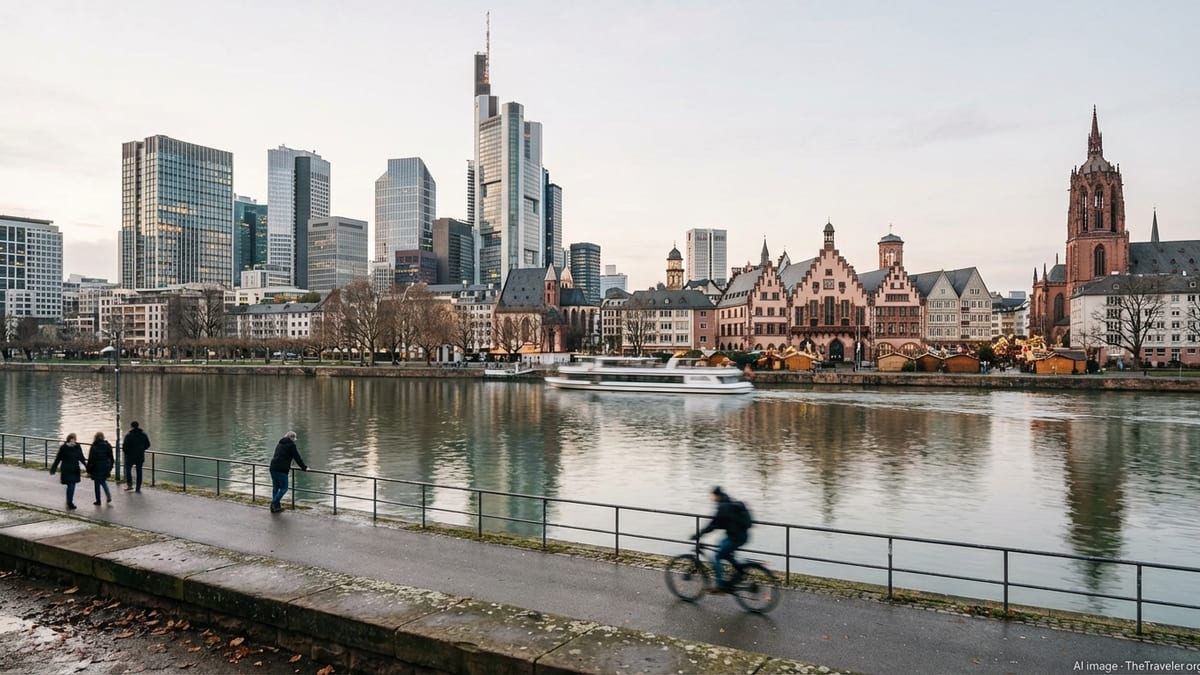
First Impressions and Getting Around
Arriving at Frankfurt Airport, I was reminded that this is one of Europe’s major transit hubs, and it feels like it. Navigation is functional rather than friendly, but the signage to the regional trains is reasonably clear if I paid attention. I used the S-Bahn from the airport to reach the city center; it was quick and more affordable than a taxi, though not exactly cheap once I converted the price and remembered that the Deutschlandticket now costs over sixty euros a month, which says something about general transport costs. Still, the connection to Hauptbahnhof and central stations like Hauptwache worked reliably and set the tone for a city where public transport is the backbone of everyday life.
The first thing that struck me above ground was the contrast between bulky postwar blocks, mirrored office towers, and a scattering of older facades. Frankfurt does not reveal its charm immediately. Coming out of the main station, I walked into an area that felt rough around the edges: a mix of commuters, people clearly struggling, and the usual fast food outlets and kiosks. It was not dangerous, but it was not particularly pleasant either, and I found myself moving quickly toward the river and the more historic core.
Once I got my bearings, I found the U-Bahn and trams straightforward to use. Ticket machines were not completely intuitive to a visitor, especially if I wanted a specific combination of zones, but basic single and day tickets were obvious enough. The frequency of trains and trams was excellent on weekdays, less so late at night. I noticed that fares and passes have crept up in price, and while I appreciated the integrated system, it is not a budget traveler’s dream. On the other hand, many of the central sights are within walking distance of each other, and once I realized that, I spent more time on foot than on trains.
Frankfurt’s Rebuilt Old Town: Charming Facade or Authentic Heart?
The old town around Römerberg was where I expected to feel that I had truly arrived in “historic” Frankfurt. What I found was both attractive and slightly uncanny. The square itself, with the stepped façade of the Römer city hall and a row of half-timbered houses, looks like every photograph you see of Frankfurt. In person, it is undeniably photogenic, especially in soft evening light. Yet when I walked closer and looked at the details, I noticed how much of it is reconstruction. Most of the medieval buildings were destroyed in the Second World War, and what stands today is a careful, sometimes idealized rebuild.
Knowing that history mattered to how I experienced the place. I could admire the craftsmanship and urban planning while also feeling that this was more of a stage set than a living old town. The Dom-Römer quarter, the recently reconstructed grouping of narrow streets between the cathedral and the Römer, is a good example. It is clean, orderly, and well executed, with cobbled lanes, gabled roofs, and pastel facades. But many of the ground floors are taken up by generic cafés and tourist-oriented businesses. I found it charming to look at, but a bit thin once I had walked every alley in less than half an hour.
That said, I would not dismiss it as fake. The way Frankfurt has tried to reclaim a historic core that was almost erased is interesting, and there are moments when the illusion works. Standing by the Fountain of Justice in Römerberg in the early morning, before the tour groups and souvenir stalls fully wake up, I could briefly imagine the prewar city. Later in the day, the square gets busy with guided groups, bus tours, and people snapping the same photo from the same angle. If I wanted to avoid that slightly theme-park atmosphere, I found the side streets leading toward the river or the cathedral more rewarding, especially the small courtyards and quieter squares where locals actually sit and talk.
Museumsufer: Highlights, Letdowns, and Museum Fatigue
Frankfurt’s riverbank museum district, the Museumsufer, was where the city started to shine for me. Lined up along both banks of the Main, the museums collectively cover everything from classic European art to film, architecture, and modern installations. I had planned only a couple of museums but quickly realized that if I was even mildly interested in culture, this was where I could happily lose entire days. The practicality of the MuseumsuferTicket, which offers two days of access to a wide range of museums, tempted me into a bit of cultural bingeing, though I also noticed that some temporary exhibitions still carried separate charges or partial exclusions that made the “all access” promise slightly less straightforward than it sounded.
The Städel Museum was the standout. Its collection is strong and well curated, especially if I like moving chronologically from Old Masters through nineteenth-century works to contemporary pieces in the newer underground extension. Labelling was generally informative without being preachy, and rooms did not feel overcrowded, which I appreciated after visits to other European institutions that can feel like conveyor belts. The downside was the café and cloakroom area, which became quite congested during peak hours, making it a little stressful to arrive or leave. Ticketing queues were manageable but present; I was glad I checked opening hours in advance and avoided the more crowded free days.
Across and along the river, I found a mix of hits and misses. The German Film Museum offered a compelling combination of historical artifacts and interactive displays, but some sections felt dated and in need of refresh. The Museum of Communication was pleasantly quiet and surprisingly engaging, though parts of it skewed heavily toward families, leaving solo visitors like me hovering between thoughtful displays and children’s stations. In several places, I ran into temporary closures of rooms or installations, without clear explanation in English. It was a reminder that even in a well publicized museum district, not everything is always accessible, and if I had bought the ticket expecting absolutely everything to be open, I would have felt a bit shortchanged.
What I appreciated most was the setting. Walking from museum to museum along the riverside paths gave me space between exhibitions to let my brain reset. The Main is not the most dramatic river in Europe, but the way Frankfurt has used its banks as promenades, with benches, lawns, and views of the skyline, made museum-hopping feel less like an obligation and more like a leisurely day out. I did, however, notice that the area becomes quite quiet in the evening after museums close, and if I wanted to linger there after dark, I preferred to stay on the better-lit northern bank and avoid some of the more empty stretches.
Modern Life Between Skyscrapers and Shopping Streets
Frankfurt’s skyline is its postcard from the future, and I wanted to see how that looked at street level. The Bankenviertel, or banking district, is dominated by gleaming towers and broad streets. Walking there during the day, I felt very much in a business city: sharp suits, hurried lunches, and plazas that seemed designed for brief cigarette breaks and phone calls rather than lingering. It is impressive in its own way, but if I was hoping for characterful cafés or independent shops, I had to look elsewhere. Many ground floors belong to chains or corporate lobbies, and outside working hours, the area felt eerily quiet.
For everyday city life, I gravitated toward the Zeil and its surrounding streets. This main shopping artery is busy, commercial, and not particularly pretty, but it is undeniably lively. If I needed anything from electronics to clothes, I could find it here. The problem is that it could be almost any large European city; the specific identity of Frankfurt blurred into a familiar mix of international brands and a few local stores fighting for attention. I did manage to find some smaller cafés and bakeries tucked into side streets, and that is where I felt a bit more local energy, especially on weekend afternoons when groups of friends gathered over coffee and cake or Apfelwein.
Financially, I found everyday costs high compared with other German cities. Coffee, snacks, and simple meals added up quickly, particularly in central areas around Hauptwache, the Zeil, and the reconstructed old town. I realized that if I wanted to eat and drink at a reasonable price, I had to step a little outside the main tourist and shopping zones. Public spaces were reasonably clean, though I did notice litter and some signs of strain on infrastructure in busier corners. Overall, modern Frankfurt works well, but it sometimes feels more like a place I pass through for a purpose than somewhere I spontaneously wander without an agenda.
Food, Apfelwein, and Nightlife: Managing Expectations
I arrived with moderate expectations for food and nightlife, and Frankfurt landed somewhere in the middle. The city is rightly proud of its Apfelwein culture, and I made a point of visiting Sachsenhausen on the southern bank of the Main, where many of the traditional cider taverns are clustered. The atmosphere there at night was more relaxed and local than in the reconstructed streets of the old town. Wooden interiors, long tables, and jugfuls of tart cider created a convivial mood. I quickly learned that Apfelwein is more sour and less sweet than many foreign visitors expect, and it is an acquired taste. I grew to like it, but if I wanted something milder, I ordered it mixed with sparkling water.
Food-wise, I found a decent but not outstanding scene. Traditional dishes like green sauce with boiled eggs or schnitzel are easy to find but can feel heavy after a couple of meals, and some of the tourist-oriented places in the old town served versions that felt rushed and overpriced. When I looked beyond the most obvious choices, I discovered a more diverse range of options, reflecting Frankfurt’s multicultural population. Turkish, Vietnamese, and Middle Eastern spots in less touristed neighborhoods provided better value and fresher flavors, but they took a bit of research and walking, and not all staff spoke much English, which might be a barrier for some visitors.
Nightlife felt scattered rather than centralized. There are bars and clubs, but I did not get a sense of a single “must-visit” district. Around the river and Sachsenhausen, taverns and bars were lively without being overwhelming, which suited me. I did notice, however, that weekends can bring a certain rowdiness, with groups on drinking tours, especially near the old town and riverfront. If I was seeking sophisticated cocktail bars or live music venues with a strong local identity, I had to look more carefully and plan ahead rather than just wander and stumble upon them.
Seasonal Atmosphere: Christmas Market Magic and Crowds
My time in Frankfurt overlapped with the Christmas market season, which runs through late November and most of December, and this changed the mood of the old town entirely. The Römerberg, Paulsplatz, and streets leading down to the river filled with wooden stalls selling ornaments, snacks, and hot drinks. In the evening, with lights draped across timbered façades and a towering tree glowing above the square, the scene was genuinely beautiful. The smell of roasting nuts, grilled sausages, and spiced drinks gave the area a warmth that cut through the cold air. For a moment, it was easy to forget the reconstructed nature of the surroundings and simply enjoy the festive atmosphere.
The flip side was the density of people. At peak times, the main corridors through the stalls became very crowded, to the point where moving from one side of Römerberg to the other felt like wading through a slow-moving river of bodies. Buying food and drink required patience, and finding a quiet corner to actually consume what I had purchased was surprisingly difficult. Prices at the stalls were high, especially for drinks served in souvenir mugs that I did not necessarily want to keep. I also noticed that some of the more obviously “handcrafted” items looked suspiciously similar to those found at other markets across Germany, raising questions about how local some of the products really were.
Despite those frustrations, there were moments that made the crush worthwhile: watching choirs perform near St. Paul’s Church, glimpsing the skyline from the Main riverbank with the market lights reflected in the water, or catching a brief snowfall that transformed the scene into something close to a cliché, in the best possible way. I would recommend timing visits carefully. Early weekday afternoons were noticeably calmer, while Friday and Saturday evenings were almost unmanageable if I disliked crowds. For me, the Christmas market was one of the few times in Frankfurt when the reconstructed old town felt genuinely alive and emotionally engaging, even if it came at the cost of personal space and budget.
Safety, Cleanliness, and the Less Glossy Side
Throughout my stay, I never felt unsafe in a direct or acute way, but I also did not feel entirely insulated from social problems. Around the main station area in particular, open drug use and visible homelessness were hard to ignore. This is not unique to Frankfurt, and it did not translate into threats or confrontations for me personally, but it did affect how I felt walking alone at night. I became more selective about which streets I used after dark, sticking to well-lit routes with regular foot traffic and avoiding certain corners where groups were loitering.
In the more touristed zones, the city felt orderly and under control, although I did come across the usual petty crime warnings about pickpockets at crowded nodes like Hauptwache, Zeil, and the Christmas market. I kept an eye on my belongings and avoided displaying valuables, which should be standard practice in any major city. The riverfront promenades felt reasonably safe, especially on the northern bank, but I tried not to wander along the quieter stretches late at night when there were very few other people around.
Cleanliness varied. The old town and museum areas were generally in good shape, whereas the station district and some side streets showed more litter, graffiti, and general wear. I also noticed that bins around the Christmas market and busy shopping streets filled up quickly, and city services struggled at times to keep pace with the sheer number of visitors. It was not disastrous, but it chipped away at the carefully curated image of Frankfurt as sleek and polished. These contrasts underscored that this is a working city with real issues, not just a postcard backdrop of banking towers and half-timbered houses.
The Takeaway
By the time I left Frankfurt, my feelings about the city were mixed but ultimately positive. This is not a place that overwhelms with charm at every corner, nor is it a budget-friendly wonderland. The old town is lovely to photograph but more carefully reconstructed than deeply authentic. The museums are first-rate, but visiting multiple institutions in a short time can become both expensive and overwhelming, especially when certain sections are unexpectedly closed. The skyline is dramatic, yet large chunks of the modern center feel generic and corporate.
Yet for all those caveats, I found Frankfurt quietly rewarding once I adjusted my expectations. Instead of seeking a romantic medieval city, I started appreciating Frankfurt as a functioning, contemporary metropolis that has tried, with mixed success, to reconnect with its past. The Museumsufer alone justifies a stay if I care about art and culture. The riverfront walks, especially at sunset with the skyline in silhouette, are genuinely beautiful. Apfelwein taverns in Sachsenhausen offer a taste of local flavor that feels grounded rather than staged. And during Christmas market season, the city manages to create one of the more atmospheric festive scenes I have experienced, provided I have patience for crowds.
Would I visit Frankfurt again? Yes, but with a specific plan. I would base myself near the river or in a neighborhood with more local life rather than next to the main station. I would buy a transport pass only if I intended significant travel beyond the compact center, and I would structure my days around one or two museums at most, leaving adequate time for breaks by the river and unhurried meals. I would also push myself to explore more of the city’s multicultural food scene rather than settling for the safe, tourist-facing spots in the old town.
In the end, Frankfurt is worth it for travelers who value strong museums, efficient connections, and a clear, honest look at how a German city rebuilt itself after near-total destruction. It is less suited to those seeking seamless storybook charm or rock-bottom prices. If I treat it as a practical, culturally rich stop for a few days rather than a dream destination, Frankfurt delivers more than its reputation suggests, even if it never quite loses its slightly businesslike edge.
FAQ
Q1: How many days should I spend in Frankfurt to see the old town and museums properly?
I found that two to three full days was enough to explore the reconstructed old town, visit a couple of major museums along the Museumsufer, and get a feel for modern Frankfurt without rushing. If I wanted to dig deeper into the museum scene or do day trips, I would add an extra day.
Q2: Is the area around Frankfurt’s main train station safe to stay in?
Staying near the main station is convenient for transport but comes with a grittier atmosphere, including visible drug use and homelessness. I did not feel directly threatened, but I preferred walking with a clear route in mind and would personally choose accommodation slightly closer to the river or the old town if I wanted a more comfortable environment.
Q3: Is the Frankfurt old town authentic or mostly reconstructed?
Much of Frankfurt’s historic core was destroyed in the Second World War and later rebuilt, particularly around Römerberg and the Dom-Römer quarter. The result is visually attractive and historically informed, but I could tell it had the feel of a careful reconstruction rather than an untouched medieval quarter.
Q4: Are the museums along the river really worth the time and cost?
For me, the Museumsufer was one of Frankfurt’s strongest assets. The Städel Museum alone justified several hours, and other institutions offered a wide range of topics. However, entrance fees add up, and some exhibits or rooms can be temporarily closed, so I found it best to pick my top priorities and check opening details before going.
Q5: How easy is it to get around Frankfurt without a car?
I managed entirely on foot and with public transport. The U-Bahn, S-Bahn, and trams are frequent and connect most key areas, though tickets are not cheap. Many central sights are within walking distance of each other, so I used transport mainly to and from the airport and for trips to more distant neighborhoods.
Q6: What is Frankfurt like during the Christmas market season?
During the Christmas market period, the old town around Römerberg and Paulsplatz becomes very atmospheric, with lights, decorations, and food and drink stalls. It felt magical in the evenings but also extremely crowded and expensive compared with the rest of the year. I enjoyed it most during quieter weekday afternoons.
Q7: Is Frankfurt a good destination for food lovers?
I found Frankfurt decent but not outstanding for food. Traditional dishes and Apfelwein culture are easy to experience, especially in Sachsenhausen, but central tourist areas can be overpriced and a bit generic. The most interesting and better value meals I had were in more local, multicultural neighborhoods away from the core.
Q8: How expensive is Frankfurt compared with other German cities?
Overall, I found Frankfurt on the pricey side. Transport passes, museum tickets, and meals in central areas all added up. It felt more comparable to large international hubs than to smaller German cities. With some planning and a willingness to eat and drink away from the main tourist streets, it was possible to keep costs under better control.
Q9: Can I see the main sights on a layover, or do I need an overnight stay?
On a long layover of six to eight hours, it is realistic to take the train from the airport, walk around the old town and riverfront, and maybe pop into a single museum. For a richer experience that includes more museums and some evening atmosphere, I found that at least one or two nights in the city made a noticeable difference.
Q10: Who would I recommend Frankfurt to as a travel destination?
I would recommend Frankfurt to travelers interested in art, architecture, and postwar urban history, as well as those using it as a convenient hub for wider travel. It suits visitors who appreciate efficient transport and strong museums more than those seeking pure romantic charm. If I arrive with realistic expectations and a clear idea of what I want to see, Frankfurt can be a satisfying, if not spectacular, city break.