

Before I visited Mexico, I thought I knew what to expect. I had seen the postcard beaches, read the headlines about safety, and heard friends rave about the food. What I found when I finally went was far more nuanced: a country moving at full speed into the future while fiercely protecting its traditions, a tourism powerhouse that is still deeply personal at street level. Here is what genuinely surprised me most during my time there.
The First Surprise: Mexico’s Tourism Boom Feels Very Real
The scale of Mexico’s tourism boom is impossible to ignore once you arrive. Airports feel busy, hotel lobbies are full of accents from around the world, and popular destinations like Quintana Roo, which includes Cancún and the Riviera Maya, are clearly operating at near-capacity in peak months. Recent figures from tourism officials show that international arrivals have climbed steadily since the pandemic years, with Mexico now ranking among the most visited countries in the Americas by foreign travelers. You can feel that momentum in the sheer volume of flights coming and going, the energy in arrivals halls, and the constant shuffle of tour groups, business travelers, and families spanning multiple generations.
At first, that level of activity can feel overwhelming. I expected quieter lulls, yet even shoulder seasons were busier than I imagined, especially in coastal hubs and colonial cities that have become Instagram favorites. The flip side is a sense of reassurance: infrastructure is well practiced, from immigration lines that move faster than anticipated to ground transportation staff who are used to helping tired visitors navigate unfamiliar systems. Far from being an emerging tourism player, Mexico feels like a confident veteran that has learned how to keep people moving.
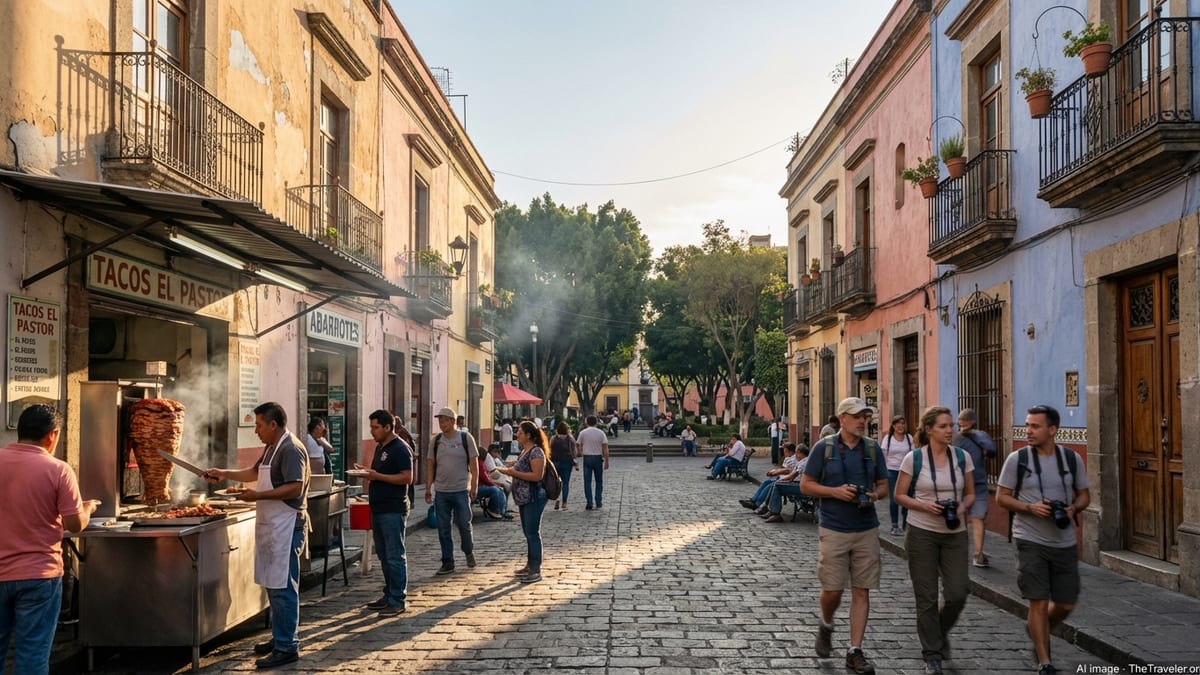
What surprised me most was how this boom is not limited to beach resorts. Domestic tourism is booming too, with Mexican families filling buses, budget airlines, and heritage sites. On weekends, I saw city parks jammed with local visitors, archaeological sites crowded with school groups, and small-town festivals where out-of-town Mexicans outnumbered international tourists. The result is that tourism rarely feels like something happening only “for” foreigners. You feel like you have stepped into a nationwide habit of traveling for culture, food, and family.
Warmth, Formality, and Everyday Kindness
I had been told that Mexicans are welcoming, but the depth of everyday kindness still caught me off guard. It showed up in small, practical moments: a woman on the metro patiently explaining the ticket system, a food vendor refusing to let me leave until I knew how to eat my tacos “properly,” or hotel staff offering local bus routes instead of pushing expensive tours. This warmth feels less like a service performance and more like a genuine cultural habit of looking out for one another, which naturally extends to visitors who show respect.
At the same time, there is more formality than many foreigners expect. Polite greetings matter. Saying “buenos días” when you enter a shop, acknowledging people with “con permiso” as you pass in a crowd, and using “usted” with older adults shifts interactions immediately. I found that when I leaned into that formality, doors opened: longer conversations with taxi drivers, unsolicited recommendations from café owners, and invitations to neighborhood events that never would have appeared on a tourist brochure.
Another surprise was how quickly relationships can become personal. After two or three visits to a local market stall, I was no longer just a customer but “amigo,” someone whose preferences were remembered and whose absence drew a concerned comment. In an era when travel often feels transactional, that sense of being gently folded into local routines was one of the most memorable parts of my time in Mexico.
The Food: Deeper, Simpler, and More Regional Than I Imagined
I expected Mexico to have great food. I did not expect the level of variety, nor how fiercely regional it would be. In the United States, “Mexican food” is often a single, blended category. On the ground in Mexico, it splinters into thousands of local realities: cochinita pibil in the Yucatán, tlayudas in Oaxaca, birria in Jalisco, seafood tostadas in coastal Sinaloa, and complex moles whose recipes are guarded like family heirlooms. Each region has its own specialties, and locals care a great deal about getting them right.
Equally surprising was how much of the best food is inexpensive and informal. Some of my standout meals came from market fondas, street stalls, and late-night cenadurías where plastic stools, paper plates, and fluorescent lighting were part of the charm. Recent travel trends highlight food tours and cooking classes as a way to understand Mexico, and those can be excellent. Yet it was ordering a three-dollar bowl of pozole next to office workers on their lunch break that taught me the most about how people actually eat.
I was also struck by how seriously ingredients are taken. Fresh masa, locally grown chiles, seasonal fruits, and herbs show up everywhere. Farm-to-table concepts that are now widely discussed in travel media feel almost redundant in many Mexican kitchens, where short supply chains and daily markets are simply how things work. The result is a cuisine that feels both deeply traditional and surprisingly modern, without needing to call itself either.
Language, Safety, and the Gap Between Headlines and Reality
Before visiting, most of what I had heard about Mexico in international news revolved around crime and safety concerns. That context is real and should not be ignored, but what surprised me was how different day-to-day life felt from the headlines. In major destinations and many mid-sized cities, there is a blend of visible security presence, common-sense precautions, and a large number of ordinary people simply going about their lives. Tourists arrive in record numbers, and for the vast majority, their experience is calmer and more predictable than the news cycle suggests.
This does not mean that safety is a non-issue. It means that it is a variable, not a constant, and that locals are your best source of current guidance. I got into the habit of asking hotel staff, restaurant servers, and guides simple, specific questions: which neighborhoods are fine to walk at night, which taxi apps they actually use, and whether a planned day trip made sense that week. The answers were usually nuanced, occasionally cautionary, and always rooted in lived experience. That local calibration kept my trip grounded and far safer than trying to rely on assumptions alone.
Language played an unexpected role here as well. Mexico receives millions of visitors from English-speaking countries each year, and in heavily touristed areas you can indeed get by in English. Yet I was surprised by how much more relaxed and generous interactions became when I used even basic Spanish. People seemed more willing to share honest opinions, help with directions that went beyond the tourist core, and talk about more sensitive topics such as rising rents or neighborhood changes. Speaking the language, even imperfectly, felt like carrying a key that opened a more honest version of the country.
Modern Mexico: Infrastructure, Technology, and the Maya Train
One of the biggest surprises of traveling in Mexico now is how modern much of the infrastructure feels. Highways linking major cities are wide and well maintained. Intercity buses can be remarkably comfortable, with reclining seats and onboard entertainment. Domestic air travel is robust, with competitive fares and frequent flights connecting not just the usual resort hubs but also emerging destinations in the interior. In many places, paying with contactless cards or mobile wallets was easier than I anticipated.
Public projects are also reshaping how visitors move. The most talked-about example is the Maya Train in southeastern Mexico, which has gradually expanded service, connecting beach destinations to inland cities and archaeological sites. For visitors, it offers an alternative to private shuttles and rental cars, while for locals it represents both opportunity and controversy. On the ground, riding a section of the route felt surprisingly ordinary: families hauling bags, workers commuting, tourists comparing notes on their next stop. The bigger story lies outside the windows, where new stations, road improvements, and service businesses are springing up along the line.
Digital infrastructure is equally notable. Mobile coverage extends into many rural areas, ride-hailing apps operate in major cities, and online booking for museums, archaeological zones, and long-distance buses is increasingly common. For a visitor, that translates into flexibility: it is easier to pivot from one region to another, to work remotely for a few days from a café, or to patch together a multi-stop itinerary that would have been far more complicated a decade ago.
Gentrification, Remote Work, and the Changing Face of Cities
Perhaps the most complicated surprise was how visibly Mexico is grappling with issues of gentrification and remote work. Certain neighborhoods in Mexico City, for example, have seen a noticeable influx of foreign residents, particularly remote workers from North America and Europe. In these areas, it is common to hear English on café terraces, see laptop screens lined up along windows, and spot rental listings priced far beyond what local salaries can sustain. While some residents welcome the economic activity, others are deeply concerned about rising rents and displacement.
Those local tensions have spilled into the streets in recent years, with protests drawing attention to how rapidly neighborhoods are changing. As a visitor, it is important not to treat this as background noise. It raises ethical questions about where you stay, how long you stay, and how you interact with the communities you temporarily join. I was surprised by how many locals wanted to talk openly about this, explaining both the benefits and the burdens of tourism and foreign residency. Listening, rather than defensively justifying your presence, goes a long way.
Outside the capital, the picture shifts but the theme remains. Beach towns, former fishing villages, and once-quiet pueblos mágicos are experiencing their own versions of transformation, as record visitor numbers and international attention bring investment, new jobs, and higher costs of living. Some communities are trying to channel this into community-based tourism and stricter zoning. Others are struggling to keep pace. As a traveler, you are not an outside observer. Your choices, from supporting locally owned businesses to respecting residential areas, actively shape how this story unfolds.
Nature, Archaeology, and the Unexpected Richness of “In-Between” Places
I went to Mexico expecting blockbuster sights: pyramids, cenotes, beaches framed by turquoise water. They are every bit as striking as the photos suggest. What I did not anticipate was how memorable the in-between landscapes would be. Long-distance bus rides took me past highland plateaus dotted with agave fields, volcanic silhouettes on the horizon, and small towns organized around quiet plazas where daily life moved at a slower rhythm. Those stretches between major attractions gradually formed the backbone of my understanding of the country.
Mexico’s protected natural areas and archaeological zones are seeing increased visitation, and many now have more structured management, timed entries, and clearer rules than in the past. While this can mean more planning and less spontaneity, it also protects fragile sites from the pressure of record tourism numbers. Guides emphasize not climbing on certain structures, staying on marked paths, and using designated swimming areas in cenotes and lagoons. Initially, the rules felt restrictive. Over time, they came to feel like a reasonable trade-off for preserving places that are both environmentally delicate and culturally sacred.
Outside the headline sites, however, quieter alternatives still exist. Local taxi drivers pointed me to lesser-known ruins, community-managed cenotes, and small-town museums that hold artifacts every bit as compelling as those in big-city institutions. Visiting these places required more patience and more basic Spanish, but the reward was a richer sense of how deeply layered Mexico’s history is, and how fiercely many communities are working to protect it.
Money, Value, and the True Cost of a Trip
Mexico has a long-standing reputation as an affordable destination, and in many ways that still holds true. Street food, public transportation, and local markets can be remarkably budget-friendly, especially once you step away from the most polished tourist corridors. What surprised me was the widening gap between those local prices and what is charged in heavily internationalized zones. In resort areas and high-end neighborhoods, prices for meals, drinks, and accommodations can rival or surpass those in parts of the United States or Europe, particularly during peak travel dates.
The lesson is that Mexico is not inherently cheap or expensive; it is both, sometimes on the same block. Planning a trip requires paying attention to where your money goes and what you get in return. I found that mid-range, locally owned guesthouses often offered better value and a more meaningful experience than international chains. Taking intercity buses instead of short-haul flights saved money and added scenic variety. Opting for a family-run fonda over a glossy international restaurant chain not only cut costs but also kept my spending closer to the community.
Another surprise was the importance of carrying some cash even in a largely digital age. While card payments are widespread in cities and resort areas, smaller businesses, markets, and rural transport often remain cash-based. Using ATMs from major banks inside well-lit, secure locations became part of my routine. Combined with tracking exchange rates and basic budgeting, these habits helped me navigate a country where value is still very much available, but no longer guaranteed by default.
The Takeaway
Traveling through Mexico left me with a sense of both gratitude and responsibility. Gratitude for the generosity of people who had no reason to be patient with my questions yet were, for meals that wildly exceeded their price, and for landscapes and historic sites that felt almost impossibly rich. Responsibility, because it is clear that the current tourism boom brings real pressures alongside its benefits: on housing, on fragile ecosystems, and on cultural heritage that risks being simplified for quick consumption.
If there is one overarching surprise, it is how coherent Mexico feels despite its size and diversity. From border towns to coastal resorts, from megacities to small agricultural communities, there is a shared insistence on identity, on rituals, on family and community ties that hold things together even as change accelerates. Visitors arrive in record numbers, new trains and routes open, and global trends in food, technology, and remote work weave themselves into the fabric of daily life. Yet beneath all of that, the country remains stubbornly itself.
For anyone considering a trip, the practical takeaway is simple. Arrive informed but not paralyzed by headlines. Learn a few phrases of Spanish and use them. Spend your money in ways that align with your values. Seek out both the famous sights and the quiet, in-between places. If you do, you may find, as I did, that Mexico does not just meet expectations. It rearranges them.
FAQ
Q1. Is Mexico safe to visit right now?
Safety varies by region and can change over time, but major tourism destinations and many cities manage large numbers of visitors without incident. Check current travel advisories, follow local advice, and use the same common-sense precautions you would in any large country.
Q2. Do I need to speak Spanish to travel in Mexico?
No, but even basic Spanish helps enormously. In tourist hubs, you can get by with English, but using Spanish tends to improve service, deepen conversations, and make logistics smoother, especially away from resort areas.
Q3. What surprised you most about Mexican food?
The intense regional diversity. “Mexican food” is not one thing: each state has its own specialties, ingredients, and techniques. Some of the best meals come from simple street stalls and market kitchens rather than upscale restaurants.
Q4. How crowded are popular destinations now?
Many destinations are busier than in previous years, especially beaches and famous colonial cities. Expect fuller flights, busy airports, and popular sites that often require advance booking or early arrivals to avoid peak crowds.
Q5. Is Mexico still an affordable destination?
It can be, depending on where and how you travel. Local markets, buses, and family-run guesthouses offer excellent value, while resort zones and trendy neighborhoods can be as expensive as major cities in the United States or Europe.
Q6. What is the Maya Train and should I consider using it?
The Maya Train is a developing rail project in southeastern Mexico that connects coastal areas with inland cities and archaeological sites. For some routes, it offers a practical alternative to buses or rental cars, but schedules and routes are still evolving, so check current information before planning around it.
Q7. How can I travel more responsibly in Mexico?
Choose locally owned businesses when possible, respect residential neighborhoods, follow rules at natural and archaeological sites, and be mindful of your impact on housing markets when booking longer stays in popular urban districts.
Q8. Do I need cash, or can I rely on cards and apps?
In cities and resort areas, cards and digital payments are common, but small shops, markets, and rural transport often prefer cash. Carry some pesos, withdraw from reputable bank ATMs, and be prepared for a mix of both systems.
Q9. What is the best way to move between cities?
For many routes, long-distance buses are comfortable, frequent, and cost-effective. Domestic flights are useful for covering large distances quickly, and in certain regions, rail options like the Maya Train can complement other transport.
Q10. How far in advance should I book key activities and accommodations?
For peak seasons, holidays, and famous sites, it is wise to book flights, lodging, and major tours several weeks or even months in advance. For off-peak and lesser-known destinations, you usually have more flexibility but should still reserve your first nights to avoid last-minute stress.