

I had wanted to see Ruaha for years. The idea of a vast, little-visited park in southern Tanzania, with big lion prides and hardly any other vehicles, sounded like the antidote to the traffic jams I had heard about in the Serengeti. When I finally made it there, I did find that old-fashioned sense of wilderness I was craving.
But I also discovered what “remote” really means in practice: higher costs, logistical headaches, a few uncomfortable surprises, and moments when I wondered whether the trade-offs were worth it. This is my honest account of what a remote Ruaha safari was actually like for me.
Planning Ruaha: The Appeal and the First Reality Check
On paper, Ruaha National Park ticked every box for me. It is one of Tanzania’s largest national parks, with a fraction of the visitors that flock to the north. Guides and operators describe it as a place where you can spend hours on a sighting without another vehicle pulling up, where lion prides are big and often seen hunting along the Great Ruaha River, and where you can still feel, in a slightly romanticized way, that you are in “old Africa.”
As I dug into the practicalities, the first reality check came quickly. The park’s remoteness translates directly into cost and complexity. Park conservation fees for non-residents were about 30 US dollars per day, plus 18 percent VAT, payable through Tanzania’s electronic payment system. On top of that, there was a separate concession fee charged per night by lodges inside the park, again around 30 dollars for adults, also before VAT, collected on behalf of the parks authority. Those numbers might not sound dramatic, but they stack fast when you multiply by several days and more than one person, and they are on top of already expensive full-board lodge rates and flights.
Then there are the flights themselves. Unless you want a long, sometimes arduous road journey from Iringa on rough roads that become tricky or even impassable in the rains, you are probably flying. Several small airlines run scheduled or semi-scheduled flights to Ruaha’s airstrips in the dry season from Dar es Salaam or from the northern circuit via other parks. In the wettest months, many camps close, and flights become fewer and less reliable. I learned quickly that Ruaha works best if you are willing to accept limited schedules rather than plan exact arrival and departure times to the hour.
Getting There: Remote Really Does Mean Remote
My journey into Ruaha started in Dar es Salaam with a light aircraft flight. The charm of a small plane quickly wore off as I realized how weather-dependent everything was. A layer of low cloud delayed our departure, and there was no clear information on when we would actually leave. In the end, we took off almost two hours late, which had a knock-on effect on my first afternoon game drive.
The approach into Ruaha was spectacular, though. Dry riverbeds, baobab-dotted hills and then, finally, the wide ribbon of the Great Ruaha River came into view. The airstrip itself was little more than a dirt runway scraped out of the bush, with a tiny shelter and a handful of staff. It felt romantic and adventurous, but also slightly unsettling to know that if anything serious went wrong, this was my main evacuation route.
On landing, I immediately felt the heat and the dryness. I visited in the late dry season, between August and September, when conditions are considered ideal for big game viewing but the landscape is at its harshest. The camp vehicle met me at the airstrip for the forty-five minute transfer to camp. Even on that first drive, the remoteness became obvious. We saw only one other vehicle the whole way. The track was dusty and rough, and I was grateful I had chosen a camp with its own well-maintained vehicles. If I had somehow tried to self-drive a rental car, I suspect I would have regretted it within minutes.
The Camp Experience: Beauty, Cost and Compromises
My camp was a mid to upper-range tented lodge inside the park, perched on a low rise near the river. The setting was undeniably beautiful. From the main deck I could look down over sandy channels and a thin, dwindling stream of water where elephants, impala and baboons came to drink throughout the day. At night I could hear lions in the distance and the occasional whooping of hyenas. It felt wonderfully wild.
At the same time, I quickly realized what that wildness cost, financially and in terms of comfort. The nightly rate looked astronomical when I first saw it, but in fairness it included full board, most drinks and two daily game activities. What you are really paying for is a fully self-sufficient operation in the middle of nowhere. The camp generated its own electricity with solar and backup generators, trucked in supplies over bad roads, paid conservation and concession fees, and maintained vehicles that take a daily beating on rough tracks.
Even so, some aspects did not quite match the “luxury” label used in marketing. Hot water was solar-dependent and limited at night. The Wi-Fi, when it worked, was painfully slow and restricted to the main area. Power in my tent was turned off for chunks of the day to conserve energy. None of this is unreasonable in such a remote location, but the slick brochures had painted a slightly smoother picture. If you arrive expecting city-level comfort, you will be disappointed.
The Rhythm of a Remote Safari: Early Starts and Long Days
My days in Ruaha fell into a predictable pattern: a pre-dawn knock on the tent door, coffee and a light snack, then out on a game drive just before sunrise. Morning drives stretched to late morning, followed by brunch back at camp, a few hot, sleepy hours of downtime, then an afternoon drive from about 4 p.m. until sunset. Night drives and walking safaris were possible too, at additional cost and with the required park permits and armed rangers.
The early starts were not optional if I wanted to see predators active. By 9 or 10 a.m., the heat pressed down and most animals retreated to the shade. In such a dry environment, the sun feels relentless, and the open-sided vehicles offer only so much protection. I found I needed far more water than I expected. The camp always provided drinking water, but I had to remind myself constantly to keep sipping, and on a couple of occasions I ended morning drives with a slight headache from dehydration.
The remote setting also meant that when I was tired, there was nowhere else to go. There were no alternative activities beyond what the camp offered, no quick town visit or café to break things up. If I skipped a drive to rest, I spent the time in camp with a book, watching the riverbed or chatting with staff. I enjoyed the enforced slowing down, but by day four I did find myself wanting just a little more variety. Someone who needs constant external stimulation could struggle with Ruaha’s quiet rhythm.
Wildlife Viewing: High-Quality Sightings, Lower Volume
In terms of wildlife, Ruaha rewarded me with some of my most satisfying sightings in Africa, but not with endless action. The park is known for its large elephant population, big lion prides and a good chance of spotting wild dogs in the right season. In the dry months, animals concentrate around the remaining water sources, especially the Great Ruaha River and its tributaries. That was exactly what I experienced, but it also meant long spells of driving through seemingly empty bush to get there.
On my first full morning, we found fresh lion tracks on the sandy road and followed them toward the river. After half an hour of slow tracking, we came across a pride sprawled in the shade, bellies full, with cubs playing around a fallen trunk. We stayed with them for almost an hour, and no other vehicle ever joined us. That level of exclusivity is where Ruaha truly shines. There were no engine noises from other cars, no jostling for the best angle. I could just sit and watch, listen, and take in the subtle sounds around me.
At the same time, there were drives when we saw very little. The vegetation in parts of Ruaha is thicker than in the classic open plains of the Serengeti, and animals can disappear into miombo woodland or tall grass incredibly fast, even in the dry season. On one afternoon, we drove for more than two hours seeing only distant giraffe and the odd kudu before finally reaching a busy stretch of river. The contrast between quiet and intense activity was stark, and if I am honest, I found the quiet stretches a bit frustrating after a while. I had to adjust my expectations from “constant sightings” to “fewer, better-quality sightings.”
Predators, Elephants and the Unexpected Moments
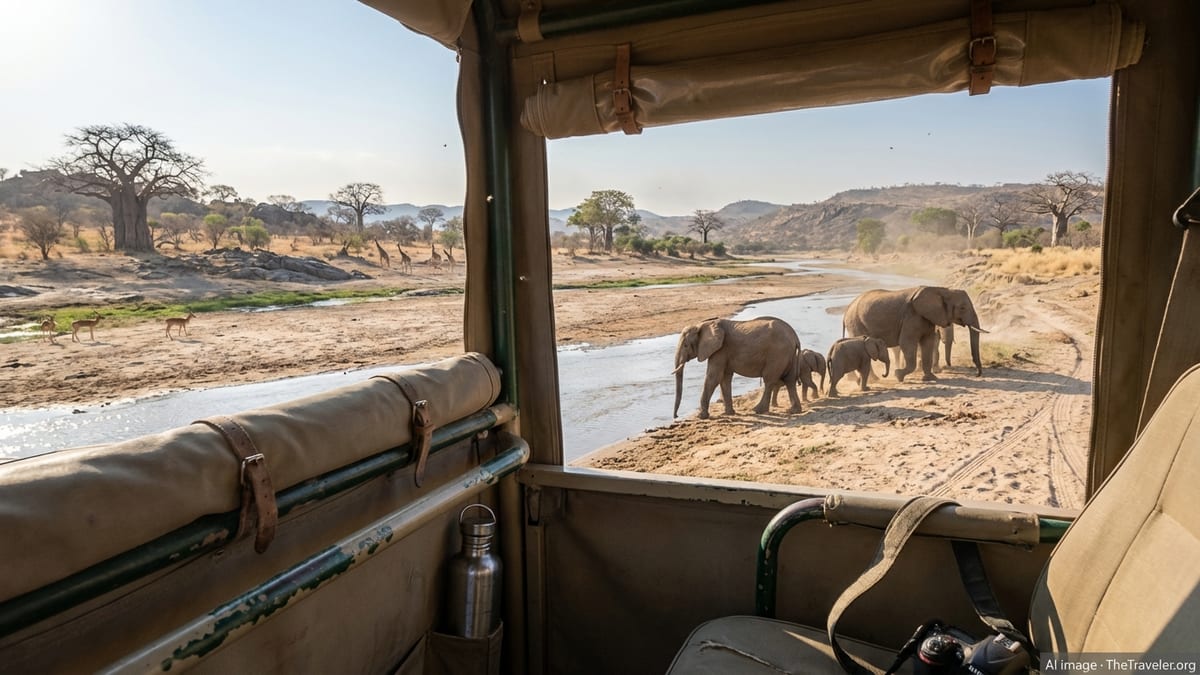
The highlight for me was the elephants. Ruaha has one of the largest populations in Tanzania, and during the dry season they gather in impressive numbers along the river. On several occasions, we parked on a rise and watched extended family groups pick their way down to drink, calves sandwiched between adults, dust hanging in the air. I never got tired of that scene. It felt raw and unscripted in a way that polished nature documentaries sometimes do not convey.
Predator viewing was good but not as prolific as some marketing materials led me to believe. I saw lions on most days, often in or near the riverbed. I had one excellent leopard sighting at dusk, draped over a branch in a riverine tree. We tracked wild dogs for two mornings in a row based on where a neighboring camp had last seen them, but never found them. I left slightly disappointed about that, but also realistic. Wild dogs are notoriously wide-ranging, and Ruaha’s size means they can easily move far from vehicle tracks.
Some of my favorite moments were not about the headline animals at all. One afternoon we stopped on a rocky outcrop as the sun dropped, and I watched a harem of greater kudu emerge cautiously from the woodland, their spiral horns catching the light. On another morning, we spent twenty minutes following a pair of bat-eared foxes trotting between termite mounds. These quieter encounters felt more special precisely because they were not chased by a queue of vehicles, and they made me appreciate Ruaha’s mix of East and Southern African species more than I expected.
Seasonality and Weather: Choosing the Right Time Matters More Here
Before my trip, I was warned that Ruaha is heavily seasonal. The main advice was to visit in the dry months from around June to October, when wildlife is easiest to see and roads are generally passable. Some operators stretch that window into November, depending on when the first serious rains arrive. During the long rains from roughly March to May, most camps in the park close, and road travel becomes very difficult. Even outside those peak wet months, sporadic rain in November or December can make some tracks temporarily unusable.
In practice, I felt how much the dry season defined the experience. In August and September, the landscape was harshly beautiful: dusty riverbeds, almost bare trees, endless shades of brown and gray, with only a few pockets of green where water lingered. It was excellent for spotting animals, but it was not the lush, postcard savanna that some photos suggest. The heat peaked in the afternoons, and even the breeze in the vehicle felt like a hair dryer at times. I was glad I had packed light, breathable clothing and a good hat, and I wished I had brought a bandana or buff to keep dust out of my nose and mouth.
I could see how a green season visit would be a radically different experience. Birds are said to be spectacular between about November and April, with migratory species swelling Ruaha’s already impressive bird list. The vegetation turns a rich green, and the park feels more alive in a different way. The trade-off is that big mammals are harder to spot, some roads turn to mud, and a number of camps shut their doors entirely in March and April. If I return, I might be tempted by a shoulder season like February, but I would go in knowing that the safari would be far more about atmosphere and birds than easy predator sightings.
Costs, Value and the Hidden Extras
Even by safari standards, Ruaha is not cheap. Besides the usual package rate for my lodge, the daily conservation fees and per-night concession charges added a noticeable amount to the final bill. While my lodge included game drives in the rate, extras such as night drives and walking safaris carried additional park fees and guide costs. For example, a guided walk required a park ranger and could only run at specific times, and a night drive needed prior arrangement and a special permit. None of this was unreasonable, but it did mean that saying yes to “just one more activity” had a real financial impact.
Another cost that is easy to underestimate is getting in and out. Domestic flights to Ruaha cost significantly more than a simple road transfer between towns, and routing can be convoluted. I ended up flying in a small plane that hopped between different parks, which was time-efficient but not cheap. In the greenest months, when some properties close, there are fewer flights, sometimes at higher prices. If something changes in the schedule, you have fewer alternatives than on busier routes.
So, did I feel I got value for money? It depends on the metric. If I look purely at number of animals per dollar, I might have been better off in a more accessible park where operating costs are lower and wildlife is packed into a smaller area. But if I consider the quality of the sightings I did have, the absence of crowds, and the sense of space and wildness, then Ruaha delivered something that is becoming increasingly rare. I left feeling that I had paid a premium for that rarity, but I did not feel cheated.
Frustrations and Things I Would Do Differently Next Time
It would be dishonest to pretend everything about my Ruaha trip was idyllic. One frustration was the lack of control over logistics. Domestic flight schedules changed with limited notice, and communication on the ground was not always clear. I had one slightly stressful morning where I thought I might miss my onward connection because the pickup from camp to the airstrip was delayed. In the end it worked out, but I spent two hours in a mild state of anxiety instead of enjoying my last game drive.
I also underestimated how tiring a remote safari can be when there is nowhere else to go. By day five, the combination of early starts, heat, dust, and the mental effort of constant scanning for wildlife left me a bit depleted. In hindsight, I would have built in an extra rest day either before or after Ruaha somewhere with a pool, some shade and maybe even a small town or beach to wander. Jumping straight from Ruaha back into city travel was jarring.
If I did it again, I would also pack slightly differently. I brought enough clothing, but not enough dust protection, and I did not fully appreciate how dry my skin and eyes would feel after hours in an open vehicle. Lip balm, eye drops and a light scarf or buff should be considered essential, not optional. I would also be stricter about managing camera gear. The dust finds its way into everything, and I spent more time than I wanted cleaning lenses and trying to protect my camera in the field.
The Takeaway: Who Ruaha Is Really For
By the time my small plane lifted off from the Ruaha airstrip at the end of my stay, I felt conflicted in a good way. I was ready to leave the heat, dust and isolation behind, but I also already missed the quiet tracks, the towering baobabs, and the feeling of watching a lion pride with no one else around. Ruaha had not been the constant wildlife spectacle I had quietly hoped for. There were slow drives, missed species and logistical annoyances. Yet the best moments I had there were among the most memorable of any safari I have taken.
Ruaha is not the park I would recommend to a first-time safari traveler who has only a few days and wants guaranteed, high-density wildlife around every corner. It demands more patience, more flexibility and, frankly, a higher budget. The remoteness magnifies everything: the beauty, the silences, the logistical challenges and the costs. You need to be the kind of traveler who values space, solitude and the feeling of being far from the beaten path, and who understands that this comes with compromises in comfort and convenience.
For me, Ruaha was worth it, but not in a simple, one-dimensional way. It gave me fewer, better sightings instead of a relentless parade of animals. It added stress in the form of uncertain logistics but compensated with mornings alone with elephants at the river. If I go back, I will time it carefully, pack more thoughtfully, and build the trip so that Ruaha is one chapter in a longer journey, not the entire story. Under those conditions, for travelers who know what they are signing up for, a remote Ruaha safari can be deeply rewarding, precisely because it still feels, in many ways, like the wild Africa we imagine.
FAQ
Q1. Is Ruaha National Park suitable for a first-time safari?
For a first safari, Ruaha can be rewarding but demanding. Wildlife viewing is excellent in the dry season, yet the park’s remoteness, higher costs and slower pace may frustrate someone who expects constant, easy sightings and smooth logistics. I would suggest combining Ruaha with a more accessible park or choosing it if you already know you enjoy quieter, more rugged destinations.
Q2. What is the best time of year to visit Ruaha?
In my experience and based on local advice, the dry season from about June to October is best for classic big game viewing. Animals concentrate around the Great Ruaha River, vegetation thins and roads are more passable. The green months from roughly November to April are beautiful and excellent for birding, but wildlife can be harder to spot, and some camps close in the wettest period around March and April.
Q3. How many days should I spend in Ruaha?
I would recommend at least three full days in the park, ideally four or five, to account for the slower pace and the park’s size. Because you might have game drives where you see very little followed by an amazing sighting, a longer stay gives you a better chance to experience Ruaha at its best without feeling rushed.
Q4. Is Ruaha very expensive compared to other Tanzanian parks?
Yes, I found Ruaha relatively expensive. Conservation fees, concession charges and the cost of flying in all add up. Lodge rates reflect the difficulty of operating in such a remote area. While the per-animal “value” might feel lower than in busier parks, you are paying for remoteness, uncrowded sightings and a more old-fashioned wilderness feel.
Q5. What kind of accommodation can I expect in Ruaha?
Most options are small lodges or tented camps inside or near the park, ranging from fairly simple bush camps to high-end properties. Even at the more luxurious end, I found that comforts are shaped by remoteness: limited Wi-Fi, solar-powered hot water, scheduled electricity and simple, hearty food rather than fine dining. It is comfortable, but not urban hotel luxury.
Q6. How difficult are the road conditions in and around Ruaha?
Inside the park, roads are rough, dusty tracks that can become muddy or impassable in the rains. They are fine in a well-maintained safari vehicle driven by an experienced guide, but I would not recommend self-driving unless you are very confident off-road and visiting in the dry season. Access roads from Iringa can be long and bumpy, especially after heavy rain.
Q7. Is it safe to visit such a remote park?
From a wildlife and security perspective, I felt safe. Camps follow strict safety protocols, guides are experienced, and park regulations are clear. The main risk is logistical: flight delays, weather-related access issues and the fact that medical help or evacuation takes longer. I made sure I had good travel insurance covering medical evacuation and listened carefully to camp briefings.
Q8. What wildlife can I realistically expect to see?
In the dry season I saw elephants daily, frequent lions, a leopard, plenty of giraffe, zebra, buffalo, hippos and crocodiles, as well as antelope like kudu, impala and waterbuck. I missed wild dogs despite trying, which is always a possibility. Birdlife is rich year-round and especially good in the greener months. You will likely not see everything, but the quality of individual sightings can be excellent.
Q9. How does Ruaha compare to better-known parks like the Serengeti?
For me, the biggest difference was the lack of crowds. In Ruaha, I often had sightings entirely to myself; in busier parks you may share a good sighting with many vehicles. On the other hand, the Serengeti and similar parks can deliver more consistent, high-density wildlife viewing over shorter distances. Ruaha is about space, solitude and atmosphere rather than sheer volume of animals per hour.
Q10. Who would I recommend Ruaha to, and who should probably skip it?
I would recommend Ruaha to experienced safari goers, photographers who value uncrowded sightings, and travelers who enjoy remote, rugged places and are comfortable with a few logistical inconveniences. I would not recommend it as the sole destination for someone with very limited time, a tight budget or a strong need for modern comforts and entertainment options between game drives.